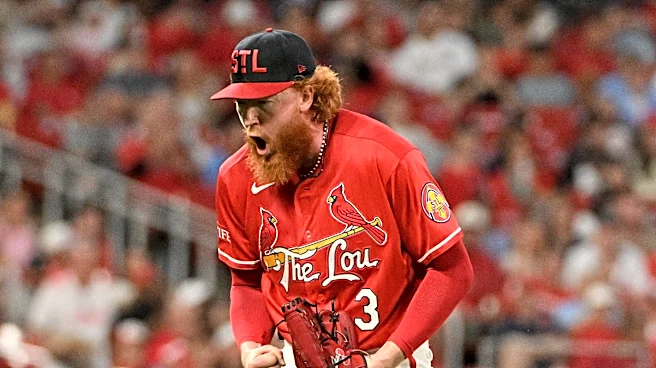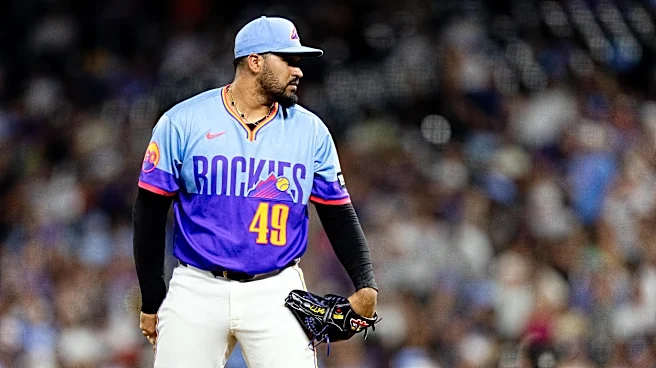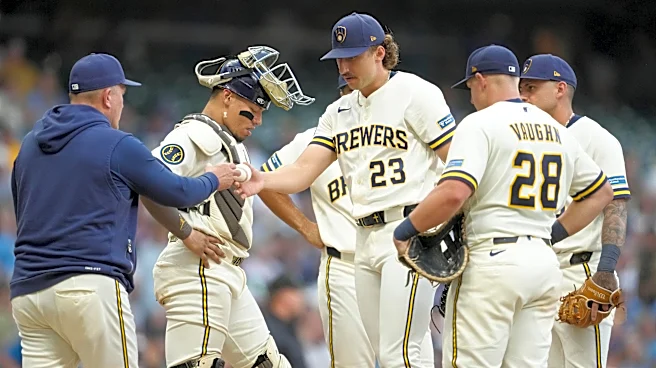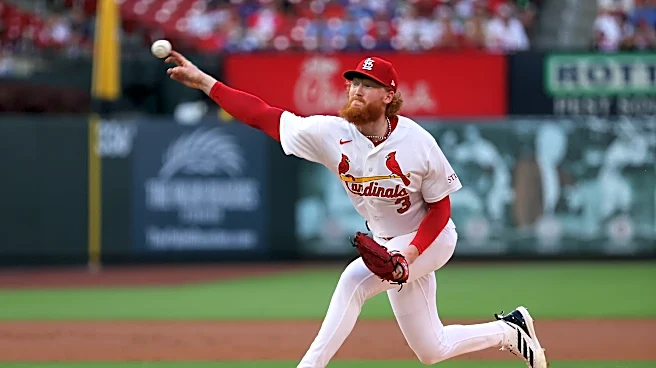


We’ve finally reached the end of trade deadline season, and after five weekly articles previewing what might happen, we now know: the Brewers tried but failed to acquire Tarik Skubal, and instead settled for two trades that netted Dustin May, JoJo Romero, and Antonio Senzatela. (A smaller trade earlier in the week shored up catching depth, with Bo Naylor heading to Triple-A Nashville.)
First, on Skubal
There has been an inherent disappointment with the Brewers around the league’s punditry because they did not acquire
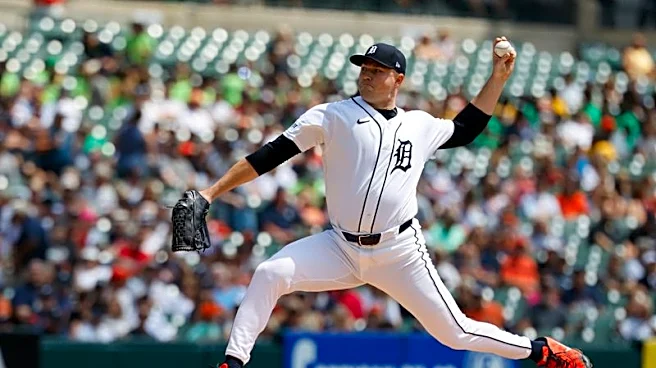
Tarik Skubal. By all accounts, they pushed extremely hard, but the Tigers chose to go with the Dodgers’ offer, and there’s not really much the Brewers can do about that. If they were willing to include Luis Peña, as reports suggest, the only thing they could’ve done to up the ante would’ve been to include Jesús Made. Trading the game’s top prospect for a two-month rental that probably wouldn’t even make you the favorite in the National League would’ve been insanity for a small-market team like the Brewers.
If you’ll allow me to rant a little, this disappointment—which in many cases feels like blame or rage from people who did not want the Dodgers to get Skubal—drives me nuts. I am extremely tired of national writers who pay no mind what it’s like to be a long-term fan of a small-market club telling me that it is my team’s fault for ruining baseball. Let’s dissect the Skubal scenario for a minute.
The Tigers wanted a controllable pitcher who was in or close to the big leagues. For the Brewers, this likely meant Logan Henderson. Obviously, Henderson is not Tarik Skubal. But… Henderson has a better ERA than Skubal this season. He has a better WHIP. He has struck out more batters per nine innings. He has nowhere near enough innings to qualify, but if he did, Henderson would be ninth in the majors in ERA this season, nestled comfortably in between Cristopher Sánchez and Yoshinobu Yamamoto. [Note that stats in this article are current as of Tuesday morning.]
Logan Henderson is really good. In the majors. Right now. Henderson is not Skubal, but this season he’s producing at a level that’s about 80% of Skubal… so if you give that back in a trade, is that not like four steps forward, three steps back? There were no other real options for the Brewers to build a trade like this around. Kyle Harrison is a good young pitcher but the same concept applies to him. Brandon Sproat has been a mess this season, and I can’t imagine the Tigers would’ve gone for that. Jacob Misiorowski is obviously not going to be included. Tyson Hardin, the top Brewers prospect at Triple-A Nashville, isn’t in the same league.
The Dodgers can afford to give away a guy like River Ryan because they have Yamamoto, Shohei Ohtani, Blake Snell, Tyler Glasnow, Roki Sasaki, Emmet Sheehan, and Justin Wrobleski.
All of this ignores the other obvious factors at play. Like how the Dodgers don’t need their prospects to work out because they can just buy starters when they need them. Or how they got Zyhir Hope, the centerpiece of the Skubal trade, because when 29 other teams would’ve promoted Michael Busch to play first base, the Dodgers instead signed Freddie Freeman as a free agent and traded Busch to the Cubs for younger prospects… including Hope. They don’t have to worry about Hope making it to the big leagues because if they have a hole, they’ll just fill it with the next Kyle Tucker that comes along.
Yes, the Brewers could maybe push their payroll a little further. They could’ve done the incredibly irresponsible thing of offering Made. But the Brewers, the team in the smallest market in the league, has made the postseason in eight of the last nine years. Shouldn’t that give the front office a little bit of the benefit of the doubt? Haven’t they proven that whatever approach they have taken works? That maybe the fact that they are risk averse isn’t a flaw but is in fact central to their unprecedented success?
There will come a time when Matt Arnold will need to go for it. But the Brewers simply cannot afford to be reckless with their assets. The “bites of the apple” approach might be infuriating sometimes, but there’s no denying that they’ve set themselves up for success. The team is still very young. There’s no reason to think they won’t be good again next season and the season after. At a certain point, Arnold not making a huge move will be a true mistake, but I don’t think this trade deadline was that time.
Ignore all of the pundits who say the Brewers failed by not acquiring Skubal. They are the same pundits who’ve predicted the team’s downfall over and over again, only for the team’s win total to keep rising.
The Brewers are better
With all that said and the context understood, let’s look at what the Brewers actually did.
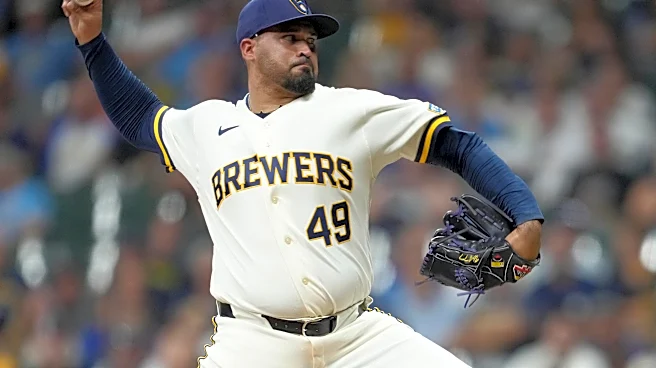
If I were to put forth an optimistic take about Dustin May, it would be this: if, when the season ends in a couple months, we look back and see May as the second-best pitcher traded at the trade deadline, I would not be shocked. Would I predict that? No. Does that say more about the market than May? Yes.
But everyone raves about May’s stuff, and he’s gone through stretches where he looked great this season. In a 12-start stretch between April 10th and June 15th, May had a 2.54 ERA, 2.68 FIP in 74 1/3 innings. This included a game when he took a no-hitter into the eighth inning against the Brewers (but ultimately lost, 2-1) and a complete-game, one-hit, one-walk, nine-strikeout shutout of the Padres. May’s overall numbers on the season are somewhat mediocre—his 4.38 ERA translates to just a 91 ERA+, for instance. But the underlying numbers are strong: May’s 3.14 FIP is well over a run better than his ERA, and if you merely lop off the two duds he started the season with, May has a 3.54 ERA and 2.91 FIP in 19 starts.
There will always be injury questions with May. With 109 innings pitched, he’s already approach his career high (132 1/3) despite debuting eight years ago, in 2019. He had a brief bout of back tightness in June during a start against the Royals in which he got lit up; he skipped his next turn in the rotation but never went on the IL. But he is healthy right now, and there’s some real upside.
In the bullpen, the Brewers did not get the lights-out reliever they coveted, and given the relatively small price the Pirates paid for Luke Weaver, one wonders if David Stearns and the Mets were ignoring the Brewers’ calls. They did, however, get two players who can help. Romero is on the injured list after an emergency appendectomy but should be back in the big leagues within a few weeks. He is having mixed success this season, but he was lights out in 2025 to the tune of a 2.07 ERA in 65 appearances. He’s also left-handed, which, along with DL Hall’s return, can take some of the pressure and usage off of Aaron Ashby.
Senzatela was a career-long starter until this season; he got off to an incredible start and has been roughed up of late, but while he posted a 1.30 ERA in his first 17 appearances and an 8.15 ERA in his next 17, is FIP is nearly identical: 3.30 in the first half, 3.49 in the second. Senzatela’s home vs. road splits also tell the story of a guy who will be happy to get out of Coors Field: this season, he’s got a 4.81 ERA in 16 games in Colorado and a 2.57 ERA in 18 games on the road.
All three players will help. Adding May to the mix will keep some pressure off of Misiorowski, Harrison, and Henderson, and the bullpen adds a couple of pieces that should give Pat Murphy and Chris Hook a couple more options that they can really count on.
What went out
The trades were not without cost. The prospects sent out for Senzatela were marginal (left-handed pitcher Mark Manfredi and shortstop Juan Martinez), but the Brewers gave up (and gave up on) Craig Yoho and parted with longtime depth piece Blake Perkins to acquire Naylor, who probably won’t even play in the majors this season. (The other player the Brewers acquired in that trade, Codi Heuer, was shuttled along to the Orioles for cash on deadline day.)
But the big headlines came in what the Brewers sent the Cardinals—a longtime foe—for May and Romero. Center fielder Josiah Ragsdale has enjoyed a big breakout season and is killing the ball at Double-A Biloxi, but, as they say, you have to give up something to get something. However, if you’d told me before the deadline that Ragsdale was included in a trade for May and Romero, I’d have assumed he was the better prospect.
That wasn’t the case here, as the highly-regarded 18-year-old Alexander Frias was the other piece sent out. Like Jackson Chourio and Jesús Made before him, Frias put up eye-popping numbers (and batted-ball metrics) in the Dominican Summer League and Arizona Complex League before making it to low-A Wilson as an 18-year-old; Frias hit .316/.411/.400 in 27 games in the Dominican Republic, then hit .441/.518/.678 in 32 games with one of the Brewers’ teams in Arizona. He was promoted to the Carolina League in July, and in 28 games hit just .236 but he showed patience and flashed pop, with four homers, four doubles, and two triples, good for a .328 OBP and .418 slugging percentage.
Frias’s batted ball metrics were high enough for some prospect observers to rate him very highly. FanGraphs was the most optimistic: they had Frias as the #43 overall prospect on their big board, behind only Made and Luis Peña on the Brewers. Keith Law also included Frias in his midseason update at #69, again behind just Made and Peña among Brewer prospects.
That feeling on Frias is far from universal. MLB Pipeline had Frias as the Brewers’ #11 prospect, and while Baseball America did give Frias the #100 spot on their midseason update, that was behind eight other Brewers, though three of those have graduated or are about to (Made, Peña, Cooper Pratt, Luis Lara, Logan Henderson, Josh Adamczewski, Braylon Payne, and Jett Williams).
The reality here is that the Brewers—the team with the most knowledge on Frias—were probably lower on him than the public consensus. And while he drew early comparisons to Chourio and Made, that’s a bit overblown; those two players were both considered five-tool prospects, while Frias is viewed as a future corner outfielder who isn’t likely to have speed as a killer tool in his arsenal. There’s a world where Frias turns into a deadly power hitter, and another where he’s a top-10 overall prospect by the end of next season, but the risk factor here was clearly higher than it was with Chourio and Made (who both, for what it’s worth, put up better offensive stats at the same age as Frias did).
What they didn’t do
Of course, adding pitchers, whether that’s May or Skubal, doesn’t change the fact that the Brewers have the fewest home runs in baseball and an offense that, at times (like right now!), can look awful. The paths to any sort of meaningful offensive upgrade were challenging; the best offensive players to move at the deadline didn’t really have positional fit on the Brewers. Luis García is a left-handed first baseman, duplicative of Jake Bauers. The Brewers wouldn’t have made an offer for Curtis Mead (who unfortunately broke his wrist in his first game with the Red Sox) that included a controllable, promising big-league pitcher (Connelly Early) like Boston did. Adley Rutschman didn’t make sense for Milwaukee and the cost was enormous.
The increasingly large elephant in the room is Christian Yelich’s poor performance as the designated hitter. The Brewers are surely hoping that Yelich can turn things around, given that they still owe him another $48 million over two years after this season, but at this point, his performance and Murphy’s insistence to keep him at or near the top of the lineup is actively hurting the ball club. Over his last 38 games, since June 12, Yelich is batting an appalling .182/.285/.318 with three home runs.
Bringing in a right-handed platoon option—or a right handed batter that would move Andrew Vaughn into a platoon situation at DH—could’ve really helped the team, even if Yelich has been slightly better against left-handed pitchers than righties this season (that bucks a career-long trend, so I don’t really trust those numbers). Jo Adell, Heliot Ramos, and George Springer (who did not move) are all right-handed batters who would’ve interested me as a way to get a little more power into the Brewers’ lineup, and to mitigate the presence of the apparently rapidly deteriorating Yelich.
Another offensive question without an apparent solution is that of William Contreras, who, like Yelich, has been alarmingly bad lately. Contreras’s OPS is down to a career-low .722 (not counting his partial rookie season in 2021), and it is trending in the wrong direction: since a season peak in late June, Contreras has hit an absolutely abysmal .165/.227/.257 over his last 29 games.
The Brewers did not have much of an avenue to improve on Contreras—they’re not going to bench him, and the reality of the situation is that they’re not going to bench Yelich, either. Now that the Brewers have chosen not to make any offensive changes at the trade deadline, they have no choice but to hope that Yelich, Contreras, and Chourio (.240/.304/.351 since June 21) find a way to turn things around. They simply cannot afford not to get contributions from any of these three players; that the Brewers went 15-10 in July with all three players mired in deep slumps is a minor miracle (and a testament to the excellent months had by Garrett Mitchell, Joey Ortiz, and Cooper Pratt).
Moving forward
The Brewers wanted to take a Prince Fielder-style swing at this deadline, but the Dodgers, as they do, stepped in and walked away with the top prize. After missing on Skubal, there wasn’t anyone else even close to that league for the Brewers to pivot to, but they did reasonably well to shore up their pitching staff.
The rest of the job will need to be done by players who were already on the team. The simple fact is, the Brewers even with Skubal wouldn’t have been a favorite to beat the Dodgers in a postseason series (which is a solid argument for why they shouldn’t have gone all in for him in the first place). That the Brewers’ two biggest potential postseason rivals—the Dodgers and Cubs (who added Kevin Gausman, Clay Holmes, Braxton Garrett, and Ryan Zeferjahn)—were two of the teams that did the most at this deadline is not encouraging, but Milwaukee should take heart in the fact that they’ve still got the league’s best record and a healthy cushion in the division. The offense needs to improve, no doubt. But this team is really good, and there’s no reason to say they couldn’t catch lightning in a bottle at the right time come the postseason.