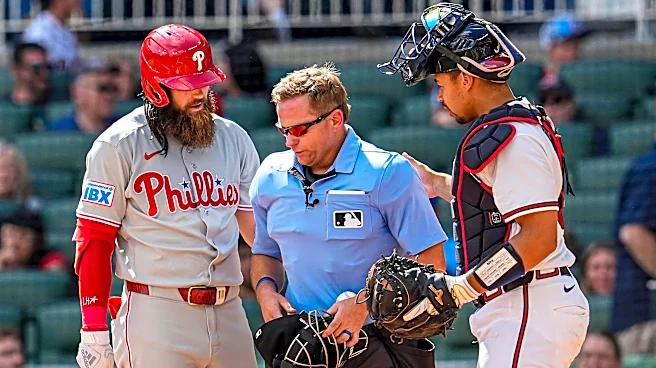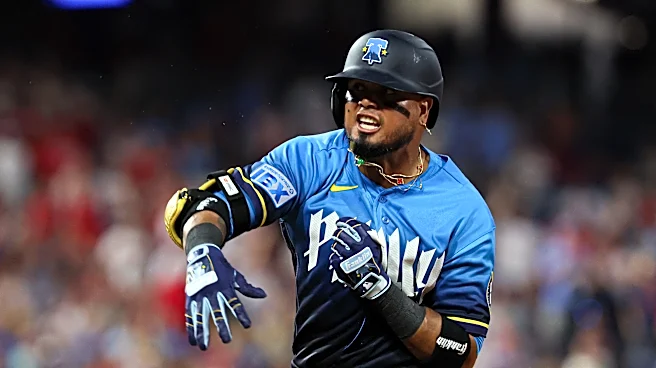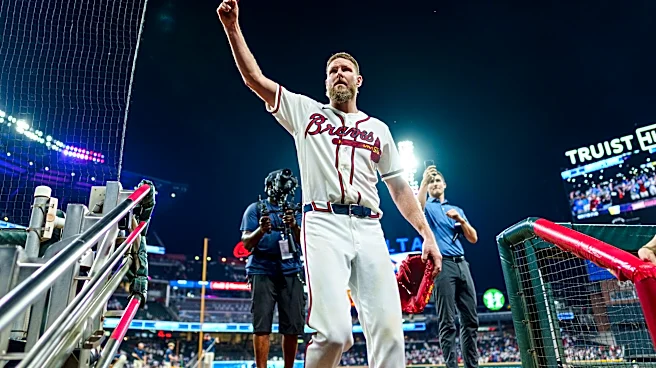


Well, here it is. It’s been a weird season, but the schedule has conspired to make September memorable for the 2026 Braves, one way or another. They have a four-game lead in the division, will play seven of the next ten games against the team they lead by those four games, and have an overall 16 games in 16 days stretch, all against contenders, which includes those ten games. Things could look really different 16 days from now… in a good way or a bad way… or they could look pretty much the same.
But the moment is thrust upon the Braves either way.
The main thing the Braves have in their favor is inertia. A four-game lead with 22 games left to play is pretty sizable, because 22 is not a lot of games. While the Phillies are projected to be a considerably better team (three-ish wins over 162 games better) at this point in time, that differential over 22 games is more like a single win, which isn’t enough. That’s why the Braves have an 85 percent chance of winning the division right now… but fare poorly in the first few games of this upcoming series, and even that will change rapidly. (This is also bolstered by the Braves having a high chance of securing the tiebreaker, meaning that the Phillies will need to make up an extra game provided the Braves win at least two of their seven remaining head-to-head games.)
The remaining schedule for both teams is a mixed bag. The Phillies have one additional home game against the Braves head-to-head, and are on the road for nine of their remaining games overall. The other teams they play are the Astros, Nationals, Mets, Brewers, and Rays. The Brewers and Rays may be prepping for the postseason in their late-season series, but they may also be jockeying for seeding position, so whether those games are or aren’t relevant at this time is hard to say. The Braves play the Rays, Cubs, Astros, Reds, and Marlins when not playing the Phillies, with 13 of those games on the road. Right now, without knowing if the Brewers will be going full bore, the Braves have a minor schedule advantage — but if the Brewers and Rays mail it in for the final six games, it’ll probably end up being the opposite. In any case, it’s not a huge difference.
The Phillies’ greatest advantage, which as noted probably doesn’t counterbalance the inertia of the standings, is that their roster is better. It’s not hugely better or anything, but both in terms of going-forward projected strength and actual production (the former matters considerably more than the latter, see this), the Phillies have the edge. The Braves have a sizable lead in position player production to date, but the Phillies’ advantage in pitching staff production so far is bigger by about a win.
The head-to-head, game-to-game odds also don’t offer much consolation. The Phillies are favored in all four games in Philadelphia, as well as one of the games in Atlanta. But, it’s not just that they’re favored: the Martin Perez-Zack Wheeler and Grant Holmes-Jesus Luzardo matchups in Games 2 and 4 are the two worst odds the Braves have gotten for a game this season, with only two other games (Hurston Waldrep-Paul Skenes and JR Ritchie-Logan Gilbert, both losses for the Braves in the end) anywhere near. Still, this too isn’t a particularly huge deal because even with those two games having the worst odds of the season, the aggregate odds sum to a 3-4 record in seven games, which… yeah the Phillies will gain a game and be three down (setting aside whatever happens in the other three games in between the two head-to-head series) with 15 to play. (Those three games would be sufficient to secure the tiebreaker, too.)
So, will the Braves fend off the Phillies? Probably, but what do you think?