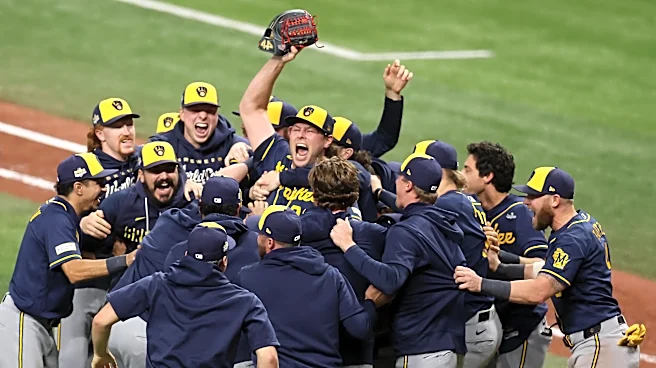





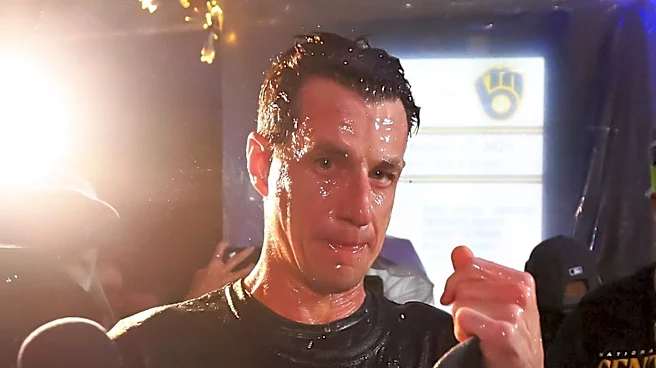

Cooper Pratt didn’t need a home run to help deliver the Milwaukee Brewers their first World Series championship. The 22-year-old rookie drove in two runs with an RBI single and sacrifice fly, helping Milwaukee defeat the Tampa Bay Rays 4-1 in Game 5.
In fact, the Brewers didn’t hit a single home run in their championship-clinching victory last week.
Milwaukee hit just 13 home runs during the entire postseason, including three in the five-game World Series. Instead, the Brewers relied on timely hitting,
aggressive baserunning and an ability to manufacture runs without waiting for someone to send a baseball into the seats.
The championship provided a revealing comparison with the Chicago White Sox, whose offense produced considerably more home runs but fewer runs during the regular season.
Chicago finished fifth in Major League Baseball with 211 home runs, while Milwaukee ranked 28th with 154. Despite hitting 57 fewer home runs, the Brewers scored 832 runs compared with Chicago’s 776. Milwaukee finished with 103 victories and a World Series championship; Chicago went 84-78 before falling in the American League Division Series.
Milwaukee manager Pat Murphy acknowledged that his team’s approach required more than swinging for the fences.
“We’re choosing hard,” Murphy told MLB.com in September. “We’re certainly trying to hit home runs.”
The numbers demonstrated how differently the two offenses operated. Milwaukee batted .258 compared with Chicago’s .236, collected 140 more hits and drew 79 more walks. The Brewers also stole 162 bases, compared with 93 for the White Sox, while striking out 111 fewer times.
Those differences helped Milwaukee score 56 more runs despite hitting considerably fewer home runs. According to the Elias Sports Bureau, Milwaukee scored just 32.1% of its regular-season runs on home runs, the lowest percentage in Major League Baseball.
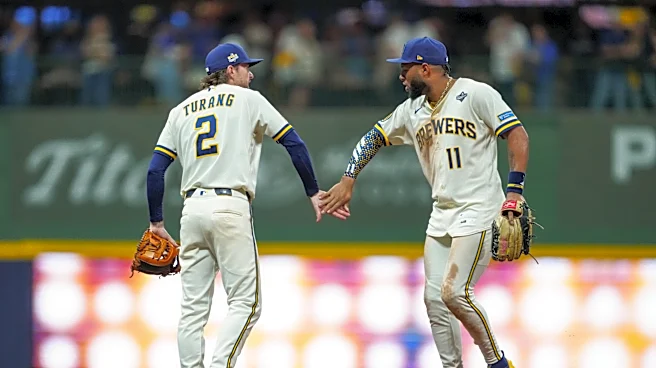
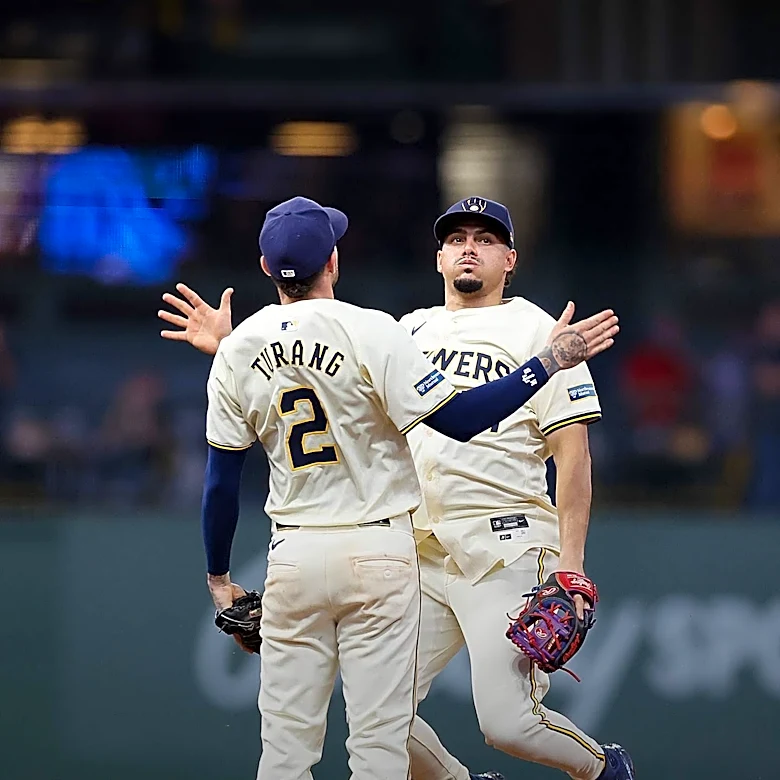
Brewers second baseman Brice Turang emphasized that the team’s success came from more than one offensive approach.
“Home runs come, and they’ll help you win games,” Turang told The Associated Press. “And so do stolen bases. So do walks, playing defense. All that matters as well.”
Chicago’s power production was impressive, particularly with three players surpassing the 30-home run mark. Munetaka Murakami led the team with 35 home runs, followed by Miguel Vargas with 33 and Colson Montgomery with 31. Together, the trio accounted for nearly 47% of Chicago’s home runs.
However, their batting averages revealed some limitations. Montgomery hit .197 while striking out 227 times. Murakami batted .207 with 196 strikeouts, although his 92 walks helped him maintain a .347 on-base percentage. Combined, Montgomery and Murakami struck out 423 times. Montgomery acknowledged his struggles with situational hitting during an August interview with the Chicago Sun-Times.
“I should be driving in more runs or just a little better situational hitting,” Montgomery said. “But I don’t know. It’s just baseball, you know?”
Vargas provided a more balanced offensive profile, batting .250 with 93 RBIs, 101 walks and a .363 on-base percentage. His 22 stolen bases demonstrated that power and offensive versatility could coexist.
Meanwhile, Chase Meidroth and Sam Antonacci offered examples of the contact-oriented approach Chicago could develop further. Meidroth batted .276 with 156 hits, while Antonacci hit .277 with a .370 on-base percentage and 20 stolen bases. Antonacci struck out just 82 times in 480 at-bats.
Milwaukee built its offense around a different combination of skills. Jake Bauers led the Brewers with 26 home runs while batting .266 with a .389 on-base percentage. Jackson Chourio contributed 25 home runs, a .291 average and 23 stolen bases.
Turang added 21 home runs, 100 RBIs and 90 walks, while William Contreras hit .270 with 18 home runs and 94 RBIs.
Former White Sox first baseman Andrew Vaughn offered perhaps the most revealing comparison, batting .306 with a .390 on-base percentage despite hitting only six home runs in 104 games for Milwaukee.
The Brewers weren’t necessarily playing traditional small ball. Their success came from combining walks, doubles, stolen bases and consistent contact to create scoring opportunities. Murphy explained that Milwaukee’s philosophy wasn’t about deliberately avoiding home runs but finding ways to score regardless of how the ball was hit.
“It’s offense. It’s a commitment to offense,” Murphy said during an October news conference. “Our relentless way helped us score runs because guys are interested and they know how to win baseball games.”
That versatility became particularly important in October. Chicago batted .211 during seven postseason games, collecting 48 hits and scoring 28 runs. The White Sox managed just four home runs while striking out 96 times. Milwaukee, meanwhile, batted .272 through its first 11 postseason games, collecting 100 hits and scoring 52 runs. The Brewers scored 25 runs during the World Series despite hitting only three home runs.
The White Sox weren’t an ineffective offensive team. Their 776 regular-season runs ranked among baseball’s best totals, making it difficult to blame home run dependence alone for their postseason elimination.
There was also a significant difference in pitching. Milwaukee allowed 618 runs during the regular season, compared with Chicago’s 720. The Brewers posted a 3.51 ERA, while the White Sox finished at 4.12.
Chicago’s challenge entering 2027 isn’t necessarily finding more power: Murakami, Vargas and Montgomery have already demonstrated they can produce home runs at an elite level.
Instead, the White Sox need to develop an offense capable of sustaining rallies, getting runners on base ahead of their power hitters and producing runs when opposing pitchers prevent the long ball. Milwaukee’s championship demonstrated that hitting home runs remains valuable, but relying on them isn’t the only way to build a championship-caliber offense.
As Murphy explained when discussing whether Milwaukee’s offensive philosophy could succeed in October, the goal remained straightforward.
“They’re built to win games,” Murphy said. “What’s the difference?”