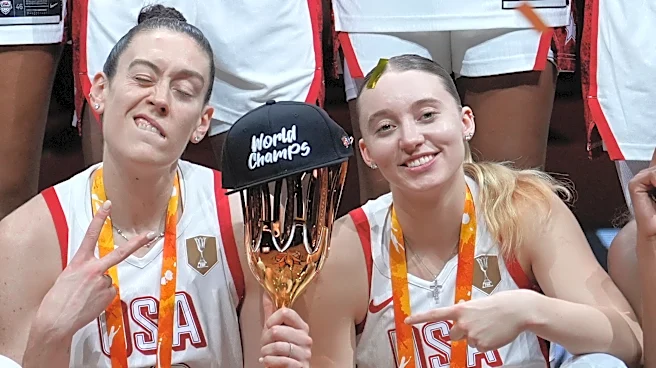


The WNBA returns on Thursday night, and the final days of the season will give players one last chance to push their own agendas for regular season awards.
The league’s most touted accomplishment, however, won’t see much competition for the third-straight year. A historic rookie season from Olivia Miles just wasn’t enough to stop an A’ja Wilson MVP three-peat.
The real question is: Has A’ja also ended the GOAT conversation? In the comments, share your take, letting us know what you think a fifth MVP
means for Wilson and women’s basketball.
A’ja is the best of her generation, but is she the best of all time?

A’ja Wilson has thoroughly distorted our perception of individual basketball success in the WNBA.
Her dominance has depraved her of the storylines that many of the great hoopers had. She didn’t have to wait seven or nine years to win a championship like NBA GOATs LeBron James or Michael Jordan. On the WNBA front, she hasn’t lacked a historic prime like Diana Taurasi, or seen that prime cut short like Maya Moore.
Just two years ago, A’ja started some uncomfortable conversations with her third MVP award, tying Sheryl Swoopes, Lisa Leslie and Lauren Jackson for the most in league history. She followed that up by winning her fourth last year, and now barring some generational four-game run by Miles, will be holding her fifth MVP award soon.
It was hard to argue against Wilson being the greatest WNBA player of all time when she won her third. Would a fifth make it impossible?
When you talk about WNBA accomplishments alone, I think so. Five MVP awards, three WNBA championships, soon to be three scoring titles, three (possibly four) Defensive Player of the Year awards. All-WNBA First Teams and All-Star nominations aren’t even worth your breath when auditing her trophy case. No one in league history has had a prime at this altitude. No prime in league history has lasted this long.
The 2020s have undeniably featured the most talented players in women’s basketball history, but Wilson’s dominance will have painted a Bill Russell-esque picture of the decade in history books.
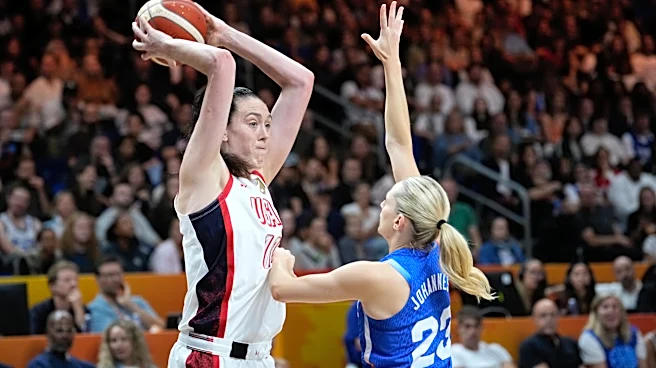
Breanna Stewart and Napheesa Collier would have been perennial MVPs at any other point in league history. Paige Bueckers, Caitlin Clark and Miles would have arrived into the league and immediately reinvented the ceiling of skill and dominance at any other point in league history. But that ceiling is still far above their head, thanks to A’ja.
Does A’ja’s college career hold back her GOAT status?

What a ridiculous question to ask, right? Does a college career that consisted of a national championship, four AP All-American selections, an AP Player of the Year, Naismith Award, three SEC Player of the Years, actually hurt A’ja Wilson?
It certainly doesn’t hurt her candidacy for greatest WNBA player of all time. But similarly to how the Naismith Basketball Hall of Fame considers all basketball accomplishments towards a player’s Hall of Fame resume, a true “Greatest Player of All Time” debate should encompass more than just someone’s WNBA career. And having bragged on her WNBA career enough, it’s worth talking about whether other player’s collegiate accomplishments invite more of an argument.
Wilson had an incredible career under Dawn Staley at South Carolina, but most wouldn’t dare put her in the top five of all-time women’s college players. UConn legends like Breanna Stewart, Moore and Taurasi have combinations of team and individual success that molded impenetrable college careers. Even Cheryl Miller, who didn’t get to play in the WNBA because she had retired before its genesis, won three Naismith Awards and had superhuman stats to boot. Wilson was a legend at South Carolina, but her collegiate resume doesn’t quite match its WNBA counterpart.
Some would argue that many of the UConn national championships matter less than WNBA championships because there are no roster building restrictions in college, therefore Geno Auriemma was dealing his own hand every year, and his individual players had less to do with the success. However, there’s also an argument that college basketball has more parity on a year-by-year basis because there were only 12 to 13 WNBA teams for Wilson’s championships. There are 362 women’s Division I basketball teams, but obviously only a handful of those teams were truly competitive to UConn on a yearly basis during their various title runs.
The important question for parity would be: Were there more teams truly competitive for UConn during their sustained title runs than there were competitive WNBA teams during A’ja’s WNBA title runs? I’m not here to debate whether Stewart’s college titles meant more than Wilson’s WNBA titles, but it’s an interesting concept to think about.
So while A’ja gives up some ground in the non-WNBA exclusive GOAT argument, it’s likely not enough to deny her that title. Stewart was the greatest college player of all time, but her professional prime has been constantly overshadowed by Wilson herself, leaving little room for argument. The most prominent argument would almost have to be for a player like Miller who can’t be measured against Wilson’s WNBA accomplishments because she didn’t have a chance to play in the league.
But at that point, we’re grasping for straws. A’ja Wilson, fifth MVP almost in hand, will be the GOAT of women’s basketball, and her only competition will be those who come after her.