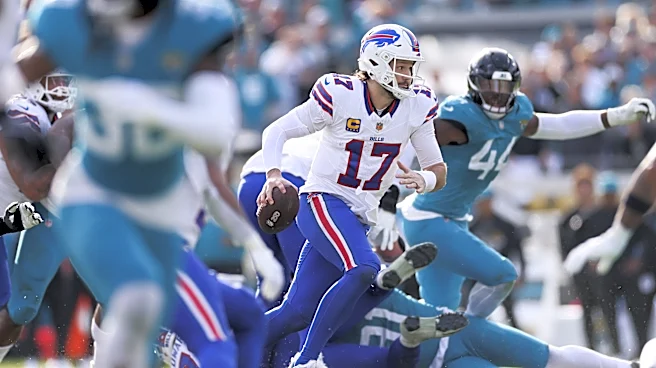





Josh Allen — one of the best quarterbacks on the planet — finished the 2025 season averaging a career-low 7.1 yards per target. A career-high 65% of his attempts traveled fewer than 10 yards downfield. No wide receiver on the roster cracked 750 yards. Khalil Shakir led the team with 719 — a number that, in any other offense with Allen at quarterback, would belong to a second or third option. The Bills’ wide receiver corps as a unit ranked among the bottom quarter of the league in receiving yards.
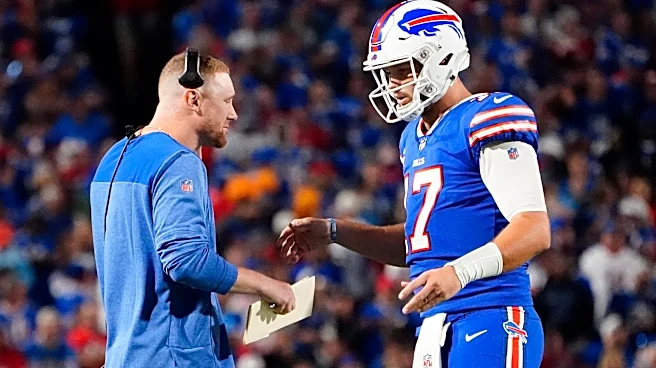
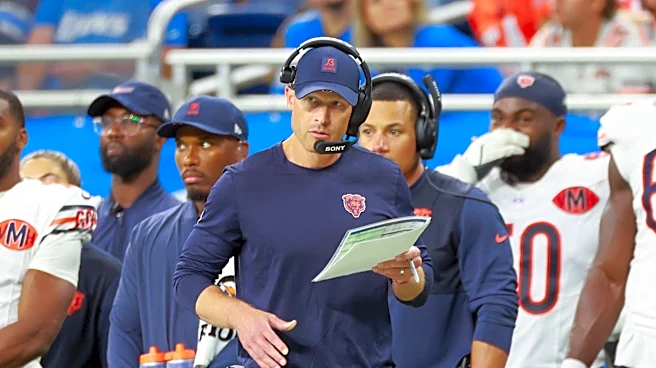
I’ve said it before, and I’ll say it again: that wasn’t Joe Brady’s offense. At least not fully. That was Sean McDermott’s offense, by Brady. Now the ball-control game plans are gone. Brady is the head coach, Pete Carmichael — who spent the majority of his coaching career running (or assisting) one of the most consistently productive passing attacks in NFL history alongside Drew Brees in New Orleans — is the offensive coordinator, and Brandon Beane spent a second-round pick to bring DJ Moore back into the system that produced the best stretch of his career. If you want the full breakdown of what Brady’s offense is going to look like in 2026, I covered that in detail in my previous piece. Today, we’re talking numbers.
I expect the Bills to generate approximately 515 targets distributed among their pass catchers, with Allen finishing around 562 total passing attempts when you factor in throwaways, batted balls, and spikes. Here’s how I see those targets distributed.
Chris Trapasso went through his exercise in May. Feel free to compare and contrast our projections… and give your own in the comments section.
WR DJ Moore

2025 with Chicago: 50 receptions, 682 yards, 6 TDs
Moore’s 2025 season was disappointing for his standards. Fifty catches and 682 yards from a receiver making $23.5 million per year isn’t ideal, to say the least, and I won’t pretend otherwise. But here’s what I keep coming back to: in 2020, under Joe Brady in Carolina, Moore was nearly unstoppable. He put up 1,193 yards and a career-high 18.1 yards per reception in just 15 games, playing through a carousel of quarterbacks. Now he arrives in Buffalo with a coaching staff that knows exactly how to deploy him and a franchise quarterback who can actually deliver the ball where Moore needs it.
Does that mean a full return to 2020 form? No. Father Time is undefeated, and Moore will be 29 in September. But I believe in the reunion, I believe in the quarterback, and I believe in a very positive change of scenario for him — from a place where he was being phased out to another one where he’s wanted, badly. He’s the WR1 on this roster, the clear leader of what I see as a genuine Big Three alongside Shakir and Kincaid. I expect him to finish the year with the most yards, catches, and touchdowns among that group.
2026 Projection: 115 targets, 76 receptions, 1,050 yards, 8 TDs
WR Khalil Shakir

2025: 95 targets, 72 receptions, 719 yards, 4 TDs
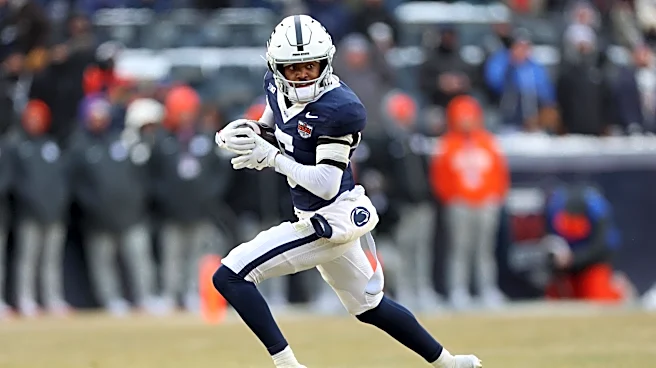
Shakir is the engine, and he’s been that for two years while carrying almost no help around him. Now, for the first time in his Bills career since becoming one of the top contributors, he gets to operate as a true complementary piece — one of three legitimate threats defenses have to account for on every single snap.
That’s not a step down. That’s what unlocks him. When you’re the only viable option, defenses game-plan for you, and I don’t think Shakir is the type of talent who could succeed no matter what. However, when sharing the field with Moore outside and Kincaid over the middle, he’s going to see soft coverage and one-on-one matchups all season long. Brady will move Shakir all over the formation — the deep crossers, the motion pre-snap, the quick game (yes, the screen passes) Brady loves. His target volume stays high because he’s Allen’s most dependable weapon, the one he knows he can trust to be on the same page on every situation.
2026 Projection: 92 targets, 75 receptions, 785 yards, 3 TDs
TE Dalton Kincaid

2025: 49 targets, 39 receptions, 571 yards, 5 TDs (12 games)
Two things are true about Kincaid: he’s one of the most dangerous mismatch weapons on the roster when healthy, and staying healthy has been the persistent challenge of his NFL career so far. He played just 12 games in 2025. Factor in that Jackson Hawes — who logged 19 targets and 3 touchdowns last season as the TE3 — will continue to earn snaps for his blocking ability and field presence, and Kincaid’s raw volume has a natural ceiling.
Still, in a Carmichael-influenced offense, the tight end is foundational. He spent 15 years in New Orleans building schemes that exploited tight end mismatches — think Jimmy Graham, think the way Brees weaponized the middle of the field to torture zone coverage. Kincaid can be that type of player, and in this system, he’s the answer to every defense that overcommits to stopping Moore on the outside. He’s the third piece of the Big Three. I’m projecting him conservatively given his injury history, and still giving him a good bump in production. He could be the leading receiver on this team on any given week.
2026 Projection: 88 targets, 65 receptions, 780 yards, 7 TDs
RB James Cook

2025: 40 targets, 33 receptions, 291 yards, 2 TDs
This is where Carmichael’s history becomes genuinely exciting. When he was calling plays in New Orleans, Alvin Kamara was one of the most dangerous receiving backs in football, consistently racking up 70-plus receptions and creating matchup nightmares on third down. The philosophy was never just to hand off and dump it to the back when nothing else was open. It was to weaponize the running back as a legitimate passing-game option.
Cook has the talent to be that player. He has shown improvement in picking up blitzes and in pass pro, and Ty Johnson has shown regression from 2024 to 2025. With Moore and Kincaid occupying safeties and linebackers, Cook is going to find cleaner looks than he’s ever seen. I expect a meaningful jump in his pass-game production. However, I’m keeping the projection measured, because the run game will remain important, Ty Johnson is still there, and Carmichael, despite certainly impacting the game plans, won’t be the play-caller.
2026 Projection: 63 targets, 48 receptions, 477 yards, 3 TDs
TE Dawson Knox

2025: 49 targets, 36 receptions, 417 yards, 4 TDs
Knox doesn’t need to be featured for this offense to work, and he won’t be. He’s a six-year veteran who blocks well in the run game, runs shorter routes reliably, and gives Allen a dependable option during scramble drills where his yards-after-catch ability takes over. Hawes will continue to earn his snaps — he caught 16 of 19 targets last season and scored three touchdowns, numbers too good to ignore. Knox’s role is real, but it’s defined.
2026 Projection: 36 targets, 25 receptions, 295 yards, 3 TDs
WR Keon Coleman / WR Skyler Bell / WR Josh Palmer

Coleman 2025: 59 targets, 38 receptions, 404 yards, 4 TDs
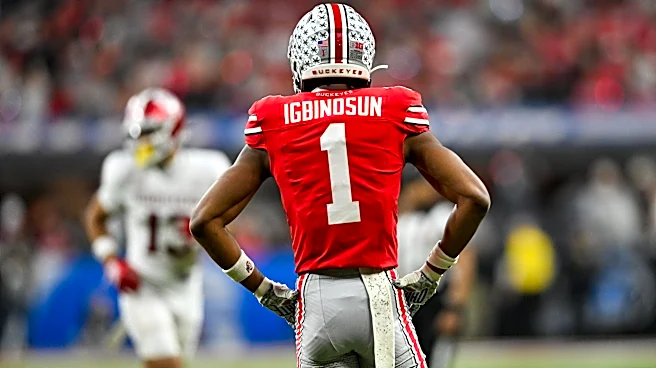
I won’t pretend Year 3 will be Coleman’s breakthrough if Year 2 wasn’t. He had chances. He’s limited as a route runner, and the contested-catch upside that made him an intriguing second-round pick hasn’t consistently translated at the NFL level; plus, professionalism issues don’t bode well. That said, he doesn’t need to be the answer — he needs to be a problem (on the field), situationally. Red zone. Jump balls. Specific packages where his size creates mismatches. If he can be that for Brady, there’s real value here.
Skyler Bell, the fourth-round pick out of UConn, is the wild card with the most upside in this group. He’s a quick-twitch playmaker who creates separation, and Brady will find ways to get him involved early, especially if Coleman opens the door for it again. Whether he or Coleman ends up higher on the pecking order will depend on that. I have Coleman ahead for now, but the gap isn’t comfortable.
Palmer is insurance at best, at this point. A fourth or fifth option in the target pecking order, useful if the guys above him miss time. He’s the vet and can earn more opportunities than the two young players, but his health issues don’t seem to go away. He’s a floor-type guy right now, and one the Bills probably would like to move on from if they can find a partner to take his contract out of their hands and open some cap space.
2026 Projection (Coleman + Bell + Palmer): 67 targets, 46 receptions, 396 yards, 5 TDs
Others (Ty Johnson, Ray Davis, Jackson Hawes, Trent Sherfield…)

Ty Johnson 2025: 33 targets, 24 receptions, 263 yards, 2 TDs
Johnson has quietly been one of the more reliable third-down backs in the league for the last few seasons, and he’ll continue to earn his share of work in the passing game. Davis provides depth and situational receiving work. Hawes will supplement Kincaid and Knox at tight end. Sherfield and whoever else carves out a spot in the rotation add to a small but real total at the bottom of the target distribution.
2026 Projection: 54 targets, 37 receptions, 267 yards, 4 TDs
Josh Allen’s 2026 Season Projection

Add approximately 47 passing attempts not registered as targets — throwaways, batted balls, spikes — and here’s where Allen lands:
372 completions / 562 attempts / 66.3% / 4,050 yards / 33 TDs / 12 INTs
The completion percentage dip from 69.3% last year is intentional and honest. When Brady pushes the ball downfield with more aggression — longer average depth of target, more shots outside the numbers — the catch rate takes a natural hit. Look at Allen’s four seasons with 4,000-plus passing yards: 2020 (69.2%), 2021 (63.3%), 2022 (63.6%), 2023 (66.5%). A 66.3% mark fits the historical pattern for an Allen offense that is actually attacking downfield. Last year’s 69.3% was a product of how short Buffalo played, not of Allen operating at a higher level.
Thirty-three touchdowns and 12 interceptions reflect an offense that is taking more risks with intent — not recklessly, but with the confidence that comes from having three genuine weapons to distribute the ball among for the first time in years.
Final Thoughts
There’s one thing I want to be clear about before closing. This projection doesn’t require DJ Moore to rediscover his 2020 self — it just requires him to be the receiver he’s always been. The drop-off in Chicago was real, but the evidence suggests it was circumstantial, not physical. A young quarterback still finding his footing, a roster in transition, an offense moving in a different (and younger) direction. His playoff performances — particularly against the Packers — showed a receiver who still wins one-on-ones, and still makes the difficult catch when the team needs it. That’s the Moore I’m projecting here.
And honestly, even if his numbers fall short of what I’ve laid out, that doesn’t break this offense — it just redistributes the targets upward to Shakir, Kincaid, or Cook. The beauty of having a genuine Big Three for the first time in years is that the system doesn’t collapse if one piece “underperforms”. Sometimes receivers impact the game without even touching the ball, we saw it a bit with Amari Cooper two years ago.
What this projection ultimately reflects is something simpler than a Moore comeback story: a Bills offense that no longer plays scared of “scoring too fast”. One that pushes the ball downfield on first down sometimes, trusts its defense to get stops, and lets Josh Allen do what Josh Allen was built to do — put points on the board and dare the other team to keep up. The ceiling for this group is real.
I’ll see you in January to find out if they reached it.
Catch up on all this and more with the latest edition of Leading the Charge!