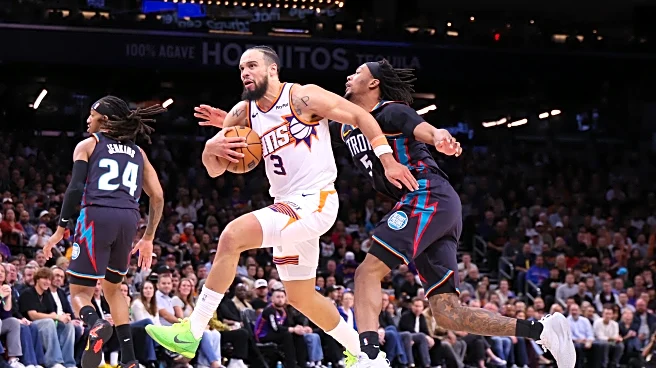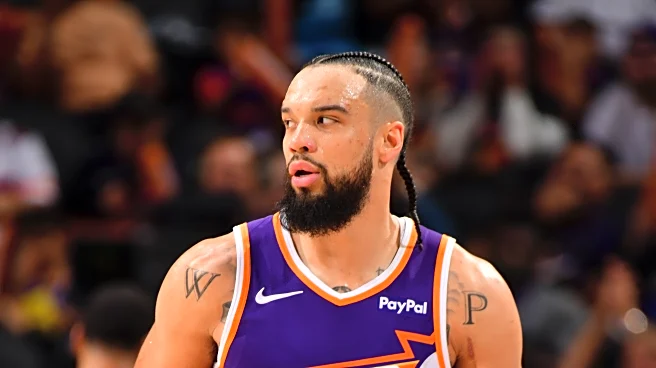

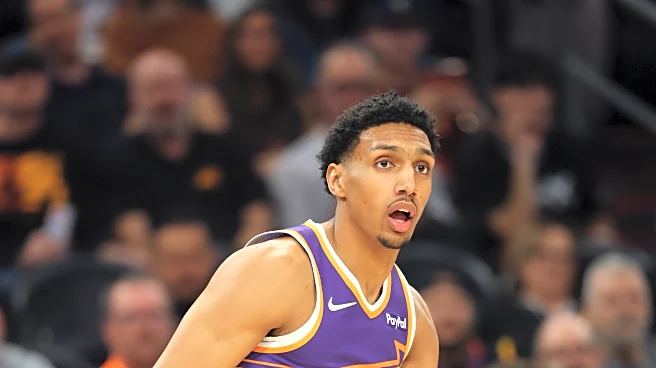
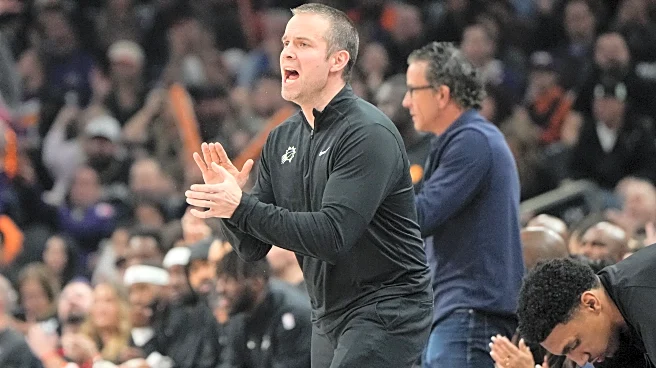
It is done. The trade deadline came and went. In Phoenix, it wasn’t messy, and that is exactly how it should have been. Yes, a move was made. But it was marginal and on the fringe of a roster. Giving up Nick Richards was expected. And Nigel Hayes-Davis? We hardly knew ye. 195 minutes played…and I can’t remember one.
The front office executed a single strategic maneuver. They shipped out Richards and NHD to slide the
books under the luxury tax. This play cleared out a roster spot. The staff has no intention of keeping both bodies coming back from Milwaukee. Cole Anthony looks like the odd man out in this shuffle. Jamaree Bouyea and Isaiah Livers are the names to watch to fill the void and reach 15.
In short? Two guys who weren’t playing for two guys who won’t play. One will be waived, which opens up two roster spots. Sign Livers (who does play). Sign Bouyea (who does play).
So yes, it was a relatively mild trade deadline for the Phoenix Suns. My thoughts? Good.
I think back to last season, when the noise started early. Rumors were everywhere due to the disgruntlement. Speculation was constant, as early as December, about who might move and when. That team was underperforming in a real way, and there was no coaching fix coming. With Coach Budenholzer in place, you were not going to solve it through messaging, motivation, or schematic implementation. Buy-in was not suddenly arriving. The only lever left was transactional. So for months, we lived in trade machines, convincing ourselves that one move could save it. None of them did.
My, my, how things have changed.
The Suns looked at the board and understood something important. Nothing was broken. Sure, you can argue they are undersized. You can argue they could use another power forward. Those points are fair. Recency bias made them feel louder after the last two games, where size showed up, and the rebounding margin swung hard, as the Suns were out-rebounded 110-80. But zoom out. In January, the Suns were out-rebounded by only 16 total rebounds. They sit 20th in the league in rebounding and fifth in offensive rebounding. Context matters.
So yes, size is a consideration. It is not a crisis. And when you weigh that against chemistry, effort, defensive identity, and growth, the answer becomes clearer. Do not disrupt what is working to chase what might. Don’t go chasing waterfalls. Stick to the rivers and the lakes that you’re used to.
Yes. I just TLC’d you.
Credit the Suns for seeing it that way. For resisting the urge to react. For trusting the group they have built. Sometimes, the best move at the deadline is recognizing that you do not need one.
I will add this. The way the team operated bodes well for the long-term development of its young players. A lot of frustration gets directed at the lack of size on this roster. But the Suns drafted size. It already exists in-house.
With Nick Richards no longer occupying the third center spot, the door swings open for Khaman Maluach to play when that opportunity is needed. And we have already seen Rasheer Fleming’s minutes begin to climb, a player who could very realistically be the power forward of the future.
You can complain about size today, or you can invest in size tomorrow. The Suns chose the latter. Why go hunting for size on the market when you are already trying to grow it internally? Why create blockages when the goal is development?
This is not avoidance. It is intention. And it reinforces the same theme that has defined this deadline for Phoenix. Trust what you have. Build it patiently. Let the next wave earn its way forward instead of cutting off its path before it even begins.
I think back to my time as Director of Food, Beverage, and FUN at The Westin Kierland Villas in Scottsdale. Managing bartenders, servers, cashiers, activities, attendance, and pool attendants across two pools, one outlet, one pool bar, and a Kids Club was a constant balancing act. Anyone who has worked in the service industry knows how relentless it can be. Daily critique. Endless pressure. Drama always lurking. And when guests are paying $850 a night (and those are pre-COVID rates), expectations are loud and unforgiving.
What kept our team steady was culture. That was the separator. I have always believed accountability is where everything starts. Equally important is clarity. You cannot hold people accountable if they do not know what is expected of them. Once that baseline was established, everything else followed.

From there, we built something tight. Something specific. And the real advantage of a fortified culture is this: when someone came in and did not align with it, they usually exited on their own. Not because they were pushed out, but because they felt it. Being the squeaky wheel did not earn attention. It stalled momentum. Teammates did not indulge it. The environment corrected itself.
That is what I was always proud of. We operated without drama. Not because conflict did not exist, but because we faced it directly. As a leadership group, we addressed issues head-on. No passive aggression. No letting things fester. Culture did not live on a poster. It lived in how we showed up every day.
Oh, and I made sure everyone on my team had a baseball card. It was a scavenger hunt for hotel guests. Collect all the cards, win a trophy. Another fun way to keep the team engaged, because they loved thinking up new poses for their cards every year.
So why do I bring that up? Because that is exactly what Mat Ishbia has built with the Phoenix Suns. And it is impressive, especially considering how quickly it happened. One season to flip the script. One season to establish a culture that lacks drama, embraces teamwork, and aligns everyone around the same goal. Players pulling in the same direction. Supporting each other. Holding the line.
And it shows. Even if Twitter does not always want to admit it.
I see it every night in opposing team subreddits. Fans are watching Phoenix and wishing their team played with the same level of effort. Noting how players like Collin Gillespie, Dillon Brooks, Jordan Goodwin, and Mark Williams look nothing like the versions they remember. Wondering why their front office did not see the same value when the opportunity was there. That kind of respect does not come from hot shooting nights. It comes from identity.
Culture is fragile. It starts at the top, but it only survives if everyone lives it daily. You cannot slap buzzwords on a whiteboard and expect them to magically show up on the floor. You must embody it, reinforce it, and above all else, protect it.
That is what we did back at the Villas. And that is what I see in Phoenix now. A culture that corrects itself. A group that does not indulge in nonsense. A team that knows who it is. That is not accidental. And it might be the most valuable thing the Suns have built all season.
And one way to protect that culture is simple. Respect it. Appreciate it. And stay the hell out of its way.
The Suns could have gotten in their own way at the trade deadline. It would not have been hard. You can stare at the roster and start shuffling pieces to chase size. You can talk yourself into positional need. You can point to Jalen Green’s $33.6 million salary this season and note that injuries have limited his on-court impact. You can stack his contract with Nick Richards and convince yourself that something cleaner or bigger comes back.
That is the temptation. And it misses the point.
Because if you do that, you ignore the most important part of what makes this team work. Culture. Jalen Green matters here, even if the box score does not show it. He is an emotional pillar. A young guy the locker room rallies around. He is on the bench every night, engaged, loud, invested. He cheers. He barks in postgame interviews. He lives inside this thing.
And that is only what we see.
It does not account for who he is on the plane. In practice. In film sessions. In the quiet spaces where teams either fracture or bond. That presence carries weight. Especially on a team that has built something fragile and rare.
This is the contrast. You can chase need and risk disrupting identity. Or you can protect what is working and trust that the rest can be managed without blowing it up. The Suns chose the latter. And in doing so, they showed that culture is not something they talk about. It is something they actively defend.
And if the fan base wants to trade him, then shame on them. Have we learned nothing? Did we not live through two full seasons of instability that came from chasing assets instead of building culture?
That is what impressed me most about the Suns at this trade deadline. They did not fall back into old habits. They did not repeat the mistakes of the past. When Mat Ishbia first arrived in Phoenix, he tried to solve everything with speed and money. He threw his wallet at the problem. It backfired. And the franchise is still paying for it, literally, with four more seasons tied to Bradley Beal.
But he learned. He pivoted. He leaned into what he knows from the corporate world. Writing a vision document is one thing. Executing it is another. Organizational buy-in is hard. It takes time. It takes patience. And to the Suns’ credit, it happened far faster than most of us expected.
That is why I am grateful they did not let short-term greed override long-term greed. Yes, there were moves available. Yes, there were theoretical upgrades. But those moves would have compromised the bigger goal. Building a team with an identity. Building a culture that prioritizes development over disruption. Avoiding positional blockades that stall growth for young players.
So yes, the Suns did practically nothing at the trade deadline. And I am completely fine with that.
Now we move on. We push this day into the rearview mirror and focus on what comes next. Not the final record. Not the destination. But the way this team continues to surprise the league by how it plays, how it competes, and how it stays true to who it is.