






The Pro Football Hall of Fame has decided to shake up the way it determines who gets a gold jacket, and the changes could have significant implications for several former Cincinnati Bengals.
Most notably, the Hall is eliminating the separate Seniors category beginning with the Class of 2027.
That is a major development for Ken Anderson, who was one of three Senior finalists for the Class of 2026, and Willie Anderson, who has spent the past several years knocking on the door of Canton as a Modern-Era
finalist.
Under the new system, there will no longer be separate pools for Modern-Era players and Seniors. Instead, every eligible former player will compete in the same Players pool beginning five years after retirement.
And while that sounds like a move toward simplicity and fairness, it could make the road considerably more difficult for some of the Bengals’ longtime Hall of Fame hopefuls.
The Senior category is officially gone
The Hall’s previous system essentially gave older players a second avenue toward Canton.
Once a player’s Modern-Era eligibility expired after 25 years, he could eventually be considered in the Seniors category. A separate Seniors Blue-Ribbon Committee narrowed the field and ultimately selected three Senior finalists for consideration.
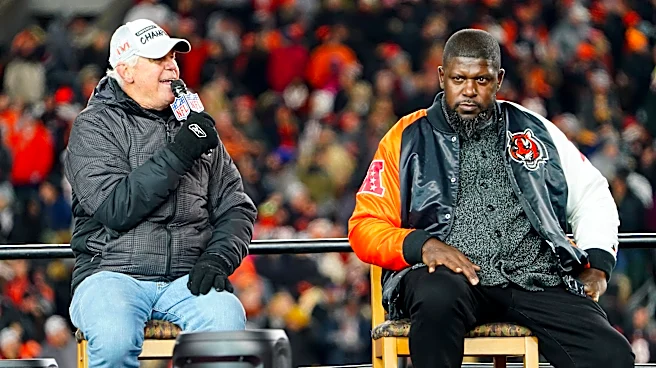
That’s how Anderson got his opportunity for the Class of 2026. The Bengals legend was among the nine Seniors semifinalists before ultimately becoming one of three Senior finalists alongside Roger Craig and L.C. Greenwood.
Craig was ultimately elected. Anderson wasn’t.
Now, there won’t be another Seniors category for him to return to.
The Hall announced Friday that all eligible players will instead remain in one pool regardless of how long they have been retired. The annual selection meeting will ultimately consider 13 players, along with one coach and one contributor. Between three and seven total people can be elected, with candidates requiring at least 80% approval.
That creates an interesting—and potentially frustrating—situation for Anderson. He has already demonstrated that he can make it through the old Senior process.
Now he’ll have to do it against everyone else.
Ken Anderson may have lost his clearest path to Canton
There is no question Anderson has a Hall of Fame résumé.
The longtime Bengals quarterback played from 1971 through 1986, earning four Pro Bowl selections and winning the league MVP award in 1981. He finished his career with 32,838 passing yards and 197 touchdown passes.
He also led Cincinnati to its first Super Bowl appearance following the 1981 season. Anderson’s candidacy has long been one of the more fascinating Hall of Fame debates because his career statistics don’t necessarily jump off the page by today’s standards.
But the context of his era is important.
He was one of the NFL’s most accomplished quarterbacks of the 1970s and 1980s, helped revolutionize the Bengals’ offense under head coach Paul Brown and offensive coordinator Bill Walsh, and was at the center of one of the best teams in franchise history.
The Hall’s previous system finally gave him a specific avenue to make that case. In fact, Anderson survived a field of 162 Senior nominees to become one of just three Senior finalists for 2026.
Unfortunately for Bengals fans, that system is now gone. And that’s where things get complicated.
Under the old system, Anderson only had to compete with the other Senior finalists for one of the available spots in that secondary pool. Within the new system, he’s competing against the entire group of eligible players.
That includes modern stars who have recently become eligible, older players who have been waiting for decades and, potentially, other candidates whose résumés previously would have been separated into different categories.
The Hall says the changes are designed to eliminate potential “unintended biases” in the old system. For Anderson, however, it means the route that finally got him within one vote of Canton no longer exists.
Willie Anderson’s situation is different
Then there’s Willie Anderson.
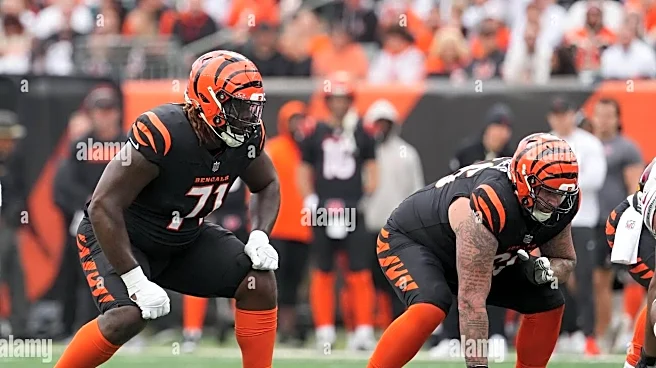
The Bengals’ legendary offensive tackle has arguably been even closer to Canton in recent years. Anderson was a Hall of Fame finalist for the fifth time in 2026 and advanced all the way to the final seven before falling short of the required 80% threshold.
That was particularly painful because the Hall’s old bylaws gave players who reached the final seven an automatic return to the finalist stage the following year. Anderson was therefore automatically advancing to the 2027 finalist stage.
Except that rule is gone, too.
The Hall specifically eliminated the provision that allowed candidates who reached the final seven to automatically return as finalists the following year.
So Anderson will not simply pick up where he left off. He’ll have to go through the new process.
That’s a significant change.
But Willie Anderson has something Ken Anderson doesn’t
There’s also a reason for Bengals fans to remain optimistic about Willie Anderson. The fact that he reached the final seven in 2026 is meaningful.
The Hall’s voters had already narrowed the field from 15 Modern-Era finalists to seven, and Anderson was one of the seven players still under consideration for induction. Ultimately, he did not receive the required 80% support.
That isn’t the same thing as being pushed aside early in the process. Anderson was right there.
The Hall’s decision to eliminate the automatic carryover rule means he’ll have to earn his way back into the finalist group, but he isn’t starting from scratch in terms of his reputation among the voters.
And his résumé remains extremely compelling.
Anderson was a six-time first-team All-Pro and seven-time Pro Bowler during his Bengals career. He started 116 consecutive games to begin his career and was one of the defining offensive tackles of his era.
If the Hall’s new system truly is designed to identify the most deserving players regardless of how long they’ve been retired, Willie Anderson should remain one of the names at or near the top of the discussion.
The numbers game could be the biggest change
Perhaps the most important part of the new system isn’t simply the elimination of the Seniors category. It’s the reduction in the number of players who will be considered at the annual meeting.
Under the previous system, the Selection Committee considered 15 Modern-Era players plus three Seniors, along with a coach and contributor. Now, it will consider 13 players, one coach and one contributor.
That means fewer player candidates will make it to the final stage. And that’s important because the Hall is entering an era in which some enormous names are joining the eligibility pool.
The Class of 2027, for example, is expected to include first-time eligible stars such as Rob Gronkowski, Adrian Peterson, Ben Roethlisberger and Cam Newton. Suddenly, longtime candidates like Anderson and Anderson aren’t merely competing against other overlooked players from their generation.
They’re competing for attention against some of the most recognizable stars of the modern NFL.
Could this ultimately help the Bengals?
That’s the great unknown.
The Hall says the changes were the result of a 2½-year review designed to improve the integrity of the selection process. The Selection Committee is being reduced from 50 members to 28, with 25 voting members and three alternates. Selectors will also no longer be assigned to individual NFL teams.
The final meeting will return to an in-person format, something the Hall believes will create more meaningful discussion and debate. In theory, that could benefit players whose cases have been difficult to quantify through statistics alone.
Ken Anderson’s case is exactly that sort of candidacy. So is Willie Anderson’s.
But there’s another way to look at it.
The Bengals have historically had a difficult time getting their legends into Canton. The franchise currently has only a small number of Hall of Fame representatives relative to its history, and both Andersons have spent years waiting for their opportunity.
The new system doesn’t necessarily close the door. But it removes some of the mechanisms that had finally started pushing those doors open.
Bengals fans should be watching closely
For Ken Anderson, the immediate question is whether the Hall’s new unified Players pool will give him another legitimate opportunity after coming so close through the Seniors process in 2026.
For Willie Anderson, it’s whether his five finalist appearances and 2026 run to the final seven will translate into enough support to get him back into the final group under the new system.
There is also an intriguing possibility that the new process could eventually benefit both.
If the Hall truly wants to judge every eligible player on the strength of his football résumé rather than how long he has been retired, Anderson’s accomplishments shouldn’t become less impressive simply because newer stars enter the discussion.
The Bengals legends will simply have to prove that their careers belong in the same conversation. For Ken Anderson, that conversation has been going on for decades.
For Willie Anderson, it’s now approaching the point where Bengals fans are wondering just how many times he can knock on the door before someone finally lets him in.
The Hall of Fame has changed the rules. Now we’ll see whether those changes finally change the answer for two of the greatest players in Bengals history.