



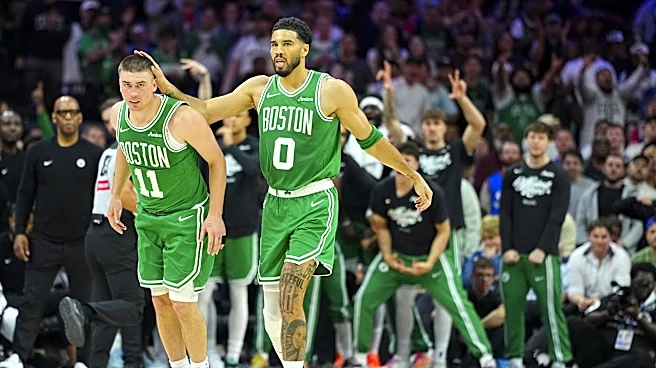
PHILADELPHIA — Payton Pritchard is sitting at his locker, his ankles submerged in ice.
“I need another win on the way home,” he says, grinning.
Neemias Queta chuckles, and shakes his head.
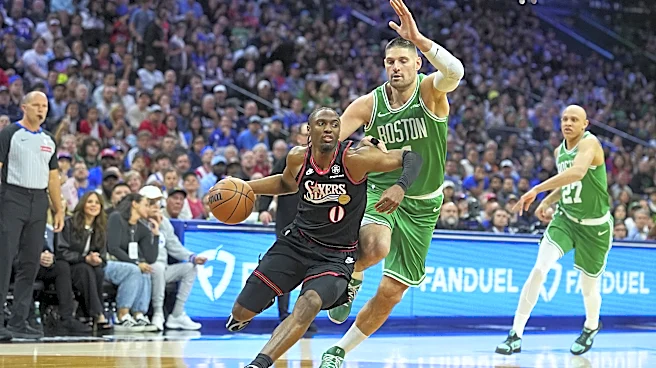
Pritchard, after all, is just a few minutes removed from the best individual playoff game of his six-year NBA career, a 32-point, 5-assist masterpiece that saw him drain 6 three-pointers, including a ridiculous end-of-first-quarter buzzer-beater.
But, with the Celtics’ 128-96 Game 4 win over the Philadelphia 76ers
in the rearview, he’s already begun to think about his next conquest, which will come on the plane ride home. That’ll be a victory in the team’s plane-ride game of Catan, which Pritchard, Queta, Ron Harper Jr, Jordan Walsh, and Derrick White all regularly partake in.
The first time I heard Pritchard talk about Catan was a month ago, when he was crashed my pregame interview with Hugo Gonzalez about the team’s obsession.
Gonzalez had been carrying a Catan board in several Celtics social media posts, so I mistakenly assumed he was passionate about the game (“I am the Catan hater,” Gonzalez clarified emphatically explaining it was his rookie chore. “I am the Catan hater.”)
Pritchard, always one of the chattiest Celtics in the locker room, wanted to make sure I knew that he won more than anyone else on the roster.
That he was the ultimate Catan competitor.
That, really, the rest of them were just battling for second place.
“I’m the best,” Pritchard told me, explaining that Walsh sucked. “It’s more of a strategy game, more mental to it. You’ve got to be better.”
During that interview, in which Pritchard’s demeanor appeared hilariously serious, I tried my best to supress a smile.
I just might be talking to the most competitive person in the world, I thought to myself.
Four weeks later, at the Xfinity Mobile Arena, Pritchard yells at Reggie Miller, who is announcing Game 4, after each one of his made baskets.
“Reggie is my man,” he said afterwards. “It’s just a friendly banter. I get going off that, and I probably use it to my advantage to get going even more. I don’t even know. I black out in those moments, so I don’t really know what I say at times. But it helps.”
Jaylen Brown says he doesn’t know what it is that Pritchard is yelling, either, but he laughs at the question.
“Whatever it is, tell him to keep doing it.”
Four days before that, Pritchard felt he let the team down
After the Celtics’ 111-97 Game 2 loss on Tuesday night, Pritchard was bummed out.
In the loss, he attempted 8 shots — making just two — and finished the night with just 4 points, 13 less than his season average.
“I was definitely very disappointed after Game 2,” Pritchard said. “Felt like I was kind of shell of myself. Bad decisions. Shot making wasn’t great.”
“I did not give the game what it needed, or my team, and it hurt us.”
It was time to turn the page.
On the flight to Philadelphia, Pritchard took care of business: he handily beat his teammates in the plane ride Catan game, a reality that Derrick White conceded at shootaround on Friday.
Then, with the series back on the road, Pritchard was back in his element, in a hostile environment faced with a whole sea of 76ers fans he could talk trash to.
In Game 3, the tides began to turn. He hit 5 three-pointers, including a massive one with just over a minute to play that gave the Celtics a five-point lead.
He claims he doesn’t remember what he said after that shot, though the words were flowing.
”I probably blacked out in that moment,” he said. (I’m honestly still not sure if Pritchard truly can’t remember what is that he’s bellowing after these big-time shots, or if just knows that he can’t repeat it).
Still, thought Pritchard said that Game 3 was a step in the right direction after a lackluster Game 2, he emphasized after that one that it still wasn’t his best.
He had another gear to reach.
Two days later, he reached it, pouring in 13 first-quarter points, and another 14 in the third quarter, en route to Sunday’s career night.
“When you get in that flow stage, it’s the rhythm: how you’re dribbling, the moves you can get to, the shot making,” Pritchard said afterwards.
It’s a feeling that he’s — intentionally — used to: “In my workouts, I try to hit that on the daily. So then when I get in the games, it’s a regular thing.”

Game 4 served as Pritchard’s ultimate bounce-back
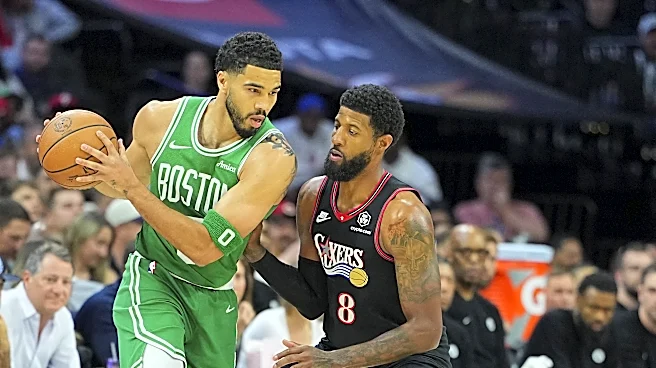
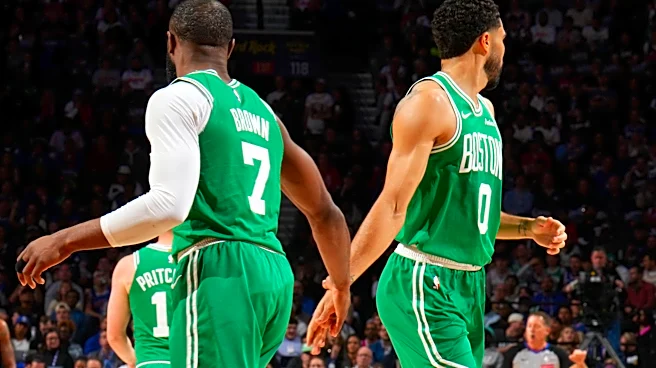
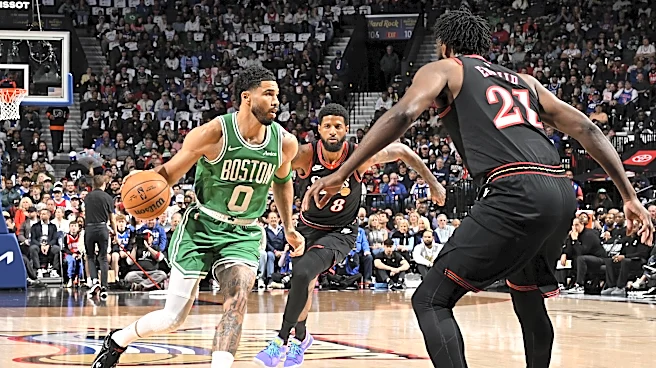
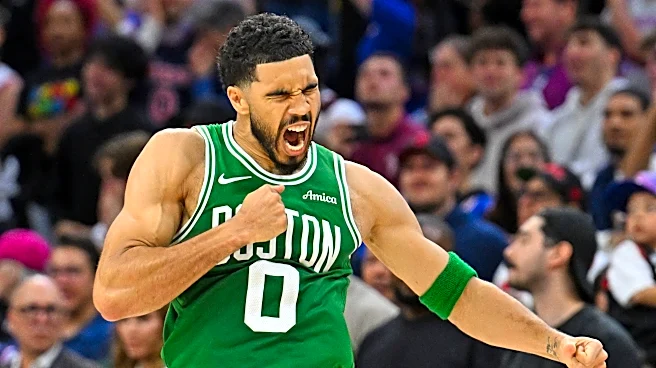
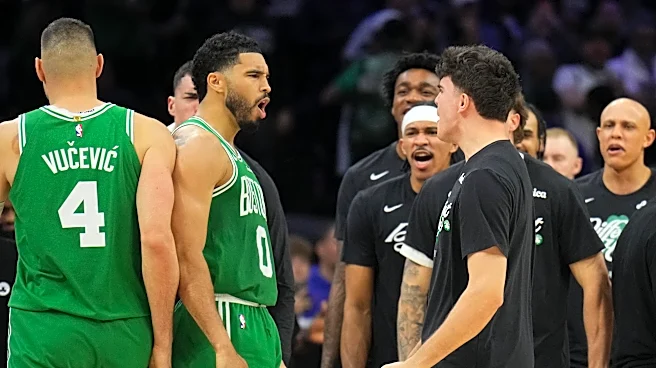
Pritchard’s best game of the series came on a night when Jaylen Brown and Jayson Tatum both struggled in the first half, combining for just 13 points on 4-17 shooting.
Brown didn’t score until the second quarter. Tatum started the game 1-8.
Still, the Celtics led by 16 points after one quarter, and never looked back.
“It’s a luxury to have a guy like that, that can score with the best of them, coming off the bench on your team,” Tatum said.
Brown felt that, two nights after he and Tatum combined to score 27 of the team’s 29 points, the 76ers made a concerted effort to take the ball out of their hand.
“They wanted to take away me getting to my spots, and also, JT — and make us play on the backside,” he said. “And we made the right rim read in the seam. Our bigs made the right plays and then, our shooters punished them, and then once you see a couple go down, it’s open from there. I thought we just did a good job of just trusting our system. And then everything took care of itself.”
On Sunday, Pritchard attempted 21 shots, his most attempts in a month. He’s only reached that number 7 times all year.
But, there’s a direct correlation between his shot attempts and the team’s aggression: The Celtics were 9-10 (47.4%) this season when Pritchard took less than 11 shots, and they were 45-15 (75%) when he took 11 or more shots.
“We’re at our best when he’s aggressive,” Joe Mazzulla said.
Mazzulla makes sure that the former Sixth Man of the Year knows that, too.
“He’s definitely in my ear all the time about being aggressive, especially since the playoffs have come around. He wants me to be in attack, and to be able to touch the point,” Pritchard said. “When you’re hearing your coaches say that — that gives you the ultimate freedom.”
And ‘free’ is a pretty good way to describe how Pritchard played on Sunday.
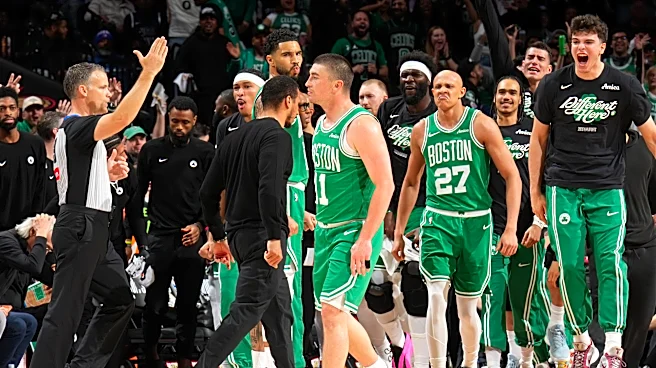
He beat the end of the first quarter buzzer with a wild three-pointer, and drew a shooting foul at the end of the third quarter. Gonzalez, Harper Jr., Baylor Scheierman, and the rest of the Celtics bench watched it all unplay in disbelief, chuckling to themselves at the shotmaking display.
Scheierman typically watches Pritchard play with a grin.
From my vantage as someone who’s been around this team almost every day this season, it’s long felt like the two have something unique in common: a seemingly-unshakeable confidence that is rare even in the NBA, this belief that they’re destined to be on the court, a swagger, a showmanship.
Everyone is confident at the pro level — that’s how they got here — but Scheierman and Pritchard seem to be on another level.
After Pritchard’s 32-point masterpiece, I asked Scheierman if he felt like like that was an accurate representation, if he could confirm my perception that he and Pritchard were uniquely competitive.
He grinned. He agrees.
“We’re both just super confident in our abilities,” Scheierman said. “And I think that comes from being maybe under-looked, overlooked throughout our careers, and maybe just [playing] with a chip on our shoulder, just wanting to go out there and just kind of put on a show every night.”
All of Pritchard’s teammates are familiar with his almost ridiculous level of competitive spirit at this point.
“I’ve known P since we was in high school, same high school class,” Tatum said. “Obviously, he’s a better version of himself, but he’s always been that competitive. Doesn’t back down from anybody. Always takes on a challenge.”
They also know him as one as relentlessly hard-working.
“The work ethic speaks for itself,” Brown said, “and when you see someone put in the work behind the scenes, moments like this are all the better.”
“He’s a gym rat,” Tatum said. “That’s one thing that is consistent and constant about him always, is he is always gonna be in the gym, working on his game, working on his craft, trying to get better. It shows in moments like tonight.”
On Saturday, a day before his career Game 4, I asked Pritchard where his Game 3 three-pointer ranked as far as big shots made in his Celtics tenure.
He was reluctant to herald it as one of the biggest, because he wanted it to be the first of many more.
“I knew it was a big shot,” Pritchard said. “It was needed in the moment. But, hopefully, I can hit more like that.”
A day later, amid the heater of all heaters, that line felt prescient.