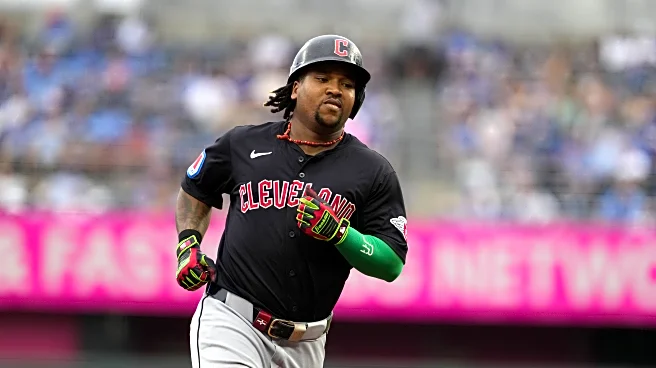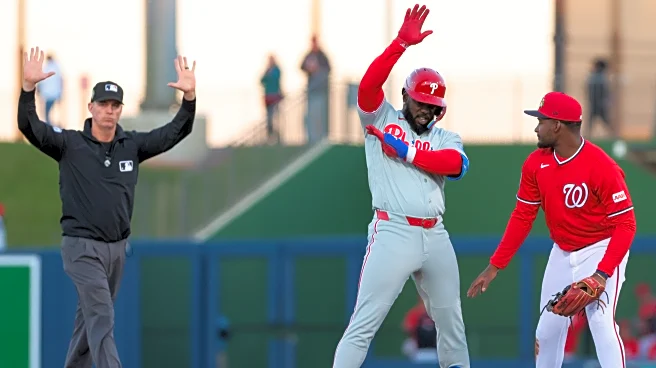

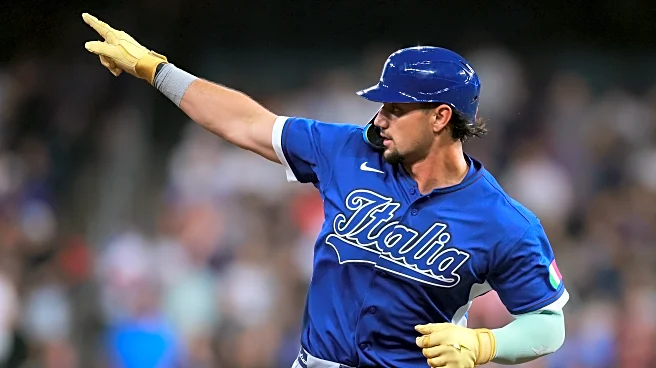
When Phillies fans entered the off-season, most knew long-time right fielder Nick Castellanos was on his way out. The free-swinging, undisciplined and inconsistent slugger never quite gave the Phillies the type of production his five-year, 100 million contract, or his production in previous stops, warranted, and his well-documented off-field friction with Phils coaches and manager Rob Thomson only hastened his exit.
Too often fans watched Castellanos flail at sliders as they dove out of the strike
zone and gazed in amazement as he actively avoided taking bases on balls like they were covered with ricin. Clearly the Phillies needed a change, so how did they replace him?
By signing another player with almost the same exact offensive traits.
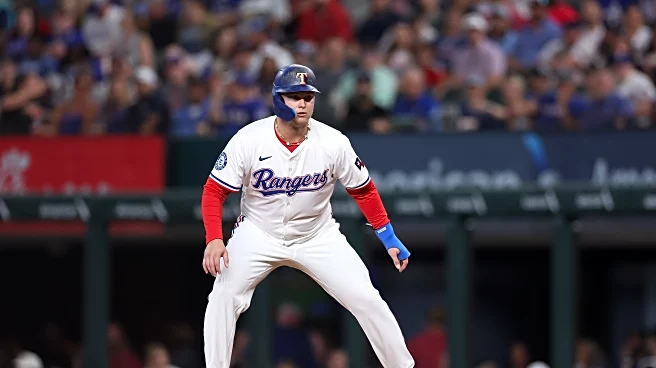
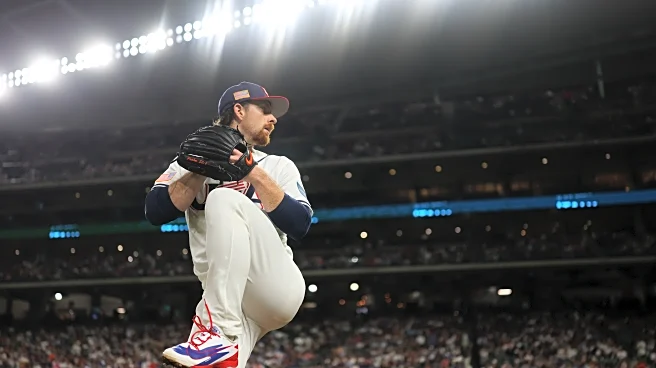
Adolis Garcia, the former Texas Rangers All-Star who has seen his production drop precipitously since an All Star campaign and magical postseason run made him a household name in 2023, is the new right fielder. He’s coming off his second straight subpar season in which he posted a .665 OPS with 19 homers in 135 games, and out of 120 players with at least 1000 plate appearances over the last two years, Garcia’s .675 OPS is tied for 4th-worst, 117th.
So, why did the Phillies sign him?
Aside from the value he brings with his speed on the bases and above-average defense in right field, Garcia possesses a good deal of power at the plate. When he makes contact, he hits the ball hard, with a 46.7% hard-hit rate a season ago that puts him in the 70th percentile, according to Baseball Savant’s metrics. His 92.1 mph exit velocity is still one of the best in the sport, in the 89th percentile of all big league hitters last season.
So, what’s the difference between his outstanding 2023 and his two worst seasons of 2024 and last year?
Plate discipline.
When Garcia hit 39 homers, knocked in 107 runs and scored 108 times three years ago, all with an OPS of .836, he walked 65 times in 555 plate appearances. He swung at just 29.5% of pitches outside the strike zone that season, giving him the highest walk rate of his career, 10.3%.
It wasn’t an elite walk rate, but it put him in the 74th percentile of big league batters, which is well above average. More patience means better pitches to hit and more advantageous hitters’ counts in which to feast on fastballs. In 2023, Garcia found himself ahead in the count in 34.6% of his plate appearances. In ‘24 and last season, that number fell to 29.2% and 29.7%, respectively. He found himself behind in the count more frequently, 36.2% of the time last year, 33.1% in ‘24 and 31.4% in ‘23.
One ominous note is the bat speed, which has steadily declined from 73.7 mph in 2023 (72nd percentile of MLB batters) to 72.1 mph last year (49th percentile). In other words, Garcia’s bat speed went from being among the top 25% in the sport, to right around the mid-line. A player rarely gains bat speed as he progresses through his 30s, and with Garcia entering his age-33 season, history tells us he’s unlikely to return to the 75th percentile of hitters in that metric.
The drop in bat speed has resulted in an increasing inability to hit every MLB batter’s bread and butter — the fastball.
In 2023, Garcia feasted on four-seamers, blasting 26 homers with a .527 slugging percentage against them. In ‘24, however, his slugging percentage against four-seam fastballs dropped to .367 and, last year, it was .421. There appears to be a direct correlation between a drop in bat speed and increasing ineffectiveness against the fastest pitches a hitter will see.
If the bat speed is dipping, how can he compensate? Being more selective should help. So far this spring, Garcia has been very patient, drawing a walk in 15.4% of his plate appearances. Granted, he’s only had 26, so we’re talking about an extremely small sample size, some of them against pitchers who will spend most of the regular season in the minors. So no one should be too concerned about his .182/.308/.227 slash line or the fact he has just one extra-base hit this spring (a double).
Aside from a return to “elite” levels from Bryce Harper, the emergence of Garcia as a real power threat from the right side of the plate could be the biggest difference between a dangerous Phillies offense and the inconsistent one we’ve seen over the last few seasons.
Trend lines usually trend in one direction, barring an outside influence that changes the scales. Is Phils’ hitting instructor Kevin Long that outside force? Could moving from Texas’ Globe Life Field, which ranked as the 2nd-worst ballpark for hitters last year, to Citizens Bank Park, ranked 11th-best, do the trick? Garcia’s .675 home OPS was a tick better than his .655 road OPS, so it’s fair to harbor some skepticism about the move to a new park, although there’s no doubt frustration regarding his home park could affect the way he hits everywhere.
Phillies fans hope there’s an answer, because if Garcia’s 2026 season resembled his ‘25 and ‘24 campaigns, the Phils’ outfield will once again feature among the league’s least productive outfields and continue what has been an Achilles heel over the last two years.