





The basketball community has suffered another loss.
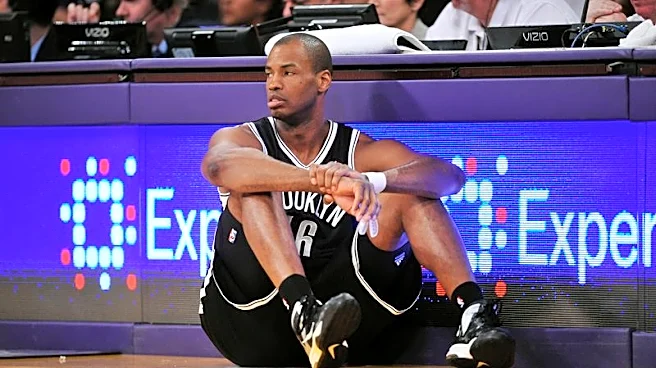
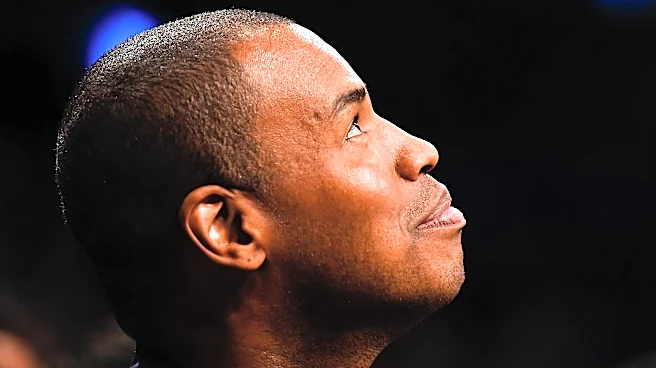
On May 12, it was announced that former Brooklyn Nets center and NBA Cares Ambassador Jason Collins passed away at the age of 47. Last September, Jason revealed that he had been diagnosed with Stage 4 glioblastoma , a tumor of the brain. Following the announcement of his passing, tributes poured in across the basketball world.
“Jason Collins’ impact and influence extended far beyond basketball as he helped make the NBA, WNBA and larger sports community
more inclusive and welcoming for future generations,” NBA Commissioner Adam Silver said in a statement. “He exemplified outstanding leadership and professionalism throughout his 13-year NBA career and in his dedicated work as an NBA Cares Ambassador. Jason will be remembered not only for breaking barriers, but also for the kindness and humanity that defined his life and touched so many others.
“On behalf of the NBA, I send my heartfelt condolences to Jason’s husband, Brunson, and his family, friends and colleagues across our leagues.”
The Brooklyn Nets shared a statement following Collins’ passing…
Collins’ NBA journey began with a bang. Though New Jersey Nets selected Eddie Griffin with the #7 overall pick in 2001, Rod Thorn knew the Rockets liked Griffin; the two teams soon worked out a trade to swap #7 for #13 (Richard Jefferson), #18 (Collins), and, #23 (Brandon Armstrong).
New Jersey made the NBA Finals in each of Collins’ first two seasons, as the California native brought interior defense and tough to matchups against Shaquille O’Neal and Tim Duncan on basketball’s biggest stage. In the ‘03 run, Collins started all 20 of New Jersey’s playoff games.
He saw the whole arc of those 2000’s Nets teams, from championship hopefuls to the unceremonious end, spending his first six-and-a-half seasons there before a trade in early 2008 sent him to the Atlanta Hawks. Collins also played for the Boston Celtics and Washington Wizards.
But a snapshot of Collins’ Basketball Reference page will never tell half of his story. In April 2013, Jason publicly came out as a gay man. In a wonderful story he co-penned for Sports Illustrated, Collins explained why he decided to come out…
“No one wants to live in fear. I’ve always been scared of saying the wrong thing. I don’t sleep well. I never have. But each time I tell another person, I feel stronger and sleep a little more soundly. It takes an enormous amount of energy to guard such a big secret. I’ve endured years of misery and gone to enormous lengths to live a lie. I was certain that my world would fall apart if anyone knew. And yet when I acknowledged my sexuality I felt whole for the first time. I still had the same sense of humor, I still had the same mannerisms and my friends still had my back.“
In the middle of the following season, Collins signed a 10-day contract with the now-Brooklyn Nets, then another, then an end-of-season contract to close out his playing career. In doing so became the first active openly gay player in four major American men’s sports leagues…
Following his retirement, Jason worked for NBA Cares and The Trevor Project, a non-profit organization that provides suicide prevention and crisis intervention for LGBTQ+ youth under the age of 25. Throughout Jason’s life, he sought to help and advocate for others around the world and make the world a better and safer place.
“Jason changed lives in unexpected ways and was an inspiration to all who knew him and to those who admired him from afar,” the Collins family said in a statement. “We are grateful for the outpouring of love and prayers over the past eight months and for the exceptional medical care Jason received from his doctors and nurses. Our family will miss him dearly.”
I think back to this article by current Defector writer and New Jersey Nets fan David Roth, published in 2013…
But if his dignity is a big part of what makes Jason Collins so admirable at this moment, the way he has consistently found dignity in his very public labor is what makes it stick. Jason Collins has faced off with Shaquille O’Neal and Tim Duncan and David Robinson in the NBA Finals and his generation’s other NBA giants in games significant and insignificant, and he has not outscored or outplayed them in any of those games. Collins went into those games knowing that he would not, could not do that. He might foul them in a timely or intelligent way, or piss them off, or set good enough screens and play good enough defense to mitigate at least to some extent the inescapable physical fact that his opponents were bigger and stronger and better at basketball than him. His ability to do those things, his willingness and knack for the NBA’s most rote and punishing work, has made him both professionally valuable and personally wealthy.
And if Collins’ bravery has made him an historically significant figure—and I’d argue that it has—it’s worth remembering that his humble heroism is of a piece with his reliable and consistently unheroic life in basketball. Jason Collins earned both respect and a living by doing work, by pushing and fighting and fighting even when it was more or less futile, because that was his job as he understood it and because it was the way he could do it best. He won what he won by finding ways to make his humble individual utmost a component part of a collective effort towards a common goal, and so both buried and multiplied his labor’s significance. He makes his living like that, by disappearing into his work and doing it, by doing invisible and important things that aren’t easily or adequately captured on either side of a basketball card. It makes sense that we wouldn’t have seen this coming, but it makes even more sense that, if Jason Collins were to make history, he’d do it just like this.
Glioblastoma is a tremendously awful, aggressive type of brain cancer; Collins was dealt an unimaginable hand of cards in his mid-40s, and yet, he died as he lived: Trying to pave the way for those behind him. As he told Ramona Shelburne this past December:
Currently I’m receiving treatment at a clinic in Singapore that offers targeted chemotherapy — using EDVs — a delivery mechanism that acts as a Trojan horse, seeking out proteins only found in glioblastomas to deliver its toxic payload past the blood-brain barrier and straight into my tumors.
The goal is to keep fighting the progress of the tumors long enough for a personalized immunotherapy to be made for me, and to keep me healthy enough to receive that immunotherapy once it’s ready.
Because my tumor is unresectable, going solely with the “standard of care” — radiation and TMZ — the average prognosis is only 11 to 14 months. If that’s all the time I have left, I’d rather spend it trying a course of treatment that might one day be a new standard of care for everyone.
I’m fortunate to be in a financial position to go wherever in the world I need to go to get treatment. So if what I’m doing doesn’t save me, I feel good thinking that it might help someone else who gets a diagnosis like this one day.
Jason Collins was 47 years old, fondly remembered by Nets fans for his play but a treasure and source of inspiration to so many more. May he rest in peace, and may his legacy live on.