

Mountain West Qualifies Seven Teams for Bowl Season — and the Stakes Couldn’t Be Higher
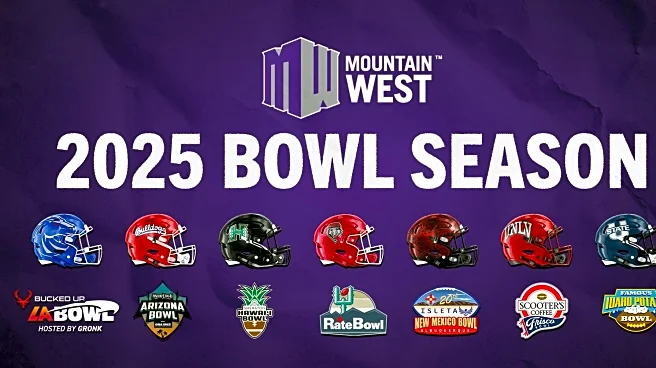
The Mountain West Conference is once again flexing its postseason muscle: seven league teams punched their tickets
to bowl games in 2025, underscoring the Mountain West Conference’s reputation as one of college football’s most consistently competitive leagues.
That is 18 of the past 19 seasons, excluding the COVID-affected 2020 season, in which at least five Mountain West teams reached bowls — a testament to the conference’s sustained depth.
With this latest haul, the MW extends its total bowl appearances since 1999 to 140, maintaining an all-time bowl record of 70–60 (.538). Over the past 21 seasons, the conference has achieved an impressive .548 bowl percentage, ranking second only to one other FBS league.
But this isn’t just about quantity — it’s about momentum. This group of seven teams includes champions, rising programs, and traditional contenders, all bringing their own storylines into December.
Spotlight on the Matchups — Storylines & Intrigue
Boise State Broncos (9–4, 6–2) — Bucked Up LA Bowl vs. Washington Huskies (Dec. 13)
Boise State maintains its lead in Mountain West excellence, winning its third consecutive conference title thanks to a program that excels in consistency.
The Broncos rely on a consistent offense built around an experienced quarterback, a powerful featured back, and one of the league’s most reliable offensive lines — a unit that has controlled the line of scrimmage all season.
Defensively, Boise State has thrived with a veteran front seven and an opportunistic secondary that stepped up in crucial late-season moments. The Broncos won four of their last five games, reaching their peak when the stakes were highest.
Washington enters as an 8–4 Big Ten team known for physical play and strong line talent, making this a true matchup of strength against strength. Boise State aims for its signature win of the season — and a chance to bolster the Mountain West’s national standing.
Fresno State Bulldogs (8–4) — Snoop Dogg Arizona Bowl vs. Miami (Ohio) RedHawks (Dec. 27)
Fresno State’s steady progress continues with a fifth consecutive bowl appearance. This year’s team combines a confident, experienced quarterback with a tough running game and a receiver group focused on speed and accuracy.
The Bulldogs’ offense isn’t flashy — it’s disciplined, efficient, and dangerous when they control the tempo.
Defensively, Fresno State has improved steadily, with a front that pressures quarterbacks and a linebacker group anchoring one of the conference’s strongest red-zone units.
Miami (Ohio), a team with a strong MAC title-game history and a disruptive defense, offers a disciplined challenge. This is Fresno State’s first appearance in the Arizona Bowl — and a chance to highlight their physical style.
Hawai‘i Rainbow Warriors (8–4) — Sheraton Hawai‘i Bowl vs. California Golden Bears (Dec. 24)
In just his first year, Timmy Chang has revitalized the Hawai‘i program. The Rainbow Warriors used improved rhythm on offense — blending tempo, option concepts, and well-timed vertical shots — to reach their first bowl game since 2019.
Quarterback play stabilized, the running game surged late, and a once-inconsistent offensive line became a dependable strength.
The defense has also made notable progress. A more disciplined secondary has reduced explosive plays, and the front seven has generated timely pressure and crucial stops.
California brings size, experience, and Big Ten-level physicality. The personal connection between Cal’s interim coach and Hawai‘i’s program adds emotional weight to an already intense matchup, with the Warriors hosting in front of a passionate home crowd.
New Mexico Lobos (9–3) — Rate Bowl vs. Minnesota Golden Gophers (Dec. 26)
One of the most notable turnaround stories in college football, New Mexico’s resurgence under first-year head coach Jason Eck has been impressive.
The Lobos reinvented their identity through discipline, ball control, and a defense that attacks with speed and confidence.
Offensively, New Mexico relies on a consistent quarterback who safeguards the ball, a tough running game designed for late-game control, and a receiving corps that has stepped up in important moments.
The offensive line made significant progress, especially during the six-game winning streak to end the season.
Defensively, the Lobos have a strong linebacker corps and edge defenders who consistently disrupt opposing backfields. Improved tackling and situational discipline fueled their late-season surge.
Minnesota — holding the nation’s longest active bowl winning streak — brings toughness and strong line play that serve as a benchmark for New Mexico’s revival.
San Diego State Aztecs (9–3) — Isleta New Mexico Bowl vs. North Texas Mean Green (Dec. 27 — Albuquerque)
San Diego State’s identity as a defensive powerhouse remains strong. The Aztecs have a top-tier defense led by experienced linebackers, a versatile secondary with shutdown abilities, and a defensive line skilled at controlling the trenches.
Few teams wear down opponents like SDSU.
Offensively, SDSU depends on balance — a reliable running game combined with a quarterback who makes timely downfield throws.
The goal is straightforward: play complementary football and shift the field to favor their suffocating defense.
North Texas has one of the most productive offenses in the country, led by an explosive quarterback-receiver duo.
It’s a classic matchup: an AAC offensive powerhouse against a Mountain West team known for toughness and discipline. With the game taking place in Albuquerque, SDSU has a solid regional edge.
UNLV Rebels (10–3) — Scooter’s Coffee Frisco Bowl vs. Ohio Bobcats (Dec. 23 – Frisco, TX)
UNLV’s transformation into a winning program continues to be one of the most compelling stories in the Mountain West. The Rebels have now achieved back-to-back 10-win seasons for the first time in program history. Their offense is among the league’s most dynamic — powered by an athletic quarterback, a versatile receiving corps, and a running game that can attack defenses in various ways.
Defensively, the Rebels have made significant progress. Their front seven disrupts plays, and their secondary plays with confidence and discipline.
Ohio maintains a disciplined, defense-focused identity, making this an interesting clash of styles. UNLV aims for only its second bowl win in 25 years, but they arrive with the confidence of a program that now expects to win.
Utah State Aggies (6–6) — Famous Idaho Potato Bowl vs. Washington State Cougars (Dec. 22 – Boise, ID)
Utah State fought through a mixed season to secure a fourth bowl appearance in five years.
The Aggies run a fast-paced passing attack, supported by a late-game surging running game. Their quarterback has demonstrated playmaking skills, extending drives through improvisation.
Defensively, Utah State depends on consistent linebacker play and developing young talent in the secondary. The unit has occasionally bent but stayed opportunistic in crucial takeaway moments.
Washington State’s fast-paced spread offense presents a major challenge, stretching defenses both horizontally and vertically. Still, the Aggies are familiar with this stage — six previous appearances in the Potato Bowl give them confidence and experience.
What Media & Fans Are Saying
• This year’s conference coverage highlights a season of “renewed narratives and second acts” — including New Mexico’s resurgence, Hawai‘i’s revival under a former Warrior legend, UNLV’s breakthrough, and SDSU’s defensive reassertion.
• The betting lines for the LA Bowl favor Washington by 8.5 points, but analysts highlight Boise State’s offensive balance and experienced defense as reasons why this matchup is among the most exciting MW vs. Power Conference games.
• Some fans feel tired of bowl destinations and seek more high-profile matchups — however, the overall opinion remains that seven bowl teams are significant, and a strong December could improve the league’s national standing heading into 2026.A
Why This Bowl Season Matters for the Mountain West
This year’s seven bowl bids send a powerful message:
The Mountain West isn’t just deep — it’s evolving, strengthening, and expanding its identity.
From traditional powers like Boise State and San Diego State, to resurging teams like New Mexico and Hawai‘i, to rapidly rising programs like UNLV, the conference is showcasing competitive balance rarely seen at the Group of Five level.
For fans across the conference footprint — from the islands to the desert to the Rockies — this postseason promises:
• compelling national matchups
• meaningful program milestones
• statement opportunities
• and a chance to enter 2026 with the strongest momentum the league has carried in years.
For fans — whether in Albuquerque, Boise, Las Vegas, Honolulu, or San Diego — this bowl season offers something for everyone. Expect enthusiastic crowds, national TV slots, and matchups where the underdog symbolizes more than just a name on a jersey — they represent a renewed wave of Mountain West pride.
Let the postseason begin.