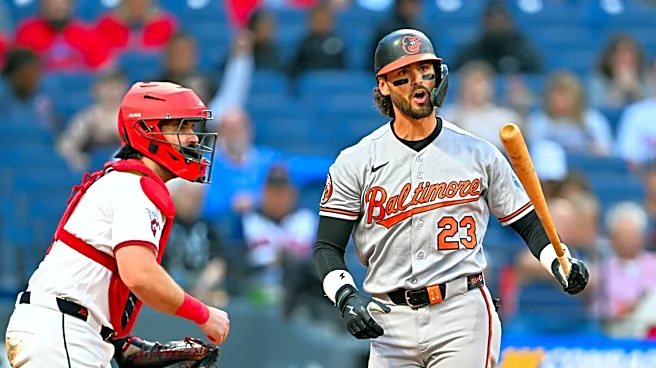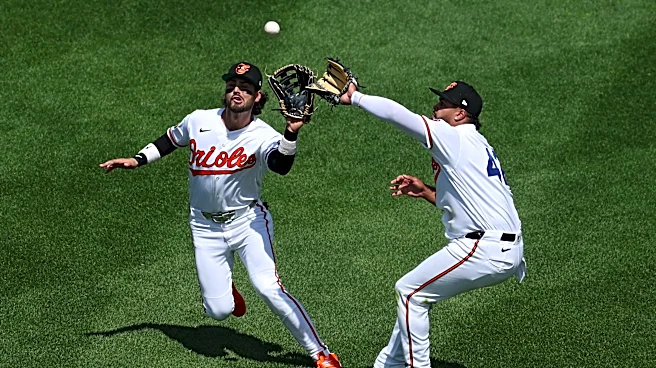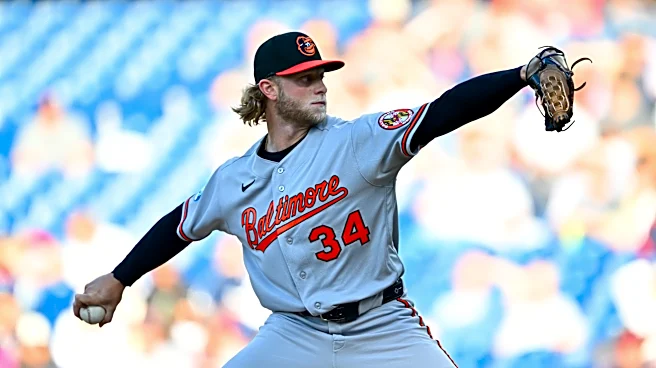

It’s no lie to say that, even among a sea of flame-throwing MLB starters, Shane Baz’s talent stands out. He brings a four-pitch mix (technically, five, but he’s thrown the sinker exactly once this year, so I don’t quite believe in it) featuring a four-seam fastball that averages, even post-Tommy John, 97 mph, 84th percentile in the league. This is the same pitch that Baseball America awarded the best-in-organization grade for three years running in the Rays system, and his scouting reports long reflected
that fact, plus the sheer talent.
Drafted 12th overall by the Pittsburgh Pirates in 2017, Baz was packaged—somewhat infamously—as the PTBNL in the trade that sent Tyler Glasnow and Austin Meadows to Tampa Bay for Chris Archer. It is widely considered one of the worst deals in, at least, Pirates history. He was soon Tampa Bay’s No. 1 prospect, striking out a ridiculous 113 hitters in 78.2 innings as a Rays farmhand. Seems that the nickname “Wizard of Baz,” which has followed him since high school, was not unearned.
At the MLB level, his numbers never hit those levels of hype. His 2021 debut lasted all of three games, and his 2022 season was also marred by injuries, including surgery with Dr. Keith Meister (who’s also operated on Kyle Bradish and Zach Eflin). Tommy John cost Baz all of 2023, an oblique injury derailed his 2024 return, and only in 2025 did Baz finally make a full season’s worth of starts. The numbers weren’t the gaudiest: he made 31 starts for Tampa Bay in 2025, registering a 10-12 record and 4.87 ERA with 176 strikeouts.
His Statcast peripherals were, though, and those totals were enough to send the Orioles scavenging through their farm system cupboard to fund the biggest pitching acquisition of the Mike Elias era. Baltimore sent four prospects—outfielder Slater de Brun (their No. 6 prospect), catcher Caden Bodine (No. 10), right-hander Michael Forret (No. 11), and outfielder Austin Overn (No. 30)—along with the 33rd overall pick in the 2026 draft to pry Baz away from a division rival. Toing the party line at the start of the seaseon, new Orioles manager Craig Albernaz declared that Shane Baz’s upside is “Cy Young award winner,” an enviable ceiling. The sides then finalized a five-year, $68 million extension just before Opening Day: the richest contract the Orioles have ever given to a pitcher.
So far in 2026, the results have been mixed (which is an affectionate way of saying they’ve been messy). Through his first four starts, Baz is 0-2 with a 4.91 ERA and 1.55 WHIP, with 19 strikeouts in 22 innings. He’s failed to complete six innings in three of four outings. He has allowed at least three earned runs in three of four starts, and the one strong one—5.2 one-run innings against the Pirates—has been bookended by clunkers against better teams.
The peripheral numbers are more encouraging, although not without their own concerns. The hopeful signs are in is the significant gap between his actual results and his expected ones: his xwOBA of .318 is considerably better than his actual wOBA of .393, suggesting some bad luck on balls in play. His knuckle-curve is generating a 28% whiff rate in early usage, and his cutter is holding hitters to a .182 average . The velocity remains intact—his spring training fastball maxed out at 98.6 mph. The strikeout upside is clearly still there.
On the other hand, Baz shows an average exit velocity of 89.2 mph (high for him) and a barrel rate of 9.8%, the latter sitting in an uncomfortable range. Opponents expected average of .252 is the highest of his career. His fastball run value of -4 is the lowest it’s been.
The recurring concern, as it has been throughout his career, is command: his four-seamer has been hit hard, surrendering four doubles among its first seven hits allowed. His offspeed stuff (changeup, cutter, the knuckle-curve) are all showing slightly reduced spin this season.
How does this compare to Baz’s best moments? His 2021 debut remains the benchmark, when his strikeout-to-walk ratio was exceptional and his stuff looked genuinely electric in a very small sample. Over 48 career starts since his return from Tommy John surgery, he has an 8.9 SO9 rate and a 3.3 walk rate, with a FIP of 4.23—numbers that speak of a solid mid-rotation arm rather than an ace, though the underlying metrics hint at more.
But his 2025 xERA of 3.88 and SIERA of 3.95 (skill-intensive ERA; it’s a Fangraphs thing) point to a pitcher whose ERA significantly overstates his struggles, particularly—and I find this pretty important—given the havoc wrought by Steinbrenner Field, the Rays’ season-long Triple-A park last year while the Trop endured storm-related repairs.
Baz’s offspeed pitches seem to need some tuning up, but overall, the stuff does not appear degraded. What has fluctuated instead is his command and, in particular, his ability to suppress the home run ball against right-handed hitters. (I am told that, post-TJ, sometimes this happens.)
Four starts in, the early returns on Shane Baz as an Oriole are neither alarming nor reassuring—they’re more inconclusive. The gap between his actual results and his expected metrics suggests the ERA will come down. Patterns are already emerging that suggest he is leaning more heavily into his curve and cutter, a mix that appears to be working well. Camden Yards is a more forgiving environment than Steinbrenner Field, and Baz has shown in flashes (including five games of nine or more strikeouts in 2025) that the potential is real. The Orioles gave up a great deal to acquire him, well before he’d thrown a pitch in orange and black, and they gave up a lot to keep him here long-term. There are legitimate reasons to believe the best of Shane Baz is still ahead of him. We’re still watching, and what we see is enough to stay interested.