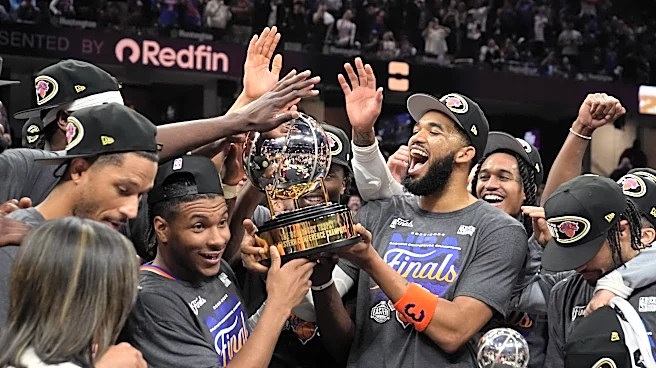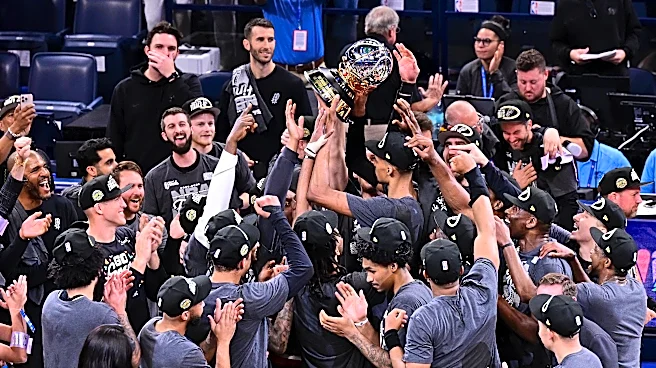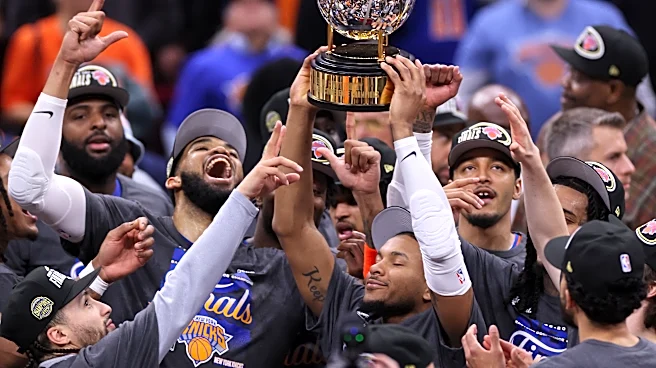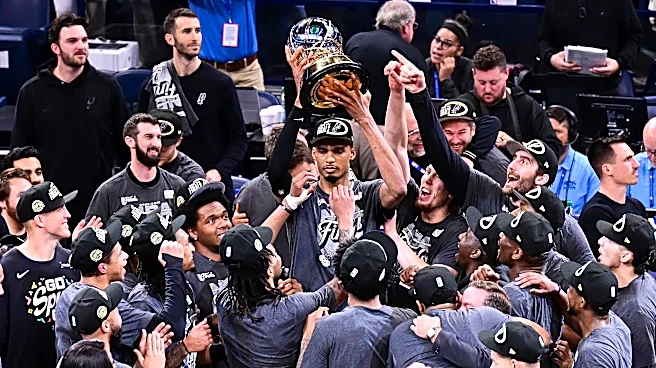

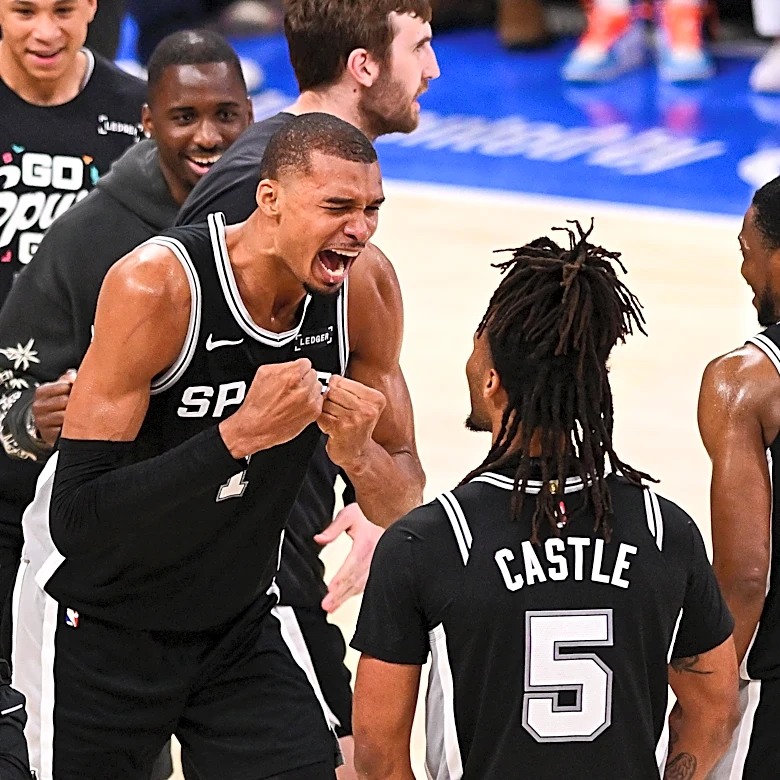


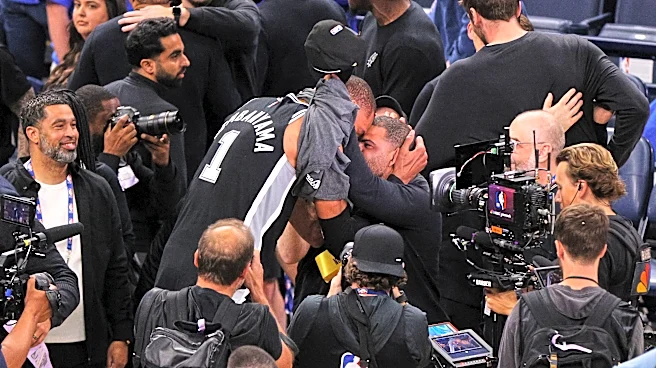
27 years ago, a sophomore Tim Duncan led the Spurs to their first title in franchise history.
Now, in 2026, a new generational big man will look to do the same, as Wemby attempts to break the hearts of New Yorkers again.
Will history repeat itself? Only time will tell, and all signs point to a long and exciting series.
The regular-season matchup
Styles make fights. That was evident in San Antonio’s matchup against OKC both in the regular season and the playoffs, and the finals could prove to be the same.
Outside of Cleveland,
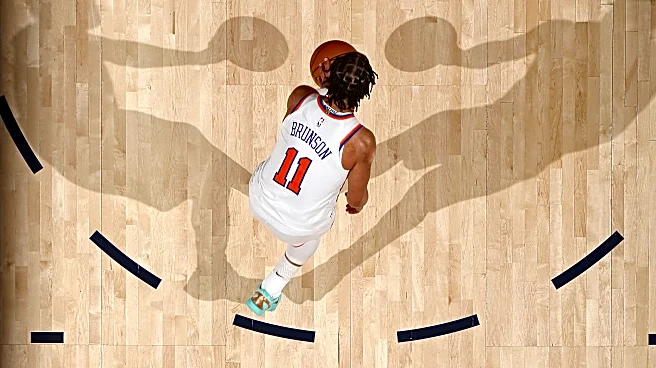
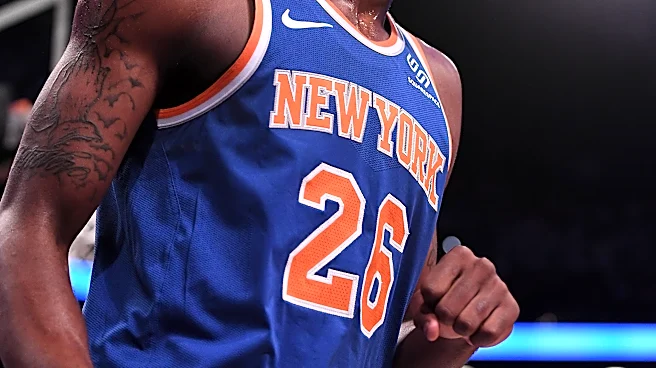
New York was the only other East team who managed to have a winning regular season record against the Spurs this year. The Knicks can match up well both against Wemby and San Antonio’s guards: KAT and Robinson can space the floor or dominate on the glass, while their long, athletic wings can match the physicality and speed of the Spurs’ backcourt.
All of this came to fruition in the season series, which New York won 2-1. The first two games in their matchup included some oddities, such as Wemby not playing his usual minutes load while the Spurs were still starting Harrison Barnes instead of Julian Champagnie. Still, both sides were healthy for their third and final matchup, which resulted in a 114-89 Knicks blowout win that might’ve been the most impressive victory of the season, considering that that was the only Spurs loss in a stretch in which they went 16-1.
In those three games, the Knicks made 17 more threes (on 29 more attempts), grabbed 12 more offensive rebounds, and forced eight more turnovers — most of which came in the final and most telling game, where they made the Spurs cough up the ball 22 times. We’ll cover those areas in more detail later on, but first, the matchups.
When San Antonio was on offense, the Knicks primarily had KAT on Wemby, Hart on Castle, Brunson on Champagnie, Anunoby on Fox, and Bridges on Vassell. I expect something similar in the playoffs, with a few minor tweaks. It makes sense for New York to put Hart and Anunoby on the Spurs’ two primary ballhandlers, as they’re most capable of switching onto Wemby in pick-and-rolls. However, I expect the Knicks to have Anunoby on Castle and Hart on Fox instead, as Anunoby’s size and strength are better suited to defend a more physical guard in Castle.
Moreover, Wemby will certainly put KAT in foul trouble at some point in the series, and New York will need to have Anunoby guard the Alien instead. Despite being nine inches shorter, Anunoby’s physical traits (weighing 240 with a wingspan over 7 feet) make him one of the best Wemby defenders in the league, and the Knicks could use him as the primary option too. This could allow KAT to roam off of Castle, whose shooting would be thrust into the spotlight again: he shot 44% frrom deep against the Blazers and Wolves, but just 23% against the Thunder.
On the other end, the Spurs had Wemby on Hart, Castle on KAT, Fox on Brunson, Vassell on Bridges, and Champagnie on Anunoby. Right off the bat, there are some obvious matchup advantages in the Knicks’ favor. It’s risky to leave a streaky shooter like Hart open, and while Castle is San Antonio’s most physical perimeter defender, he’s still much smaller than KAT and risks Big Purr shooting over him too. Moreover, it’s no longer viable to expect Fox to guard Brunson given his ankle sprain, and that assignment could be given to either Vassell or Castle, with the other on KAT. However, that still leaves Anunoby on a much smaller player whom he can bully, and suddenly, the Spurs’ physical advantage over just about every team in the league has disappeared.
If needed, San Antonio could play a more traditional matchup where Wemby guards KAT, Castle guards Anunoby, and Vassell guards Brunson, thus eliminating any size/strength advantage that the Knicks might have. However, this presents a new problem that the entire series could hinge on.
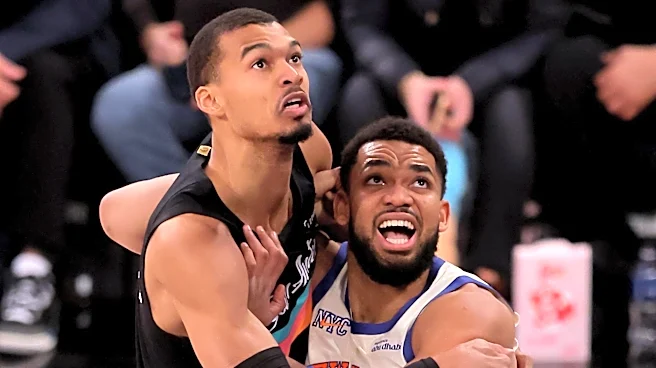
Can KAT force Wemby out of the paint?
The most crucial battleground in this series is the KAT vs Wemby chess-match. All three of the Spurs’ playoff opponents thus far have featured at least one non-spacing big that the Alien can roam off of, but that won’t be the case against Big Purr. Given New York’s shooting prowess (they’re making 40.7% of threes in the postseason), San Antonio might be forced into playing traditional matchups, but that could result in semi-open driving lanes for the Knicks, which plays right into their strength.
New York is leading the playoffs in attempts around the rim, with a whopping 38.5% of their shots being taken within 4 feet of the basket. Some of that is due to their competition (Cleveland, Philly, and Atlanta were all in the bottom half of the league in rim frequency conceded during the regular season), but there’s no doubt that the Knicks have also made it more of a priority to get to the hole.
Unsurprisingly, the Spurs have been a dominant rim-protecting team, allowing opponents to shoot just 55.5% at the basket in the playoffs, which is 4% lower than Detroit in second place. Interestingly, that hasn’t deterred teams from driving more against San Antonio than usual, as 31.1% of opposing shots have come at the rim, compared to just 29% in the regular season. The strategy here is to attack Wemby in the hopes of wearing him down, getting him in foul trouble, and/or creating easier opportunities to get offensive rebounds and rack up second-chance points. That latter approach worked to some extent for the Spurs’ West opponents, and the Knicks are in a good position to exploit it too.
Rebounding
New York has been one of the best rebounding teams in the playoffs, grabbing 31.9% of their own misses while corralling 75.7% of their defensive boards. On the other hand, the Spurs have seen a drop off from their regular season numbers, having an ORB% of 30% but just a 70.3% defensive rebounding rate. If KAT does manage to pull Wemby away from the rim while the Knicks continue attempting almost 40% of their shots at the basket, then the Spurs could be in big trouble.
San Antonio could counter by having Wemby roam off of Hart instead. Like Castle, though, Hart has largely made teams pay for that strategy, and he shot 41.3% from deep in the regular season on 3.7 attempts per game. Those numbers are down to just 30.3% during the playoffs, but Hart presents other problems even if his shots aren’t falling. He’s a very good cutter who can sneak behind the defense for easy finishes if left unguarded, and Hart is one of the best offensive rebounders from the guard position too. Even if the Spurs manage to keep Wemby closer to the rim, they risk having Hart fly in uncontested for second-chance opportunities when the Alien is occupied with defending drives. Moreover, playing non-traditional matchups would mean a much smaller defender will be on KAT, who could then bomb away from deep.
The three-point battle
The Spurs and Knicks were the two most prolific shooting teams from the corners in the regular season, attempting 12.9% of all shots from those areas. In the playoffs, those numbers have dropped to 11.6% for San Antonio and 10.7% for New York, while giving up more of those same attempts for their opposition: the Spurs are conceding 12% of opponent shots from the corners (the most among playoff teams) while the Knicks aren’t far behind at 11.6% (3rd most).
However, the two teams’ own accuracy from the corners couldn’t be more different. New York has made a scorching 42.1% of their attempts while the Spurs are at just 30.9% — almost 9% lower than their regular season number (39.7%). San Antonio has been selective with who they’ve chosen to leave open, and it’s paid off even at the expense of role players such as Alex Caruso catching fire for multiple games. If the Knicks continue shooting fireballs and Hart starts making his threes, the Spurs might be forced to guard them five-out, thus pulling Wemby to the perimeter and opening up the lane. Even if Hart continues to struggle, New York can play five-out with Landry Shamet instead, and the Spurs will need to hunt him relentlessly on offense to make such a lineup untenable.
The Knicks have an equally difficult problem to solve in their end. San Antonio generates large quantities of corner 3s through Wemby’s roll gravity, and snipers like Vassell and Champagnie are usually the beneficiaries. While the Spurs have struggled from the corners as a whole, they’ve made 36.3% of their total threes by converting at a 38.9% from above the break. New York cannot afford to leave the corners open until those shots start falling, but that would then give Wemby and the Spurs’ guards easier opportunities to drive to the rim, where the Knicks are allowing an abysmal 69.4% shooting from opponents.
Both teams will need to pick their poison, and whoever forces the opposing defense to adjust more will have the upper hand.
Transition and turnovers
The Knicks forced San Antonio into turning the ball over 22 times in their final regular season game — a shocking number given that San Antonio had the fourth-best turnover percentage in the regular season (12.9%), which has increased to 14.7% in the playoffs.
The Spurs will need to take care of the ball against a Knicks team that has forced turnovers on 16.2% of their defensive possessions during the postseason, leading to a 15% transition frequency while logging a 138.9 offensive rating on such plays. San Antonio has been just as lethal, running on 16.9% of plays with a 133.6 ORTG, and both teams are letting their opposition run on less than 12% of all plays. Both teams are also very good at forcing the opposition into playing in the halfcourt, with over 81% of all their defensive possessions being played in such sets. In short, this will be a battle of strengths between the two teams, and whoever comes out on top will have a massive advantage in the series.
X-Factor: Mitchell Robinson
Assuming he plays with the broken finger, New York’s not-so-secret weapon could be the key piece that swings the series in their favor. Robinson’s unique combination of size and agility makes him one of the few players in the league whom Wemby won’t have an obvious physical advantage over, and that could show up on the offensive glass.
With Robinson playing in the playoffs, the Knicks have a Houstonian 38.2% OREB rate, with a dominant +15.7 net rating on the back of both an elite offense (124.8 ORTG) and defense (109.1 DRTG). Robinson’s physical advantage over the Spurs isn’t just theoretical, either: during the minutes he matched up against Wemby in the NBA Cup, the Knicks grabbed 12 offensive rebounds to the Spurs’ 5 defensive ones.
Yes, you read that right. New York outrebounded San Antonio 12-5 in the Spurs’ own end.
Another wrinkle the Knicks can employ is a double big lineup featuring KAT and Robinson together. In 54 playoff possessions, New York has a 40.7% OREB rate and a 127.8 offensive rating, although their defense has suffered with a 123.5 DRTG. Not only will this make it impossible for the Spurs to grab a rebound, it might also force them to play French Vanilla, which is a look that Mitch Johnson has been loath to use: San Antonio’s twin towers have only played 13 possessions together, resulting in a -20.9 net rating that would make Sam Hinkie blush.
We still have no word on Robinson’s availability given his pinky injury, but everyone should be waiting with bated breath given the outsized role he could play in this series.