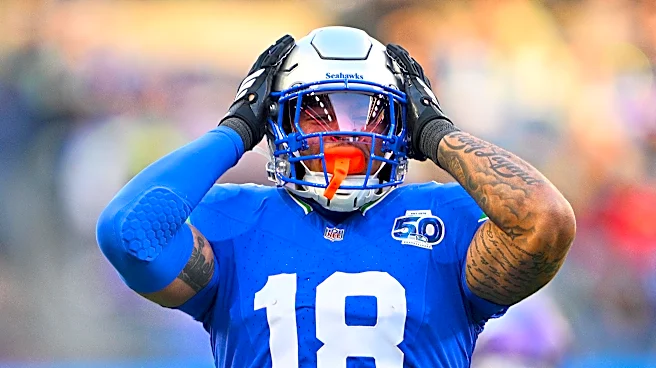


When the Seattle Seahawks selected Elijah Arroyo in the second round of the 2026 NFL Draft, John Schneider made it clear the organization believed it had landed far more talent than the draft slot suggested. The general manager even remarked that, had Arroyo remained healthy throughout college, he would have been viewed as one of the top players in the class—a statement that illustrated just how highly Seattle valued his upside.
That kind of praise naturally raises expectations. While it’s easy to
understand why the Seahawks were excited about his athletic profile, projecting any rookie as one of the best players in an entire draft class places an enormous burden on a player who had already battled injuries before entering the league.
Seattle essentially viewed the draft as adding three premium talents: first-round pick Grey Zabel, early second-round selection Nick Emmanwori, and Arroyo, whose talent they believed exceeded where he was selected.
The rookie season, however, never quite unfolded the way many envisioned.
Rather than immediately becoming a featured weapon in Klint Kubiak’s offense, Arroyo spent much of the year trying to carve out a consistent role within Seattle’s tight end rotation. The flashes were evident, but the production rarely matched the potential.
That doesn’t necessarily mean the process was disappointing.
The tape still reveals a player with traits that are difficult to teach.
What stood out on Elijah Arroyo’s tape
A different type of tight end
What immediately stands out watching Arroyo is that he doesn’t play like a traditional in-line tight end.
Seattle drafted him because he brings a different skill set to the position.
His size, movement skills and catch radius allow him to function almost as a hybrid receiver, creating difficult matchups against linebackers while also possessing enough size to challenge safeties over the middle of the field.
This is something worth watching repeatedly. Arroyo lining up as the X receiver forces the defense to declare its coverage. If a linebacker or a safety rotates down to match him, it’s a strong indicator of man coverage; if a cornerback stays responsible for him, it points more toward zone.
On this rep, Arroyo also wins the physical battle at the catch point, using his frame and strength to create separation from the defender and come down with a tough reception. That combination of alignment versatility and physicality could make him particularly valuable for Seattle’s offense.
Those traits become particularly valuable in play-action concepts, where linebackers are forced to step toward the line of scrimmage before recovering into coverage.
Vertical stress creates opportunities
Although he isn’t an elite route runner yet, Arroyo has enough speed to threaten the seam. That vertical element forces defenses to account for him differently than they would many traditional tight ends. His presence has value beyond his own statistics.
A seam-running tight end stretches coverage between the hashes, creating additional room for players like Jaxon Smith-Njigba underneath while also complementing Seattle’s running game and play-action concepts. That’s the role Arroyo appeared best suited to fill entering his rookie season, even if the offense never fully unlocked it.
Play-action is a fundamental part of this offense and should remain that way. Heavy formations can force the defense to commit extra resources to stopping the run, creating opportunities for Arroyo to attack vertically once the secondary bites.
That’s exactly what happens on this rep. Derek Stingley Jr. steps downhill and commits to the run action, giving Arroyo the window he needs to accelerate past him. Arroyo’s speed immediately becomes a factor, and the only reason this doesn’t turn into a touchdown is the safety arriving over the top to prevent the explosive play.
The release off the line isn’t particularly clean, but #34 dropping down to defend the run gives Arroyo an advantage. As the defensive back transitions, Arroyo threatens the inside with his stem before snapping the route back outside, forcing the defender to react and creating separation.
With a cleaner release, this could have turned into an excellent gain. The route manipulation is the important part here: Arroyo uses the defender’s initial positioning against him rather than relying on speed to win the rep.
It only takes one mistake, one defender underestimating his speed, or even a moment of hesitation for Arroyo to find himself behind the defense with nothing but open field in front of him. His ability to threaten vertically forces defenders to respect that speed at all times, and any lapse in technique or discipline can quickly turn into an explosive play.
Reliable hands and an expansive catch radius
Another encouraging aspect of the tape is how naturally Arroyo catches the football.
His catch radius consistently gives quarterbacks margin for error, particularly on throws away from his body. He rarely looks uncomfortable extending for the football and generally finishes receptions cleanly once the ball arrives.
Rather than relying on overwhelming physicality, Arroyo wins by presenting quarterbacks with a large target window. Even when defenders remain in phase, his ability to extend beyond his frame gives quarterbacks confidence to place the football where few defenders can reach.
His catch radius shows up again here. It may seem like a minor detail, but the ability to consistently make catches with his arms extended gives the quarterback a much larger margin for error. Instead of needing a perfectly placed throw into his frame, he can extend away from his body and secure passes that would otherwise be difficult completions.
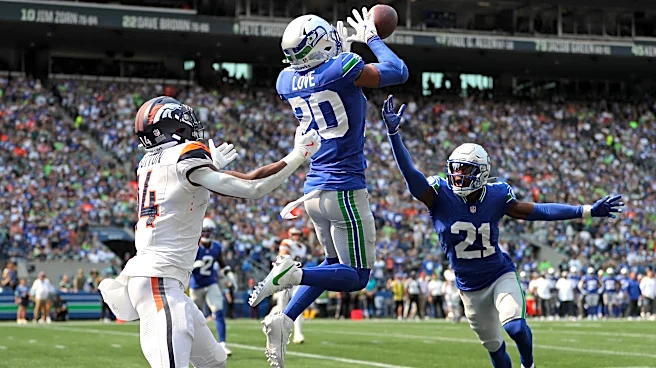
That ability has been showing up throughout camp and has been one of the reasons he has stood out in practice. We saw another example of it at the 2026 Football Fest, when he made a touchdown catch against Julian Love, once again using his length to finish the play away from his frame.
That reliability remains one of his strongest building blocks entering Year 2.
Areas for improvement
Blocking remains the biggest obstacle
The biggest limitation on Arroyo’s tape isn’t difficult to identify: It’s his blocking.
The encouraging part is that effort isn’t the problem. He’s willing to engage defenders and doesn’t shy away from contact.
There has been plenty of talk about how much he has improved in camp, but I’d be very surprised if he ever develops into a consistently solid inline blocker. His skill set is better suited to being used in motion, where he can build momentum, or as a blocker working into the second level.
The goal should be to put Arroyo in situations where his athleticism and movement skills can have an impact rather than asking him to consistently win isolated reps at the line of scrimmage against bigger defenders.
Even in a favorable situation, though, Arroyo still makes mistakes. On this pin-and-pull concept, he has a clear opportunity to make the block on the safety. If he connects cleanly and gets the defender out of the play, this likely turns into a touchdown for Seattle.
This is exactly the kind of blocking assignment where Arroyo can make an impact, but the execution still needs to become more consistent.
He comes in motion once again, this time as part of a wham block. Ironically, though, Arroyo’s best block on the play is the one he makes on Charles Cross, Seattle’s left tackle.
He does a good job of engaging Cross and helping keep the blocking surface clean, which is exactly the kind of small but important contribution that can make a run concept work. It’s not a highlight-reel block, but it shows Arroyo can still provide value as a moving piece when the assignment is within his skill set.
Now imagine putting him in unfavorable situations — like the brilliant idea of asking him to block Danielle Hunter one-on-one on a passing down.
That’s not a matchup Seattle should be creating for Arroyo. Asking a young, athletic tight end to consistently hold up against an elite pass rusher in isolated protection is playing directly into the defense’s hands and takes away the traits that make him valuable in the first place.
The issue is technical consistency. Hand placement, leverage, sustaining blocks and overall technique still require significant refinement before Seattle can comfortably leave him on the field in every personnel package.
That’s particularly important in an offense expected to feature multiple tight-end sets. Unless a player is truly dominant as a receiver, coaches generally need to trust him as a blocker before expanding his snap count.
This remains the clearest path toward earning a larger role.
The details still need polishing
While Arroyo’s physical tools stand out, the finer details of playing tight end remain a work in progress.
Route pacing can become more consistent, his positioning at the catch point occasionally leaves room for improvement, and there were several plays where stronger adjustments could have prevented passes from becoming dangerous opportunities for defenders.
Not every turnover involving his targets was his responsibility, but there were situations where helping his quarterback a little more aggressively may have changed the outcome. The fumble against Houston also serves as a reminder that finishing plays extends beyond making the catch.
These aren’t alarming flaws for a young tight end, but they are areas where incremental improvement could produce meaningful gains.
Future outlook on Elijah Arroyo
Seattle now has a coaching staff led by someone with extensive experience developing tight ends. That background could prove valuable as Arroyo continues refining both his blocking technique and the nuances of the position.
The offensive environment also appears favorable.
With the running game demanding defensive attention and playmakers such as Jaxon Smith-Njigba creating problems elsewhere in the formation, opportunities should exist for Arroyo to exploit favorable matchups against linebackers and safeties.
The traits are already there.
Now the consistency has to follow.
Final thoughts
Elijah Arroyo’s rookie tape won’t leave many believing Seattle has already found its next star tight end.
It also shouldn’t leave anyone giving up on him.
The film shows a young player with legitimate receiving traits, excellent catch radius and enough athleticism to create matchup problems that few tight ends on the roster can replicate.
At the same time, it also highlights why his role remained somewhat limited. Until his blocking and overall technical refinement catch up with his physical ability, it will be difficult for Seattle to maximize his usage.
Year 1 offered flashes rather than answers.
Whether Year 2 becomes the true breakout season may depend less on athletic talent—which has never been the question—and more on how quickly the details of playing the position catch up to the gifts that made the Seahawks believe they had found exceptional value in the second round.