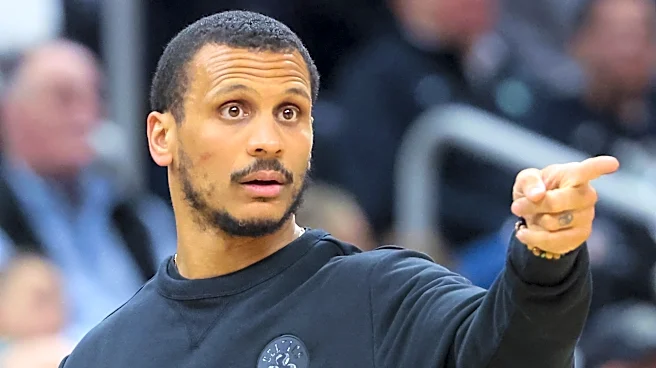



In a pregame press conference in Atlanta in late, Joe Mazzulla said he never wanted to be asked about the Coach of the Year award again.
“I don’t need it,” Mazzulla said. “I think it’s a stupid award. They shouldn’t have it. And it’s more about the players. It’s more about the work that the staff puts in. It’s just that simple. I really don’t ever want to be asked or talk about it again. It’s just that dumb. The players play. It’s about them. Staff work their ass off. I’m grateful to have them.”
I
remember turning back to the national reporter who asked the question and chuckling. He hadn’t interfaced with Mazzulla as much as we on the Celtics beat had, and he had just experienced a classic Joe Mazzulla press conference moment that he likely knew was coming.
That Monday evening was far from the first time that Mazzulla had minimized the significance of that kind of honor – he’d downplayed several Coach of the Month awards throughout his four-year tenure as Celtics head coach – but it was the first time that it appeared almost certain that Mazzulla would be named Coach of the Year at the season’s end, after leading a “Gap Year” Celtics team to a 56-26 record.
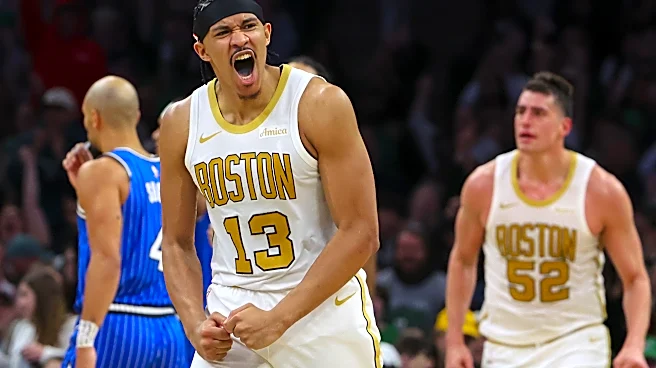
Three weeks later, hours after Mazzulla was, in fact, named a finalist, Derrick White spoke about the award in definitive terms.
“He doesn’t like the attention on him and making it about himself,” White said. “But, obviously, he has done an amazing job this year – and when he wins it, it’ll be well deserved.”
What does it actually mean to win an award in the NBA?
Awards dominate discourse in the NBA, particularly in April. But their significance is often diminished depending on when they’re announced and what happens in the postseason.
I always think back to Dirk Nowitzki winning the MVP in 2007, just days after his top-seeded Dallas Mavericks lost to the 8th-seeded Golden State Warriors in the first round of the playoffs.
“It just feels so empty right now,” Nowitzki said a few days before collecting his hardware. In a league defined by championships, the highest regular season of all suddenly felt futile.
Coach of the Year is a particularly interesting award because, in recent years, it’s almost been cursed.
Take a look at just the last few years.
In 2023, Sacramento Kings head coach Mike Brown won the award.
In 2022, it was Phoenix Suns head coach Monty Williams.
In 2021, it was New York Knicks head coach Tom Thibodeau.
In 2020, it was Toronto Raptors head coach Nick Nurse.
In 2019, it was Milwaukee Bucks head coach Mike Budenholzer.
In 2018, it was Toronto Raptors head coach Dwane Casey.
Every single one of those coaches was fired within four years. The most extreme example, Casey, was actually fired before he even collected the hardware.
And Mazzulla is fully aware of that reality, of the fleeing nature of success, about how the next day, or next season, isn’t promised. He talks about it all the time.
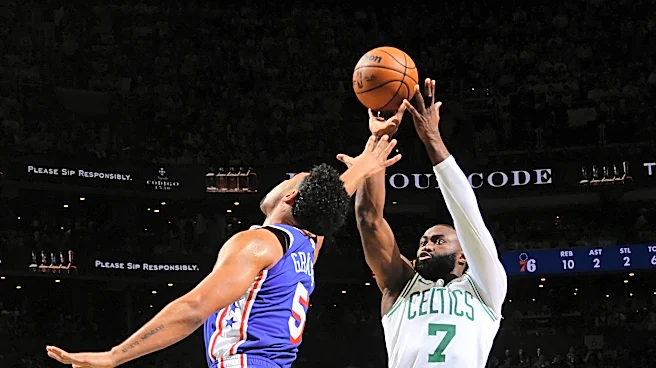
“This could all change 24 hours from now, to where we’re having different conversations,” Mazzulla said Monday, with the Celtics holding a 1-0 series lead over the Philadelphia 76ers. “So it’s part of just the perspective of being rooted in something, regardless of the environment around you on a 24-hour cycle.”
Much of Mazzulla’s desire to deflect praise and recognition is rooted in his faith. He lights up at the podium as he discusses it.
“There are a bunch of better leaders that have gone through a lot before me – David, Solomon, those guys were much better than I was,” he said. “But they went through a lot of good and bad. I like studying those two the most. I flocked to David and Solomon. Good dudes struggled, had success. Guess we’re still talking about them though. But that won’t be me 2,000 years from now.”
Mazzulla has also acknowledged he hasn’t always been this way, calling back to his tenure at West Virginia University as a star basketball player.
“Being a Division I basketball player, you grow up with this sense of entitlement, as if the whole world revolves around you,” he said. “I had to, inherently, if I wanted to be a better husband, a better father, a better coach, I had to get rid of that type of entitlement.”
That end result is what we see today.
Still, whether he likes it or not in this very moment, Mazzulla is on top of the world
“Praise is just as dangerous as criticism,” he said. “You just have to remind yourself that neither one lasts too long. And really, at the end of the day, they’re gonna forget about you eventually. This is all just a short-term thing that’s gonna last a few years, and then 10-15 years from now, no one is gonna talk about it.”
I asked Mazzulla if he tries to impose that belief on his players – especially the young ones who are experiencing widespread praise for the very first time. Several, like Baylor Scheierman, Neemias Queta, and Jordan Walsh, have been inundated with praise as their public profile has risen this season.
It’s something Walsh spoke to last week as he reflected on the highs and lows of his own individual season.
“It’s so hard; one day, you have your name going crazy and everywhere, everybody’s talking about it and how good you’re doing, and the next day, it’d be silent and [you] have nothing, and you’re just kind of on the bench,” he said.
So, is the praise something Mazzulla hopes his players fight?
“Everybody’s different,” he said. “You just try to treat people the way that they need to be treated. Everyone has a different anchor, has a different approach, handles things differently. I don’t try to make guys believe or do things that they don’t want to do. It’s not who they are.”
What he will preach is the idea that it’s all about the team, all about a storied franchise that has won 18 banners, about the greats that came before this particular group.
“The whole idea of this thing is that everything’s bigger than us,” Mazzulla said. “We’re part of this organization. We have a responsibility and ownership to move it forward for however long we’re here. And we can’t – I can’t be good if I don’t have people around me that are good. And, we need each other. So it’s really just having an understanding of that. We need to have great people around you. It’s as simple as that. And, we’re very fortunate enough to have that. We’ll see where it takes us.”
It’s not often that Mazzulla goes this long on a topic, but this topic is one of the things he’s been most consistent about this season: it’s not about him, it’s not about any individuals, really. It’s about the organization.
“I can’t be good if I don’t have people around me that are good.”
You’ll hear lots of people around the Celtics organization saying that in various forms. The assistant coaches don’t want to take the credit. The front office doesn’t want to take the credit. I asked Mazzulla if the award would resonate a little bit more if it were more about the collective.
He nodded.
“I would like for it to be changed to Staff or Organization of the year,” Mazzulla said. “If it were Staff of the Year, it’s different, if it were Organization of the Year – but at the end of the day, I haven’t made one basket all year. Our staff hasn’t made a basket. We haven’t gotten a block. We haven’t ran back on defense. We didn’t play in a back-to-back. We didn’t have to play hurt. We haven’t really done shit. So, if you don’t have the guys to be able to put you in position, it doesn’t really matter. I’m just grateful – the greatest gift I have is I get to coach a bunch of guys that care about winning and being a part of the culture that we have.”
On his way out of the press conference, one reporter jokingly reminded him that they did, in fact, get buckets – referencing the infamous preseason Coaches vs Media game, in which the Celtics coaches defeated us media members 57-4 in a 12-minute beatdown.
That drew some laughs.
But, more seriously, Mazzulla has a valid point. The Celtics coaching staff consists of more than a dozen people. There’s also an athletic training staff, a nutrition team, and countless other people who are responsible for players’ success and development.
He’s the one who talks to the press before and after every game, but he represents a collective that keeps the wheels turning.
Payton Pritchard still believes the tone is set at the top.
“Joe just does an excellent job of holding everybody to a high standard and work ethic and showing up every day and just putting that time in,” Pritchard said. “It doesn’t matter if it’s training staff, weight room. Everybody knows their job, and they come in on a high level, and they produce every day. Even the player development staff, they’re on-court probably more than us, working their butt off. It definitely starts with Joe and the expectations he has and the standard that he holds people to.”