




The 2025–26 Mavericks season didn’t just fall short of expectations. It unraveled almost immediately, forcing everyone involved to confront how fragile the foundation really was. This was a team that entered the year expecting to compete right away, expecting to be playing meaningful basketball deep into April, and instead looked disjointed from the opening week. That early loss to Washington in Game 2 wasn’t just a bad night. It felt like the first real crack. From there, it didn’t take long for the fanbase,
and honestly, the organization, to realize that what Nico Harrison had envisioned was not a bold retool but a complete miscalculation. The roster lacked cohesion, the identity wasn’t there, and the “plan” never materialized. By early November, ownership made the move they almost had to make, firing Harrison after a 3–8 start, not just to change direction, but to signal accountability. It was less about fixing the team overnight and more about admitting that the path they had taken after the Finals run had gone completely off course.
From that point on, the season was defined by instability. Injuries hit key players at multiple points, forcing constant lineup changes and eliminating any chance at continuity. At the same time, trade rumors swirled around several core pieces, casting a cloud that never really lifted. On the court, that instability showed up in the way Dallas played. Jason Kidd’s “free-flow” offense was supposed to provide flexibility, and in some ways it did. It allowed players to step in and out without a rigid system breaking down. But the downside became obvious. A roster filled with players who all needed similar touches and operated in similar areas of the floor struggled to define roles. Possessions often felt random. Some nights it clicked for stretches, but more often it resulted in stagnant offense, missed shots, and a team that never developed a consistent rhythm.
The trade deadline was the moment when everything finally shifted from confusion to clarity. The Mavericks pivoted hard. Moving off the Anthony Davis centerpiece of the original Doncic deal, prioritizing draft capital, and embracing a long-term view weren’t just roster adjustments. It was the organization fully acknowledging what this season had become. More importantly, it allowed them to center everything around Cooper Flagg. With that shift, roles began to make more sense. The offense, while still inconsistent, became more purposeful because it finally had a focal point. Instead of trying to spread responsibility across a flawed roster, the Mavericks leaned into their one undeniable strength. Flagg became the engine. And for the first time all season, the basketball started to look somewhat coherent.
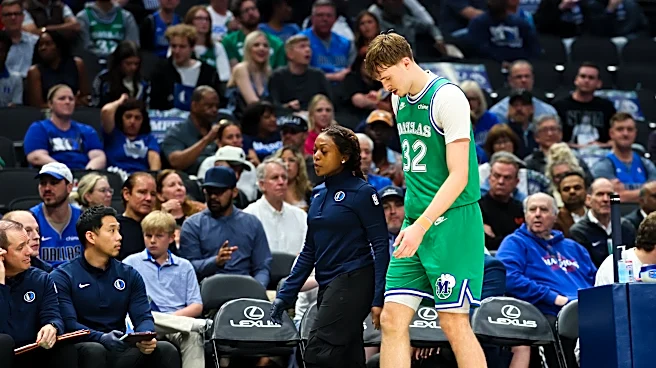
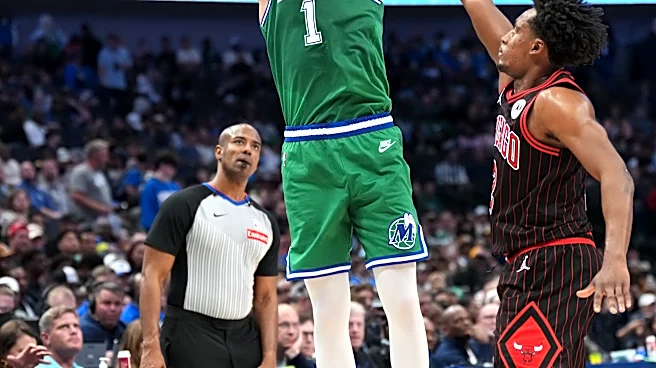
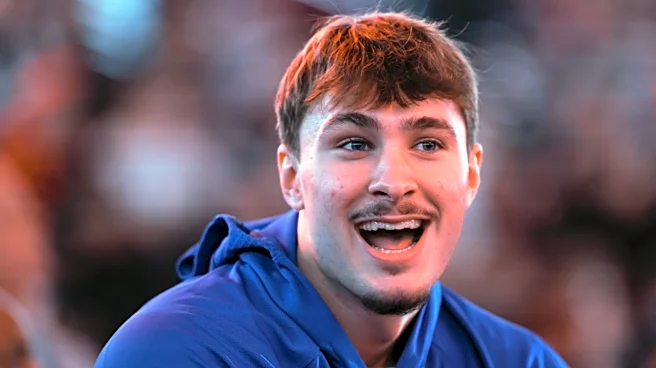
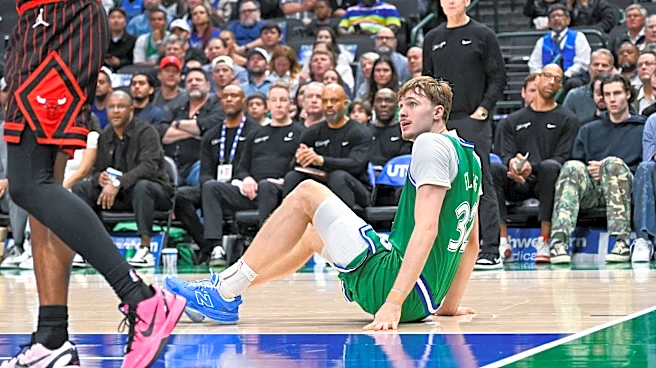
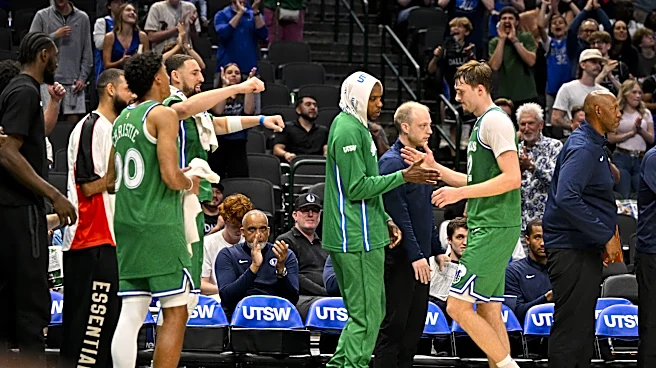
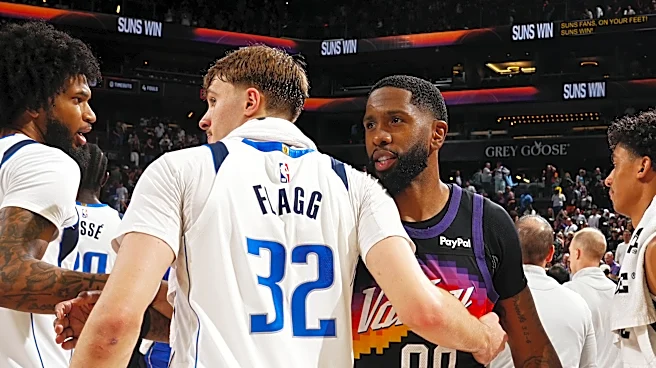
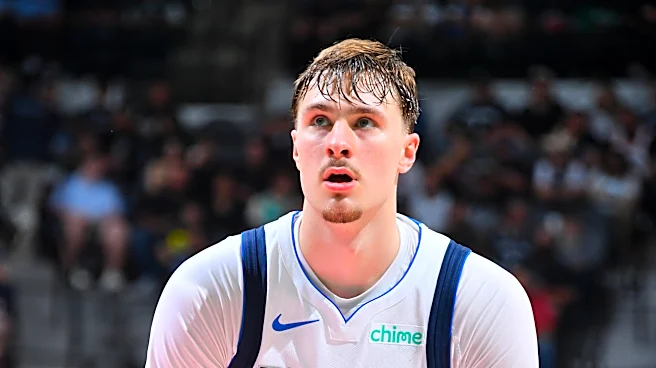
And that’s ultimately what this season will be remembered for. Not the losses. Not the dysfunction. But the emergence of Cooper Flagg. As the youngest player in the NBA, he didn’t just show flashes. He developed in real time into a primary creator and offensive hub. By April, he was averaging over 21 points and 5 assists, handling point guard responsibilities, and showing a level of composure that is rare even among elite prospects. His growth as a playmaker stood out the most. Early in the year, he was reacting. By the end, he was dictating. He got more comfortable getting to his spots, reading defenses, and managing possessions under pressure. His ability to shift between forward and guard roles, play through contact, and maintain production against high-level defenses speaks to both his physical and mental development. Coaches trusted him more. Teammates relied on him more. And he responded every time. The combination of skill, feel, and mentality has already pushed him into legitimate Rookie of the Year territory, and more importantly, into the conversation as a future superstar.
That’s why, despite everything, there is still a clear sense of direction. Even ownership sees it. The organization openly acknowledged that this season was “really difficult,” but emphasized that having a generational talent like Flagg provides an extraordinary opportunity to reshape the franchise. That optimism is real, but it doesn’t hide the urgency. Dumont also made it clear that this is an extremely important offseason and that the Mavericks have “a lot of work to do.” And that might be the most important takeaway. The hard part isn’t identifying the centerpiece. It’s building everything else around him correctly.
That process starts at the top. Dallas still needs to hire a president of basketball operations, someone who can establish a real identity, build a functional roster, and create a culture that this team clearly lacked throughout the year. This hire is not just about basketball decisions. It’s about direction. It’s about finally aligning the front office, coaching staff, and roster around a single vision.
From there, the decisions only get more complicated. The Mavericks have to nail their draft pick. With where they are, there’s no room for error. That player has to complement Flagg, whether that means adding guard creation, perimeter defense, or shooting. Then there’s Kyrie Irving. His presence represents both opportunity and uncertainty. Does he fit the timeline of a team building around a 19-year-old? Can he elevate this group, or does his timeline conflict with where the franchise is headed? The same questions apply, in different ways, to veterans like Klay Thompson and P.J. Washington. These are productive players, but the Mavericks have to decide whether they are part of the next version of this team or assets that can be used to reshape it.
And beyond the roster, the scope of this offseason is even larger. Ownership is exploring major infrastructure decisions, including a new arena and entertainment district that could define the franchise’s future for decades. That matters because it reflects the scale of what’s happening. This is not just a rebuild on the court. It’s a full reset of the organization’s identity, from leadership to roster to long-term vision.
That’s what makes this season so strange to evaluate. It began with expectations of immediate contention and ended with one of the most disappointing records in recent franchise history. But buried inside all of that failure is something that changes everything. The Mavericks found their cornerstone.
Now the real challenge begins.