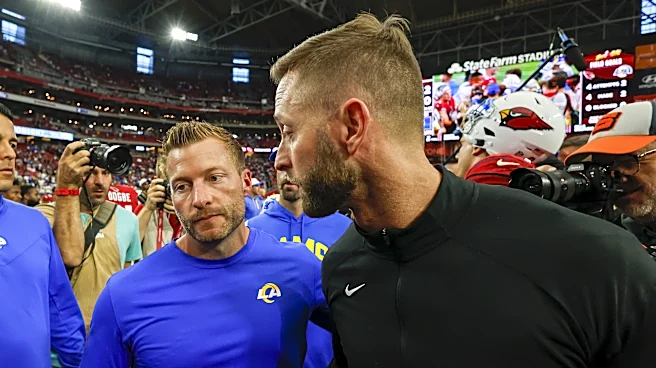





The Los Angeles Rams have built one of the NFL’s most stable and forward-thinking organizations under head coach Sean McVay, but even the most successful tenures eventually raise one unavoidable question: what comes next? While McVay has shown no immediate signs of stepping away, the Rams appear to be quietly positioning themselves for the future—and Kliff Kingsbury is emerging as the most logical successor when that time comes.
McVay, still one of the youngest head coaches in the league, has already
accomplished what many coaches chase for decades. A Super Bowl title, multiple playoff appearances, and a reputation as one of football’s premier offensive minds have cemented his legacy. However, he has also been candid in the past about the toll coaching can take, even briefly contemplating stepping away following the 2022 season. While he ultimately returned reinvigorated, the Rams would be naïve not to prepare for the eventual transition.
That’s where Kingsbury enters the picture.
Known for his offensive innovation and quarterback-friendly systems, Kingsbury brings a skill set that aligns seamlessly with the Rams’ identity. During his time as head coach of the Arizona Cardinals, Kingsbury showed flashes of brilliance, particularly in developing dynamic offenses built around modern passing concepts. While his tenure in Arizona had its ups and downs, his ability to adapt schemes and maximize quarterback play remains highly respected across the league.
For a franchise that has thrived under offensive creativity, continuity will be key. Transitioning from McVay to a defensive-minded or philosophically different coach could disrupt the culture that has made the Rams successful. Kingsbury offers a bridge not a reset. His offensive principles share DNA with McVay’s system, emphasizing spacing, tempo, and quarterback efficiency. That familiarity could allow the Rams to maintain their identity while still evolving.
Another factor working in Kingsbury’s favor is his experience working with quarterbacks at every level. From his time mentoring stars in college to helping shape professional signal-callers, Kingsbury has consistently demonstrated an ability to connect with and develop talent at the most important position in sports. For a team navigating both the present with Matthew Stafford and the future with recent draftee Ty Simpson that is experience is invaluable.
There’s also a cultural component to consider. McVay has fostered an environment rooted in collaboration, energy, and innovation. Kingsbury, known for his player-friendly approach and modern perspective, fits that mold. He’s not a rigid, old-school disciplinarian; instead, he relates well to today’s athletes, something that has become increasingly important in maintaining locker room cohesion.
Of course, naming a “heir apparent” in the NFL is never official until it happens. Circumstances change, opportunities arise elsewhere, and coaching searches often take unexpected turns. But the Rams are one of the league’s most deliberate organizations, and their decisions are rarely accidental. If Kingsbury continues to integrate into the Rams’ system and proves he can elevate the offense, his candidacy will only strengthen.
For now, McVay remains firmly in charge, and the Rams are focused on competing at the highest level. But behind the scenes, the groundwork for the future could be taking shape. When the day eventually comes that McVay decides to step away, the transition may not be a dramatic overhaul but rather a calculated handoff.
And if that vision holds true, Kliff Kingsbury could very well be the next chapter in the Rams’ evolving story.