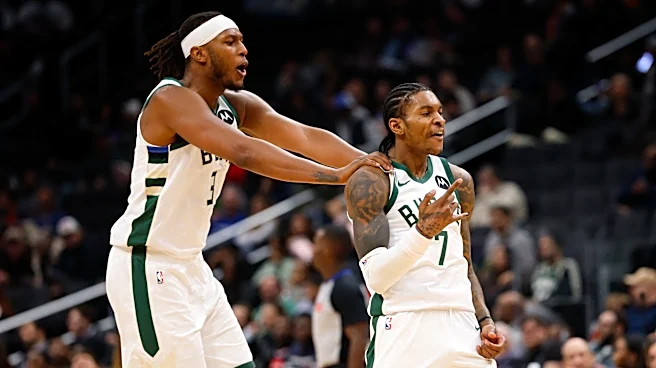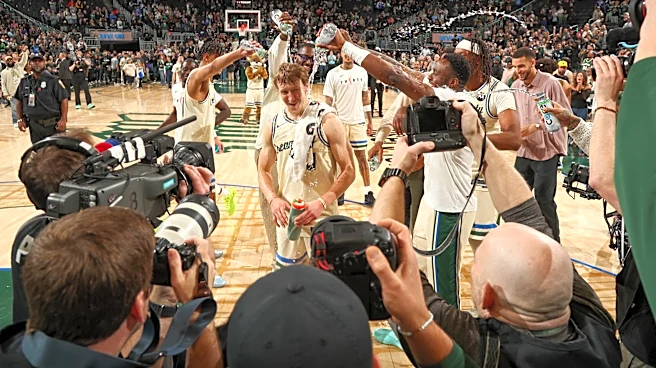


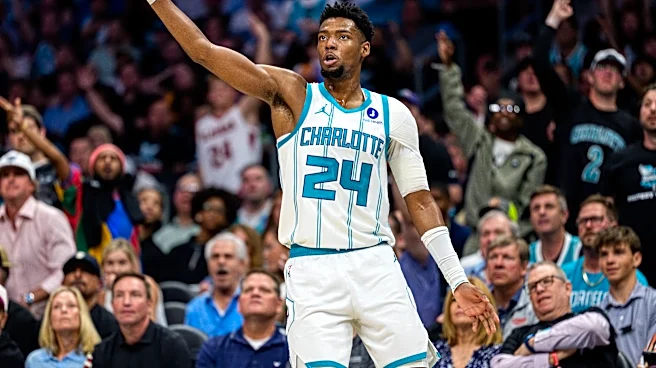
At number nine with a bullet, we have the beloved sharpshooter and the pride of Cedar Falls, Iowa: AJ “Dairy Bird” Green. In one of the few great moments from last season, fans who were still watching games in April got to see Green break a 25-year-old franchise record when he hit his 230th three of the season, finally pushing past the previous record set in 2001 by Jesus Shuttlesworth himself, Ray Allen. Hitting 232 for the season, Green certainly proved “He Got Game” (couldn’t resist), but how
much game remains up for debate, and the question now is: what will his role be on this team moving forward?
Warm and fuzzies aside, we can rip the band-aid off: Green is just not a great defender. The three-guard lineup we watched in spring of 2025—when Dame was out with his deep vein thrombosis—consisting of Green, Kevin Porter Jr., and Gary Trent Jr. was good for an absolute killer defensive rating of… 116.5. Granted, that number isn’t terrible, but it certainly wasn’t enough to be effective in the playoffs. Last season, the three-guard lineups became almost impossible to watch at times. Green does not have the wingspan, foot speed, or general size to be a major defensive factor, and while this is an era of positionless basketball, a line needs to be drawn between “this player could be an effective wing if they were a plus defender” and “this player has some great two-guard qualities we can maximize.”
To that end: Green is consistently in elite shooting company, and last season, despite being streaky at times, Green actually took a step forward in his production from behind the arc. The aforementioned franchise record is a fun memory, but Green had the third-best three-point percentage last year among players who took 500+ attempts, behind only Jamal Murray and Kon Knueppel. His true-shooting percentage of 62.7% last year actually ranked ninth among guards who played at least 1500 minutes, and given the company he is in, it is reasonable to say that he can be an impact player on a good team. When you consider that he was this efficient last season while battling through an early-season shoulder injury (and the general ineffectiveness of the Bucks offense), it becomes that much more impressive. The man can shoot, and he can shoot with the best of ‘em, but given where the Bucks are as a franchise, what does Green’s role look like moving forward?
The focus for this series is on the potential contributions to a playoff team, but barring a better-than-expected season for the Bucks, Green’s fit for the future and playoff contributions are one and the same. Given his defensive limitations and the major backcourt logjam, it is reasonable to assume he will both be coming off the bench for the Bucks this year and perhaps even fighting for minutes. One way he can earn more tick is by continuing to be an absolute sniper from long distance and creating more opportunities for those around him, especially if it helps take pressure off younger players.
To do this, though, Green will need to rely on his IQ and keep building his ball movement (his assist percentage, while still nothing to write home about, did tick up last year). Therefore, it is reasonable to assume that a strictly volume shooter on this current roster may not move the needle much. I think in this case, we as fans should enjoy the ride: either Dairy Bird will continue to dazzle this year and beyond as a sharpshooter, or he could very likely be part of a deadline deal to a playoff team. Even for those of us for whom hope springs eternal about this iteration of the Bucks, Green offers a skill set we already have in abundance, which is why he bullets on the list at number 9. To Dairy Bird: keep shooting, brother.
Who’s up at eight?