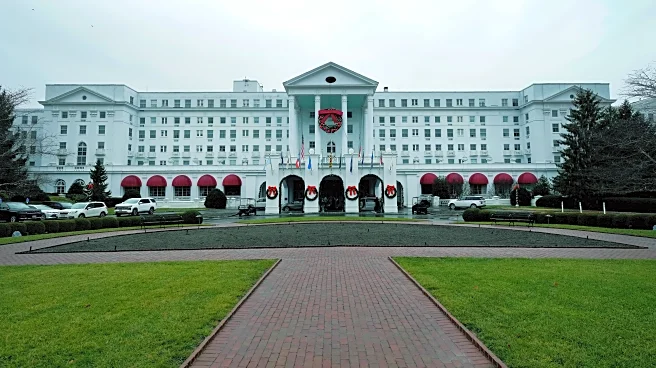

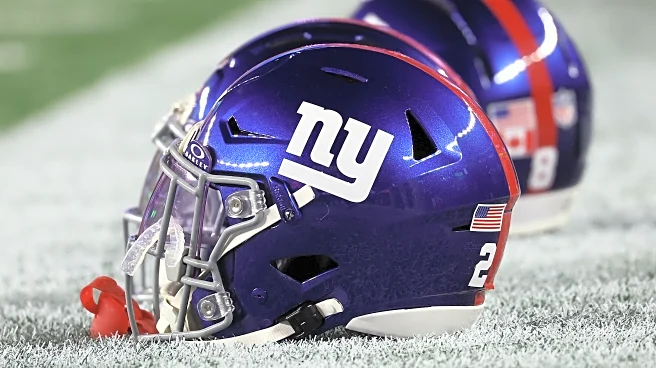


For about the first two weeks of training camp this summer, the New York Giants will not train at the Meadowlands, per Paul Schwartz. Instead they will decamp, so to speak, to White Sulphur Springs, West Virginia, where they will train at The Greenbrier Resort.
There are two reasons for the move. The first is that MetLife Stadium will play host to World Cup games from June 13 through to the championship final on July 19. The games themselves probably wouldn’t interfere with camp, e.g., last year camp began
on July 23. However, a grass field will be installed for the Cup games and then needs to be restored to the beloved artificial turf the Giants use for their games. Probably best that the players don’t have to watch the grass being removed. The second reason, which is a plus for the players, is that their locker room, weight room, cafeteria, and offices at Quest Diagnostics Training Center are being upgraded. Perhaps the Giants will do better on the 2027 NFLPA Report Card than they did in 2026, when e.g. the locker room got a grade of D, lower even than the D+ they gave Joe Schoen.
This will be the first time since 2012, the last year the Giants trained at the University of Albany, that they will not train at Quest. Why West Virginia, though?
The resort sells itself with its slogan, “Discover life as few know it.” Giants fans can probably relate to that, though not exactly in the way the resort has in mind. Rooms for late July go for as little as $717.38 per night if you want to attend. The Meadowlands, it is not.
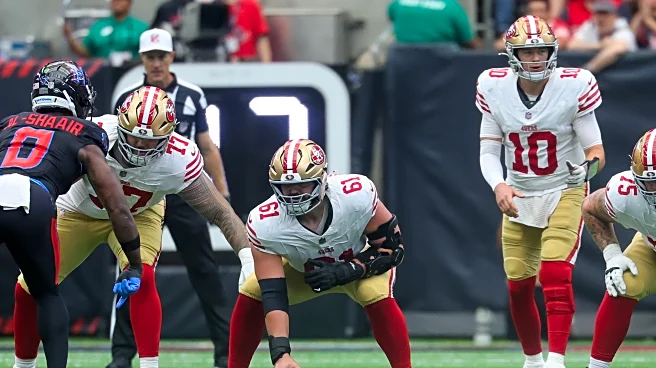
It turns out that the Greenbrier is not as puzzling a choice as you might think. West Virginia in late July doesn’t exactly sound like fun, but the resort is at an elevation of 2000’, so temperatures are probably more bearable than you might imagine, which is one reason people are drawn to it. And of course the Meadowlands in July is no bargain. The Giants in fact will not be the first team to train there. The Houston Texans did so three times, including last season, the New Orleans Saints also trained there for three consecutive seasons, the Cleveland Browns did so twice, and several other teams have stayed there in-season during extended East Coast trips.
According to The Houston Chronicle, the idea of The Greenbrier as an NFL training and practice location originated with Sean Payton, who had stayed there for a week, in 2013. Payton loved the place, including its out of the way location with few distractions for the players, and contacted their vice president of sales and event services about hosting the New Orleans Saints’ training camp. The owners liked the idea and the resort staff created three NFL-caliber football fields and a training center to host them.
The Greenbrier isn’t your usual training venue, though. It actually has a fascinating history. Here’s a little bit of it. Follow the links below if you’d like to learn more.

The sulphur springs
Rick Blaine came to Casablanca for the waters (so he said, cheekily) but he was misinformed. Originally, though, that’s actually why people came to the Greenbrier. According to its official history:
Founded in 1778, the resort’s early days were marked by its role as a natural healing oasis and a place of retreat for those seeking solace. Its mineral springs were believed to possess therapeutic properties, drawing in guests seeking respite from all over the world.
Given their recent history, who needs more solace than the Giants and their fans?
The Greenbrier became a place for prominent people, especially from the South, to come to escape the summer heat. Five sitting presidents stayed there in the years before the Civil War. During the war the resort closed and was used instead as a hospital and military command center. Once the Chesapeake and Ohio Railway was built, the railroad eventually acquired the property and opened the hotel that became the center of today’s resort.
The Greenbrier has a championship golf course and has hosted numerous tournaments. Sammy Snead became the resident playing professional there in 1944 and maintained his connection to it for the rest of his life.
The Greenbrier hosted a PGA Tour event, The Greenbrier Classic, on its Old White golf course from 2010-2019. It has also hosted a LIV Golf event.

World War II and the Cold War
The U.S. State Department leased the hotel for seven months in 1941, and the next year, the U.S. Army acquired it, turning it into a 2,000 bed hospital that cared for more than 24,000 soldiers during World War II, including Gens. Omar Bradley and Dwight Eisenhower. The hotel was leased also to be an internment center to house “enemy alien diplomats,” according to the National Park Service. Unlike the infamous Japanese-American internment camps of the World War II era, the Greenbrier internment facilities notably treated their residents well: “(The U.S.) hoped that relocating the diplomats to high-quality internment centers would inspire Axis nations to treat US diplomats similarly.” Eventually the enemy diplomats were used in a prisoner swap to bring U.S. diplomats home. The grounds were maintained by 1,000 German prisoners of war.
After World War II and later the Korean War, the government renewed its lease with Greenbrier in 1957 to build a bunker under the hotel. The bunker was intended to house all the members of Congress in the event of a nuclear attack, so that the government could continue to function. The existence of the bunker was a secret until exposed in 1962 by The Washington Post. Three years later the government ended its lease, and so the hotel began giving tours. Today you can still get tours of the bunker:
Maybe this is why the Giants will only spend two weeks at The Greenbrier. Players on the roster bubble at the end of camp fearing a visit from “The Turk” might hide out in the bunker.
The existence of the bunker was supposed to be secret, as stated above, but as reported by Smithsonian Magazine, when the resort broke ground on a new wing in 1958,
Observant locals soon noticed something odd about the project. The hole dug for the foundation was enormous, and vast amounts of concrete arrived every day on trucks, along with puzzling items: 110 urinals, huge steel doors. Guards were stationed outside.
The residents figured out what was going on but kept it a secret for 35 years.

The Greenbrier today
The Greenbrier was listed on the Register of National Historic Places in 1974 and was designated a National Historic Landmark in 1990. Since 2009 it has been owned by the family of U.S. Senator Jim Justice, who purchased it from bankruptcy. The financial problems continued, though, and earlier this year it was reported to be over $47M in debt. That sounds like a lot, but it’s about half what Joe Schoen wound up paying Daniel Jones.