

I have a client who just turned 104 years old. She was alive in the era of Babe Ruth, Lou Gehrig, Rogers Hornsby, Cool Papa Bell and Walter Johnson. She also would have been alive when the United States celebrated its 150th anniversary. It made me think how rare it is for someone to see three fifty-year anniversaries. I’ve witnessed the 200th and the 250th but won’t be alive for the 300th unless there is some yet undiscovered medical miracle. Even if there is, I’m not sure I can stomach that much
more bad Royals baseball.
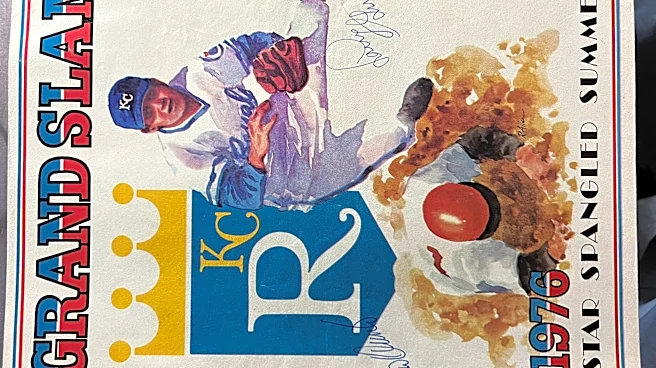
Okay, that was kind of a cheap shot, but it is what it is. Watching the country celebrate the 250th anniversary got me thinking back to the glorious summer of 1976. Nostalgia is a powerful thing. We’re things better in 1976 than they are today? Probably not. I can only say that our music and the Royals were better in 1976. I’m probably overlooking something that you’ll tell me about, but nostalgia has a way of making your brain forget about the bad things.
Sometimes we forget or take for granted some of the glorious things that make our lives easier today such as medical advances and modern technology. Our houses are better. Our automobiles are better. Our food choices are more plentiful and better. Jet travel is faster and safer. I could go on, but you get the idea. I thought of this often as the country hosted the World Cup this summer. I must give the United States a round of applause for the World Cup. Everything I’ve read from our visitors has been positive, eye opening and refreshing. I loved hearing the surprises our visitors encountered. Buc-ees! Waffle House! Stores open 24/7! Biscuits and gravy! Wal Mart! Ice in our drinks! Unlimited refills! Air conditioning! So many choices of beer! Ranch dressing! Barbeque! Over a million people came to the US for the games and many raved about how friendly and hospitable American’s were. That warms my heart and makes me proud to be an American. I hope they come back for another visit.
1976 was a special year for the country and for baseball. Who can forget Mark Fidrych and his goofball antics on the mound? He was a pretty darn good pitcher that summer, winning 19 games, and became a national icon. Henry Aaron hit the 755th and last home run of his career off former Royal Dick Drago. The White Sox play some games in shorts. With free agency looming, Athletics owner Charlie Finley began to sell players. Commissioner Bowie Kuhn vetoes the sales “in the best interest of the game”. Nolan Ryan struck out 327 batters.
It’s hard to believe it’s been fifty years. What a time to be alive. I was just 15, working that summer pumping gas at Jensen’s Standard station and thinking about my upcoming junior year in high school. Our Cookie League baseball team was still wearing wool jersey’s, which made day games under the scorching Kansas sun a miserable event. The wool jerseys were a leftover remnant from the 1960’s. In the summer of ’77, the city leaders found a little cash to outfit us in a more fashionable and cooler, polyester jerseys. We were poor kids, living in an impoverished small town. We scrounged around for extra bats and most of us used hand me down gloves. Spikes were rarely seen. We never gave it a second thought; the teams we played against looked a lot like us. We just loved playing the game.
The year kicked off with the Steelers dynasty beating the Cowboys 21 to 17 in an exciting Super Bowl X.
A couple of guys named Steve founded a company they called Apple on April 1st and eventually changed the world.
The NBA and ABA merged on June 17th.
The big local news in June was the passing of Les Milgram on June 19th. The Milgram family were grocers and at one time owned 61 stores in the metro and surrounding area. Les Milgram, a name unknown to many younger fans, was a noted civic leader who was influential in getting the Philadelphia Athletics to relocate to Kansas City. He also played a large role in getting the Dallas Texans to relocate to Kansas City in 1963. He could often be found sitting a couple of rows behind the Athletics dugout.
After the Athletics left town, Milgram persuaded his childhood friend, Ewing Kauffman, to become the owner of the city’s new expansion baseball team.
Milgram served on the Royals Board of Directors and through his love of baseball, played a large role in keeping the Ban Johnson league afloat after World War II.
Today, the Royals reward their best player each season with the Les Milgram Player of the Year Award. Milgram was truly a titan on the local civic scene and his passing at the age of 58 left a huge void. He was survived by his wife Ann, and children Betsy, Nancy, Sally and Nat.
July was a big month in the States. The United States celebrated its 200th anniversary on July 4th, which seemed like a much bigger deal than the recent 250th anniversary.
Family Feud made its debut on July 12th.
Son of Sam murdered his first victim on the 29th, setting off a year of angst and anxiety among New Yorkers.
On July 30th, Bruce Jenner captivated the nation by winning the gold medal in the decathlon at the Montreal Summer Olympics.
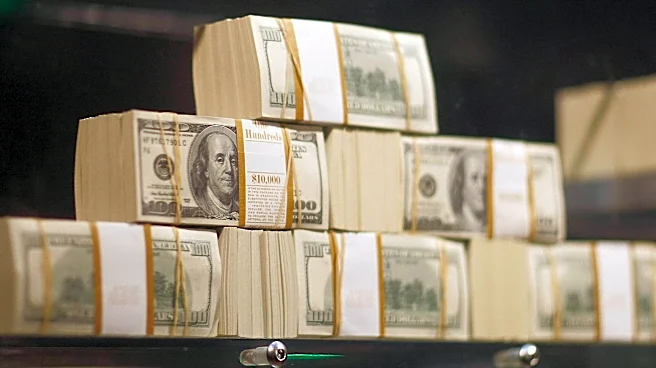
In November, Jimmy Carter upset incumbent Gerald Ford to win the Presidency. On November 29th, the New York Yankees sent shockwaves through the baseball world when they signed Reggie Jackson to a 5-year, $3 million contract. Imagine that. Five years of a superstar for $3 million.
Rocky was the movie of the year, while MASH, All in the Family and Happy Days were the hit television shows. Culturally, 1976 was probably closer to the 1950’s. With no internet or cell phones, kids still cruised Main Street on the weekends and went to school dances. The swimming pool was the nerve center of the community in the summer months. Life moved at a slower pace.
1976 was also the first year that the Royals won the American League West and in just their 8th season of existence, made their playoff debut. The Royals were a young team, with only two starters, Freddie Patek and Hal McRae, aged 30 or over. The Royals had accumulated an impressive array of young talent. Royal hitters had 6,199 plate appearances that summer. Only 1,522 were taken by players age 30 or over, and the bulk of those were taken by Patek (age 31), McRae (30), Bob Stinson (30) and Cookie Rojas, the grey beard of the Royals at the age of 37. Even the pitching staff was young, with Al Fitzmorris, Marty Pattin and Steve Mingori being the only three age 30 or over who collected significant innings. That’s how you build a winner.
Whitey Herzog was in his first full season as manager and George Brett followed up on his strong 1975 season with a season which announced him as a superstar. It was a great time to be a Royal fan.
Brett won the league batting title on his last at bat in the final game of the season, edging out teammate Hal McRae, .333 to .332. George also led the league in hits (215), triples (14) and total bases (298), put up a 7.50 WAR season and still lost the MVP vote to Thurman Munson. Munson was a great player and had a decent season, but the voters blew this one.
McRae, the Butch Cassidy to Brett’s Sundance kid, had some bitterness about losing the batting title, but still had an outstanding season, leading the league in OPS at .407 and infusing the Royals with a hardnosed style of play.
The Royals offense was clicking early in 1976. They had a three-game stretch in May in which they scored 37 runs. They dropped 14 runs on Texas on consecutive nights in late May. They peaked on June 15th when they jumped out to a 20-0 lead against Detroit, before settling in for a 21 to 7 win. They lashed the Tigers with 24 hits. Tom Poquette had five. George had four.
The Royals division lead swelled to 12 games after they swept a double header from the White Sox on August 6th.
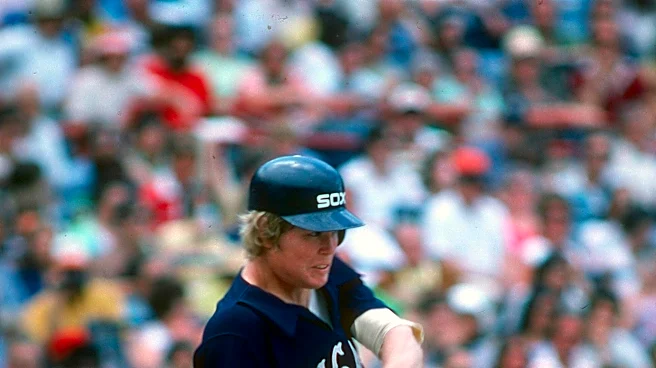
The Royals and Sox played another double header on August 8th. This was notable because Chicago wore shorts for the first game. They took a lot of heat for the shorts, but I thought they looked kind of snazzy, and why not? July and August can be crazy hot and if the shorts are more comfortable, let them wear them.
After the August 6th sweep, the young team battled injuries and the pressure of a pennant race and slumped to the finish line by losing 32 of their last 58 games.
Pitching ace Steve Busby was lost early in the season. Doug Bird lost significant time to elbow soreness. Tom Poquette, who had emerged as a solid force in left field, missed 58 games after he crashed into the wall in foul territory chasing a fly ball. He was briefly knocked unconscious and had to be carried off the field on a stretcher.
Patek, Rojas and Otis all missed games during the season to injury. Fortunately, the Royals had built some depth and guys like Dave Nelson, Jim Wohlford and Jamie Quirk. Frank White covered shortstop during Patek’s absence.
The Royals made one huge trade during the season, when they sent catcher Fran Healy to the Yankees for pitcher Larry Gura. Gura had fallen into Billy Martin’s doghouse and desperately needed a change of scenery. Gura only pitched 62 innings, toggling between starting and relief.
On September 29th, with the Royals clinging to a 2.50 game lead, Herzog surprised everyone by giving the ball to Gura. In what has become known as one of the most clutch performances in club history, Gura shut down the hard charging A’s with a four-hit, complete game shutout. The win gave the Royals a 3.50 game lead with three games to play and clinched their first American League West crown. The Royals lost nine of their last 11 games but still managed to win the division by 2 ½ games.
The second acquisition flew under the radar but was just as important. On July 5th, they purchased the contract of pitcher Andy Hassler from division rival California. Hassler gave them 14 starts and almost 100 innings of work, which was desperately needed.
Two future Royal Hall of Famers, John Wathan and Willie Wilson, made their debuts in 1976 as did Ruppert Jones, a 21-year-old phenom. After the season ended, the Royals lost Jones, Al Fitzmorris, Stinson and Tom Bruno in the expansion draft.
It was a sad departure for Fitzmorris, who had been an original Royal and a fan favorite. Fitz had a fantastic 1976 season, making 33 starts, pitching 220 innings with a record of 15 and 11.
From 1974 to 1976, Fitzmorris was nails, making 95 starts and posting a 44 and 27 record with a 3.17 ERA. Despite being the Royals best starter in the regular season, Whitey Herzog did not pitch Fitzmorris in the Championship Series. It was a puzzling move and left many fans questioning the wisdom. I loved Whitey and will always have a soft spot for him, but this was a bad piece of managing. When Herzog informed Fitz that he wouldn’t be pitching against the Yankees, sparking a heated argument between the two. Fitzmorris’ time with the Royals was over.
The magical summer soon came to an end at the hands of the damn Yankees. The teams split the first four games and were tied 6 to 6 going into the bottom of the 9th, thanks to George’s titanic three run blast in the 8th off Grant Jackson. After a five-minute delay while miscreant Yankee fans had their moment, Chris Chambliss hit the first pitch from Mark Littell over the right field wall to send New York to the World Series. I always felt bad for Littell who’d had a fantastic season and was one of baseball’s good guys. I spoke to him a few months before his untimely death and he made no excuses. He said he’d cooled off a little while Yankee fans rioted, which delayed the start of the inning. Of the pitch, he said, “it was a high fastball, out of the strike zone. Chambliss just did a great job of hitting it.”
Despite the bitter ending, it was a great summer. Due to my own heavy work and baseball schedule, I was only able to attend two games but remember them fondly. The first came in early June against the Orioles. We arrived late to the game and there were four young men sitting in our seats. Pop asked them to move. They refused. An usher showed up, looked at our tickets and told the guys to take a hike. The leader of the group told the usher to bleep off. The usher grabbed him by the nape of his neck and his belt, yanked him from the seat and hurled him down the steps. The other three meekly filed out. I loved every second of it. Can you imagine something like that happening today? The game was notable for being one of Steve Busby’s last great starts.
For younger fans, it’s hard to describe Busby’s greatness. The fact that he has two of the Royals four no-hitters should be some clue.
The game was also highlighted by a three-run bomb off the bat of Reggie Jackson. Brooks Robinson, nearing the end of his illustrious 23-year career, made a late game appearance as a defensive replacement. Brook’s appearance was brought on when future Royal manager Tony Muser took a bad hop to the cup, off the bat of John Mayberry. Muser went down like he’d been hit with a deer slug. He was carried off on a stretcher to a round of polite applause while the ground crew raked up what remained of his shattered sack.
The second game came in early September and wasn’t notable for anything other than Bert Blyleven stifling the Royals’ bats. It was a beautiful late summer Sunday. My friend Dennis and I had ridden the bus from Salina to the stadium on one of those package deals, which was a bargain. Our seats were in the lower bowl, halfway up behind third base. Before the game, we soaked up the sun while the PA system blared hit music from the summer. One of the songs they played was “Moonlight feels right” which featured a fantastic marimba solo. Every time I hear that song, it takes me back to that day. What a great summer.