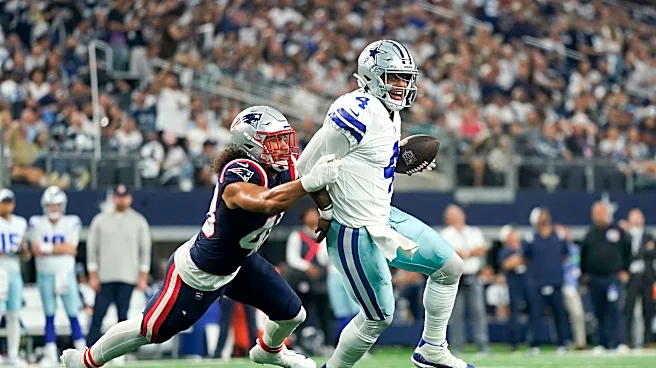


It is Day 4 of our 100-day countdown to kickoff. We are looking back at the 100 most iconic games in Dallas Cowboys history. The countdown will leads us right up to the opening game of 2026. Our look back doesn’t depend on just one criteria for our rankings. We take into consideration things like how big the game was for the organization, how memorable the game was, games that had unusual events take place, games that are a part of NFL lore, Cowboys firsts, and games where the Cowboys just plain
dominated. Variety is the spice of life and we have all different kind of Cowboys games to review. At the bottom, we’ll link each day of the countdown so you can go back and check out any you missed.
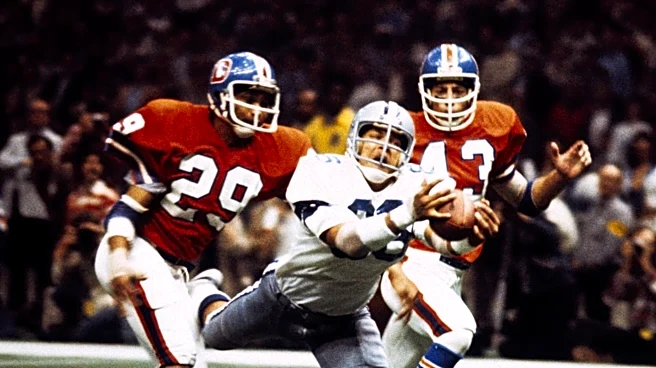
Here we are on Day 4 of our 100-day countdown to kickoff, when we revisit the defensive masterpiece that delivered the second championship in Cowboys history. Dallas forced eight Denver turnovers, controlled the game from the opening quarter and finished its dominant 1977 season by beating the Broncos in Super Bowl XII.
Sunday, January 15, 1978
Louisiana Superdome, New Orleans, Louisiana
Final Score: Dallas Cowboys 27, Denver Broncos 10
Denver quarterback Craig Morton had previously played for Dallas and started Super Bowl V for the Cowboys. Now he was trying to win a championship against his former team. Instead, the Doomsday Defense made his return miserable, constantly applying pressure and forcing him into one of the toughest performances of his career.
Dallas’ defense created the opening touchdown. Randy Hughes intercepted Morton and returned the ball to the Denver 25-yard line. Five plays later, rookie Tony Dorsett scored from three yards out to give the Cowboys a 7-0 lead. Another interception, this time by Aaron Kyle, helped set up Efren Herrera’s 35-yard field goal and made it 10-0 before the opening quarter had finished.
The Broncos simply could not protect the football. Morton was intercepted four times during the first half, while Denver also lost three fumbles. Dallas did not take full advantage of every opportunity, missing several field goals and giving the ball away itself, but Herrera eventually connected from 43 yards to send the Cowboys into halftime leading 13-0. Denver had committed seven turnovers before scoring a single point.
Denver finally showed some life after halftime. Morton moved the Broncos into Dallas territory and Jim Turner kicked a 47-yard field goal to reduce the deficit to 13-3. For the first time all evening, Denver had a little momentum.
Staubach immediately helped take it away. Facing third-and-10, he launched a deep pass toward Butch Johnson, who made a spectacular diving catch in the end zone for a 45-yard touchdown. The play remains one of the most memorable catches in Cowboys Super Bowl history and pushed Dallas comfortably ahead 20-3.
Denver responded after Rick Upchurch returned the following kickoff 67 yards. Morton was eventually replaced by Norris Weese, who guided the Broncos to their only touchdown of the game when Rob Lytle scored from one yard out. The Dallas lead was suddenly down to 20-10, but the comeback never went any further.
Tom Landry finished the game with one of his trademark creative calls. In the fourth quarter, fullback Robert Newhouse took a pitch as if he were running outside, stopped and threw downfield to Golden Richards. Richards caught the ball for a 29-yard touchdown, giving Dallas a 27-10 advantage and effectively ending the contest. It was Newhouse’s first pass attempt since 1975.
The defense remained the story from beginning to end. Dallas intercepted four passes and recovered four Denver fumbles. Morton completed just four of 15 passes for 39 yards with four interceptions before being replaced. The Broncos finished with only 156 net yards of offense as the Cowboys completely controlled the biggest game of the season.
Randy White and Harvey Martin were rewarded by becoming the first defensive teammates to share Super Bowl MVP honors. White recorded six tackles, while Martin and the rest of the defensive front repeatedly disrupted Denver’s offense. Their shared award perfectly represented a championship won primarily through defensive dominance rather than one individual offensive performance.
This game belongs near the very top of the countdown because it showed Dallas at its most complete. The 1977 Cowboys had opened the season with eight consecutive victories, finished 12-2 and then defeated Chicago and Minnesota by a combined 76-13 in the NFC playoffs. Super Bowl XII completed that run with another controlled performance and gave Tom Landry his second championship.
Interesting Facts About the Game
Morton had thrown only eight interceptions during the entire 1977 regular season, then threw four against Dallas in Super Bowl XII.
Countdown to kickoff
100, 99, 98, 97, 96, 95, 94, 93, 92, 91, 90, 89, 88, 87, 86, 85, 84, 83, 82, 81, 80, 79, 78, 77, 76, 75, 74, 73, 72, 71, 70, 69, 68, 67, 66, 65, 64, 63, 62, 61, 60, 59, 58, 57,56, 55, 54, 53, 52, 51, 50, 49, 48, 47, 46, 45, 44, 43, 42, 41, 40, 39, 38, 37, 36, 35, 34, 33, 32, 31, 30, 29, 28, 27, 26, 25, 24, 23, 22, 21, 20, 19, 18, 17, 16, 15, 14, 13, 12, 11, 10, 9, 8, 7, 6, 5