






The hoopla is almost here. After an exciting NBA Finals, transaction season is about to kick into high gear, and it’s going to feel a lot like the Monaco Grand Prix. (based on my research, it’s fast) The draft, free agency, and the endless stream of trades that connect the two are what make late June and early July one of the most entertaining stretches on the NBA calendar.
Right now, however, we find ourselves in that brief calm before the storm. With the draft only days away and free agency looming
shortly thereafter, I thought now would be a good time to assess the overall health of the Western Conference. It’s going to be fascinating to see whether the conference improves this summer, stays relatively the same, or takes a step backward.
Because when ESPN releases power rankings that place the Phoenix Suns in the bottom third of the league before a single offseason transaction has occurred, it makes me wonder why.
Yes, the Western Conference remains stronger than the Eastern Conference at the top. Oklahoma City and San Antonio have established themselves as the conference’s standard bearers. But beyond those teams, I think there’s a legitimate argument that regression could be coming.
The tax aprons have changed the game. Teams can no longer spend freely and figure out the consequences later. Organizations throughout the conference are facing difficult financial decisions, and many will be forced to trim payroll, move productive players, or reshape their rosters in ways they wouldn’t otherwise choose. That reality could significantly impact the competitive landscape.
So I thought it would be a worthwhile thought exercise to evaluate every Western Conference team based on where they finished last season and the challenges they currently face. What financial hurdles are they facing? What roster decisions must they make? Which teams are likely to stay the course, and which ones may be forced to pivot?
By understanding where each franchise currently stands, we can create a baseline. Then, once the draft has concluded, free agency has unfolded, and the trade market has settled, we can revisit the conversation and ask the important question: Did the Western Conference get better, get worse, or stay the same?
Let’s take a look at where each team currently sits as it prepares for the draft, free agency, and all of the chaos that comes with them.
Oklahoma City Thunder
2025-26 Record: 64-18
Odds to West: +140
Cap Space: -$101.5 million
First Apron Space: -$41.6 million
Second Apron Space: -$28.6 million
2026 Draft Picks: 12, 17, 37
The biggest challenge facing the Oklahoma City Thunder this offseason isn’t talent. It’s the cap sheet.

The extension era has arrived. Both Jalen Williams and Chet Holmgren are set to enter the first year of their five-year extensions, with each scheduled to earn $41.3 million in 2026-27. Add in team options for Isaiah Hartenstein ($28.5 million), Lu Dort ($17.7 million), and Kenrich Williams ($7.2 million), and that’s another $53.4 million in potential salary commitments.
Why does all of this matter? Because Oklahoma City is quickly approaching the same crossroads every contender eventually reaches. The Thunder currently hold three draft picks in this year’s draft, but they don’t necessarily have the roster spots to accommodate them. At this stage of the offseason, they already have 16 players under contract, including three players occupying two-way slots. Something has to give.
Last season, Oklahoma City operated below the first apron. Heading into next season, they project to sit roughly $28.6 million above the second apron if all of these commitments remain intact. That’s a dramatic shift, and it places Sam Presti in a position he hasn’t had to navigate before.
The question becomes one of priorities. Are the Thunder willing to live in the second apron for a season, accepting all of the roster-building restrictions that come with it in pursuit of another championship? Or do they begin making smaller sacrifices around the edges, declining team options, moving depth pieces, and replacing them with younger, cheaper players through the draft? Neither option is ideal. That’s the challenge of the modern NBA. Eventually, success becomes expensive.
The Thunder are still in an enviable position. They have an MVP in Shai Gilgeous Alexander, two ascending stars in Williams and Holmgren, and one of the league’s strongest organizational foundations. They’re not suddenly going to fall apart because of the cap sheet. But it is fair to wonder whether some of the depth and continuity that made them so dangerous last season could be compromised by these financial realities.
That’s what the second apron does. It forces good teams to make difficult choices. And this summer, Oklahoma City is about to make its first round of them.
San Antonio Spurs
2025-26 Record: 62-20
Odds to West: +140
Cap Space: -$64.8 million
First Apron Space: $52.8 million
Second Apron Space: $65.8 million
2026 Draft Picks: 20, 35, 42, 44
The Western Conference champion Spurs find themselves in a highly enviable position because none of their core players have reached the expensive phase of their careers yet.

Victor Wembanyama is entering Year 4. Stephon Castle is entering Year 3. Dylan Harper is entering Year 2. From a financial standpoint, San Antonio is sitting pretty. They have the luxury of building around elite young talent without the burden of multiple max contracts weighing down their cap sheet. That’s a powerful place to be.
The Spurs currently have nine players under contract heading into next season, meaning they’ll need to add roughly six more players to round out the roster. Fortunately for them, they possess four draft picks and more than enough flexibility to accomplish that goal without sacrificing their long-term outlook.
Financially, there isn’t much pressure. Mentally, however, that’s where the challenge begins.
The Spurs just made an NBA Finals run and came away empty-handed. While they were competitive throughout the series and had opportunities to win multiple games, they still lost. That’s a difficult pill to swallow for any team, especially a young one that spent the entire season proving it belonged among the league’s elite.
How they respond matters. Do they use that experience as fuel? Do they return with a renewed sense of purpose? Or does the disappointment linger longer than expected? Those are the questions that can’t be answered by salary cap sheets or roster projections.
There is also the De’Aaron Fox situation to monitor. Fox is scheduled to make $49.5 million as his extension begins to take effect. That’s a significant number, and eventually the Spurs will have to determine what their long-term financial picture looks like once Wembanyama, Castle, and Harper become extension-eligible themselves.
The key word there is “eventually”. They don’t have to make those decisions right now. That’s what makes San Antonio so dangerous. While other contenders around the Western Conference are trimming payroll, shedding contracts, and navigating apron restrictions, the Spurs have flexibility. They have youth, draft capital, and continuity. And they have arguably the most important asset in basketball: a young superstar who hasn’t reached his prime.
Because of that, San Antonio feels like one of the few teams in the conference that could legitimately be better next season simply through continuity and development. And that’s a scary thought for the rest of the NBA.
Denver Nuggets
2025-26 Record: 54-28
Odds to West: +1200
Cap Space: -$99.0 million
First Apron Space: -$10.4 million
Second Apron Space: $2.6 million
2026 Draft Picks: 26, 49
Denver finds itself in a very interesting position this offseason. Unlike Oklahoma City, which is dealing with the realities of the second apron, the Nuggets currently sit in that uncomfortable space between the first and second aprons. They’re close enough to feel the pressure, but not so deep into it that drastic measures are required. That creates some interesting decisions for a front office trying to maximize what remains of Nikola Jokic’s prime.

The rumors suggest Denver is exploring ways to save money. Two names that continue to surface are Cameron Johnson, who is owed $23.1 million this season, and Christian Braun, whose five-year, $125 million extension is set to begin. Both are quality players. Both contribute to winning. And both represent opportunities for Denver to create financial flexibility if ownership decides that’s the priority.
That’s where the challenge begins. The Nuggets currently have 10 players under contract, meaning they still have work to do filling out the roster. At the same time, there are reports that Denver could be interested in moving up in the draft, potentially packaging picks 26 and 49 in an effort to acquire a player they believe can contribute immediately.
They’re going to need those contributions. One of the realities of the apron era is that roster depth becomes increasingly difficult to maintain. When large portions of your cap sheet are devoted to a handful of star players, finding productive role players on rookie-scale contracts becomes critical. That’s why the draft matters so much for Denver.
The bigger question is what they’re prioritizing. Are they attempting to maximize every remaining year of the Jokic era, even if it means operating closer to the tax thresholds? Or are they looking to trim payroll, gain flexibility, and accept a slight step backward in the short term? If so, that could create an opportunity for others in the conference.
Those decisions matter because this is a team that could realistically regress. Not because Nikola Jokic is any less dominant. Not because Jamal Murray can’t still be an impact player. But because the margin for error becomes thinner every year. Supporting casts change, depth erodes, and players age. Jokic and Murray are now three years removed from their championship run. While neither player is old by any means, the clock never stops moving forward.
Denver still has, in my opinion, the best player in the world. The question is whether they can continue surrounding him with enough talent to keep pace with the rapidly changing Western Conference.
Los Angeles Lakers
2025-26 Record: 53-29
Odds to West: +1700
Cap Space: -$95.5 million
First Apron Space: $101.5 million
Second Apron Space: $114.5 million
2026 Draft Picks: 25
The Lakers were a team that I viewed as paper tigers entering last season. They looked better on paper than they did in reality, and for much of the year, I remained skeptical. Ultimately, they proved me wrong. They finished with an impressive record and advanced to the second round of the playoffs…where they were swept by OKC. That said, they’re another team entering this offseason with plenty of questions to answer.

The Lakers have some financial flexibility relative to other contenders, and a large part of that hinges on what LeBron James decides to do. The assumption is that he’ll return to Los Angeles, but until that decision is finalized, it’s difficult to know exactly what the Lakers’ long-term plans are.
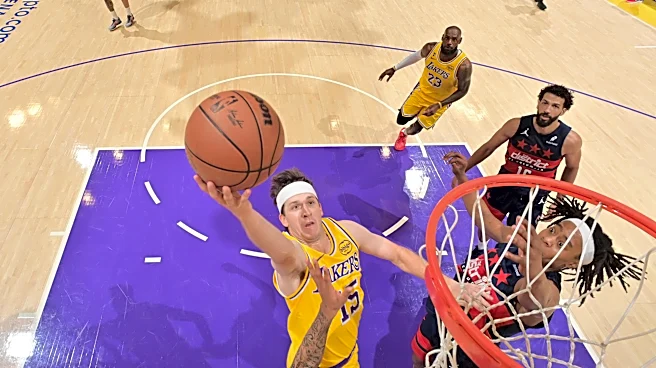
Assuming LeBron does return, the Lakers remain incredibly top-heavy salary-wise and talent-wise. Luka Doncic, LeBron James, and Austin Reaves account for the majority of their offensive creation, and while that’s an impressive trio, it also creates some important financial decisions.
The biggest one involves Reaves. Does he exercise his player option? If not, he’ll either hit the open market or negotiate a new deal with the Lakers at a significantly higher number. That’s a pivotal decision for Los Angeles because Reaves has become one of the better value contracts in basketball, and that value disappears the moment a new contract is signed.
In many ways, the Lakers feel stuck between two eras. They’re trying to maximize what’s left of the LeBron era while simultaneously preparing for life after LeBron. Those are two very different objectives, and balancing them isn’t easy.
We all know LeBron’s farewell tour is coming at some point. LeBron has never been shy about embracing the spotlight and celebrating himself, and when that final season arrives, it will become one of the biggest stories in sports. At the same time, the organization has already begun transitioning toward a future centered around Doncic. That’s a difficult line to walk.
Because of that, I wonder about their depth. The top of the roster is talented enough to win plenty of regular-season games. But when you move beyond those headline names and begin evaluating the supporting cast, things become less convincing. Injuries, age, and roster balance all become factors.
And if the Lakers are forced to allocate even more money to the top of the roster, those depth concerns only become more pronounced. That’s why I view Los Angeles as one of the more fascinating teams in the Western Conference this summer and a candidate for regression. They have star power. They have market appeal. They have flexibility. What they don’t necessarily have is certainty.
Houston Rockets
2025-26 Record: 52-30
Odds to West: +2000
Cap Space: -$61.3 million
First Apron Space: $21.5 million
Second Apron Space: $34.5 million
2026 Draft Picks: 39, 53
Houston is one of the few teams in the Western Conference that I could realistically see being better next season. A big reason for that is health. Last season, injuries had a significant impact on the Rockets. Fred VanVleet missing time hurt their facilitation and overall offensive organization, while Steven Adams’ absence removed an important interior presence that was vital to their identity. When those players were unavailable, Houston often looked like a team searching for answers.

If they simply stay the course, they have a chance to improve. The Rockets currently have roughly $21.5 million of room before reaching the first apron and still need to fill five roster spots. That gives them some flexibility without forcing them into difficult financial decisions, although it appears that being an apron team is their destiny. Unlike some of the other contenders in the conference, they aren’t entering the offseason looking for ways to cut costs. That alone puts them in a favorable position.
The challenge, however, remains health. The amount of mileage they put on Kevin Durant last season was substantial. As great as Durant continues to be, he’s not getting younger, and asking him to shoulder that kind of burden over an 82-game season comes with risk.
There are also basketball questions that still need answers. Amen Thompson remains one of the most intriguing young players in the league, but I don’t know if he took the developmental leap many expected last season. The talent is obvious. The athleticism is undeniable. The shooting? Meh. There’s still growth required before he becomes the fully realized version of the player Houston hopes he can be.
That’s what makes the Rockets difficult to project. On paper, they have enough talent to be a top-three seed in the Western Conference. If they stay healthy, develop internally, and continue building around their core, that outcome feels entirely realistic. At the same time, we saw how fragile things became when injuries hit. When key players were unavailable, Houston often looked unsure of its identity. Whether that was a coaching issue, a roster construction issue, a culture issue (hmmm…), or simply the reality of missing important contributors, the result was the same. The Rockets struggled to consistently define who they were.
Minnesota Timberwolves
2025-26 Record: 49-33
Odds to West: +1800
Cap Space: -$97.0 million
First Apron Space: $16.9 million
Second Apron Space: $29.9 million
2026 Draft Picks: 28, 59
Another interesting team sitting in the middle tier of the Western Conference is the Minnesota Timberwolves. This is a franchise that has been successful by most measures. Over the past three seasons, they’ve reached two Western Conference Finals and followed that up with a second-round exit against the Spurs this postseason. That’s a pretty good run.
The problem is that once you’ve reached that level, expectations change. Good is no longer good enough.

Minnesota currently has nine players under contract and some flexibility to work with. They still have access to the mid-level exception and biannual exception, which means they can add talent without having to completely reshape the roster.
The question is whether they believe adding around the edges is enough. Or do they feel compelled to make a larger move?
Julius Randle’s future remains one of the more compelling storylines surrounding the franchise. Does Minnesota view him as part of the long-term solution? Or do they explore alternatives in an effort to raise their ceiling? That’s a decision that could define much of their offseason.
Complicating matters is the injury to Donte DiVincenzo, who is expected to miss the entire season following the injury he suffered in the postseason. Losing a key rotational player adds additional pressure to a roster already trying to find ways to improve.
And then there’s Anthony Edwards. Not because he’s unhappy. Not because he’s demanding changes. But because every franchise with a superstar eventually reaches the point where urgency begins to increase. Edwards has already established himself as one of the faces of the league. At some point, the expectation shifts from competing to contending. That’s when difficult decisions start getting made.
Minnesota has proven it can be good. The Timberwolves have demonstrated that repeatedly over the past few years. The challenge now is taking the next step and becoming great. The danger, of course, is that in chasing greatness, you can accidentally move backward. That’s what makes this offseason so important. Do they trust the foundation they’ve built and make smaller adjustments around it? Or do they decide that, after falling short once again, something more significant needs to change?
Minnesota’s ceiling remains high. The question is whether they’ll have the patience to pursue it the same way they’ve been pursuing it, or whether they’ll feel compelled to take a different path.
Phoenix Suns
2025-26 Record: 45-37
Odds to West: +7000
Cap Space: -$73.8 million
First Apron Space: $22.8 million
Second Apron Space: $35.8 million
2026 Draft Picks: 47
Ah, yes. A team we know well. The Phoenix Suns. Of all the teams in the Western Conference, Phoenix might be one of the more difficult teams to project because its path to improvement doesn’t necessarily come from external additions. It comes from within.

There is certainly a path to progression for this team next season. Health will play a major role, as it always does. But more importantly, internal development must occur. The Suns have invested heavily in young players over the past two drafts, and if they want to make a meaningful jump in the standings, those players need to take meaningful steps forward. That’s the bet.
Ryan Dunn needs to be better. Khaman Maluach needs to contribute. Rasheer Fleming needs to find ways to impact winning. Oso Ighodaro must continue to grow (and maybe even learn to take a jumper). The young core doesn’t have to become stars overnight, but they do need to become productive rotation players.
The growth can’t stop there. The team as a whole needs a better understanding of how to play together. Last season was the first year of a new era, one focused on culture, identity, and establishing a foundation. The expectation is that a second year in the system should bring more cohesion and a better understanding of roles.
There are coaching adjustments that need to occur as well. Three-guard lineups were a recurring issue throughout the season, particularly when size and rebounding became concerns. Finding better lineup combinations and maximizing the strengths of the roster will be an important part of the equation moving forward.
It appears that continuity appears to be the plan. Unlike many teams in the Western Conference that are looking to shed salary, shake up their roster, or reevaluate their direction, Phoenix seems focused on bringing back the majority of last season’s team. That continuity could prove valuable if the organization truly believes it has identified the right culture and the right style of play.
From a roster standpoint, there may only be one open spot available, whether that’s filled through the draft or reserved for a future free agent acquisition.
Financially, the Suns have the flexibility to operate above the first apron if necessary, and they may need to do exactly that if they intend to retain Jordan Goodwin, Collin Gillespie, and Mark Williams. Those decisions will go a long way toward defining what next season’s roster ultimately looks like.
The path forward for Phoenix feels relatively straightforward. Stay healthy. Develop internally. Retain the right players. Continue building the culture. If those things happen, there’s a realistic chance the Suns are better next season than many people currently expect.
Portland Trail Blazers
2025-26 Record: 42-40
Odds to West: +5000
Cap Space: -$66.1 million
First Apron Space: $38.8 million
Second Apron Space: $51.8 million
2026 Draft Picks: None
The Portland Trail Blazers are the only team in the Western Conference entering this draft cycle without a selection. Normally, that would be viewed as a problem. For Portland, I don’t know if it is.

This isn’t a roster that desperately needs more young players. In many ways, they’re in a similar position to the Phoenix Suns as, rather than searching for outside answers, they can lean into the identity they began developing last season and hope continuity helps push them forward.
The biggest addition they expect to have next season is one they didn’t have for most of last year. Damian Lillard. Assuming his recovery continues on schedule, Lillard’s return gives Portland an established veteran presence and someone capable of stabilizing the offense. Whether he’s still the same player he was in his prime remains to be seen, but his presence alone changes the complexion of the roster.
Beyond that, the Trail Blazers don’t have many difficult decisions to make. They hold team options on Scoot Henderson, Donovan Clingan, and Kris Murray. The assumption is that all three options will be exercised. That’s what makes Portland one of the more straightforward teams in the conference this offseason. They’re not trying to dump salary. They’re not trying to reshape the roster. They’re not navigating difficult extension decisions or second apron restrictions. Instead, they’re in a position where they can largely run it back and see what another year of development produces. And that’s not a bad place to be.
The hope is that Scoot Henderson continues to grow. The hope is that Clingan develops into a more impactful center. The hope is that the young core improves while Lillard provides leadership and stability. It’s a simple formula. Continuity, development, and patience. Whether that’s enough to move them up the Western Conference standings remains to be seen, but Portland feels like a team that is comfortable finding out.
Los Angeles Clippers
2025-26 Record: 42-40
Odds to West: +3300
Cap Space: -$90.7 million
First Apron Space: $46.8 million
Second Apron Space: $59.8 million
2026 Draft Picks: 5, 36, 52
I feel like the Clippers could end up being the team that dictates how this draft unfolds. Holding the fifth overall pick gives them a tremendous amount of leverage, especially when you consider their current roster construction. After acquiring Darius Garland last season, point guard isn’t a pressing need. The interesting wrinkle is that many of the players projected to be available around No. 5 are guards.

So what do the Clippers do? Do they stay put and take the best player available? Do they move back and accumulate more assets? Do they identify a team desperate to move up and capitalize on that urgency? Regardless of what they opt to do, they will be adding a young talent to a roster ready to absorb it.
Beyond the draft, the Clippers have several roster decisions looming. They hold team options on some old heads in Bogdan Bogdanovic, Brook Lopez, Nicolas Batum, and Jordan Miller. None of those decisions is franchise-altering on its own, but collectively they help determine the direction of the roster.
Collectivly, the Clippers average age is 28.8, second oldest in the league. They are old, not in a catastrophic way, but old enough that they have to start thinking about what’s next. The current roster can still compete, but eventually every veteran-heavy team reaches a point where it must begin balancing present success against future sustainability.
That’s why this offseason feels important for them. We saw flashes of what this team could be after they moved away from James Harden and Ivica Zubac and leaned more heavily into a roster built around Garland. There was more balance. There was more pace. There were moments when the Clippers looked like a team beginning to transition into its next phase. Whether they fully embrace that transition remains to be seen.
The fifth pick gives them options. Their team options give them flexibility. And unlike some teams that are boxed in by financial restrictions, the Clippers still have pathways to reshape the roster if they choose. That’s why I view them as one of the swing teams in the Western Conference. If they make the right decisions, they could absolutely take a step forward next season. And if they decide to get creative on draft night, they may end up impacting far more than their own future. That is, unless their Aspirations catch up to them…
Golden State Warriors
2025-26 Record: 34-45
Odds to West: +4000
Cap Space: -$119.6 million
First Apron Space: $27.0 million
Second Apron Space: $40.0 million
2026 Draft Picks: 11, 54
Speaking of old, let’s talk about the team whose average age is 30.1. Golden State is old. That’s not meant as an insult. It’s simply the reality of where they are as a franchise. The core that delivered championships is still in place, but with age comes challenges, and those challenges become more apparent with each passing season.

Golden State currently has nine players under contract heading into next year, meaning they still need to fill out roughly six roster spots. The problem is they don’t have a ton of financial flexibility relative to the first apron, which limits some of the ways they can improve around the margins.
They have the No. 11 pick, which gives the Warriors an opportunity to inject some youth into a roster that desperately needs it. Whether that player contributes immediately or develops over time, adding a young asset is critical for a team that has spent years pushing its chips toward the center of the table. The question is whether that will be enough?
When I look at the Warriors, I don’t necessarily see a team that’s positioned to improve significantly next season. They’re still going to have Stephen Curry. They’re still going to have championship experience. They’re still going to have one of the smartest organizations in basketball. But age is undefeated.
Experience helps you navigate difficult moments. It helps you win close games. It helps you handle pressure. What it doesn’t do is make your legs fresher in January, February, and March. It doesn’t make recovery easier. It doesn’t prevent the wear and tear that accumulates over the course of an 82-game season. We saw some of that last year. There were stretches when the Warriors looked dangerous and capable of beating anyone. There were other stretches when fatigue seemed to catch up to them, particularly as the season wore on. That’s the challenge of building around an aging core.
Golden State remains good enough to be competitive. They remain good enough to make the playoffs. They remain good enough to be annoying in a playoff series if Curry gets hot. But when I evaluate the trajectory of the Western Conference, the Warriors feel like one of the teams most vulnerable to standing still while younger teams continue moving forward.
New Orleans Pelicans
2025-26 Record: 26-56
Odds to West: +15000
Cap Space: -$61.1 million
First Apron Space: $6.3 million
Second Apron Space: $19.3 million
2026 Draft Picks: 58
The New Orleans Pelicans are one of the more difficult teams in the Western Conference to figure out. On paper, they should be better than they are. But, like 1994 states, reality bites.

They currently have 14 of their 15 roster spots filled and only possess one draft pick (turns out trading away your unprotected first in this years draft was a bone headed move), a selection at the back end of the second round. That means they aren’t entering the offseason with a ton of flexibility to reshape the roster through the draft. Which raises an important question. Are they finally at the point where they need to start moving pieces?
The trajectory they’re carrying over from last season certainly suggests that possibility. This was a team that lost 30 more games than it won, and at some point, results have to matter. You can talk about injuries. You can talk about bad luck. You can talk about circumstances. Eventually, the standings tell the story, and the story hasn’t been a good one.
When you look at the Pelicans’ roster, it feels like there should be something there. There is talent. There are productive players. Some pieces would fit on winning teams. Yet year after year, they struggle to put it all together. That’s why I wonder if they’re approaching an inflection point. At some stage, organizations have to stop asking why something isn’t working and start acknowledging that it isn’t working. If New Orleans reaches that conclusion, this could be the summer they begin selling off pieces and attempting to reset their timeline.
In some ways, they remind me of the Toronto Raptors after Kawhi Leonard left. There were still plenty of productive players on the roster. There was still talent. There were still recognizable names. What there wasn’t was a player capable of carrying the franchise on his own and elevating everyone around him. That’s the challenge New Orleans faces.
And because of that, they could become one of the teams that dictates the trade market this offseason. If they decide to move veterans, other contenders will be interested. If they decide to pivot toward youth, there will be opportunities to accumulate assets. Either way, I think a change ‘gon come.
When I look at the Pelicans heading into next season, I don’t see a team positioned to improve. I see a team staring at difficult decisions and a front office that may finally have to accept that the current version of the roster has reached its ceiling. That’s why I expect regression. Not because the players aren’t talented, but because the organization may finally decide it’s time to build something different.
Dallas Mavericks
2025-26 Record: 26-56
Odds to West: +10000
Cap Space: -$84.5 million
First Apron Space: $55.6 million
Second Apron Space: $68.6 million
2026 Draft Picks: 9, 30, 48
Dallas is a team that, in theory, should be better next season. Kyrie Irving is expected to return. Cooper Flagg will be entering his second season and continuing his development. And unlike some of the teams we’ve already discussed, the Mavericks aren’t entering the offseason trying to tear things down or dramatically reshape who they are. The foundation is there. The question is how all of the pieces fit together.

Dallas currently has 11 players under contract, so there is still work to be done filling out the roster. Part of that will come via the 9th pick in the draft, and I wouldn’t be surprised if this is where Univerity of Arizona alumn Brayden Burries lands. The succesor to Kyrie is waiting for them in the lottery.
For Dallas, the harder part is figuring out how to maximize the talent already in the building and determining what the hierarchy looks like once everyone is healthy. Because while I can absolutely see Dallas winning more games than they did a season ago, I’m not sure that’s the real question. The floor feels relatively safe. The ceiling is what interests me. Are they a team capable of making a massive leap and winning 20 more games? I have a hard time seeing that. Improvement feels likely. Dramatic improvement feels less certain.
Part of that is because development rarely occurs in a straight line. Cooper Flagg should be better. The young players around him should be better. But the return of Kyrie Irving changes the dynamics of the team. Possessions shift, roles evolve, and expectations change. Integrating a high usage star back into the lineup is never as simple as plugging a player back into his old spot and continuing where you left off.
That’s why I think Dallas is probably a year away. Not a year away from being good. A year away from fully understanding what it can become. The talent is obvious. The star power is there. But next season feels more like a season of discovery than a season of contention. The Mavericks need to learn how all of these pieces function together before they can truly maximize the roster.
That makes them one of the more fascinating teams in the conference. I expect them to improve. I’m just not convinced they’re ready to make the kind of jump that places them firmly among the Western Conference elite.
Memphis Grizzlies
2025-26 Record: 22-57
Odds to West: +35000
Cap Space: -$1.2 million
First Apron Space: $61.6 million
Second Apron Space: $74.6 million
2026 Draft Picks: 3, 16, 32
We all know where Memphis appears to be heading. The Grizzlies began dismantling portions of their roster last offseason, and at this point the only true cornerstone that remains is Ja Morant. Whether that’s by design or simply the natural evolution of the roster, Memphis feels like a franchise standing at a crossroads. And this draft could accelerate that process.

The Grizzlies currently hold the third, 16th, and 32nd picks, giving them three opportunities to add young talent. Or possbily package them to move up. Or sell one. That’s exciting, but it also creates a practical problem. Roster spots aren’t unlimited. Something has to give. Memphis also has team options on Taylor Hendricks, Zach Edey, Olivier-Maxence Prosper, and GG Jackson. Assuming they want to retain some or all of those players, the roster math becomes increasingly difficult. That’s why I expect movement.
Whether it’s veterans being traded, younger players being moved, or draft picks being packaged in deals, it feels unlikely that Memphis simply makes all of its selections and carries everyone forward. There are too many players and not enough opportunities.
The biggest question, of course, revolves around Ja Morant. ISure sounds like Memphis is willing to trade him. That’s a conversation that would have sounded ridiculous a few years ago, but circumstances change. If the organization truly believes it needs a complete reset, then every player should be subject to discussion.
The challenge is determining Morant’s value. He’s still one of the most explosive guards in basketball, but availability, injuries, and off-court concerns have complicated the equation. If Memphis decided to move him, would teams line up with premium offers? Or would the Grizzlies find themselves needing to include additional assets to facilitate a deal?
Memphis feels like a team preparing for a full rebuild. They have draft capital, young players, and flexibility. And they have an opportunity to establish a new timeline around a younger core. That timeline may very well center around Cedric Coward. Damn, I like that guy. Whether he’s the future face of the franchise remains to be seen, but he represents the type of young asset rebuilding teams prioritize. Development, opportunity, and patience become the focus. Because when I look at the Grizzlies entering this offseason, I don’t see a team trying to climb the Western Conference standings.
Sacramento Kings
2025-26 Record: 22-60
Odds to West: +75000
Cap Space: -$90.6 million
First Apron Space: -$1.0 million
Second Apron Space: $12.0 million
2026 Draft Picks: 7, 34, 45
What can you say about the Sacramento Kings? I know Suns fans spend plenty of time lamenting the state of their franchise, but Sacramento provides a reminder that things can always be more complicated. Imagine one playoff appearance in the past 20 years. I’d prefer not to.

This is a team that won only 22 games last season and now enters the 2026-27 offseason cycle already operating above the first apron. That’s not exactly where you want to be when you’re coming off a season like that.
The financial picture explains why.
Zach LaVine is owed $49 million next season. Domantas Sabonis will make $45.5 million. Then you have DeMar DeRozan, De’Andre Hunter, Keegan Murray, and Malik Monk, all earning more than $20 million annually. That’s a lot of money committed to a roster that hasn’t produced results. Or beams.
That’s why the rumors have started. Sabonis’ name continues to surface in trade discussions, which makes sense when you consider where the Kings are as an organization. If you’re looking to reshape the roster, your best players are naturally going to become part of the conversation. The challenge is value. Sabonis remains a highly productive player, but he’s entering his age-30 season and is owed $94.1 million over the next two years. That’s not an impossible contract to move, but it does narrow the pool of potential suitors. Teams need to believe he’s the missing piece, not merely a good player. That’s easier said than done.
When I look at Sacramento, I see a franchise caught in an uncomfortable middle ground. They’re not rebuilding. They’re not contending. They’re not young enough to be patient, and they’re not good enough to justify running everything back without asking difficult questions.
Maybe they will improve next season. Maybe a coaching adjustment, better health, or internal development helps them squeeze out a few more wins. That’s certainly possible. But when I compare them to the teams around them in the Western Conference, I don’t see a clear pathway toward meaningful improvement. Marginally better? Sure. Significantly better? Negative.
Utah Jazz
2025-26 Record: 22-60
Odds to West: +8000
Cap Space: -$46.7 million
First Apron Space: $66.6 million
Second Apron Space: $79.6 million
2026 Draft Picks: 2
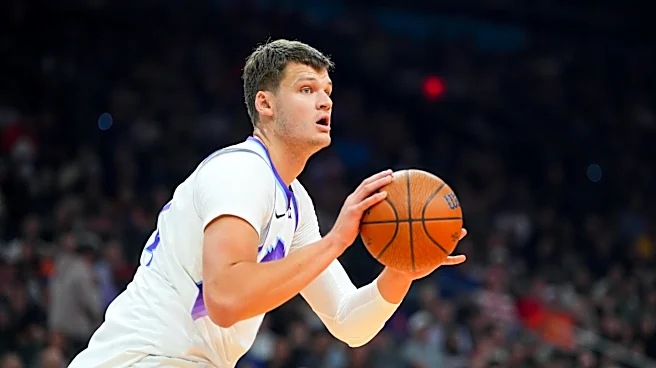
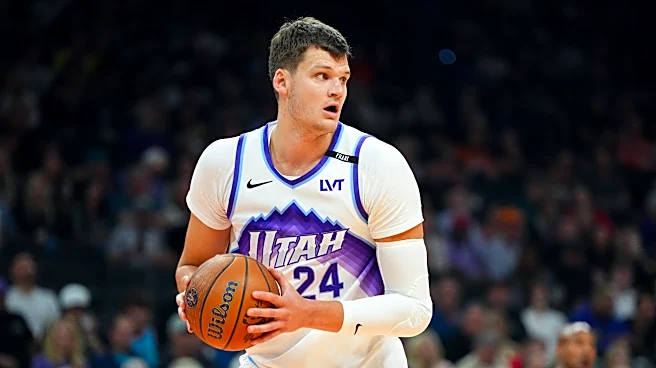
Last, but certainly not least, we have the Utah Jazz. They’re one of the more intriguing teams in the Western Conference because they feel like a franchise that is on the verge of turning the corer. They should be more competitive next season, even if they aren’t ready to make a meaningful leap in the standings.

The biggest decision facing them comes with the second overall pick. And it’s a fascinating one. Do they select Darryn Peterson, who reportedly refused to work out for them? Or do they go with Cameron Boozer, a player many view as a foundational building block, even though the Jazz already have plenty of size and frontcourt talent on the roster? That’s a franchise-altering decision.
Beyond the draft, Utah’s young core is intriguing. Keonte George and Ace Bailey are players the organization clearly believes in, and whoever they add with the second overall pick will immediately become part of that developmental timeline.
At the same time, they still have veterans on the roster. Jaren Jackson Jr. and Lauri Markkanen consume a significant portion of the payroll, but they also provide proven production and stability. That combination gives Utah an interesting balance between youth and experience, even if the roster isn’t quite ready to compete with the top teams in the conference.
Walker Kessler’s extention remains up in the air, as negotations are stalling.
Overall, I don’t expect the Jazz to be overly aggressive this summer. Outside of making their selection at No. 2, I don’t see a franchise that needs to make sweeping changes. They’re still in the evaluation phase. They’re still trying to determine exactly what they have in their young players and what kind of team they ultimately want to become.
Because of that, continuity makes sense. I do think they’ll win more games next season. Not because they’re going to make a blockbuster trade or sign a marquee free agent, but because young players generally improve. Another year of development matters. Another year of experience matters. And when you combine that with a premium draft pick entering the fold, the Jazz should naturally take a step forward.
Will it be enough to push them into playoff contention? Probably not. But they don’t need to be there yet. What Utah needs is clarity. They need to identify who belongs in their long-term plans and who doesn’t. They need to determine whether this young core can become something meaningful. That’s why the Jazz are one of the more interesting teams to watch this offseason. Not because they’re likely to make a huge move, but because the next phase of their rebuild is about to begin.
That’s how I see each team in the Western Conference as they prepare for the offseason and the season that follows. Every franchise enters the summer with a different set of challenges. Some are attempting to maintain their place atop the conference. Some are looking to cut costs. Others are searching for the final piece that can elevate them from playoff team to contender. And a few are still trying to determine exactly who they are.
The interesting part is that many of those decisions will be driven as much by finances as basketball. The tax aprons have fundamentally altered the way teams operate. Organizations can no longer simply spend their way out of mistakes or continue adding talent without consequences. As a result, roster construction has become a balancing act between competitiveness, flexibility, and long-term sustainability.
We’ll see how each front office chooses to navigate those challenges in the coming weeks. Once the draft is complete, free agency has run its course, and the trade market begins to settle, we’ll have a much clearer picture of where every team stands. That’s when this exercise becomes even more interesting.
I’ll revisit it later this offseason, before the start of the 2026-27 campaign, to evaluate how each team addressed the issues in front of them, whether they solved their biggest problems, and whether they strengthened or weakened their position in the Western Conference hierarchy.
Until then, this serves as the baseline. Now we’ll see what happens when the chaos begins.