



Quarterbacks
1. Fernando Mendoza – Indiana Mendoza is a big-framed, well-rounded quarterback with functional mobility, toughness, and enough arm talent to attack all areas of the field when he is able to throw on schedule. He throws well on the move, can buy time with his legs, and has shown the poise to make high-level throws in big moments. The concern is that the game can speed up on him once the first read is removed or real physical pressure gets home, and the overall passing profile still looks
raw for a player expected to run a full NFL offense. The traits are strong, the upside is high, and the developmental runway suggests a player who may need early patience before settling in as a high-end starter. Projection: Round 1 / No. 1 overall candidate
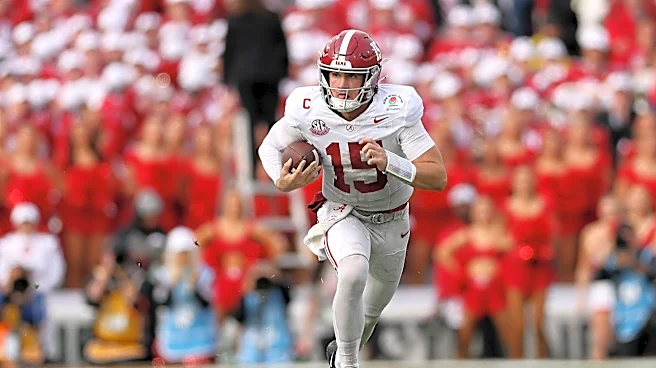
2. Ty Simpson – Alabama
Simpson projects as a steady, functional quarterback with enough arm to stretch the field, enough athleticism to move when needed, and a generally reliable rhythm-passing profile. He throws well on the run, keeps the offense on schedule, and has starter traits in a structured system. The limitations show up when the play breaks down or the throwing window tightens, as he can stare down targets, get hesitant versus tighter coverage, and struggle to create once structure disappears. The overall profile points more toward a developmental starter than a true difference-maker, but the floor is solid enough to warrant real Day 2 consideration.
Projection: Round 2
3. Drew Allar – Penn State
Allar has one of the more impressive physical profiles in the class, with prototypical size, a powerful arm, and the ability to generate easy velocity down the field without overstraining. He also offers useful movement ability and enough functional running value to keep defenses honest. The issue is consistency. Accuracy comes and goes, touch is not always there on deeper throws, and the overall package still feels unpolished despite the arm talent and experience. The tools are significant enough to justify a strong investment, but the transition likely requires time before the traits become a complete quarterback.
Projection: Round 2-3
4. Carson Beck – Georgia
Beck is one of the cleaner operators in the class, functioning as an experienced pocket passer with good field vision, calm feet, and a strong understanding of how to work through progressions. He handles structure well, takes what the defense gives him, and looks comfortable running a quarterback-driven offense that asks for command at the line of scrimmage. The ceiling is somewhat limited because the arm is good rather than special and the creativity outside the pocket is minimal. Even so, the polish, poise, and decision-making make him one of the safer bets to run an NFL offense competently.
Projection: Round 3
5. Taylen Green – Arkansas
Green is a classic upside swing built on size, movement skill, and rare athletic ability for the position. He is explosive as a runner, can stress defenses outside structure, and flashes enough arm talent to keep evaluators interested in the long-term ceiling. The development curve is steep, however. Processing is still behind, mechanics need cleanup, and the consistency from snap to snap is not close to NFL-ready. The appeal is obvious because the best plays look like those of a high-end starter, but the path there will require patience, coaching, and time.
Projection: Round 3-4
6. Garrett Nussmeier – LSU
Nussmeier profiles as an experienced pocket passer with a workable floor built on feel, toughness under pressure, and a generally reliable short-to-intermediate passing game. He can distribute on time, lead receivers into catchable windows, and hold up reasonably well in muddy pockets. The concerns center on ceiling. The arm is ordinary, mobility is limited, and the downfield passing profile lacks the zip and drive needed to consistently stress the outside parts of the field. The result is a player who looks more like a quality long-term backup than a true answer as a full-time NFL starter.
Projection: Round 4
7. Joey Aguilar – Tennessee
Aguilar is a flawed but intriguing quarterback because there is enough functional decision-making, pocket feel, and off-script playmaking ability to see a path to a backup role. He can work around the pocket, make the right read at times, and create outside structure in ways that some Day 3 passers cannot. The mechanical issues remain significant, particularly with accuracy and timing, and the tendency to leave throws late over the middle creates real concern. Even with those problems, the flashes of processing and improvisation make him a more interesting developmental option than many quarterbacks in his range.
Projection: Round 5
8. Sawyer Robertson – Baylor
Robertson offers an appealing physical profile with size, enough athleticism to extend plays, and just enough arm to attack the field vertically when the picture is clean. He can function in rhythm, create with his legs, and show occasional flashes that suggest workable starting traits. The problem is that too much of the game falls apart once the first read disappears. Processing slows down, pressure changes the picture, and the overall profile never consistently rises above adequate. There are enough tools to earn a draftable grade, but the most likely outcome is developmental depth with fringe starter upside.
Projection: Round 5-6
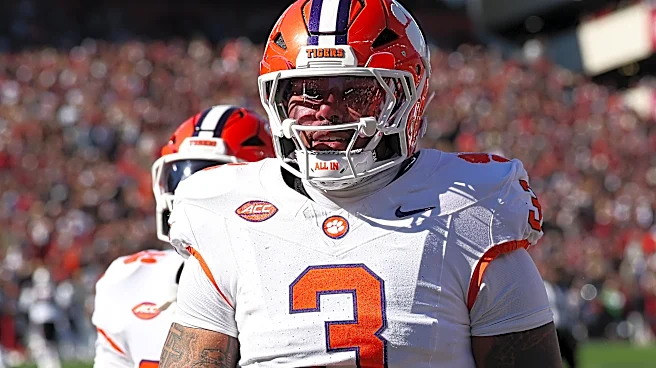
9. Cade Klubnik – Clemson
Klubnik brings experience, mobility, and enough play extension ability to remain interesting, especially outside the pocket where he can throw on the move and create with his legs. Inside structure, the passing profile is much harder to trust. The footwork is messy and the decision-making can collapse once the first read is taken away. There is athletic utility here, but the quarterbacking foundation still needs major work. That points to a late-round developmental profile rather than a player ready to compete for a meaningful role early.
Projection: Round 6-7
10. Cole Payton – North Dakota State
Payton is a developmental quarterback prospect with an intriguing modern profile built on size, athleticism, and running ability. He can move, extend, and stress defenses outside the pocket, and the physical traits are easy to spot. At the same time, he is inexperienced, comes from a lower level of competition, and still looks late with both timing and decision-making as a passer. The arm is functional but not especially natural, and the overall projection depends heavily on development. He is worth a late-round swing because of the tools, but patience would be required.
Projection: Round 6-7
Running Backs
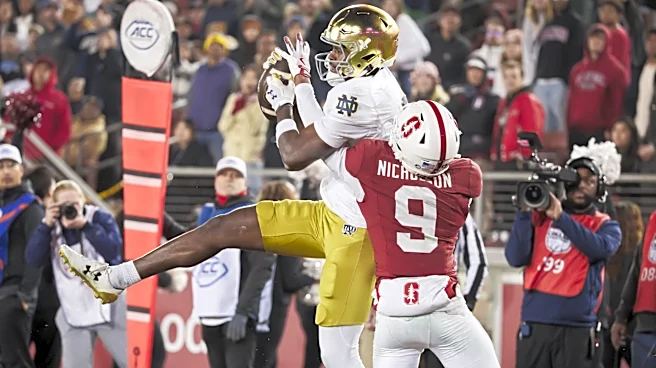
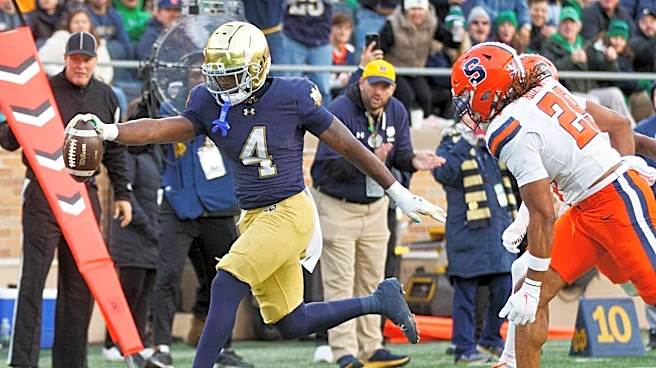
1. Jeremiyah Love – Notre Dame
Love is a complete feature-back prospect with size, power, explosiveness, and true three-down utility. He runs with force, keeps his feet moving through contact, consistently falls forward, and has the speed to win on the edge or finish explosive plays. He also brings legitimate value in the passing game and shows the willingness needed to stay on the field in protection. There are very few holes in the profile. This is the type of back who can handle volume, create offense in multiple ways, and step into a major role immediately.
Projection: Round 1 / Top 15 Overall
2. Mike Washington Jr. – Arkansas
Washington has the frame, burst, and long speed to project as a dangerous NFL runner, especially once he reaches open space. He is a legitimate big-play threat, offers pass-catching value, and has enough size to handle real work. The style is not especially punishing for a player with his build, and there is still development needed in pass protection and short-yardage grinding. Even so, the combination of body type, explosiveness, and easy speed gives him clear starter upside and makes him one of the more attractive backs in the class.
Projection: Round 2
3. Jadarian Price – Notre Dame
Price is a sturdy, downhill runner with a thick lower half, good contact balance, and the kind of style that fits early-down work at the next level. He is difficult to tackle once he gets moving and can wear on defenses over the course of a game. The concerns are tied to ceiling. He lacks true home-run speed, looks somewhat heavy-footed, and does not currently offer much proven receiving value. The profile fits best in a committee, but the physicality and reliability make him an easy projection as a useful NFL runner.
Projection: Round 2-3
4. Nicholas Singleton – Penn State
Singleton offers a strong blend of experience, frame, burst, and versatility, making him one of the more complete backs in the group. He can catch the football, run through contact, squeeze through tight lanes, and generate chunk plays with his athletic ability. There are moments of tunnel vision in the run game, and the overall profile leaves some question as to whether he is a fully instinctive runner or more of a talented downhill slasher. Even with that concern, the tools and well-rounded skill set point to an early contributor with starter potential.
Projection: Round 3
5. Kaytron Allen – Penn State
Allen is a physical downhill back whose best traits show up in short-yardage and interior run situations. He runs with aggression, welcomes contact, pushes piles, and has the body type to handle hard NFL carries. The tradeoff is limited explosiveness. He does not have much burst, top speed, or movement flexibility, and the pass-game profile is modest at best. He projects as an early-down grinder rather than a complete feature back, but that role still has real value for teams looking for dependable physicality.
Projection: Round 3
6. Jam Miller – Alabama
Miller is an explosive downhill runner with good burst, solid speed, and impressive cutting ability for his size. He lowers his shoulder, bounces off contact, and can create chunk gains when the lane is clean. The issue is how narrow the usage profile can become. He is not especially creative as a runner, tends to lock into the designed track, and does not project as a reliable third-down option because of his blocking limitations. As a pure ball carrier there is enough to like, but the overall role likely starts on early downs.
Projection: Round 3-4
7. Jonah Coleman – Washington
Coleman is a compact, versatile back with quick feet, strong short-area movement, and enough receiving and blocking value to fit into multiple offensive systems. He is not a rare athlete and does not bring ideal size, but he is instinctive, slippery in tight areas, and dependable in the small details that keep backs on the field. He projects well as part of a rotation and has the type of all-around game that can make him a useful starter in spurts.
Projection: Round 3
8. Demond Claiborne – Wake Forest
Claiborne is an explosive athlete whose best work comes when he can build speed quickly and attack the edge. He has legitimate acceleration, real top-end juice, and the type of long-speed profile that creates big plays. The running back craft is still developing, however. He is not especially creative in the open field, the receiving profile is limited, and the overall game can look more athlete-driven than fully polished. The upside is worth betting on, but the projection depends heavily on role and usage.
Projection: Round 4-5
9. Emmett Johnson – Nebraska
Johnson is not built on standout traits, but he plays with urgency, toughness, and enough all-around skill to carve out a real NFL role. He is quick through the hole, catches the football well, and consistently squeezes production out of a modest physical profile. He can be finished more easily than bigger backs and lacks the athletic juice to project as a feature runner, but the reliability, effort, and passing-game value make him a strong fit as a change-of-pace and third-down option.
Projection: Round 4-5
10. Noah Whittington – Oregon
Whittington is an undersized but useful back with return value, good stop-start ability, and enough toughness to survive inside despite his frame. He works well through traffic, can make a subtle one-cut move in tight space, and plays with more edge than expected for his size. He does not have feature-back traits, and there is not much evidence of star upside, but the versatility and mature running style make him a strong candidate to fill multiple roles on a roster.
Projection: Round 5-6
Wide Receivers
1. Carnell Tate – Ohio State
Tate projects as a polished, high-level outside receiver with rare ball skills, excellent size, and one of the cleanest natural catching profiles in the class. He is a true hands catcher, plucks the football cleanly away from his body, and plays with the kind of smooth stride and route pacing that allows him to separate without relying on elite raw speed. The top gear is good rather than great, and he is not a dominant blocker, but the total package is outstanding. This is a complete receiver prospect with the skill set to become a top option early in his NFL career.
Projection: Top 10 pick / Round 1
2. Makai Lemon – USC
Lemon wins with polish, intelligence, and route-running detail more than overwhelming physical traits. He changes direction extremely well, reads coverage, settles into voids, adjusts cleanly to the quarterback, and consistently creates throwing windows with timing and feel. He can line up in multiple spots, handle traffic, and absorb contact better than his size suggests. The athletic profile is not special, and he is unlikely to win with pure speed or size alone, but the football character and technical quality point to an immediate impact starter with long-term star potential.
Projection: Top 12 pick / Round 1
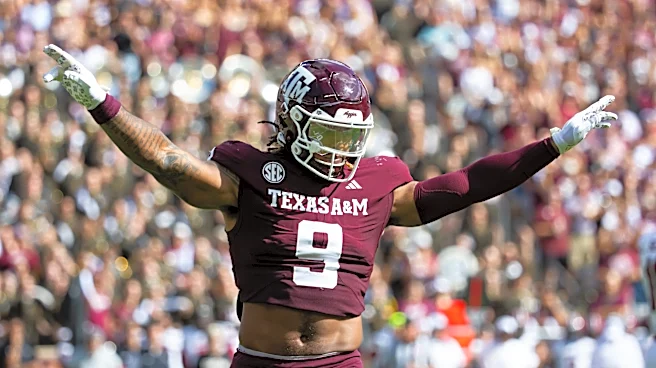
3. KC Concepcion – Texas A&M
Concepcion is a dynamic offensive weapon with return value, strong hands, and real field-tilting ability after the catch. He is explosive, fast, and dangerous whenever space is available, whether working as a slot target, underneath separator, or vertical threat. The main concern is technical refinement. He rounds some routes, is not ideally built to live through constant contested situations, and does his best work when he is allowed room to operate. Even with those limitations, the playmaking profile is easy to buy because the explosiveness and versatility are so evident.
Projection: Top 15 pick / Round 1
4. Jordyn Tyson – Arizona State
Tyson is a versatile receiver with good size, quickness, and enough movement skill to work from multiple alignments, though the slot may be where he is most dangerous. He is shifty, fluid, and capable of running a wide range of routes, with the short-area quickness to separate on underneath and intermediate concepts. The concerns are tied to reliability and durability. The hands have been inconsistent at times, and the injury history creates risk in an otherwise strong profile. When healthy, the tape reflects a high-level receiver with top-two role upside.
Projection: Round 1
5. Elijah Sarratt – Indiana (BIGGEST DRAFT CRUSH)
Sarratt is a physically reliable, well-rounded receiver with strong hands, a broad route tree, and one of the better contested-catch profiles in the class. He wins back-shoulder throws, handles contact well, and has enough toughness and ball skill to function as a dependable target in difficult situations. The athletic profile is solid rather than exceptional, and he does not consistently separate vertically without needing to win at the catch point. Even so, the completeness of the game stands out. This is the profile of a quality NFL starter with a strong chance to outperform pure testing numbers.
Projection: Round 1-2
6. Zachariah Branch – Georgia
Branch is an explosive playmaker whose value begins with elite quickness, dangerous speed, and true home-run ability in space. He is undersized and likely projects best in the slot, but the suddenness, open-field creativity, and game-breaking return value give him a special-package dimension that few receivers in the class can match. The profile is not without concern. He is a body catcher at times, needs route-running refinement, and will not win with physicality against bigger corners. Still, the explosiveness is too dynamic to ignore.
Projection: Round 1-2
7. Deion Burks – Oklahoma
Burks is a compact, explosive receiver with legitimate speed, strong lateral quickness, and the kind of movement skill that makes him difficult to corral in space. He can align outside or inside, though the slot may ultimately maximize the quickness and separation ability. There are still questions about how broad the route tree can become after being used heavily on screens and quick hitters, and the size will naturally limit some of the contested-catch profile. The upside remains significant because the athletic ability and play speed are very real.
Projection: Round 1-2
8. Germie Bernard – Alabama
Bernard is a polished, versatile receiver who can be moved around the formation and trusted to execute a broad role within a modern offense. He catches naturally, runs a varied route tree, and shows the type of reliability and football intelligence that tends to translate quickly. He is more finesse than physical and may not develop into a true vertical lid-lifter at the next level, but there is a strong baseline of skill, consistency, and functional athleticism. The overall profile points to a safe early pick with long-term starting ability.
Projection: Round 1-2
9. Omar Cooper Jr. – Indiana
Cooper brings a strong blend of size, speed, and red-zone production, with enough athleticism to threaten vertically and enough route skill to work effectively from the slot. He flashes high-end catch-making ability and can produce explosive plays, particularly when the ball arrives on time. The weaknesses are tied to consistency and physicality. There are some drops, too many missed opportunities in traffic, and a route inventory that still needs expansion. Even with that, the production, athleticism, and scoring profile make him a strong Day 1 or early Day 2 candidate.
Projection: Round 1-2
10. Antonio Williams – Clemson
Williams wins with suddenness, quick feet, and the ability to separate sharply on short and intermediate routes. He is an easy mover, can accelerate in and out of breaks, and projects well into a slot-heavy role where space and timing matter most. The issue is play strength. He is not built to win consistently with physicality, does not offer much after first contact, and may have some matchup limitations against bigger press corners. The separation skill is good enough to offset that and should make him an effective NFL target.
Projection: Round 2
11. Ted Hurst – Georgia State
Hurst is a high-upside size-speed projection with a strong physical profile, impressive high-point ability, and more quickness than expected for a bigger receiver. He tracks the football well, shows some agility after the catch, and flashes good enough releases to suggest a broader route inventory than many similarly built prospects. The risk is obvious. The drop rate is too high, the level of competition creates projection questions, and physical corners can disrupt him more than they should. He is a bet on traits, but the ceiling is substantial.
Projection: Round 2-3
12. Bryce Lance – North Dakota State
Lance is an appealing developmental receiver thanks to his combination of size, length, speed, and production. Once he gets into stride, he becomes a legitimate vertical threat and has the frame to create problems down the field or after the catch on in-breaking routes. The concerns are tied to readiness. He is somewhat stiff, the route tree remains limited, and the jump from the FCS level to the NFL will be significant. Still, the tools are real, and there is enough receiver skill present to make the projection more than just a straight-line athlete.
Projection: Round 2-3
13. Chris Brazzell II – Tennessee
Brazzell has a clearly defined NFL skill set built around size, length, strong hands, and contested-catch ability. He boxes out defenders well, catches comfortably outside his frame, and offers real downfield and red-zone value because of the way he plays through contact. The limitation is route diversity. He lacks the short-area quickness and sudden change of direction needed to become a complete separator, which narrows the role. As a complementary vertical and boundary target, though, the traits are highly usable.
Projection: Round 2-3
14. Denzel Boston – Washington
Boston is a size-and-traits receiver with an enticing physical profile and movement ability that stands out for a player of his build. He moves better than expected, has workable hands, and carries the type of frame teams want to develop on the outside. The technical side is still lagging behind. Routes tend to round off, separation is inconsistent, and the contested-catch profile does not always match what the body type suggests it should. There is clear upside here, but the projection still relies solely on development.
Projection: Round 2-3
15. Chris Bell – Louisville
Bell is a big, physical receiver whose game is built on strength, top-end speed, and contested-catch competitiveness rather than technical route-running. He is dangerous on crossers and man-beating concepts, can track the football well, and offers enough size and speed to create problems when allowed to build into routes. The route tree is not especially refined, and the ACL injury creates both short-term uncertainty and some likely draft-day slippage. The role projects more cleanly as a complementary weapon than a true featured target, but there is still real NFL value in that profile.
Projection: Round 3
Tight Ends
1. Kenyon Sadiq – Oregon
Sadiq is a rare tight end prospect with an outstanding blend of size, athleticism, versatility, and blocking willingness. The speed is obvious on tape and backed by rare testing for the position, allowing him to stress defenses up the seam, win on man-beaters, and align all over the formation. He is also a more capable blocker than most receiving-first tight ends, showing strong effort, good finishing ability, and real value working to the second level. The only real nitpicks are that he can be a little slow building into top gear and is not always as punishing after the catch as his frame suggests he could be. Even with that, the profile is special and points to an immediate-impact NFL starter with difference-making upside.
Projection: Top 10 pick / Round 1
2. Eli Stowers – Vanderbilt
Stowers is a high-ceiling tight end with excellent size, rare movement ability, strong hands, and legitimate value as an in-line blocker. He plays with length, catches comfortably outside his frame, and consistently shows the toughness to finish catches in traffic or generate extra yards after contact. The former quarterback background still shows up in the developmental arc, as there is room for growth in the route-running detail and overall polish as a pass catcher. That said, the athletic profile, blocking upside, and natural ball skills give him one of the highest ceilings in the class.
Projection: Round 1-2
3. Sam Roush – Stanford (Draft Crush)
Roush is a throwback-style tight end with NFL size, strong all-around utility, and one of the better blocking profiles in the class. He is powerful at the point of attack, plays with good effort and technique, and has the frame to handle real in-line work against front-seven defenders. As a receiver, he catches naturally, moves well for his size, and is difficult to bring down once he gets going because of his mass and leg drive. He is not an elusive open-field player and is never going to win with twitch, but the complete profile gives him a very clean projection as a starting-caliber two-way tight end.
Projection: Round 2
4. Max Klare – Ohio State
Klare is a receiving-oriented tight end with very good size, a strong frame, and enough speed to threaten the seam and work effectively after the catch. He accelerates well once he gets moving, carries his size naturally, and has enough toughness with the ball in his hands to drag defenders for extra yardage. The limiting factor is the blocking. He can get into position, but he does not consistently stay engaged, generate movement, or finish the rep the way a complete NFL tight end must. That likely pushes him toward a more specialized receiving role early in his career, though the pass-game upside is still attractive.
Projection: Round 3
5. Eli Raridon – Notre Dame
Raridon looks the part of an NFL tight end with rare length, good overall movement ability, and proven blocking value. He can line up on the line or flexed out, moves well laterally for his size, and plays enough snaps in enough different roles to project as a reliable multi-use piece. As a blocker, the trust level is high, and he consistently delivers in that area. As a receiver, there is still another level available. For a player with his size and catch radius, he does not attack the football with enough authority and does not maximize contested opportunities often enough. The ACL history also adds some risk, but the overall package is still very appealing.
Projection: Round 3-4
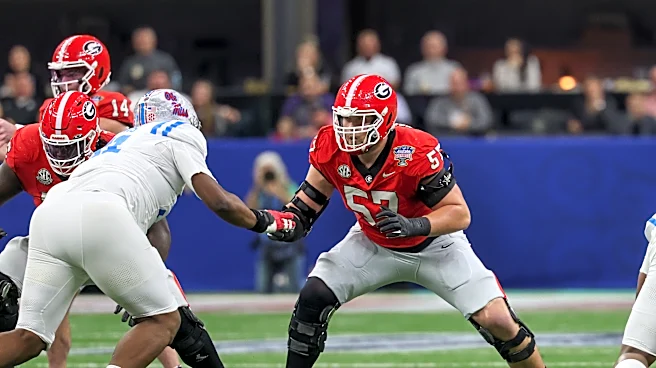
6. Oscar Delp – Georgia
Delp is an athletic, fluid-moving tight end with the kind of movement skill that stands out immediately. He has good speed, useful agility, and enough technical competence as a blocker to at least stay functional in that phase, even if lack of strength keeps him from controlling defenders consistently. The passing-game profile is intriguing because of the athleticism, but it also comes with real questions. The production never fully matched the talent, there are some drops on tape, and he does not offer much tackle-breaking value after the catch. There is developmental upside here, but it is a tougher projection than the physical tools alone would suggest.
Projection: Round 3-4
7. Jack Endries – Texas
Endries projects as a dependable, versatile tight end who can help in multiple phases and settle in quickly as a reliable No. 2 option. He blocks with good pop, stays engaged through the rep, and has enough experience and alignment flexibility to be trusted either in-line or detached. He moves well overall and has adequate speed to contribute as a receiver, though the route-running lacks sharpness and he can be slow getting in and out of cuts. He may not offer the same ceiling as some of the players above him, but the all-around dependability gives him a clear path to meaningful NFL snaps.
Projection: Round 4
8. Michael Trigg – Baylor
Trigg is a long, rangy receiving tight end with big hands, a wide catch radius, and a natural ability to pluck the football cleanly. He is a good enough athlete to threaten space and has the size to absorb contact, while also showing enough power after the catch to fight for extra yardage when he gets going. The concerns are tied to refinement and complete-role value. He is not especially elusive, tends to run more straight-line than dynamic, and the blocking falls short both in technique and urgency. The receiving tools are draftable, but the projection is more as a complementary pass-game piece than a true every-down tight end.
Projection: Round 4-5
Offensive Tackles
Francis Mauigoa
Mauigoa is one of the safest offensive tackle prospects in the class because of his blend of size, athletic ability, footwork, and proven production in pass protection. He gets out of his stance quickly, carries light feet for a big man, and shows very little wasted movement in his kick slide, which allows him to stay clean and controlled against speed. His hands are powerful, he stays engaged through contact, and once he gets a defender latched, the rep is usually over. He also anchors well after the initial jolt and consistently regains balance without losing the rep. The main concern is that he is not always at his best in space, where angles and target acquisition can get a little messy, but that is a relatively small weakness in an otherwise complete profile.
Projection: Top 7 pick / Round 1
2. Kadyn Proctor (Draft Crush)
Proctor is a massive left tackle prospect with rare size, strong hands, quick enough feet, and a ceiling that is as high as any blocker in the class. He anchors extremely well, absorbs power with ease, and once engaged, has the strength to control where rushers go. For a player of his size, he moves better than expected in space and looks comfortable in zone concepts, which adds another layer of value to the profile. The inconsistencies show up in his rep-to-rep balance and coordination, as his feet do not always stay in sync with his upper body and he can get caught lunging or overreaching. Even with that, the physical profile, experience, and flashes of dominance make him an easy first-round talent with Pro Bowl upside.
Projection: Round 1
3. Caleb Lomu
Lomu is an athletic, pass-protection-oriented left tackle with very good length, light feet, and the kind of movement skills teams look for on the edge. He is quick out of his stance, matches speed well early in the rep, and consistently shows the foot quickness to survive on an island. He is also effective in space and brings more value in the pass game right now than as a run blocker. The issues come once rushers force him into recovery mode. He can overreach against inside speed moves, stop moving his feet on contact, and lose the sync between upper and lower body when the rep becomes more reactive. He also needs more finishing power and a stronger initial strike. The upside is that of a quality starting left tackle, but there is still polish needed.
Projection: Round 1
4. Spencer Fano
Fano is a high-upside tackle prospect with experience on both sides, a lean athletic frame, and the kind of quickness that stands out immediately. He gets out of his stance fast, plays with clean overall technique, and delivers forceful hand strikes when he lands correctly. He also stays engaged well and has enough movement skill to fit what many teams want from modern offensive tackles. The concern is functional strength and balance. He can be pushed back, winds up on the ground too often, and has a tendency to overextend or lunge, which creates instability through the rep. There is clear first-round ability here, but the floor is lower than the top tackles because so much of the projection depends on him getting stronger and more controlled.
Projection: Round 1-2
5. Blake Miller
Miller is an experienced right tackle with very good size, length, and lower-body movement skills, giving him a strong baseline as a future starter. He is explosive out of his stance, arrives under control with bent knees and ready hands, and moves well in space for the position. His feet stay alive throughout the rep, which helps him recover and stay attached in pass protection. The developmental work is mostly centered on the upper body. Hand placement can get too high, the punch does not always carry enough force, and he still needs more strength to maximize his physical gifts. Even so, the athletic foundation, consistency, and experience make him one of the more reliable tackle projections outside the top tier.
Projection: Round 2
6. Monroe Freeling
Freeling is a long, athletic tackle with starter traits and enough positional flexibility to project as a swing option early before potentially growing into a bigger role. He is quick off the line, works to stay engaged, and once he gets attached to a defender he can be difficult to shake. There is also enough athletic ability in the frame to believe he can handle NFL edge movement with more seasoning. The problems are mostly technical and balance-related. He lacks power in his punch, hand placement needs refinement, and too many reps end with him off balance or on the ground. The upside is real because of the length and movement skill, but the profile still feels more developmental than plug-and-play.
Projection: Round 2
7. Gennings Dunker
Dunker projects as a tough, experienced lineman whose best work comes in tight quarters where effort, technique, and competitiveness matter more than pure athleticism. He has great size, long arms, and a strong disposition for the position, staying engaged through the rep, driving his feet, and fighting until the whistle. He does not give up on plays and clearly brings the kind of mentality offensive line coaches value. The limitation is athletic ceiling. He is not a natural mover in space, can be displaced off the ball, and is best suited to phone-booth work rather than wide-open assignments. The profile suggests a reliable right tackle candidate with some inside flexibility rather than a high-end edge protector.
Projection: Round 2-3
8. Max Iheanachor
Iheanachor is a traits-based tackle prospect with excellent size, length, and movement ability, but he remains one of the rawer evaluations in the group. He has the body type teams covet, can move extremely well for a thickly built blocker, and has pass-protection production that will draw attention. The issue is that the game still looks new to him at times. Instincts are inconsistent, awareness is not fully developed, hand placement can get too high, and his upper and lower body do not always stay connected through the rep. There are flashes of high-level tackle play, but they are mixed with reps that show how much developmental work is still ahead. The long-term ceiling is high, though the early projection is much more about patience than immediate reliability.
Projection: Round 2-3
9. Caleb Tiernan
Tiernan is a massive, thickly built lineman whose physical presence stands out immediately and whose best work currently comes in the run game. He plays with a fighter’s mentality, looks to engage physically, and is more effective moving forward than retreating in pass protection. The concerns are tied to projection at tackle. Edge defenders can get inside his frame and control reps, his punch is not as forceful as it should be for a player of his size, and shorter arms may eventually push him inside. If a move to guard comes, more bend and flexibility will be needed there as well. He is a tough evaluation because the size and demeanor are attractive, but the best NFL fit may not be on the edge full-time.
Projection: Round 3-4
10. Dametrious Crownover
Crownover is a tall, long right tackle prospect whose value starts with size, strength, and the ability to hold ground once he gets engaged. He is more trustworthy in the run game, particularly in zone concepts where he can latch on and steer defenders, and he handles power better than speed in pass protection. The limitations show up quickly against movement. He is slow out of his stance, late with his hands, lacks natural fluidity, and does not look comfortable in space. He also plays too tall and does not show the body control or bend that would make an easy transition inside. The profile is that of a limited but potentially functional right tackle whose best chance comes in a system that minimizes exposure to speed and emphasizes downhill work.
Projection: Round 4
Interior Offensive Linemen
1. Chase Bisontis – Texas A&M
Bisontis projects as one of the cleanest interior offensive linemen in the class because of how active, aware, and controlled he is snap to snap. He hunts for work, reacts quickly to movement around him, and shows light, quick feet that allow him to function well both in traffic and in space. There is a clear feel for the position in his game, and that processing speed shows up in the way he adjusts to stunts, bodies, and late movement. He may not be the most overpowering mauler in the group, but the athleticism, football IQ, and consistency point to a high-level starting guard or center with scheme versatility.
Projection: Round 1-2
2. Olaivavega Ioane – Penn State
Ioane is a thick, powerful interior blocker who thrives in a phone booth and consistently wins with strength, anchor, and force at the point of attack. He does not get walked back often, absorbs contact extremely well, and plays with the kind of lower-body power that shows up immediately in both pass protection and the run game. He is a bully when blocking downhill and can push the pile or move defenders off their spot once he gets locked in. The limitation is range. He is not a fast mover and does not offer much value in space, which makes him a better fit for a tighter, more physical interior role than a movement-heavy one. The floor is high and the profile fits an early NFL starter at guard.
Projection: Round 1-2
3. Logan Jones – Iowa (Draft Crush)
Jones looks like one of the safer center projections in the class because of his experience, polish, and readiness to handle NFL interior chaos. He was a four-year starter, won the Rimington Trophy as the nation’s top center, and comes out of one of the better offensive line development programs in college football. He is quick off the ball, constantly looks for work, and plays with the kind of urgency and edge that gives him a chance to contribute immediately. There are size limitations, and pass protection can look a little strained against bigger interior defenders, but he consistently holds his own and plays bigger than the measurements suggest. The run-blocking profile is especially strong, and the overall game looks very close to NFL-ready.
Projection: Round 2
4. Jake Slaughter – Florida
Slaughter plays the position like a veteran, showing a strong anchor, excellent feel in traffic, and the ability to hold up against quality competition. He does not get pushed off his spot easily, hunts for work, and looks comfortable operating in the fire and chaos that comes with life at center. On paper he can look a little undersized, but the play strength and competitive temperament help him play bigger than the measurements. There is still room to add strength, but the overall package suggests a player who can step into a lineup early and hold his own. The combination of anchor, awareness, and poise gives him one of the better Day 1 projections in the class.
Projection: Round 2
5. Trey Zuhn III – Texas A&M
Zuhn projects better inside than outside because of his arm length, bend, and athletic profile, and center may ultimately be his best NFL spot. He gets out of his stance quickly, shows good hand usage and a solid punch, and has the movement skills to function well in an interior role where quickness and leverage matter. The concerns are mostly projection-based. He has played mostly left tackle, so there will be an adjustment period inside, and his current frame and strength level may not be enough yet to consistently deal with NFL power at center or guard. He also has a tendency to play a little too soft with defenders at times instead of fully striking through them. Still, the versatility, athleticism, and long-term upside make him one of the more intriguing conversion candidates in the group.
Projection: Round 2-3
6. Keylan Rutledge – Georgia Tech
Rutledge is a strong, consistent interior blocker whose best work shows up when he is allowed to move and strike with momentum. He brings good quickness, enough explosiveness, and real value in space, particularly on pulls where he can arrive with force and knock defenders around. His initial impact is impressive, and there is enough speed and play strength to see a dependable NFL starter. The issue is finishing. Too many reps end with a body check rather than a full engagement and elimination, which leaves some meat on the bone in both the run game and second-level work. Even so, the overall game is strong, and the floor looks relatively safe for a player in the Day 2 range.
Projection: Round 2-3
7. Emmanuel Pregnon – Oregon
Pregnon is an ultra-experienced interior blocker with four years as a starter and a profile built on strength, reliability, and technical steadiness. Once engaged, he does a very good job of controlling the rep and driving defenders backward, which gives him clear value in tight quarters and at the point of attack. The downside is that the game is not especially explosive or sudden. He can look stiff, is not particularly quick out of his stance, and does not offer the kind of easy movement traits that raise a lineman’s ceiling. What remains is a strong, experienced guard prospect whose technique and power should carry him onto the field, even if the overall upside is not elite.
Projection: Round 2-3
8. Connor Lew – Auburn
Lew is an experienced interior lineman with 24 starts over three seasons, good instincts, and enough mobility to climb to the second level and function within the structure of an offense. He generally understands where he needs to be, plays with decent control, and has enough movement ability to work effectively outside the phone booth. The concern is power. He can struggle when isolated one-on-one with strong nose tackles, does not show a consistently firm anchor, and can be too content staying on his first assignment instead of actively searching for extra work. The torn ACL in October 2025 also affects the overall evaluation and likely costs him some pre-draft value, even if the long-term outlook is manageable. The intelligence and mobility are attractive, but the lack of true interior power lowers the ceiling.
Projection: Round 3
9. Billy Schrauth – Notre Dame
Schrauth is a thick-bodied, phone-booth guard whose value comes from toughness, tight-area power, and the ability to function in a more physical downhill system. He has roughly the equivalent of two full seasons as a starter, brings leadership value as a team captain, and fits best in an offense that lets him work in close quarters rather than asking him to win with range and fluidity. The limitations are pretty clear. His feet are slow and choppy, the movement skills are capped, and the overall ceiling looks more functional than dynamic. The knee injury from 2025 is part of the profile as well and adds another layer to the evaluation. He may never be more than average, but there is still a role for a player with his play style in the right scheme.
Projection: Round 4
10. Kage Casey – Boise State
Casey projects inside because the arm length and overall size are not ideal for tackle, and the best NFL path looks like guard where the game becomes more compact and physical. He has very strong hands and can violently throw defenders aside when he lands cleanly, which gives him some traits worth developing on the interior. The problems are consistency and overall athletic profile. He can look stiff, will whiff at times, and does not always stay engaged through the full rep. That combination makes it difficult to project him as a full-time starter. The most realistic outcome is a versatile backup who can cover multiple spots and bring some physicality when called on.
Projection: Round 4
3 players who can fit in Indianapolis
Elijah Sarratt, WR, Indiana
Sarratt makes sense for Indianapolis because he offers the kind of size, toughness, and ball-winning ability that could eventually replace Michael Pittman Jr.’s role in the offense. He can win on back-shoulder throws, work the intermediate area, handle contested catches, and give the Colts a dependable boundary target who fits a physical passing game. In the second or third round, he would profile as a long-term WR2 with a path to becoming Pittman’s replacement.
Blake Miller, OT, Clemson
Miller fits the Colts as the right tackle who can potentially replace Braden Smith and compete against Jalen Travis. He has the size, length, foot quickness, and movement skills to work in Indianapolis’ zone blocking schemes, and his experience gives him a strong starting point. He still needs refinement with strength and hand usage, but in the second or third round he would make a lot of sense as a long-term answer at a premium position.
Emmett Johnson, RB, Nebraska
Johnson fits the Colts as a Day 3 depth back who can handle backup snaps and help in the passing game. He brings effort, burst through the hole, and receiving value, which would give Indianapolis a useful complementary option behind its top backs. He would not need to carry the offense, but he could fill a clean RB2 or RB3 role and provide reliable rotational value.