




Minnesota Timberwolves at San Antonio Spurs
Date: May 6th, 2026
Time: 8:30 PM CDT
Location: Frost Bank Center
Television Coverage: ESPN
Game 1 was not pretty. It was not elegant. It was not the kind of series opener that ends with everyone breathlessly talking about offensive genius or some masterclass in modern basketball.
No, this was a rock fight. It steel-cage match with a shot clock. And somehow, the Timberwolves survived it.
They walked into Frost Bank Center, stole home-court advantage, and escaped
with a Game 1 win by the skin of their teeth. This was not a comfortable victory. This was the Wolves clinging to a seven-point lead late, watching it shrink to four, then two, then holding their breath as Julian Champagnie’s potential game-winning three clanged off the rim and allowed every Wolves fan to exhale.
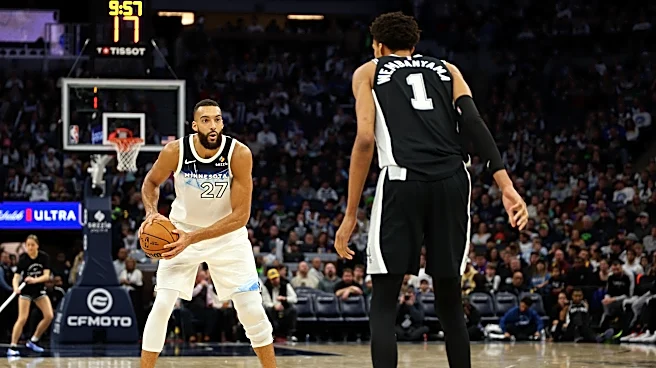
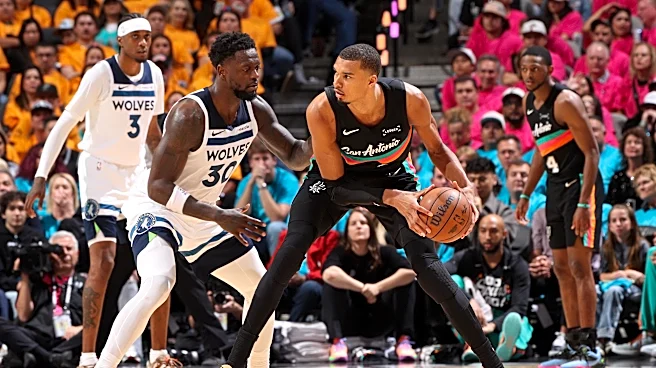
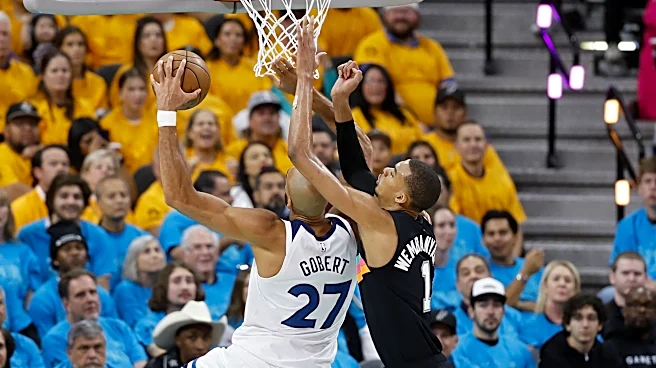
From the opening possession, it was obvious this series was not going to look anything like the matchup with Denver. Against the Nuggets, Minnesota discovered that Denver’s rim defense was basically a velvet rope with no bouncer. Attack Jokic, make him move, pressure the paint, force rotations, rinse, repeat. Against San Antonio? Different universe. The game opened with blocks on both ends, which was appropriate because Victor Wembanyama spent the night reminding Minnesota that layups are now a privilege, not a right.
Twelve blocks.
Twelve.
Well, maybe seven or eight blocks and a few missed goaltends and fouls if you believe Chris Finch (and of course we do!). Either way, Wembanyama managed to turn the paint into a restricted military zone. The Wolves had 24 points’ worth of shots sent flying in the opposite direction, and somehow they still found enough offense to win. That alone should tell you two things: this Wolves team has some real playoff scar tissue, and this series is going to be an absolute grinder.
Minnesota did not have anyone who could match Wembanyama’s alien anatomy, because nobody does. But what the Wolves did have was collective defensive toughness. They made San Antonio work. They kept the Spurs to 102 points. They turned the game into a series of ugly possessions, hard contests, forced decisions, and physical collisions. Both teams landed punches. Both teams went on runs. Neither could fully break away.
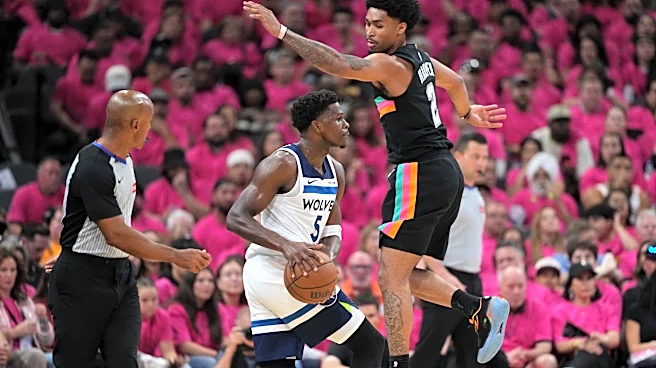
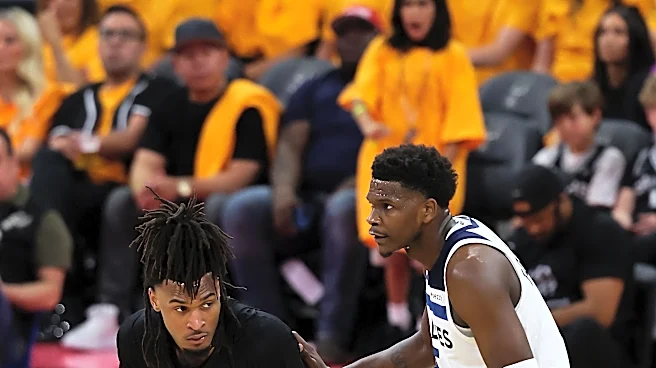
And then there was Anthony Edwards. His 18 points will not end up on one of those glossy playoff graphics. By Ant standards, it was almost pedestrian. But if you watched the game, you understood how important his presence was. After everything with the knee, after the uncertainty, after wondering whether Minnesota’s superstar would even be available, he came back and gave the Wolves just enough downhill juice and clutch shooting to matter.
He was one of the few players who could look at Wembanyama lurking near the rim and still say, “Yeah, I’m going anyway.” He was willing to stare down that massive wingspan and launch a cold-blooded three right past it.
So many Wolves possessions became a game of cat and mouse. You could see guys driving, seeing Wemby’s shadow stretch across the lane, and suddenly reconsider the plan. Minnesota had multiple shot-clock violations. Other possessions ended in desperation heaves because the Spurs’ defense, powered by the human cell tower in the middle, had swallowed up the first, second, and third option.
So even if Ant was not fully Ant, he gave Minnesota something it desperately needed: pressure. Confidence. A killer instinct.
Julius Randle had his moments too, especially late, when Minnesota needed someone to manufacture offense through brute force. It was not always pretty, but in the fourth quarter, when the Spurs were pushing and the Wolves were trying not to cough up a game they had spent all night wrestling into their possession, Randle used his strength to bully his way into points, draw contact, and keep Minnesota upright.
Mike Conley was enormous. Filling in for the injured Donte DiVincenzo and Ayo Dosunmu, Conley reached into the old-man bag and pulled out four critical threes, the exact kind of stabilizing shot-making Minnesota needed. Every one of those makes mattered.
Naz Reid mattered too. As the third big in Minnesota’s frontcourt rotation, he gave the Wolves a needed offensive counterpunch, attacking the rim when the opportunity was there and spacing the floor when San Antonio’s defense tilted inward. Against Wembanyama, you need bigs who can force decisions. Naz did enough of that to help Minnesota survive.
But surviving Game 1 is not the same thing as solving the Spurs. That’s the danger heading into Game 2. The Wolves stole home court. They proved they can win this kind of game. They sent a little doubt into every talking head who confidently penciled San Antonio into the Western Conference Finals because Wembanyama is the future and the NBA loves a coronation story.
But now comes the real opportunity: Minnesota can leave San Antonio up 2-0.
A Game 2 win changes everything.That puts the young Spurs under the kind of psychological pressure they have not had to deal with yet. That forces Wemby and company to go on the road against a battle-tested Wolves team that has spent the last three postseasons collecting scars, receipts, and road wins in hostile buildings.
Game 1 was the first bite.
Game 2 is where the Wolves decide whether they are satisfied with that, or whether they are ready to really sink their teeth in.
With that, here are the keys.
1. It Begins and Ends With Defense
If Game 1 made anything clear, it is that points are going to be expensive in this series.
Minnesota is not walking into this matchup and dropping 125 unless something truly bizarre happens. Wembanyama’s rim protection is too overwhelming. The Spurs can turn ordinary possessions into escape rooms. That means the Wolves have to win the same way they won Game 1: by making San Antonio just as uncomfortable.
Holding the Spurs to 102 points was a strong start, but it was not perfect. Minnesota still gave up too many easy looks, especially when San Antonio got out in transition. In the half court, the Wolves were able to lock in, communicate, and force the Spurs into tougher possessions. But when San Antonio ran off misses, pushed after makes, or caught Minnesota cross-matched, things got dicey fast.
That cannot be the tradeoff. The Wolves cannot spend 20 seconds defending beautifully only to get burned because they are late getting back the next trip. Transition defense has to be a priority. The Spurs are young, fast, and fearless. If you let them run, they will. If you let them build confidence with easy baskets, suddenly their half-court offense gets lighter too.
Minnesota’s defense has to be connected from possession one. Wall off the paint. Contest without fouling. Get back. Finish possessions with rebounds. Make San Antonio earn everything.
Because the Wolves are not winning this series in a track meet. They are winning it in the mud.
2. Stay Out of Foul Trouble
Jaden McDaniels and Julius Randle both finished Game 1 with five fouls. Stephon Castle fouled out for San Antonio. The whistle was tight, and while that spoke to the physicality of the game, it also created a dangerous tightrope for Minnesota.
The Wolves cannot afford to have McDaniels stapled to the bench for long stretches. We saw in the Denver series how quickly things shift when Jaden picks up early fouls. In Game 5 against the Nuggets, he got two quick ones and Minnesota’s defense immediately lost most of its bite. Against San Antonio, his availability is even more important. He is one of the few Wolves with the length, feet, and defensive instincts to bother multiple Spurs actions. He has to be on the floor. He has to be aggressive. But he also has to be smart.
Same goes for Randle. Same goes for Gobert. Same goes for Naz. Against Wembanyama, the Wolves need every big body they have. They cannot afford cheap fouls 30 feet from the basket. They cannot afford frustration fouls. They cannot afford reaching when verticality will do. Every whistle that sends a key Wolf to the bench makes life easier for San Antonio.
The best ability is availability, and in this series, that might be more than a cliché. It might be the difference between a 2-0 lead and a tied series.
3. Keep the Offense Moving, And Find Ways to Remove Wemby From the Play
Game 1 was a warning: if the Wolves let San Antonio’s defense get set, possessions can die slow, painful deaths.
Wembanyama changes everything. He doesn’t just block shots. He changes decisions before they happen. He makes drivers hesitate. He makes cutters pull up short. He makes guys second-guess what used to be automatic. That is how you end up with multiple shot-clock violations and late-clock prayers.
The answer is not to simply “be tougher” and drive into him anyway. That is how you end up as Block No. 13.
The answer is movement.
The ball has to move side to side. The Wolves need to make San Antonio’s defense rotate, make Wemby turn his head, make him guard multiple actions instead of letting him sit in the paint like a final boss waiting for challengers. The more static Minnesota becomes, the more powerful he gets.
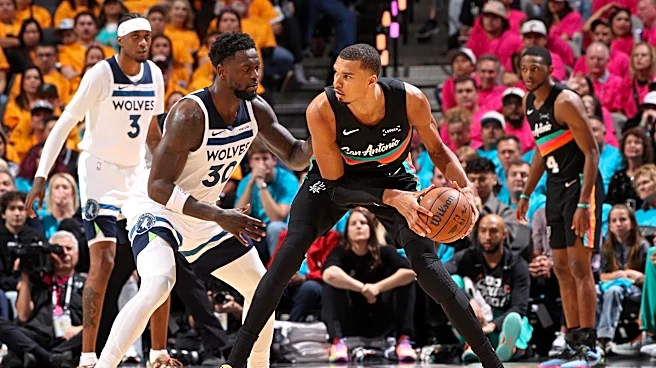
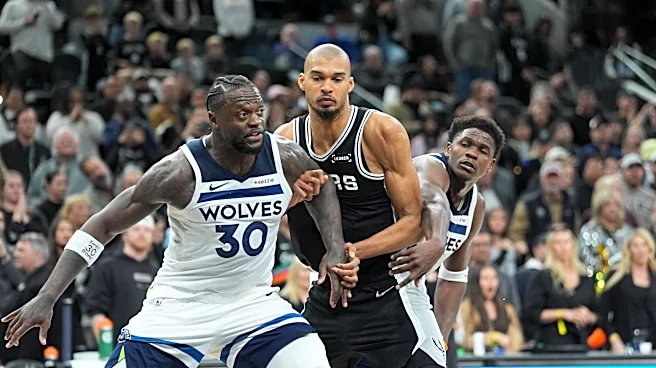
One of the most encouraging wrinkles late in Game 1 was the way Randle helped wall off Wembanyama from the play, using his body to seal him and create cleaner driving lanes. That is the kind of stuff Minnesota has to lean into. Screen him. Pin him. Drag him away from the basket. Make him choose between helping and giving up something else.
You are not going to eliminate his impact. But you can make him work harder to apply it.
That means Ant attacking at the right times. Randle using his strength intelligently. Naz spacing and cutting. Conley organizing. The offense has to be active, deliberate, and patient enough not to panic when the first look disappears.
Against Denver, the Wolves could attack the rim as Plan A.
Against San Antonio, Plan A has to be creating the conditions where attacking the rim is even possible.
4. Hit Shots (And For the Love of KG, Hit Your Free Throws)
Minnesota shot 38% from three in Game 1. They needed every bit of it.
Conley’s four threes were massive. Edwards’ late shot mattered. Naz hitting from deep mattered. In a game where the rim was guarded by a skyscraper with timing, the three-point line became the team’s lifeline.
The Wolves do not need to shoot 45% from deep to win this series, but they cannot afford one of those 24% disaster nights. They need mid-30s or better. They need the open looks to go down. They need to punish the Spurs when the defense collapses or when Wembanyama is pulled out of position.
But it is not just about making shots. It is about generating the right ones. No desperation heaves because the possession got stuck. No contested threes early in the clock because someone didn’t want to drive. No wasted chances after beautiful ball movement. If the Wolves create clean looks, they have to cash them in.
And free throws? …Enough.
This has been a season-long issue, and it cannot follow them deeper into the playoffs. The margin in this series is too thin. Every point matters. When the Wolves earn trips to the line, they cannot treat them like extra credit. These are professional basketball players. Good ones. There is no reason for the free-throw percentage to resemble something from a middle school tournament.
5. Stay Physical and Keep Punishing Wembanyama
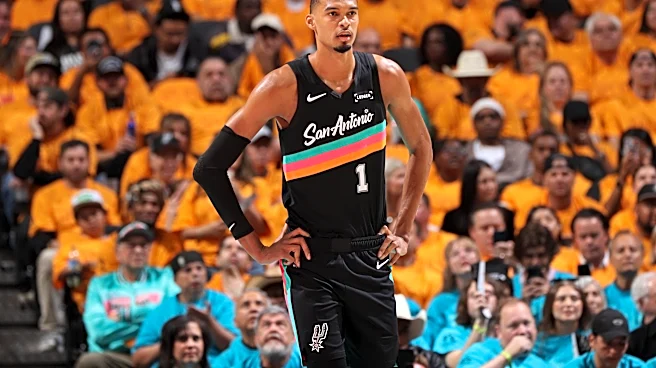
Wembanyama had a triple-double. He blocked 12 shots. His defensive impact was absurd.
He also scored just 11 points.
That is not an accident.
Minnesota did a strong job making his offensive life uncomfortable. They bodied him. They leaned into him. They denied easy catches. They made him fight for position. They forced him into an 0-for-8 night from three. Now, will that happen again? Probably not. Wemby is too good, too talented, too inevitable to expect another quiet scoring night.
But the approach has to stay the same.
Make him feel the series.
Randle has to keep using his strength. Gobert has to make him work inside. Naz has to be physical. Everyone has to box out. Every drive by San Antonio has to be met with bodies, not open lanes. The Wolves cannot allow the Spurs to live off second-chance points and easy putbacks, which nearly cost them Game 1.
This is where Minnesota’s size and experience need to matter. San Antonio has the alien. Minnesota has the grown men. Use them.
The Wolves are not going to out-finesse the Spurs. They are not going to win a verticality contest with Wembanyama. They have to make this a strength battle. A positioning battle. A will battle.
Make the young team feel the older team’s weight.
The First Bite Wasn’t Enough
The Wolves stole Game 1, but stealing home court only matters if you protect the advantage it gives you. A split in San Antonio is fine. A 2-0 lead heading back to Target Center is something else entirely. That is a statement. That is pressure. That is a young Spurs team suddenly facing the reality that playoff series are not won by highlights, hype, or wingspans alone.
Minnesota has a chance to put real weight on San Antonio’s shoulders. The Spurs are talented. They are hungry. They are not going away because they dropped one close game at home. Wembanyama will adjust. Their coaches will adjust. Their guards will push harder. Their crowd will be louder. Everything about Game 2 will be more difficult.
Let it be.
The opportunity remains the same.
The Wolves have the experience. They have the scars. They have the defensive identity. They have the physicality. They have just enough offensive punch, if they execute, to make this series theirs.
But it will not happen by accident. They need to defend like Game 1 was not good enough. They need to stay out of foul trouble. They need to move the ball with purpose. They need to hit their threes. They need to stop throwing away free points at the line. They need to make Wembanyama feel bodies every single trip down the floor.
The first bite drew blood.
Now comes the next one.
This is where the apex predator does not relax after wounding its prey. It tightens the grip. It gets more physical, more focused, more relentless. It keeps attacking before the opponent has a chance to recover.
Game 1 was the warning.
Game 2 is the chance to make San Antonio truly feel the weight of the hunt.