

2026 stats: .230/ .289/ .424, .713 OPS, 108 wRC+, 0.4 fWAR (121 G, 505 PA), -17 OAA
So begins the individualized account of the 2026 Giants. The atomization of failure. The Bummer Parade. The team failed because many of its players failed — a core that weighed-down rather than carried. Adames is first alphabetically and fittingly first to be scrutinized, because as the recipient of the Giants largest free-agent contract, the first major Free Agent signing during the Posey Era, the veteran shortstop
should be considered the grand marshal of this dejected march.

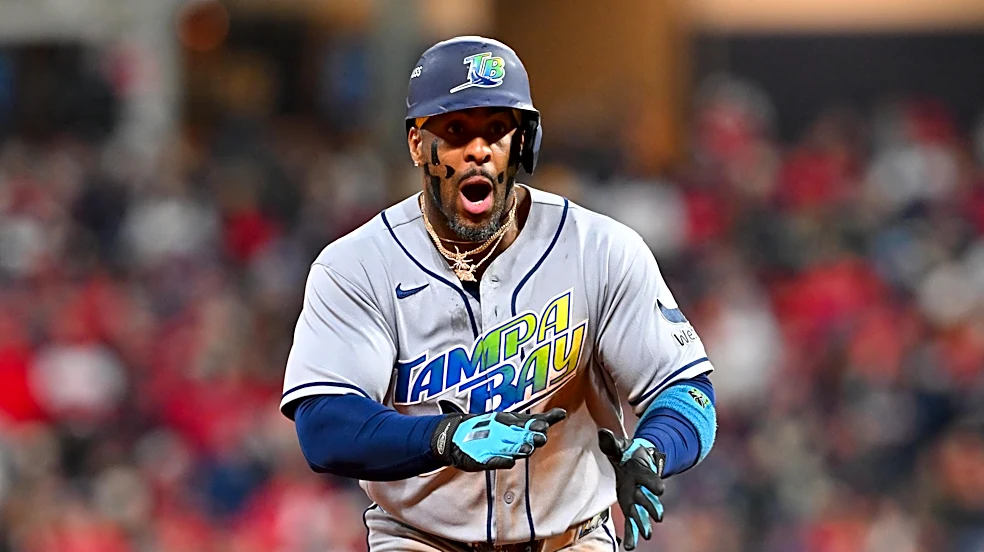
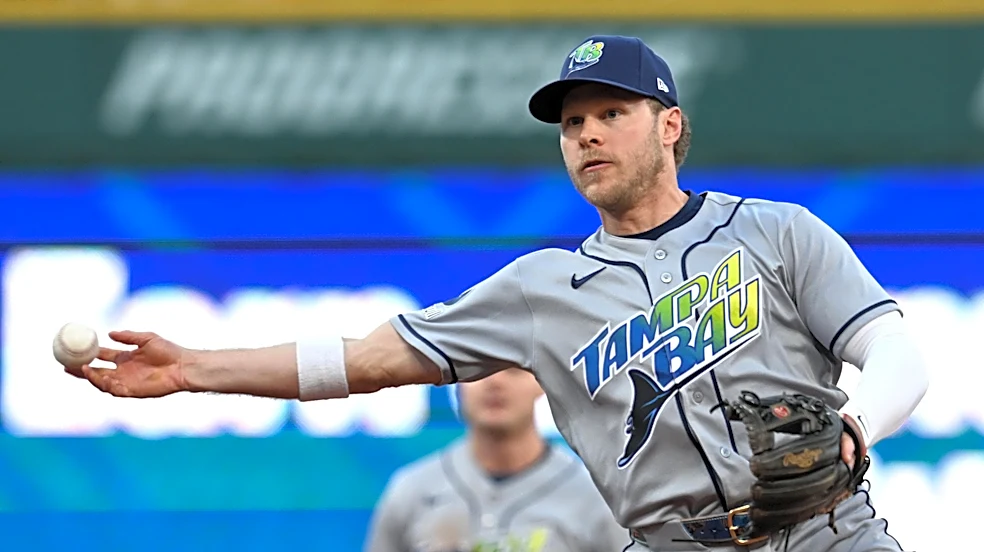
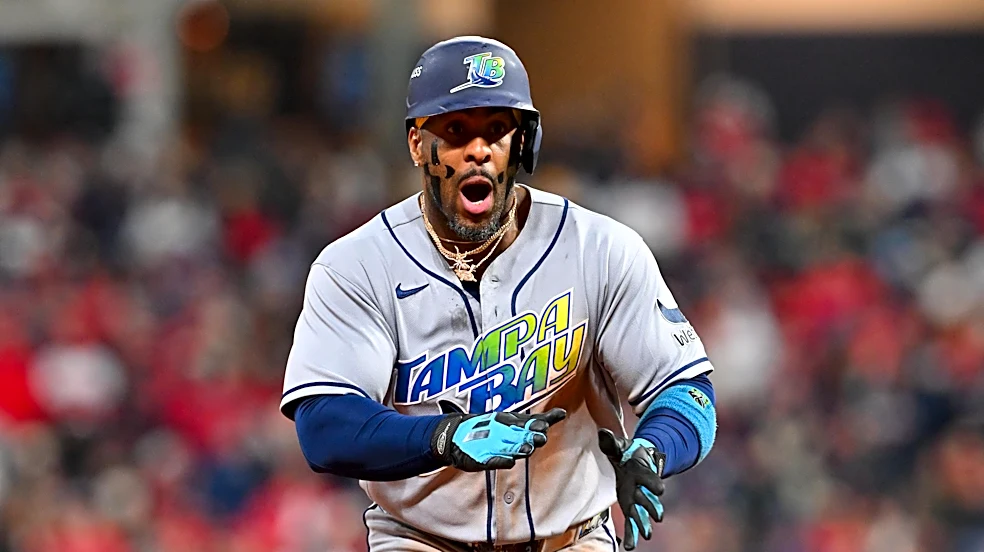
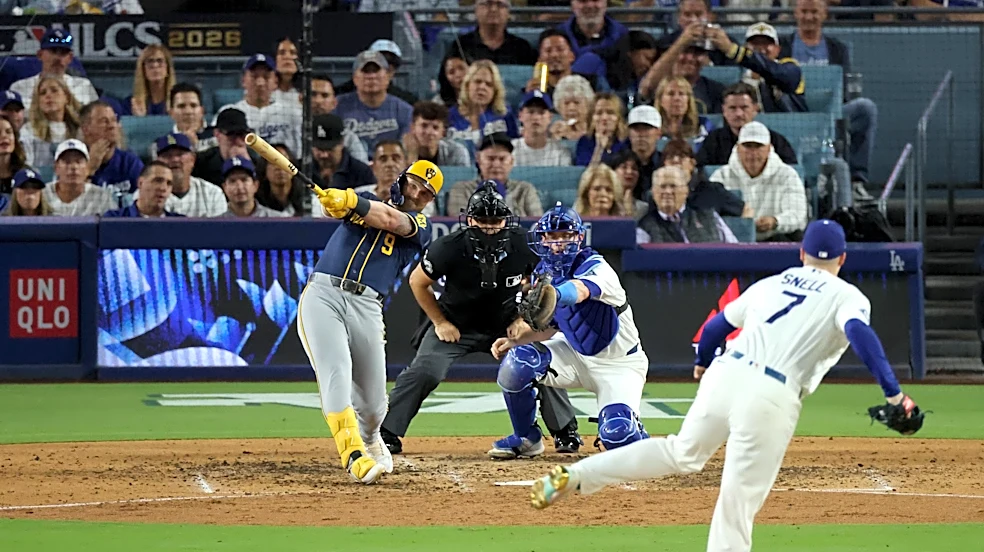
Before arriving in the Bay, Adames spent his career with the Tampa Bay Rays, a team currently wrestling it out with the Guardians for the American League Pennant, and the Milwaukee Brewers who just proton-torpedoed the Death Star to blast into their franchise’s first World Series appearance in 44 years. He played in the postseason in five of his first seven seasons. HE was in Eden, a winner’s paradise with upwardly-mobile clubs, but now, since signing with the Giants, he’s “east” of it. 2025’s 81-81 record was the first time Adames was a part of a non-winning team, and now he’s tasted a losing record for the first time in his career.
“It sucks” was the blunt assessment Adames provided after receiving an injection in his strained left elbow that ended his season a month early. The not-winning certainly hurts, but I imagine there’s an even harsher burn felt when Adames considers the fact that Milwaukee has earned the best record in baseball in consecutive years since he left. His absence to their success is correlation not causation (probably), but that logic is sheer armor in the cold loneliness of a sleepless night as the demons descend.
We are our own worst critics, and I’m not here to pile on, just reiterate a known fact: The 2026 Giants were bad in part because Adames was bad. His Win Probability Added was in the negatives (-1.68). He led the Giants position players last year with a 4.4 fWAR, but in 2026, that number plummeted to 0.4 — the lowest mark of his career (including the 60-game 2020 season), and good for just 11th on the team. Lower than injured back-up catcher Daniel Susac (1.0), who logged nearly 350 less plate appearances. Lower than Jonah Cox (0.6) who started the year in Double-A Richmond and played in nearly half as many games at the Major League level.
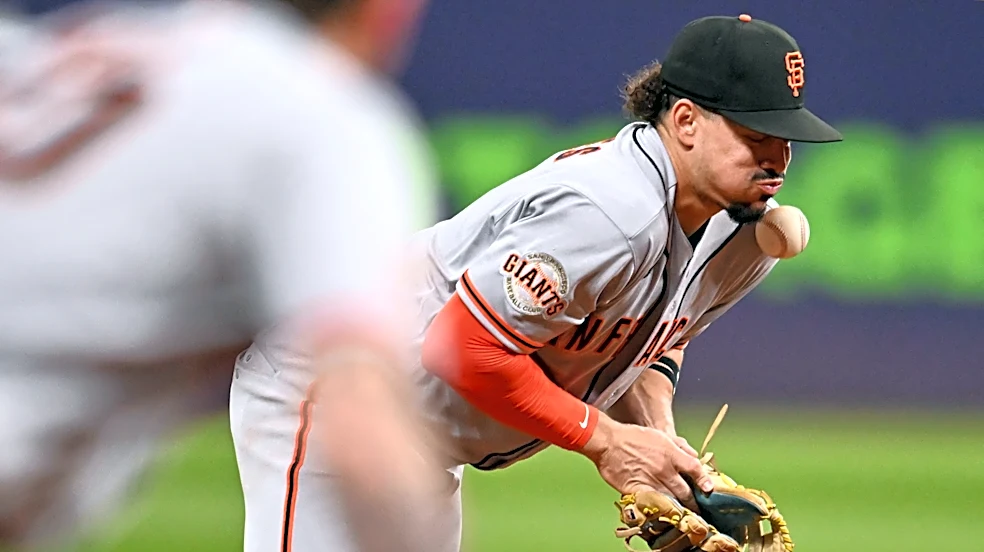
Horrid defense is partially to blame for Adames’s fWAR being so low. Generally defensive statistical numbers are best at reflecting the extremes. Pete Crow-Armstrong’s MLB-leading 26 Outs Above Average mark feels appropriately illustrative of how good he is with a glove. Then, on the other end of the spectrum, there’s Adames. His -14 Fielding Run Value was the lowest of his career andthe second lowest of all position players across the Majors. His -17 Outs Above Average also found itself in the dark basement of the league’s 1st percentile, tied with Washington’s shortstop CJ Abrams.
These numbers resonant. They feel accurate and true. Adames was a bad shortstop, and the free fall started from the very beginning. The first time Adames handled a baseball in 2026 he botched a double-play attempt behind Logan Webb by spiking his throw to first base, allowing a runner to score.
10 of his 18 errors on the season were from his arm. To be fair, some of these were not egregious misfires, but unnecessarily challenging short-hops in front of a trio of inexperienced first basemen like Rafael Devers, Casey Schmitt, and Bryce Eldridge. One could argue, as I have in the past, that as the Ringo of the infield, the first baseman is there to support the genius of the other three. But that assumes a level of exceptionalism. While Matt Chapman and Luis Arraez fielded their position at a high, somewhat inspired, level, Adames operated on a much lower plane. Range was a serious issue. In different positional alignments, shaded towards third base or second base, Adames struggled to cover the holes that were created by these shifts. He looked stiff, often disjointed, and out of rhythm with himself.
A persistent back issue helps explain this defensive regression. The injury not only hampered Adames’s movement during play, but managing the pain also cut-in to his usual pre-game preparation. Between plate-appearances and between innings, Adames would be seen with his lower back swathed in a cumbersome cummerbund-like compression heat wrap thing in a desperate attempt to keep the issue at bay. Though the discomfort never officially led to a stint on the injured list, it caused periodical in-game exits and periods of forced rest, before he went on the IL in the final month of the season with an elbow strain.
121 games was Adames’s lowest games played total (excluding 2020) since his rookie year in 2018. He had missed just three games over the last two seasons.
Offensively, there’s not much on the surface that show a significant difference between his performance in 2025 and 2026. Sure he didn’t hit 30 homers again, coming up nine short, but he also logged 180 less plate appearances. His batting average and slugging percentage held pretty much steady from the previous year with some nominal increases.
His wRC+ season dropped from 108 to 98 — a drop best explained by his .289 on-base percentage (.311 wOBA), his lowest of his career.
Walks were a struggle. This was a team-wide epidemic, but on an individual level, you could argue that Adames set the tone as an early choice by Tony Vitello to hit lead-off. Over the first month of the season Adames, dealt with another painfully slow start, posting a 68 wRC+. A good portion of those plate-appearances came at the top the batting order where he walked just seven times in 139 PA with an overall .259 OBP.
Now Adames isn’t known for his disciplined approach at the plate, but throughout his career, he’s been much better at getting on base than what he showed in early 2026, and 2026 in general. His BB% fell from 11.7% in 2025 to 7.3%. Maybe this dip was the result of him trying to embody the Luis Arraez, contact-oriented batting philosophy espoused in the pre-season, but I think his persistent back discomfort held sway here as well. Hitting is hard enough when confident and healthy, so when a hitter isn’t feeling 100 percent, or doesn’t have complete faith in their lower half, their hitting becomes reactionary and defensive. They lunge at pitches to fight them off, or try to cheat by swinging earlier, thus becoming susceptible and exposed to opposing pitchers secondary offerings.
This was the energy emanating from Adames for so many plate appearances. He looked off-balance, on his heels, and not in control. His swing decisions cost him. He chased more out of the zone and made more contact on pitches that weren’t strikes. He swung the bat more overall but took more of the pitches he should’ve swung at. More often than not the count wasn’t in his favor, which led to him seeing fewer straight four-seam fastballs than he did last season — and he did less with the four-seamers he got. He maintained similar consistency with bat speed and launch angle, but overall his barrel-rate and hard-hit rate dropped.
Despite the all-around rough year — probably the worst of his career — don’t expect any major changes to Adames’s role on the team in 2027. Buster Posey is still confident in his abilities at short, which is not surprising however delusional some fans might consider that to be considering his injury, his age, and the wealth of younger options on the roster and out on the farm. A move to the right side of the infield is definitely on the horizon for Adames (or a move to another team in the offseason??), but to be searching for a replacement now feels a bit reactive. I buy the bad back narrative, and he’ll benefit from extra time provided by the probable lockout will give him.
That being said, patience should be in short supply in 2027. That should be posted above the clubhouse door for every Giants player to see. For Adames in particular, all the good will from the 2025 season is now gone. His annual salary will jump to around $30 million in the third year of his seven-year deal, making him the second highest paid player per year on the roster behind Devers. That’s a lot of cash. And with great cash comes great expectations. His ebullient personality is a nice fit for “heart-and-soul” of the club, but a cheery smile isn’t going to float him through another sub-par year.
Adames should be feeling the heat.