







There’s a number being celebrated across college basketball right now.
Seventy-one.
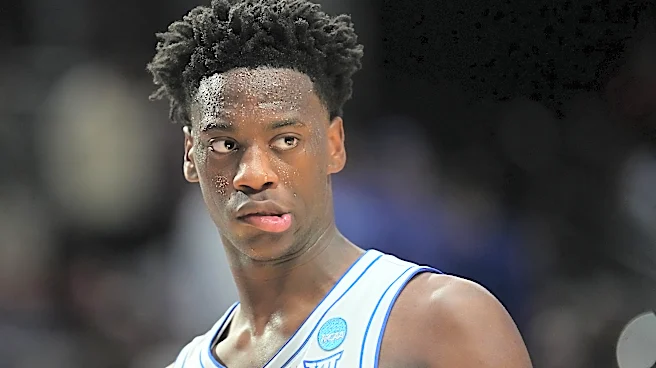
That’s how many players entered the 2026 NBA Draft early, per the NBA. It marks the lowest total in more than 20 years. It’s being framed as a sign of progress, proof that the NIL era is keeping talent in school and strengthening the game by keeping stars around longer. And at the top of the sport, that’s true.
College basketball arenas are packed with familiar faces, recognizable names, and players making life-changing
amounts of money. Not always for the same team as they did last year, but they are still in school.
But just beneath the surface, that same system is forcing difficult decisions, shrinking opportunities, and quietly pushing hundreds of athletes out of college sports altogether.
We see the commercials and the endorsement deals. We see the shiny, million-dollar collectives acting as high-priced magnets, keeping the brightest talent on campus. For the absolute best of the best, the Name, Image, and Likeness (NIL) era is a glittering, roaring success that people like Matt Jones have championed.
But step away from the glare of the television lights, and the offseason talk about who is signing where. Walk down the quiet hallways of the athletic departments, past the billion-dollar football facilities, and new basketball arenas. Walk into the smaller locker rooms. Listen closely to what you hear.
You can hear the sound of doors locking and closing forever. You can hear the sound of dreams ending. And in some places, you’ll already hear nothing.
There is a dark side to the modern NCAA Transfer Portal and the new, pay-for-play collegiate landscape. It is a quiet tragedy, happening to kids whose names you don’t know, who you may have never known, in sports that don’t get televised on prime-time Saturday nights.
NIL is ending dreams, and it starts with how it’s being paid for.
The hidden cost of the NIL era for non-revenue sports
Take a look at the University of Arkansas. Right now, the Razorbacks are shutting down their men’s and women’s tennis programs. Entirely. Gone. Arkansas’ men are playing in the NCAA Tournament this year.
But when they lose, the ride is over. The program is done. Why?
Because they don’t generate revenue. Head coach Jay Udwadia was heartbroken:
“We are all gutted and devastated,” Udwadia wrote in his Facebook post. “I appreciate all of the warm messages. It’s an incredible experience to coach where you played back in the day. … There are so many people who made Arkansas Tennis so very special and laid the foundation of excellence.”
But there will be no more names added to the legacy of Arkansas tennis.
In this new era, driven by the multi-billion-dollar House v. NCAA settlement that requires schools to share revenue with their athletes, the math ain’t mathing for a lot of smaller programs. If a sport doesn’t make money, the players are standing on the trap door waiting for the villain to pull the lever and end their careers.
Track and field programs are bracing for the cuts, because they are surely coming. Diving too. Softball and baseball may make the cut at some schools, but not at all of them.
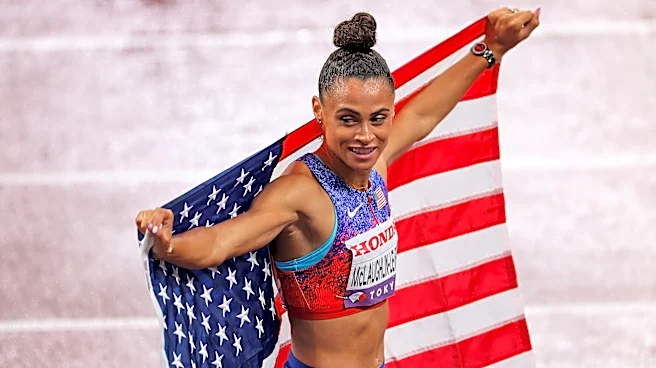
The sports that require massive overhead but yield minimal television contracts are going to change or end. Think of the generational icons who used the collegiate system to develop, athletes like track superstar Sydney McLaughlin-Levrone, who honed her Olympic greatness right here in Lexington at the University of Kentucky.
Under the current financial model, those developmental runways are being paved over. The traits of a hard-working, developing athlete no longer matter to the balance sheet. It is only about the dollar. Maybe that’s just the way the world works, but it shouldn’t.
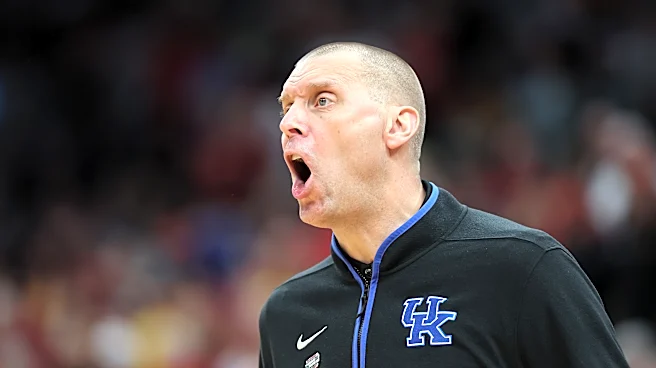
Kentucky’s President, Eli Capilouto, has openly acknowledged the profound financial pressures sweeping through college athletics as the university searches for new leadership. He said they have to save money. Across the country, administrators are looking for ways to cut expenses so they can afford to pay their star quarterbacks and point guards.
The Transfer Portal trap: Thousands of athletes left without a home
The Transfer Portal gives guys a chance to show up at a bigger school and get on the NBA radar. It’s for guys who were under-recruited or bloomed late. But not everyone finds a home; some are left in the chaotic purgatory of the portal
Look at women’s college basketball. Reports say nearly 1,000 players are unsigned in the portal right now. Most programs already have their core rosters set. Dozens of coaches have closed up shop for the summer. If you do the math, assuming every program has maybe two scholarships left to hand out, there are roughly 700 spots left.
That means 300 to 350 young women are going to be left without a chair when the music stops this summer.
They won’t find new homes. They will simply be off scholarship. Maybe they got bad advice from a handler promising them a bigger NIL payday elsewhere. Maybe they were gently, or forcefully, pushed into the portal by a coach who needed to make room for a higher-priced transfer. Whatever the reason, they are checking their phones every morning, waiting for a call that is never going to come. Their college basketball careers are now over.
The same silent epidemic is happening on the football field. Out of more than 3,200 FBS scholarship entries in the 2026 cycle, roughly 1,200 players are still in the portal without a declared school. And Spring ball is wrapping up. Nearly half of the young men who entered the portal haven’t found a home, and a large portion of them won’t.
Agents and collectives may help some, but they don’t help everyone.
Collectives and the erasure of the true student-athlete
We aren’t talking about the five-star recruits. They will always find a team. They will always find a collective waiting with a check and a coach ready to hand them the keys to the proverbial kingdom.
But college athletics was never supposed to just be about the stars. For decades, the true soul of the NCAA was the kid from a broken neighborhood, or a struggling rural town, who used a 4.6 forty-yard dash or a reliable jump shot as a ticket out. They came to a school, spent 2 or 3 years developing on the court and in the classroom. They aren’t going to the NFL or the NBA. They were going to get a degree, though. They were going to break the cycle of poverty. They were going to use sports to change how they lived their life.
That version of the “student-athlete” is now going to be erased.
NIL was initially sold to us as a fair compromise. It was supposed to be a way for the local quarterback to make a few thousand dollars doing a car dealership commercial, or a gymnast to monetize her social media following. Go sign a few autographs, maybe get a free meal. Use their talent like they should be able to. It was supposed to be a supplemental reward. Instead, third-party collectives have mutated it into a raw, unregulated payroll system. It is simply pay-to-come-to-our-school.
It wasn’t fair before, when schools made all the money and athletes got nothing. But it’s swinging too far the other way now.
Because to fund those payrolls, to meet those revenue-sharing caps, the middle class of college athletics is being sacrificed. The scholarship limits are changing, and roster spots are shrinking.
There is no doubt that the athletes generating billions of dollars for their universities deserve their fair share of the pie. I don’t think anyone would argue against that. We can’t pretend the old system wasn’t broken, at least a little bit. But as we cheer for those who wisely stayed in school to collect their NIL money, we must also look at the empty tennis courts in Arkansas.
We must look at the 1,200 football players staring at a closed portal door, hoping to find a new home. We must look at the 300 young women whose scholarships just vanished into thin air.
Progress always comes with a price tag, no matter the arena. AI may help revolutionize the world with great efficiency, but jobs will be lost to AI. It is no different here in sports either; it’s just not a CPU but rather a GM and an AD.
The next Sydney McLaughlin-Levrone may already be out there, but by the time they get to college, their sport may no longer be offered.
For college sports, the bill has finally come due, and the non-revenue sports are footing the cost. It is unfortunate, but the ones paying for it are the kids who can least afford it.