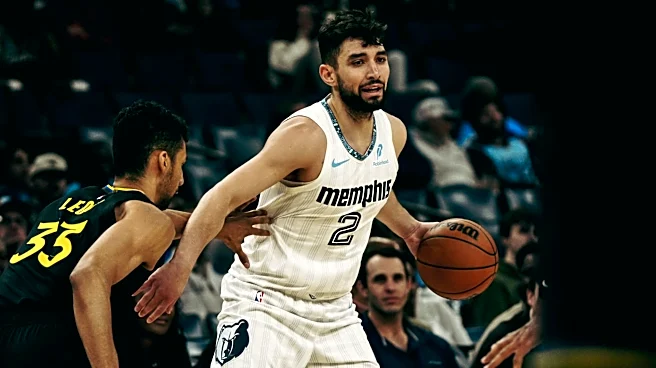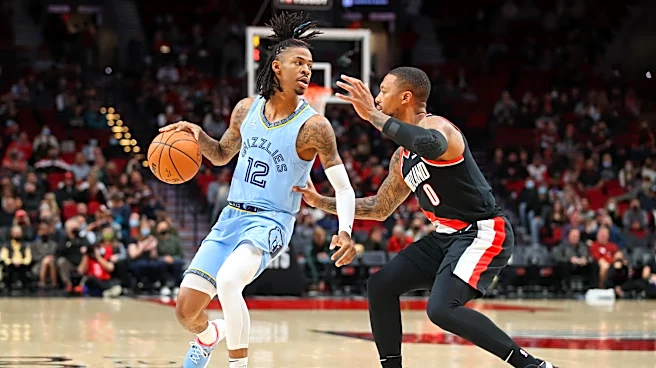




Training Camp begins for the Portland Trail Blazers next week. It’s a new venture with a new head coach (Micah Nori) a new batch of guards (Damian Lillard and Ja Morant) and a new franchise direction under owner Tom Dundon. That leaves a fair amount of uncertainty as to how the season will go. It’s hard to know what target the Blazers will hit until we understand what they’re aiming for.
On the other hand, there’s something to be said for, “If it walks like a duck and quacks like a duck…” That’s probably
true of the Blazers as well. In practical terms, your team is going to be defined less by what you aim to do than what you are equipped to do.
In that sense, it might be beneficial to take an early look at Portland’s roster, specifically with an eye towards anything that might limit their effectiveness this season. And as it turns out, a few characteristics might.
Youth
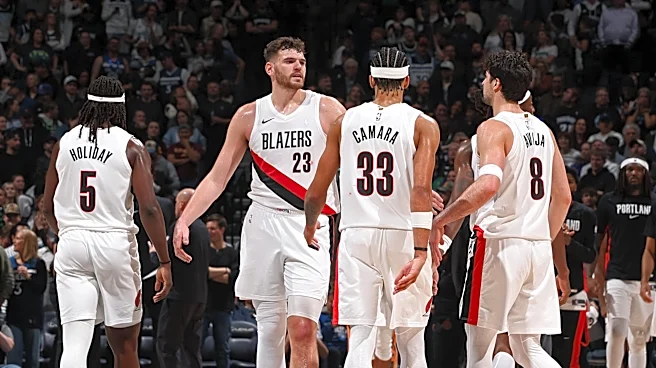
Let’s start with the most beneficial trend up and down the lineup. Despite a year of aging for their young core, )and getting real NBA Playoffs experience in 2025-26) the Blazers are still young. Only two players—Lillard and Jrue Holiday—have more than eight years of service in the league. Nine of their players were born in this millennium, two more in 1999.
The good news: young legs should provide sustained energy. If Coach Nori wants to push tempo on offense, the roster should be able to sustain the attack. Some of the bad news about that tempo-pushing may come below, but the bloom isn’t off the rose for this group with untapped potential and a tendency to play above their heads.
Height
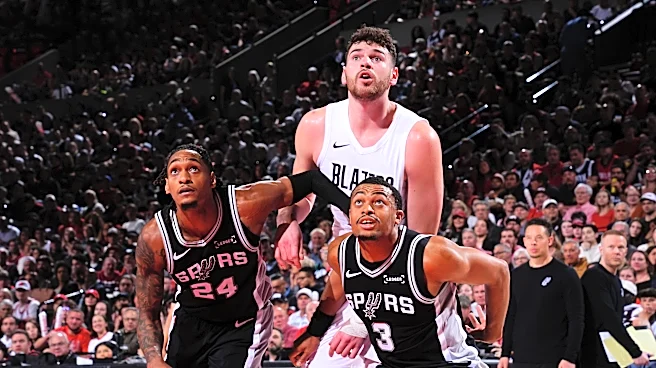
Again there’s some good news here. The Blazers have three 7-footers: Donovan Clingan, Branden Carlson, and Yang Hansen. The bad news is that one of those three is the starting center and two probably aren’t scheduled to play much.
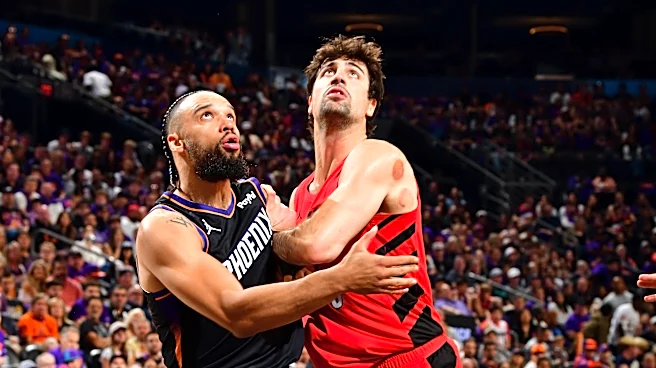
The worse news is that, in a league that currently values height, the Blazers field four major players 6’4 and under: Lillard, Morant, Holiday, and Scoot Henderson. That’s a huge swath of their backcourt. Portland will rely on guards this season; it’s how their roster is built. Only Shaedon Sharpe (expected to miss the first half of the season with injuries), Vit Krejci (not a reliable player yet), and a converted Deni Avdija stand 6’5 or taller. And Avdija is slated to play forward in this impoverished rotation.
Speaking of forwards, Avdija, Toumani Camara, and Robert Williams III are the only healthy regulars between 6’4 and 7’0. (And “healthy” hasn’t exactly applied to Williams over his career.) Possible back-ups are Jeremy Sochan, Micah Potter, and Sidy Cissoko. They’re nice, but not exactly instilling fear across the league at this point.
The upshot is, the Blazers are likely to play a variety of small-ball lineups even when they don’t intend to. Especially when they get past the starting lineup, opponents are likely to out-size Portland.
Quickness
Normally, the trade-off for lack of size is increased quickness, useful particularly on defense. We’re not talking vertical speed, up and down the court. Almost all NBA players can run pretty quickly in a straight line. Rather lateral quickness, escape-ability on offense and court coverage on the other end.
The Blazers don’t really have much of that, though. Lillard was never a speed merchant, even in his prime. He did have a first step, but he wasn’t known for using it often. Morant did, but he’s famously lost a step in recent seasons due to injuries. Neither guard employed much quickness on defense at any stage of their careers. Holiday has multi-directional capability and will never be a bad defender, but he’s increasingly relying on smarts and targeted opportunities, not quick-twitch speed. Scoot Henderson is probably the best bet among the backcourt players for real mobility across the court. But he’s fighting alone in that regard.
Among forwards, Avdija is one of the fastest players in the NBA vertically and he’s been a good defender throughout his career. He’s also coming off a back injury that appeared to sap his mobility last season. Krejci is no help in this department. Camara has great instincts and enough athleticism to make good on them. Williams is ultra-mobile for a center but less so if he’s converted to power forward against more rangy, lithe opponents.
None of the non-Williams centers could be described as fast. Two—Clingan and Hansen—are downright slow.
A lineup including Henderson, Camara, and Williams will likely be able to cover the floor against almost any opponent, all save the speediest or the largest. Drift away from that specific trio and Portland begins to slow down and lose defensive chops considerably. Avdija may provide a serious boost if his back allows. Other than that, there’s just not much help available.
Shooting
In modern years, the cure-all to many of these problems has been three-point shooting. The Blazers were bad in this department last year, ranking 28th in the league. They also lost three of their top four shooters (by percentage and reasonable attempts) over the summer. Into the void will step Lillard—a career 37.1% shooter who fired 37.6% two years ago, the last time he played—and Morant, whose career percentage beyond the arc is 31.1%. Saying the Blazers are bad in this department is like calling Eric Cartman slightly uncivil.
Somewhere, somehow—whether it’s brilliant years from Camara, Krejci, and Lillard or a trade for players as yet unknown—Portland will have to manufacture ways to spread the floor. Otherwise all of those fancy pick-and-roll options for the star guard are going to be met with the same packed, drive-snuffling defense.
Conclusion
If it walks like a duck? Well, Portland’s duck is young, but it’s also short, not really speedy, and can’t shoot well. If you’re wondering why speculation about a Lillard-Morant backcourt abounds despite the obvious flaws in that pairing, this post may provide your answer. Portland needs those two to be brilliant, All-Star-level individual scorers because that’s what the team has going for it right now. Other good aspects abound, but they’re like taking steps up a sand dune: lots of energy expended only to have the surface beneath you constantly erode because of these flaws.
Is it possible for the Blazers to overcome these shortcomings? Maybe. In order to do so, they’ll already be working twice as hard as most other good teams. That’s not a great sign for a long, 82-game campaign, let alone a potential playoffs run after. The team certainly has their work cut out for them. Let’s see what schemes come out of training camp to compensate for these things. Hopefully, they’re really good. They kinda need to be.