



The BLUF
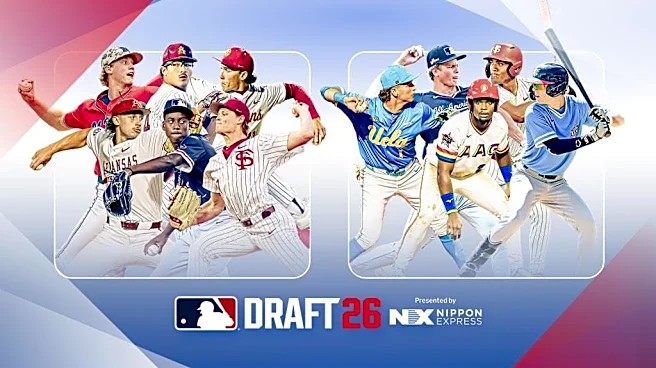
Despite early predictions that this would be one of the deepest drafts in recent memory, the reality is that this crop of draft-eligible prospects has by and large not lived up to the hype or expectations. Beyond the top-3 names in the draft, there is a substantial drop-off in talent to the next tier, which is about 10-12 players deep. Then, there is another slightly lesser drop to the next tier. That third tier is a massive one, with enough talent to blanket multiple rounds in the draft.
Prep hitters make up a big portion of this group.
The Field
The percentage of first-round position players who bat left-handed has topped 50% in each of the past four drafts. That figure could drop below 50% this year. That said, this year’s cohort of non-pitchers sports a 96 wRC+, the lowest it has ever been since 30 teams were drafting. That combination of factors could lead this year’s draft to prioritize right-handed hitters early, as draft FOMO is a real thing (even if it shouldn’t be).
If there is one thing about Mike Hazen that tends to be polarizing, it may be his patience. Some wish he would lose some of that patience with players in the organization that are struggling Others wish he would be a bit more pro-active in the trade and free agent markets. One place where Hazen’s patience has seemingly paid off though is in the draft. No, Pavin Smith did not pan out. A quick perusal of the other names taken in that draft will quickly show that those who clearly out-performed Pavin Smith were taken before he was or are named Daulton Varsho, also taken by Mike Hazen. Though the numbers will continue to evolve away from his favour, Daulton Varsho currently stands as the most successful draftee of that class.
It isn’t that Hazen out-waits people and grabs a falling value. What I mean by patience here is that Mike Hazen puts together a plan and then executes it, regardless of what others around him are doing at the same time. He is not a reactionary GM. He plays the long game and is willing (as evidenced by the last 3 years of Diamondbacks baseball) to suffer the short-term pains for longer-term gains. This approach has resulted in some outside the box selections in previous draft years. One of the features of Hazen’s drafts is that he tends to select the toolsy types, dynamic players that go about their business with their hair on fire. Daulton Varsho, Corbin Carroll, Slade Caldwell, Tommy Troy, Kayson Cunningham, and even Ryan Waldschmidt (to a lesser extent) fit this mold of player. This has led to Hazen and the Diamondbacks being profiled as a model-based draft system as opposed to a scouting based one. This while on the surface this is somewhat accurate, this simplification discounts the vast amount of work put in by the scouts to find the right players for the model in question. Given that Hazen’s model require multiple elite attributes, it would be silly not to acknowledge that there is just as much scouting going on in his method as there is in the traditional method of simply selecting the best available tools on the board.
With all that out of the way, it seems fairly safe to bet that Mike Hazen will again be looking for premium hitting talent in the early rounds of the draft. This year’s pitching goes deep, but the pitching lacks upside. Then there are those with decent upside that are injured. Yesterday’s subject of conversation, Brody Bumila, will almost certainly not throw a pitch in 2027. Will that make him more or less likely to honour his commitment to Texas, where his scholarship will be forever at risk, while he can take safe money and professional rehabilitation now? (This writer tends to think that if Bumila is not off the board by the time the Diamondbacks have made their pick at #15, he likely goes to school.) Simply put, for a man who tends to make moves based on high future upside, selecting anything other than a hitter seems unlikely this year, especially given the dearth of arms that comfortably fit into the 15-20 range in this year’s draft.
There have been no fewer than 15 bats linked to Arizona at one point or another since the beginning of 2026. Despite this large number, only two have repeatedly garnered mention after mention. These two feel the most likely targets in a vacuum for a number of reasons, not the least of which is that these two bats fit Hazen’s model quite nicely and project in the right range of prospect talent. Using the Daulton Varsho example from above, Hazen would have been crucified if he had selected Varsho at #7 overall when his selection in the second round was already considered a gamble/reach. Thus, even though a good portion of the names that have been variously linked to Arizona all fit the “Hazen Model”, that doesn’t mean they are appropriately slotted by showing up as soon as #15.
The Two Most Likely
Draft day is always a fluid evolution. One team can overturn the entire cart by making a wild, outside-the-box pick with one of the first few selections in the draft. Other factors (such as late-breaking injuries, a late showcase against elite talent, legal woes, parental and peer pressures, etc.) can also greatly influence the draft. Then of course, there is always the players themselves. Sometimes, just sometimes, they have a firm idea in mind and will only accept moving forward if that is met. Despite all this uncertainty, there are some players out there that just scream that they are a fit for the time and place.
Trevor Condon OF, Etowah HS, GA
Age: 18
Bats/Throws: L/R
Height: 5’11”
Weight: 178 lbs.
Scouting grades: Hit: 60 | Power: 45 | Run: 70 | Arm: 55 | Field: 60 | Overall: 55
In the updated for 2026 dictionary, the prime entry for the Hazen Model is Trevor Condon. Condon is a toolsy, left-handed, undersized, speedster with pop who is aggressive on the bases and uses his double plus speed to good effect in the outfield and on the base paths. His most frequent comp these days is Pete Crow Armstrong, though he profiles similarly to Corbin Carroll as well. Previously, he was compared to another Diamondbacks draftee, Slade Caldwell. He has above-average contact skills with great feel for the barrel and is difficult to strike out. While Condon’s hitting prowess is more impressive than his raw power (which is clearly still developing, even over the course of this summer alone), scouts have been impressed with his ability to engage his lower half this spring against high-quality Georgia competition. While this may not translate to prolific home run power the way it has for Corbin Carroll, it should profile quite nicely into Condon becoming a doubles machine, not unlike the first such profile Hazen drafted – Daulton Varsho. In fact, he has more impact potential than a stereotypical slap-and-dash speedster. Condon’s run tool is far and away his loudest. He has turned in 80-grade times at multiple showcases and should settle in easily as at least a 70-grade runner. Condon’s playstyle is commonly referred to far and wide as a man playing with his hair on fire. He has an elite first step out of the batter’s box and has a reputation for playing all-out on every play, even the routine ones. Hopefully, this doesn’t turn into an Eric Byrnes situation and remains more a Carroll/PCA situation. Defensively, Condon features solid arm strength, good outfield instincts, and the speed to stick as a regular center fielder.
Condon has been linked to Arizona more often than any other player in the draft, by sources from all over. This is about as safe as one can get with identifying a pick so deep into the draft.
Fangraphs: 22
Baseball America: 16
MLB Pipeline: 13
ESPN: 16
A.J. Garcia OF, Virginia
Age: 21
Bats/Throws: L/L
Height: 6’3”
Weight: 195 lbs.
Scouting grades: Hit: 55 | Power: 55 | Run: 45 | Arm: 45 | Field: 50 | Overall: 55
While the scouting grades do not match a typical Hazen Model player, the eye-test and scouting evaluations do. A high school standout in New Jersey, Garcia started his collegiate career at Duke, before transferring (to follow his coach) to Virginia for his junior year. While at Duke, Garcia showed advanced hitting skills, being exceptionally hard to strikeout and drawing himself a Duke-record 57 walks in his sophomore year. Garcia has surprising pop, with raw power that he is already showing signs of being able to tap into in game situations. Garcia is considered by many to be one of the more advanced collegiate bats in this year’s draft. That can be a good thing (hello Aaron Judge) or a risky thing (how are you doing today Pavin Smith). Still, in a class deemed to be deep in hitting with few left-handed standouts, being ranked among the best of them cannot really be a bad thing. On the bases, Garcia is very average. He simply does not lack the pure speed of some of his peers. However, he is a savvy runner, able to take the extra base frequently and still a threat to steal when the situation calls for it. Defensively, he has the defensive nous to stick in center field. If his lack of above average speed moves him out of center, he best fits in left field, where his average arm will not be exposed by being compared to the sorts of cannons that often end up in right.
Garcia was attached to Arizona more early on than he is now. However, looking at the various mock drafts out there and the list of players that fit the mold and who would be a good fit at #15, Garcia remains a solid choice. This is where scout versus model selection comes in. Garcia gets more ouot of his tools than the tools themselves would suggest. His average speed and fringe arm, along with playing in less competitive collegiate environments has led to some scouts being a bit down on him, slotting him as a late first-rounder or an early second-rounder. On the other hand, he ticks most all of the model system’s boxes. He plays with high amounts of energy. He is aggressive, despite the lack of blazing speed. He has a good feel for hitting and has power that belies his modest (but still quite good) exit velocities.
Fangraphs: 20
Baseball America: 14
MLB Pipeline: 19
ESPN: 24
Conclusion
If ever there was a draft for Mike Hazen to “play it safe” by doing what he does best rather than looking to mix things up and do something unexpected, this is the draft to do it. Clearly, the team is still waiting for many of Hazen’s picks to mature into Major Leaguers. However, early returns (Varsho, Carroll, Waldschmidt) suggest that Hazen might be on to something with his model. Trevor Condon fits that model about as perfectly as one could ask for. He also fits the expected landing range for his prospect status. In fact, if Arizona doesn’t take him, he is still likely off the board before #20. If Arizona wants him they will need a slight bit of good fortune to see him still be available, but it is not at all unlikely. He certainly won’t be available at #31.
A.J. Garcia is a safer bet to be available and also profiles to reach the Majors faster than Condon. There is a non-zero chance he could even be had at #31, especially if teams take advantage of this wide pool to start shifting slot bonuses about, getting funny with the money. Despite the listed rankings, Garcia is not a reach at 15. At 31, he’s actually something of a steal. Unless three is a clearly preferred prospect still on the board (such as Condon or a select few others) there really is no downside to taking Garcia with the 15th overall selection.
The next installment will look at draft strategies and how Arizona might best maximize this year’s draft> Despite the lack of elite talent in this draft, there exists a large number of potential MLB regulars. If this season has demonstrated anything to the Diamondbacks fandom, it is that the team needs to get deeper, both on the 26-man roster and in the organizational pipeline. So, how might Mike Hazen go about addressing this?