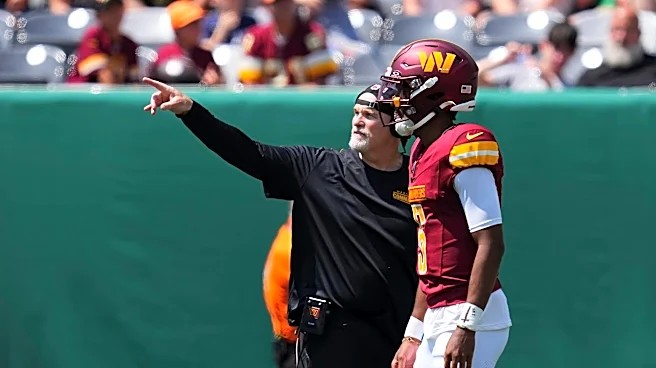





The Dallas Cowboys got better at running the ball last season. The combination of play-caller Brian Schottenheimer and offensive coordinator Klayton Adams stepped in and immediately righted a wrong from their previous offensive leader, Mike McCarthy. It is a bit ironic when you think about it, considering McCarthy famously complained about his previous play-caller not running enough, only to learn that he, himself, was not very good at it.
Some might remember that Kellen Moore was viewed as too pass-heavy
and cared more about scoring points than he did about sustaining a balanced offensive attack. It was strange because, well, scoring points is usually a good thing, and also because the Cowboys ran the ball well under Moore. But it got weirder when the team struggled to run the ball when McCarthy took over the offense.
- Kellen Moore (2019-2022), four seasons, 4.6 yards per rushing attempt
- Mike McCarthy (2023-2024), two seasons, 4.0 yards per rushing attempt
- Brian Schottenheimer (2025), one season, 4.6 yards per rushing attempt
McCarthy preached the importance of a strong rushing game but just couldn’t carry out the plan. Fortunately, the change in management on the offensive side last year returned them to a more effective rushing attack. How did they do it?
Well, it’s a lot of things, actually, but simply put, they decided to use more tight ends. McCarthy’s offense relied heavily on 11 personnel, deploying three wide receivers 76.5% of the time in 2024. That dropped to 67% last year, with the team seeing a 7.5% jump in 12-personnel and a 4% jump in 13-personnel. When you do the math, that equates to an extra 120 plays last year with more tight ends on the field.
Before we go further, let’s just recap that those personnel packages are:
- 11 personnel (1 RB, 1 TE, 3 WRs) – extra receivers to spread out the defense
- 12 personnel (1 RB, 2 TEs, 2 WRs) – heavier lineup for more help running, but still some balance
- 13 personnel (1 RB, 3 TEs, 1 WR) – maximum blocking for short-yardage situations
With such a high 11-personnel rate, McCarthy’s offense had become entirely too predictable. It allowed opposing defenses to stay in lighter nickel packages and relentlessly come after the quarterback. Remember that? The uptick in extra tight end usage last year forced those defenses to swap out smaller defensive backs for bigger, slower, run-stopping linebackers.
The key thing to remember here is not just that Schotty and Adams attacked more with two or three tight ends on the field. Their usage was higher, and it certainly provided better blocking for the run game and hidden pass protection by pesky players who love to chip-and-go, but it went further than that.
The real juice from this balance is how it kept opposing defenses out of sorts. It helped the passing attack become more explosive because in supposed run-heavy formations, the defense would routinely cheat forward and leave the deep field without safety help. How many times did we see George Pickens in isolated one-on-one situations last year? Advantage Pickens, every single time.
Switching personnel regularly means defenses have to stay on their toes and match those substitutions, resulting in moments where they get caught with the wrong players on the field. When Dak Prescott sees those mismatches, he exploits them instantly. The offense does not just set out to do what they want to do. Instead, they remain versatile enough to attack whatever defensive alignment looks most vulnerable.
Speaking of Dak, when the defense scrambles to match the heavy look, it becomes much easier for the veteran quarterback to figure out their intentions before the snap. Shuffling around personnel forces the defense to show its hand early, giving the offense more opportunities to exploit a weakness. And Prescott is an excellent pre-snap evaluator.
People had high expectations for Adams last season, and he absolutely delivered. We saw career years for newcomers like Javonte Williams and George Pickens, alongside a nice Pro Bowl return for Jake Ferguson. But it is the creative tight end utilization that serves as the icing on this delicious treat.
The ways Adams deployed his tight ends were varied. They’ll line up right next to a tackle and deliver a quick double-team block, clearing out a huge hole. They’ll scamper across the line in motion and seal off an unsuspecting edge rusher. And they’ll climb to the second level, neutralizing a linebacker trying to fill the gap. It all culminates in an effective run-blocking scheme that Adams has successfully installed at every single stop of his career, with Dallas being the latest beneficiary.
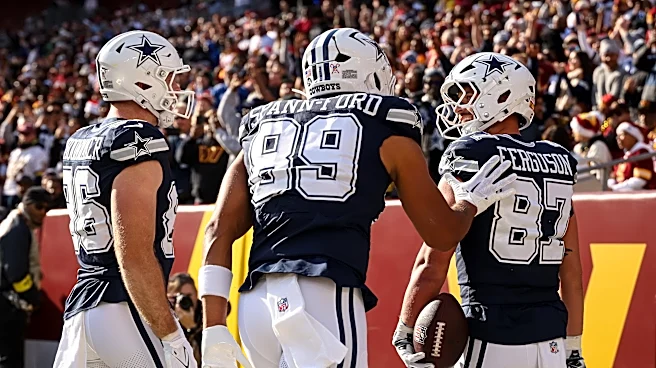
Of course, none of this is possible if you do not have the players to pull it off. Jake Ferguson is a proven pass-catching weapon, but he is also a wonderfully gritty blocker who brings an A for effort and usually delivers a solid result. Meanwhile, Brevyn Spann-Ford has developed into a run-blocking ace who regularly seals the edge, leveling defenders like a snowplow at times. He is almost equivalent to an extra offensive lineman, except he can also sneak out and catch touchdowns.
Even everyone’s favorite punching bag, Luke Schoonmaker, can be effective in doses. As a third tight end option, teams can do a whole lot worse.
More young recruits have arrived. The Cowboys’ top two paid undrafted free agents are tight ends, Michael Trigg and DJ Rogers. These guys are pass-catching threats who can punish mismatched defenders. Selling you on undrafted rookies who have yet to play a single NFL down might seem silly, but players like Spann-Ford and Peyton Hendershot tell us that we should at least leave the porch light on for them. Adams has a great history of coaching up raw potential, so you never know who might pop.
There is plenty of reason for continued optimism surrounding this group as they look to build on what they started.