


The calm before the storm. That’s right, the clouds are starting to roll in, and we know the epicness of the NBA season lies just over the horizon. With anticipation building, the Bright Side writing crew has been putting together its final thoughts ahead of the season, making predictions and trying to make sense of what lies before us.
On Sunday, we discussed reasons for optimism and concern. Today, we’re turning our attention to where we might be wrong, asking ourselves a simple question:
What would make you look back and say, “We should have seen that coming”?
It’s interesting
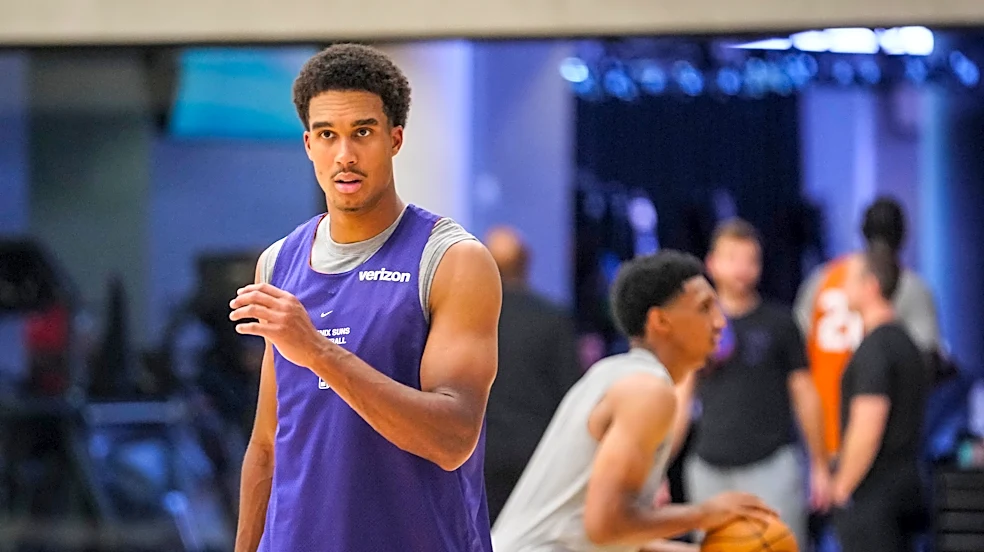
when I sit around listening to podcasts featuring national media voices and hear their takes on the Phoenix Suns. Take Bill Simmons and Zach Lowe, for example, as they go through their over/under predictions for every team in the NBA. I understand that their analysis will be relatively surface-level because they’re nowhere near as glued to this team as we are. When Bill Simmons can’t get Khaman Maluach’s name right and says he didn’t look particularly good last season, it’s pretty clear he wasn’t watching much Suns basketball. Because Maluach looked good last year in his limited time, and he looked even better during Summer League and the early stages of the preseason. He’s given us legitimate reasons for hope.
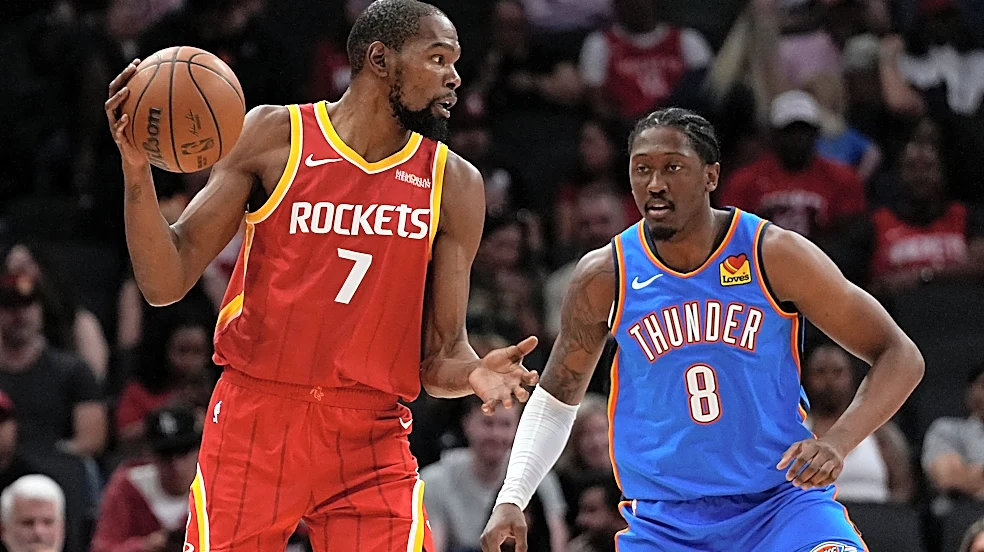
It’s a reminder that the national guys simply don’t have the time to watch the Suns with the same level of attention that we do. And when they take the under on 38.5 wins, we interpret it as a personal slight. We become offended. How dare you? What do you know?! After all, the oddsmakers have been wrong about the Phoenix Suns for three consecutive seasons. They thought the Kevin Durant, Bradley Beal, and Devin Booker trio would produce a better team than it ultimately proved to be. Then they thought Phoenix would be horrible last season, and the Suns exceeded those expectations.
Which brings me to what we should’ve seen coming.
After spending an entire summer talking about how the Suns are going to smash the over, perhaps what we should see coming is that they simply won’t. Maybe they finish with 37 wins. That’s not my final prediction, but if it happens, I’m going to look back and say, “Duh.” Because isn’t that how it always seems to go? Whenever you feel that little tinge of excitement in sports, something comes along and takes it away. The joy never seems to last. The expectations never quite materialize.
Perhaps I’m in a particularly sour mood as I sit here writing this after watching Notre Dame lose to BYU on a last-second play that was clearly pass interference, with one second still remaining on the clock. I feel like the team was robbed. They should’ve had the ball at the 1-yard line, pounded it into the end zone, and won the game. All those narratives would’ve gone right out the window. But such is sports. Sometimes it feels like they’re designed to disappoint us rather than provide elation. I don’t know why we continue doing this to ourselves, investing so much emotionally in teams that will never care about us the way we care about them.
In that same breath, doesn’t this Suns season feel like we’re setting ourselves up for disappointment? We believe this team will progress, but much of that belief hinges on youth and development. And what have youth and development taught us time and time again? That it’s unreliable. That it isn’t something you can automatically count on. Part of development is failure. That’s how young players improve. They make mistakes, learn from them, and, hopefully, become better players as a result. But those mistakes have to happen first, and they’re going to come at a cost.
Doesn’t that feel like exactly where we’re headed this season?
These prospects that are fortifying our depth need time to develop, and in a league where 30 of our games will come against a tougher Eastern Conference, and with teams near the bottom of both conferences expected to compete harder, there could be more opportunities for failure than we’re willing to acknowledge. And when the season is over, perhaps we’ll look at each other and say, “Yep. Should’ve seen that coming.” We were too optimistic. We placed too much faith in the belief that youth and development would automatically translate into success.
What did the rest of the Bright Side writing crew have to say? Here you go.
Brandon Duenas: Don’t be surprised if the Mark Williams injury ends up being a blessing in disguise when we look back on it in March. This has more to do with how high I am on Khaman than anything. I believe he would’ve rotted away on the bench again if Williams were healthy, stunting his growth and ability to get valuable reps early in the season. When he (Williams) returns, they’re going to have a “problem” many teams would envy.
Holden Sherman: Jalen Green would be better off as a sixth man. Devin Booker is at his best when he’s being set up to score. Alongside Gillespie, Booker can be set up more. When he’s playing alongside Green, he has to not only set himself up to score, but also the rest of the offense.
Bruce Veliz: The way that Collin Gillespie can take control over a game. So far in the preseason, he has looked to improve on his role from last season, and this could prove he was worth way more than what he was paid this offseason.
Tom Mildenberger: I think you could argue that the thing we should have seen coming has already happened with the Mark Williams injury.
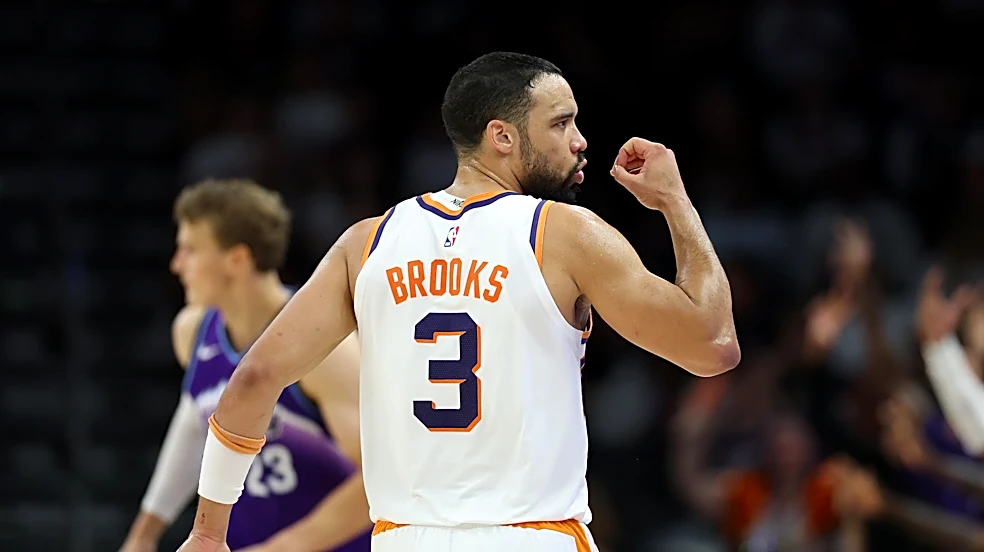
Since that’s already happened, I have another. Dillon Brooks will be the second-leading scorer on the Suns, and this year he will make the All-Star team. Early in the preseason, he has not only picked up where he left off but also seems to have improved his decision-making. This roster is the perfect setup for Dillon to thrive on the back side of the play with space to work. There are also the intangibles of hunger and desire. Dillon wants to be a star, and that’s nothing. I’m expecting a big year from the Villain.
CJ Navage: We should have seen coming the inability of Oso to hang with the starting center spot. So many posters, videos, and fans point to things like ‘basketball IQ’ and ‘sees the floor well’ when describing his game, which is really damning with faint praise for a player who lacks some very necessary common basketball skills, e.g., shooting of any kind other than at the rim.
Mark Bowser: Like it or not, we just won’t be seeing DBook playing the majority of his time off the ball. Jalen Green may be taking baby steps to pace himself and make some plays for teammates, but is by no means a point guard offensively. Even for those clamoring for Collin Gillespie as the starting point guard, he’s not a pure distributor. While it would take some wear and tear off and further increase scoring ability, I think off-ball Book with this roster is a pipe dream.
Kevin Humpherys: I will go out on a limb and say I think Jalen Green takes a huge step forward this season. He looks more explosive during the preseason than he did all of last season, and his confidence shooting the ball is just as high. Green worked out with Steve Nash this summer, and as great as that is, I think his main area of growth will be simply getting a full season to figure things out with Booker and Brooks in Ott’s system.
The ball is still going to get sticky at times, but I think he will improve as the season progresses. With all the attention Devin Booker is going to get at the end of games, look for Green to be the one taking and making big shots for the Suns in crunch time this season.