

I felt it for the first time when I went outside last night to play with the dog. For the first time in months, I could walk outside without getting blasted in the face by the oven-like air that the Phoenix metropolitan area has to offer. Yes, for the first time, it felt like fall. And that means Phoenix Suns basketball is right around the corner.
With Media Day this upcoming Monday and training camp starting Tuesday, we’re about to rev up the engine and start getting answers to the questions we’ve
been asking ourselves all summer long about this team.
Which brings me to another Bright Side Roundtable opportunity for our writers to answer a simple question: What is the biggest question you need answered during the first 10 games of the Suns’ season?
Of course, we’re not going to get answers to everything. The season is 82 games long, and thinking that the first 10 games will tell us everything we need to know about this team is somewhat obtuse. Still, those first 10 games will provide insight into what we can expect, whether that’s schematically, how the rotations take shape, or how the new pieces fit into the puzzle.
And for me, that’s what I primarily want to see. How does this puzzle fit together from a rotational standpoint? Rotations will continue to evolve throughout the season. Injuries will present themselves, players will exceed expectations, others will fall short, and adjustments will be made based on opponents and production.
But those first 10 games should begin answering one question I desperately want answered: How does this organization perceive the progress Rasheer Fleming made this offseason?
Sure, he was a second-round pick in the 2025 NBA Draft, but he’s somebody the Suns moved up to acquire. They spent assets to get him because they believed in what he could become. And in his limited opportunities last season, Fleming flashed the potential to provide size, athleticism, defense, and three-point shooting off the bench. For a team that has desperately needed a quality power forward since Amar’e Stoudemire played for the organization, Fleming could begin filling that role this season. That’s why I want to see how and when he’s utilized throughout the first 10 games.
In Year 1, he was a rookie learning to adjust to the speed of the NBA while developing his basketball IQ. Year 2 should be about building upon that foundation and demonstrating whether he’s made the developmental leaps we all hope he has. How much does the coaching staff trust him? Where does he fit into the rotation? And how much opportunity will he receive to showcase that growth? We should know quite a bit more after those first 10 games.
So what does the rest of our Bright Side Roundtable panel have to say about it? Let’s get into their answers.
Kevin Humphreys: Will we get to see the Suns’ core four players play together to begin the season?
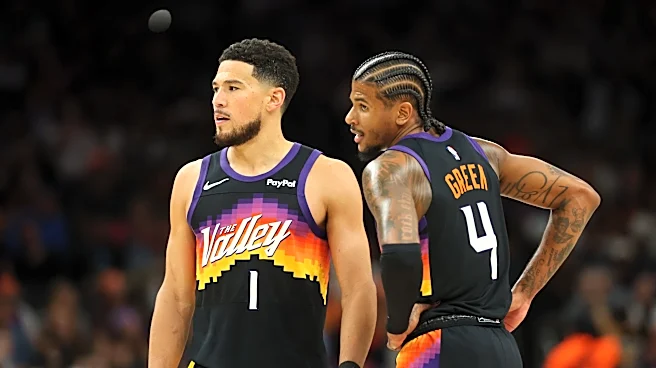
Last season, we only got to see the Big 3 play 10 regular-season games together, and now Miles Bridges is getting thrown into the mix. If we can just get all four of those guys healthy through 10 games, that will be a huge win. If that happens, then what kind of hierarchy, if any at all, is developing between Jalen Green, Dillon Brooks, and Miles Bridges?
Bruce Veliz: The biggest question I need answered in the first ten games is how Jordan Ott’s play style will evolve into year two?
Last season, they were a scrappy and physical team that never gave up on the defensive end, and on offense, it was mainly three-point centered, focused on the drive and kick. Without Grayson Allen and Royce O’Neale, the team has lost part of that identity, so how will he adjust and benefit that to fit this team? Will there be any changes, or will they stick with what worked last season?
Holden Sherman: At least two wins against one of the Thunder, Nuggets, Spurs, or Rockets. Phoenix went 4-12 against these teams last year, including going 0-7 against Houston and Denver. These teams were four of the five top seeds in the West and are ones the Suns will have to compete with if they are serious about being top-six in the Conference. The team needs to finish games against these teams stronger; it’s not just about playing them close. All of these teams Phoenix suffered close losses to, and Denver should be worse this year, considering they traded Peyton Watson, a main contributor from a season ago, and only received draft compensation in return. The Suns need to play their best against the best.
SoSaysJ: How much are the Suns going to take the kid gloves off Khaman Maluach? During the first five months of last season, Maluach averaged 5.5 MPG. That ticked up to 13.9 MPG over the last two months of the season. During NBA Summer League, he (not surprisingly) played 27.4 MPG – and thrived, averaging 19.5 PPG, 12.8 RPG, and 2.0 BPG, while shooting 40.0% from three and 53.2% overall.
Considering his production during Summer League, the fact that he has one year in the NBA under his belt, and the injury to Mark Williams, extended minutes certainly seem warranted during the regular season, but to what degree? Will he start? Will he play 20+ minutes? 25+ minutes? Regardless of whether Khaman or Oso is the starting center when the regular season begins, I will be particularly interested in Maluach’s playing time during those first 10 games and the game situations in which he is on the floor.
For the Suns to enjoy any near-term success beyond what we saw last season, Maluach will have to develop and play a significant role on both sides of the ball. I think the first 10 games of the season should give us an idea as to how ready the coaching staff thinks he is to step into that role.
Brandon Duenas: The first 10 games are all about experimentation and seeing what you have as a group. That being said, I am looking forward to seeing how each individual player, especially those in the starting lineup, adjusts their game to this group. The potential glaring issue with this team is the lack of playmaking/floor spacing in the starting unit. I will be paying very close attention to the shot distribution and the roles that Green, Brooks, and Bridges naturally take.
I excluded Booker because I believe he can fit in any environment, so I’m more curious as to how those other three play off each other (and Book) and if there’s more “team ball” than “me ball.” Will Brooks and Bridges sacrifice shot attempts and make quick reads? Does Jalen Green take on more of a downhill playmaking threat this year? There are plenty of solutions to mix and match the right units on the Suns’ bench, so it will be an interesting dynamic to follow. Green and Brooks didn’t share the court a ton last year, and Bridges is the newcomer. This is why they pay Jordan Ott the big bucks.
Mark Bowser: I agree with Brandon’s specific dynamics above and how that results in the flow of the overall offense. My main question is in the intangibles category. Last year, the Suns were gritty more often than not. They dove for loose balls, scrapped on defense, and crashed the offensive glass. With new parts added and several high-effort players signing new contracts, will the effort dip? Or will it go up a notch? The extended players (Brooks, Goodwin, Gillespie) all have this in their DNA. The new acquisition, Miles Bridges, is the wildcard. Reviews of his effort fluctuate, generally positive when his team is doing well. Can he enhance the Suns’ reputation in this regard, or will his addition disrupt the chemistry?
Tom Mildenberger: In the 2024-25 season, the Suns started 8-2 before Budenholtzering their way to a 36-win season, so I’m not getting caught up in wins and losses. The Suns will bring the same coach back for a (gasp) second year in a row, so despite swapping Allen and Royce for Bridges, I think we mostly know how the team will look, stylistically and culturally.
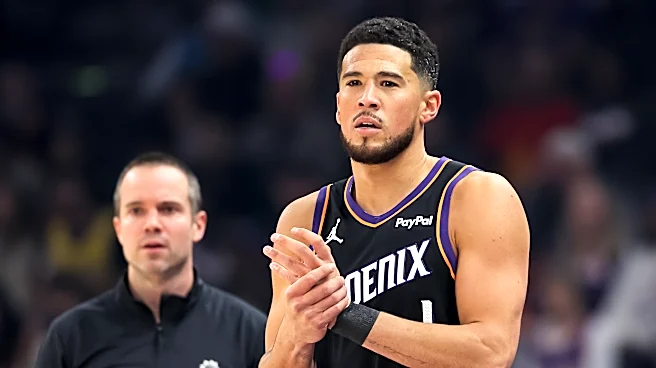
What I’m going to be watching for in the first ten games is which Devin Booker we get. Are we going to get the make-the-right-play, Devin Booker? Or are we going to get the flame-throwing Booker who sets arena points records? There are reasons to think that the former version of the Book might be better suited for the Suns’ current roster than the latter, but if I’m being honest, I don’t want to see Devin Booker pile up hockey assists or get to the free-throw line thirty times a game this season. I want to see the Booker that the defense knows is going to shoot, but still can’t do anything to stop. Can he still be that Booker? I’m not sure, but I think we’ll know in the first ten games.
There’s no shortage of things to watch when the Suns finally take the floor, which is exactly what makes those first 10 games so valuable. We won’t have the answers yet, but we should have enough evidence to start forming better questions. How much has the roster evolved? Who has earned trust? Which combinations work? And perhaps most importantly, what does this team look like when the experimentation begins to give way to an identity? After spending the summer imagining the possibilities, we’ll finally get to see which ones survive contact with actual basketball.