



The Steelers’ class has been one of the more polarizing ones around the NFL, with a wide range of grades from analysts. Even the Black and Gold faithful are split on how to feel about it, just peruse our draft-related articles if you need proof of this.
This week, we’ve been unpacking the Steelers 2026 NFL Draft performance. In Part 1, we discussed Max Iheanachor and the Makai Lemon phone call. In Part 2, the conversation turned to trade value and whether Germie Bernard plus Iheanachor was a better
combination than what they could have gotten to pair with Lemon, had he made it to their pick.
Today, Read & React will finish off the discussion by dissecting the Steelers’ three selections in Round 3, as well as their final slate of picks on Day 3. Like in the previous articles, we will try our best to represent both the pros and cons of the Steelers’ approach.
Round 3

RP: I think the polarizing reactions to the Steelers draft were no better represented than how the team went about making the final eight of their 10, and was once potentially 12, picks.
Acknowledging my own biases, I had zero complaints about the Steelers first two picks. Where I began to falter was in the third round, the round I considered the most crucial to the team’s draft, with the Steelers poised to make three picks in a round where three future starters could be secured. On first blush, I came away a little disappointed with the selections — and the one trade-up they made — even though I can easily see the team’s logic and point of view. I’ve warmed towards the picks in the days since, and ultimately was more frustrated with a majority of Day 3, save for the Riley Nowakowski and Eli Heidenreich selections. However, Ryland will tackle those picks more in detail, so I’ll stick with the third round.
The Drew Allar pick was always going to create division in the fanbase. There might not be a player in the entire 2026 draft with a wider range of potential outcomes. That makes the pros and cons pretty easy to wrap your head around, truthfully.
For the pro-Allar crowd, the argument essentially boils down to some easily digestible arguments:
- Allar has the size and live arm that nobody outside of first-overall pick Fernando Mendoza possesses in this class.
- One of his biggest flaws, footwork, is something that can theoretically be corrected with coaching. This is also accompanied by arguments that the Penn State coaching staff, which saw longtime head coach James Franklin fired in-season, did him no favors.
- The Steelers should be making as many swings at quarterback as possible until they find the franchise guy they’ve been lacking.
The cons are also fairly obvious to anyone who has followed Allar and Penn State for the past three seasons.
- Allar’s consistency is all over the place, especially his footwork and the base from which he throws from. He’s prone to unnecessarily throwing off the platform, in some cases leaving his feet to do so, and it drastically impacts his accuracy. For all the gripes that he wasn’t supported by the coaching staff or given adequate weapons to work with, there are also plenty of throws on his tape where he misses open players significantly.
- For every “WOW” throw Allar puts on tape, there is an equally baffling throw where Allar misses a throw that NFL quarterbacks make all but automatically.
- Allar has experience, but he never stuffed the stat sheet, and save for a tough 2024 CFB Playoff game against Oregon, Allar gained a reputation — fair or not — for shrinking away in the biggest games.
As for value, I think there is room to quibble with the Steelers taking him so early, but not much. Most of us expected them to target the position with either their last pick in the round or a fourth-round pick. The Cardinals took Carson Beck with the first pick of the third round, and perhaps they decided it was best not to mess around. While no quarterback was selected after Allar (76) until the Jets took Cade Klubnik (110) with their second fourth-round pick, perhaps that changes if Allar were still on the board. There would have been plenty of online squawking if, say, the Browns — who ended up selecting Taylen Green (182) — had traded up in front of the Steelers and taken him while they waited.
So while I would have preferred the Steelers wait, and have my fair share of Allar skepticism, I get their approach here.
Next, they took Georgia cornerback Daylen Everette at pick 85. While I have no problem with them taking a cornerback there, I do think this will be an interesting pick to look back on. Everette wasn’t my favorite cornerback prospect, and there were some intriguing alternatives on the board. I would have preferred Arkansas corner Julian Neal — who ended up with the Seahawks — and some other names like Tennessee’s Jermod McCoy, Miami’s Keionte Scott, Texas’ Malik Muhammad, Texas A&M’s Will Lee III, and Oregon’s Jadon Canaday, were picked not long after. There are cases against each of these prospects too — McCoy’s knee, Scott’s coverage, etc — but I’m paid to share my opinions and analysis, and those were all players whom I liked better on tape. Everette is athletic and was a three-year starter, but I questioned how well he saw the game on the field, as he often reacted quickly enough to make a tackle, but not to break up a play he might have with a quicker reaction. If Everette isn’t awesome and even just a couple of the others are, we’ll be seeing screenshots of the draft board for years.
But I also see what’s intriguing about Everette. He jumped out of the gym at the Combine, and ran a blazing 4.38 40-yard dash. While I don’t think his on-field play has fully reflected that, if he can learn from the Steelers’ vets and have his mental game catch up to his measurables, it isn’t a stretch to envision him becoming a quality corner. And he’s a sound and hard-hitting tackler for a cornerback, and that will always play.
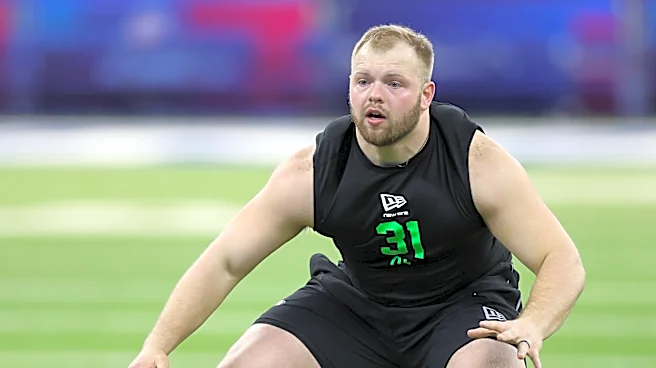
Lastly, trading up and sacrificing a fourth-round pick — especially paired with the Steelers selecting a kick returner with their lone remaining pick in that round — to move up three spots was maybe not the most optimal move to land Gennings Dunker. That said, it’s the pick I have the least gripes about. If Dunker fails, it will be because he’s a clunky and stiff mover. However, if the Steelers are transitioning to more of a gap-running team, as I suspect, and they kick him into guard where he won’t be asked to move as much in space, the fit makes a ton of sense. There were a few guard prospects I liked more, but the Steelers seem convicted in Dunker, reportedly liking what they saw with him playing side-by-side with Iheanachor at Senior Bowl practices. Dunker also has a winning personality that his college teammates rave about, and he has enough experience and accolades to feel optimistic that this was the right call. That a common pro comparison for him was Mason McCormick also helps me picture how he’ll play with the Steelers.
Maybe the Steelers didn’t fully maximize their haul in this round, but their vision is easy enough to decipher. If even just one of these players is a key contributor moving forward, the team and fans should consider it a success.
Day 3 picks

RB: Most of my issues with the Steelers’ 2026 draft class stem from their non-Germie Bernard choices on Day 2. Nothing was particularly close to an abject disaster, but I wasn’t that high on any of the names they selected in Round 3. I “get” every pick and can certainly envision a future where they all work out (especially Dunker), but there were several players I would’ve preferred at each draft slot.
That feeling continued on Day 3, but frankly, it’s hard to get too worked up about a team’s late-round selections. Historically, whether it’s a player you like or not, those picks don’t tend to pan out. It’s also where the now-suddenly-controversial consensus board – which both I and data believe is a valuable point of reference – starts to matter less and less. Especially in a draft universally seen as weaker than usual in 2026, “reaching” in the sixth or seventh round isn’t really a big deal.
Still, I’m paid to have thoughts on football, and will continue to have some here.
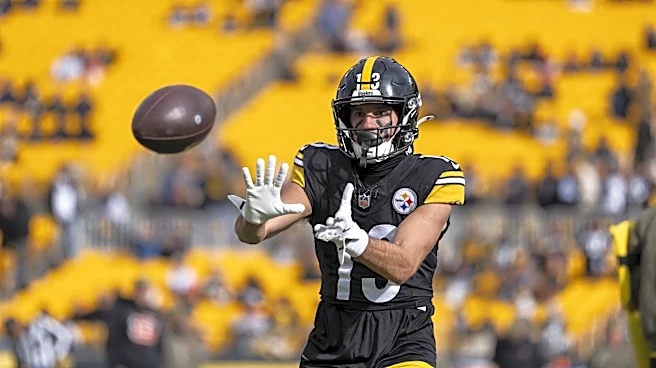
Mainly, I still have questions about the Kaden Wetjen pick. Selecting him in the fourth round still doesn’t seem like good value to me even if I can definitely appreciate the arguments for the other side. But my principle of not complaining much Day 3 picks much applies the least here – with previous fourth-round picks, the Steelers have selected legitimate contributors in Mason McCormick and Nick Herbig. Even Jack Sawyer, a player I was not high on, was at a high-value position and played some important snaps on defense as a rookie in 2025.
That’s the fourth-round precedent set by Steelers general manager Omar Khan. By that logic, the Wetjen pick – who was almost purely a special teams weapon in college – doesn’t make as much sense. Players such as Skyler Bell, Kaleb Elarms-Orr, Genesis Smith, Bryce Boettcher, Bryce Lance, Kyle Louis, and Keyshaun Elliott – all potential future starters on offense or defense – were still available.
Kick returner is also a spot where teams routinely find value much later than the fourth round. Of the top five in kick return average in the NFL last year, three were undrafted free agents. To me – especially considering the differences between NFL and college special teams – it’s a bit like drafting a kicker in the fourth round. Sure, if you get the next Chris Boswell it’s clearly good value, but it’s far from a guarantee that the player is Boswell (who was a UDFA himself).
Wetjen has fantastic open field vision and good burst in space, but he’s not an overwhelming athlete and has a unique build for a wide receiver (his listed position) at 5’9, 193 pounds. On offense, that clearly hurts Wetjen’s catch radius. He was limited to a gadget role in Iowa’s offense, and I wouldn’t expect that to suddenly change in the NFL.
What makes his fit on offense even more of a question mark is that Germie Bernard, the Steelers’ second-round pick (and a far more complete receiver, to be clear) excelled even more on gadget plays and manufactured touches at Alabama. And the Steelers’ highly-touted seventh-round pick, Eli Heidenreich, essentially projects as a bigger, more athletic version of Wetjen when it comes to offensive usage. I just don’t see great two-way value in the Iowa return man.
Again, if Wetjen puts up NFL return numbers like he did in college, that’s certainly worth a fourth-round pick, especially in a weaker draft such as 2026’s. But I don’t think that’s the guarantee so many believe it is. Look at the top return men from college each year – their NFL success rate isn’t that high.
I’m far less conflicted on the rest of Pittsburgh’s Day 3 picks.
The selection of fullback Riley Nowakowski in the fifth round was another fairly high-valued pick spent on a lower-value position, but the Steelers were able to trade down to get him. Plus, fullbacks have been heavily featured in modern Mike McCarthy offenses and Nowakowski looks like he’ll be a very good one. His tight end experience is another plus. Good pick.
In the sixth, the Steelers surprised a lot of people by selecting Notre Dame defensive lineman Gabriel Rubio, a name I, as well as most Steelers writers, hadn’t even heard of in the pre-draft process. I don’t have any evidence that he wouldn’t have been available much later in the draft like many have argued, but again, value isn’t as big of a deal that late on Day 3.
Turn on Rubio’s tape, as a lot of us did for the first time on Saturday, and you’ll find a rock-solid run stuffer with excellent length and some intriguing flashes of strength. He’s had past injury concerns (only played double-digit games in two of his last four seasons) and his 4.82 RAS underlines his lack of pass-rushing ability. Still, if I had gotten to his tape pre-draft, I can confidently say I would’ve thought Rubio was a draftable player.
As far as I’m concerned, the Notre Dame product is a solid Day 3 find by the Steelers’ scouting department who simply fell through the cracks of most pre-draft media coverage.
As for the first of the team’s Round 7 picks, I’ll be honest that I didn’t see it with safety Robert Spears-Jennings’ tape. He doesn’t quite have the ideal pop of a box safety, and bites on far too much in coverage. His impressive athleticism – a 9.78 RAS and 4.32 speed – didn’t always show either, but the last round is meant for fliers on players with that impressive of a profile. I don’t mind the pick at all, and Spears-Jennings’ two years of SEC starts don’t hurt, either.
The Steelers concluded their draft by selecting Navy do-it-all star Eli Heidenreich. We’ll certainly be breaking his game down in far more depth in later articles, but for now, just know he had excellent testing numbers and found a way to be incredibly productive in Navy’s offense as a slotback. He’s light for a running back and lacks great length as a wide receiver, but possesses a surprisingly polished skill set for either spot.
As mentioned earlier, I have questions on how Heidenreich might fit into the Steelers offense, but keep in mind that he’s a seventh-round pick who is most likely to end up on the practice squad. If he challenges for a job on the final 53-man roster, that’s a good problem to have.
Ultimately, I didn’t love this class, but I’ll admit I had high expectations with Pittsburgh entering the draft with 12 total picks. It’ll be interesting to see how it plays out over the summer.