



February 11, 2027. The NBA trade deadline. Between now and then, contenders will emerge, sellers will reveal themselves and new names will hit the market. In this February Forecast, we’re identifying potential Celtics targets before the deadline picture comes into focus. First up: Ryan Rollins.
Who?
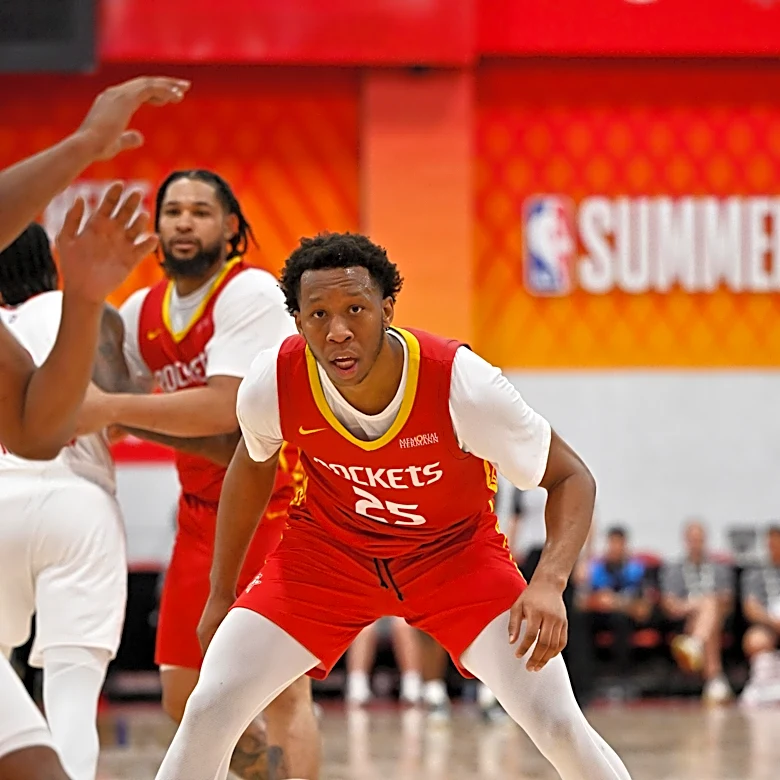
Rollins is a 24-year-old, do-it-all guard with good size who has steadily worked his way up the NBA ladder. Drafted 44th overall in 2022 by the Golden State Warriors, he spent his rookie season struggling to
crack a championship-calibre rotation before the team from the Bay moved on from him ahead of year two.
Without the cachet that comes with being picked in the lottery, it can be easy to fade into G League obscurity as a second-rounder. Before his second NBA season had even finished, Rollins had already donned two more jerseys. A short stint in Washington was cut short by legal trouble before the 6-foot-3 point guard eventually found his way to Milwaukee.
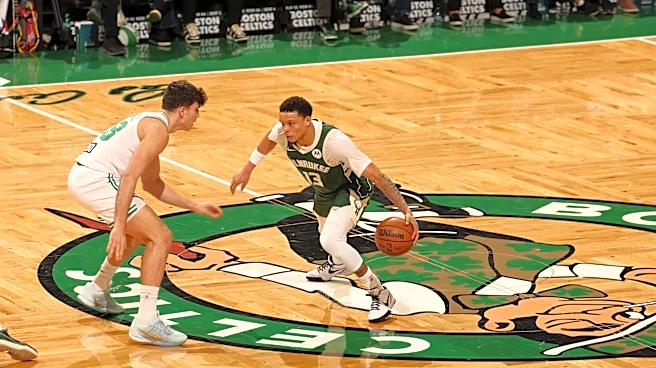
With the Bucks thinner than Ariana Grande on a press tour, opportunity finally arrived. Rollins played just under 15 minutes per game in his third NBA season, but he began to pop up in some of the nerdier corners of NBA Twitter. He knocked down shots, generated steals and shot well from the charity stripe. The buzz wasn’t mainstream, but Milwaukee’s coaching staff liked what they saw.
In 2025-26, Milwaukee’s depth chart bordered on translucent. With Damian Lillard waived (still can’t believe I’m saying that) and resources invested in the frontcourt, Rollins earned a spot in the starting lineup and hasn’t looked back. In 32.1 minutes per game, the former Toledo guard’s production exploded:
17.3 PTS | 4.6 REB | 5.6 AST | 1.5 STL
2.7 TOV | 47.2 FG% | 40.6 3P% | 6.1 3PA
Forty percent from deep. A 2:1 assist-to-turnover ratio. Thirteenth in steals. In a desert of an NBA season for the Bucks, Rollins was one of the few springs of hope in an otherwise desolate year. Despite an unorthodox path, Rollins is entering year five of his NBA career as one of the more well-rounded backcourt players in basketball.
As the Bucks look to rebuild in a post-Giannis world, one might think Rollins would be at the center of their plans, but I’m not so sure. Here’s the case for why he’ll be available in February and why Boston should pull the trigger.
Why he’ll be available:
Rollins is on an expiring deal and set to become a UFA in the summer of 2027. I don’t know about you, but if I were a 24-year-old who had just enjoyed the best season of his career, I wouldn’t necessarily look at Milwaukee as the place to be as I enter my prime. To keep Rollins, the Bucks would have to pay him handsomely. Conventional wisdom dictates that rebuilding teams should latch onto whatever young talent is already in the building in the wake of a mega-trade, not move it on, so perhaps Milwaukee will fork out the big bucks. I’m just not convinced that would be the smartest use of their resources.
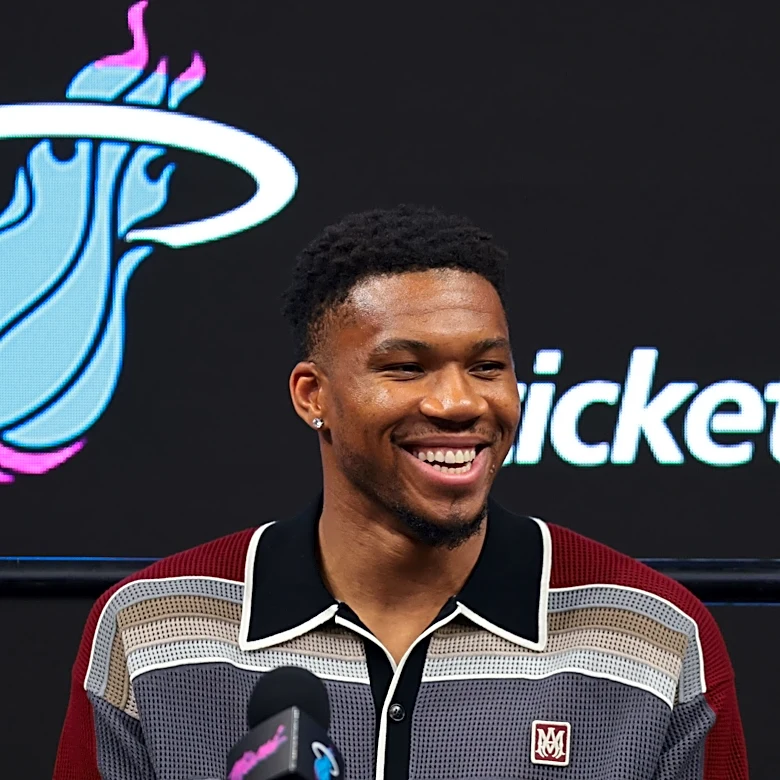
In pulling the trigger and relinquishing franchise legend Giannis Antetokounmpo to the Miami Heat, the Bucks acquired not one but two guards in return for their star. One-time All-Star and Milwaukee native Tyler Herro made up the bulk of the salary in that transaction and, while some may view him as little more than salary matching, there’s a good case to be made that he can be this season’s billboard player. A spaced-out paint and increased touches could give Herro the platform to re-enter the All-Star conversation, secure his next big payday or perhaps rehabilitate enough value to net Milwaukee something meaningful in a deadline deal further down the line.
The major sticking point in the negotiations was 20-year-old Lithuanian-born Kasparas Jakucionis. Jakucionis was projected as a lottery-level talent for much of the 2025 draft cycle and, while his counting stats weren’t earning him All-Rookie plaudits, his 42.3% three-point shooting and defensive resilience offered signs of encouragement. That development contrasted with his freshman season at Illinois, where he profiled far more clearly as an on-ball creator than a useful off-ball player. Add Milwaukee’s No. 9 pick, Brayden Burries, another guard who was incredibly exciting in his Summer League showings, and the Bucks suddenly have a very crowded backcourt.
Yes, Herro could be moved instead of Rollins, but he doesn’t have first-round-pick value at the moment. While Milwaukee acquired as many picks as it could from Miami in the Giannis trade, three firsts and a swap, they’re still roughly pick-neutral over the next seven years. A small-market team looking to create another title contender needs to operate from a position of pick superiority. More bites at the apple, particularly in a league with flattened lottery odds, represent Milwaukee’s clearest route back to relevance without an all-time great already in the building. Their route to becoming pick-positive runs through trading current members of the roster for future assets, or taking on bad salary as their financial flexibility increases.
Right now, Rollins is the player on the roster who could bring in picks. Any contender can realistically find a way to acquire his $4 million salary, while paying him in the coming offseason would eat into the flexibility Milwaukee should be trying to create. He is simultaneously cheap enough to be accessible to almost every contender, productive enough to attract real interest and young enough for the Bucks to justify demanding meaningful draft compensation. For that reason, I expect that, much like Coby White and Ayo Dosunmu with the Bulls last year, Rollins will be available at the deadline.
The Fit:
Much like his contract is easy to fit into a trade, Rollins’ skill set is easy to fit into just about any roster in the association. As mentioned above, he’s a capable defender with on-ball talent, a great spacer and a player who, over the last two seasons, has flourished with increased on-ball responsibility. Teams could look at Rollins as a Swiss Army knife-type player who can play off stars, or bet on him as something more, with untapped on-ball upside in a different situation.
I think that with Neemias Queta and Mitchell Robinson as Boston’s primary options at center this season, the Celtics will be less reliant on Derrick White’s unique rim-protection ability at the guard spot. With less switching versatility from those two at the five than Boston enjoyed with, say, Al Horford in past seasons, the need for point-of-attack defense increases, and that’s where Rollins could really come into his own. Milwaukee was five points per 100 possessions better defensively with Rollins on the court this year.
Rollins is a great halfway house between Pritchard and White. A better defender than Pritchard, a more dynamic self-creator than White and the kind of guard who would thrive playing in an offense focused on Jayson Tatum, while also carrying second units when he sits. Want proof of concept? Just check out his numbers last year depending on whether or not he shared the court with Giannis in Milwaukee:
WITH GIANNIS: 18.0 USG% | 15.0 PTS | 5.7 AST | 5.2 REB | 59.0 TS% | 40.3 3P%
WITHOUT GIANNIS: 27.3 USG% | 22.4 PTS | 6.8 AST | 5.3 REB | 58.0 TS% | 40.7 3P%
The jump in usage with Antetokounmpo off the court, coupled with the stability of his efficiency, indicates that Rollins really may be a late bloomer with star upside still in the tank.
Some of that star upside can be seen down below in Rollins’ career night against the Dubs last year:
The Cost:
Coby White and Ayo Dosunmu arguably set the market for players in the Rollins archetype with a year left on their contracts, but he’s a better player than both former Bulls on an even cheaper deal. I expect that, if Rollins were made available at the deadline, he’d attract interest from multiple teams and be particularly valuable to those dealing with apron or tax issues.
Any of Houston, Toronto, Atlanta, Detroit, Charlotte or Denver could pounce, with all of those teams a little short in the backcourt and possessing the picks to acquire Rollins if they want to strengthen prior to the postseason. With that healthy market and Rollins’ talent, I expect it would take more than a singular first-round pick to get Milwaukee’s attention. I’d suggest the following trade makes sense:
Boston Celtics receive:
Ryan Rollins
Milwaukee Bucks receive:
Jordan Walsh
Boston’s 2027 first-round pick
The less favorable of Boston’s two potential 2028 first-round picks, lottery protected
If the 2028 first does not convey, Milwaukee instead receives the less favorable of Boston’s two 2031 first-round picks, top-eight protected. If the 2031 first also fails to convey, the obligation converts to three future second-round picks.
This move would take advantage of Boston’s surplus on the wing, give Milwaukee another entry into the first round of the 2027 draft and maintain the upside of the Philadelphia trade for Boston. It’s a high price to pay, but one I think is worth paying.
The Verdict:
If Boston wants to build the next great Celtics team sustainably, they’ll have to make smart moves rather than simply going all-in on sure things. Trading for Rollins isn’t the kind of star move that breaks social media, but it reminds me of the Derrick White trade Brad Stevens made in 2022. Both were analytics darlings languishing on rebuilding teams, with the potential to ascend to another level in a winning context.
Trading for Rollins isn’t without risk, but it’s a move that strengthens the Celtics for next season while preserving financial flexibility. It’s a move that could soften the sting of Derrick White’s expected decline over the next few seasons. It’s a move that would still allow Boston to use its full mid-level exception next offseason, utilizing Rollins’ $7.6 million cap hold.
If I were in Brad Stevens’ shoes, I’d be looking to bring Rollins in. What do you think?