

Mizzou appeared poised to respond following Mississippi’s second touchdown to go up 14-3.
DeMarion Fowlkes returned the kickoff to the Tigers’ 42-yard line. Five plays later, Mizzou found itself facing a first-and-goal at Mississippi’s three-yard line. It’s hard to imagine a team not coming away with any points in this scenario, but the Tigers managed to accomplish that.
After two rushes went nowhere, Austin Simmons tried rifling a pass to Cayden Lee over the middle, but Blake Purchase dropped from
his edge position to deflect the pass. On fourth-and-goal from the five, Blake Craig shanked the kick to the left for his sixth miss of the year, completing a disaster of a sequence.
While Mizzou stalled in the red zone, Mississippi kept rolling. The Rebels responded with a 10-play, 80-yard drive, ending with Trinidad Chambliss throwing a 17-yard strike to Caleb Cunningham in the end zone, extending the lead to 21-3.
The difference between the ending of both drives for Mizzou and Mississippi was night-and-day, and highlights an important trend. Through seven weeks, the Tigers have one of the worst red zone operations in the Southeastern Conference.
Red Zone Scores:
- Mississippi: 100% (24-for-24).
- Alabama: 96.5% (28-for-29).
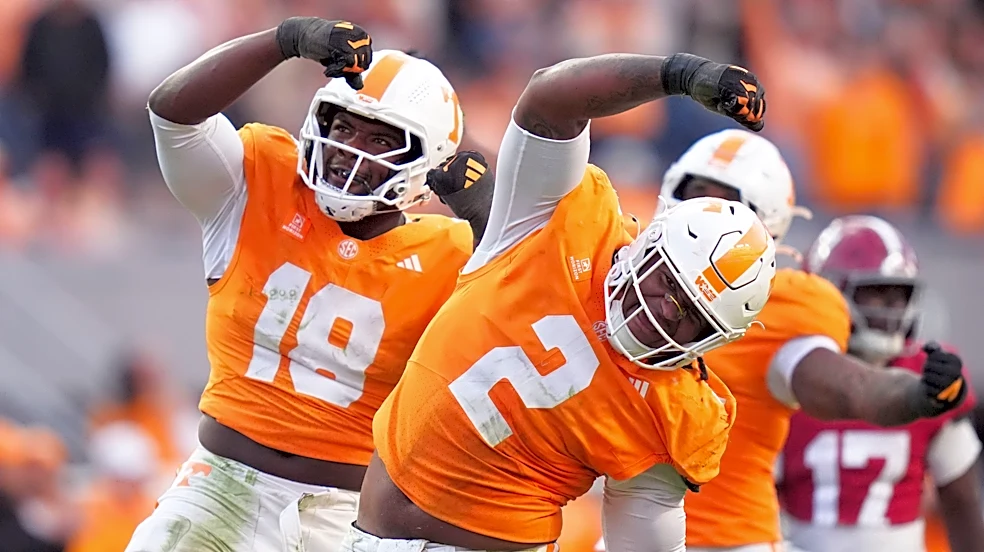
- Tennessee: 95.7% (22-for-23).
- Florida: 93.9% (31-for-33).
- South Carolina: 91.7% (22-for-24).
- Texas: 91.3% (21-for-23).
- Georgia: 91.2% (31-for-34).
- LSU: 87.5% (35-for-40)
- Mississippi State: 86.4% (19-for-22).
- Vanderbilt: 86.4% (19-for-22)
- Arkansas: 84.6% (22-for-26).
- Oklahoma: 84.6% (11-for-13).
- Kentucky: 81.3% (26-for-32).
- Texas A&M: 81.3% (26-for-32).
- Missouri: 75% (21-for-28).
- Auburn: 75% (15-for-20).
Even if you remove a pair of kneel-downs against Kansas and Troy, the Tigers still sit at just 80.8% (21-for-26).
As for Red Zone Touchdowns:
- Mississippi: 87.5% (21-for-24).
- Alabama: 82.8% (24-for-29).
- Georgia: 82.4% (28-for-34).
- Florida: 75.7% (25-for-33).
- LSU: 70% (28-for-40).
- Tennessee: 69.6% (16-for-23).
- Vanderbilt: 68.2% (15-for-22).
- South Carolina: 66.7% (16-for-24).
- Kentucky: 65.6% (21-for-32).
- Texas: 65.2% (15-for-23).
- Auburn: 65% (13-for-20).
- Mississippi State: 63.6% (14-for-22).
- Texas A&M: 62.5% (20-for-32).
- Arkansas: 57.7% (15-for-26).
- Missouri: 50% (14-for-28).
- Oklahoma: 46.2% (6-for-13).
For as exciting as this Mizzou’s offense can be, these numbers are alarming. Plus, the Tigers still will have to play the SEC’s No. 1 and No. 2 ranked red zone defenses in terms of touchdown percentage: Oklahoma (40%) and Texas (43.75%) over the next couple months.
Why does Mizzou continue to struggle to finish drives in the red zone? While the missed field goal is frustrating, the problem expands beyond the special teams error. Ineffective early-down rushing, fueled by blocking breakdowns and missed opportunities in the pass game, have all contributed into Mizzou’s red zone inefficiencies in 2026.
Against the Rebels, the Tigers failed to gain significant positive yardage on all three of their goal-to-go situations. On MU’s first one, the offensive line failed to win at the point of attack. Jamal Roberts has to bounce it outside, but two Ole Miss defenders fill the rushing lanes for a gain of zero. This was also after a false start.
Before the missed field goal, multiple issues arose. First, Curtis Peagler failed to generate any push from his right guard spot. The defensive tackle gets his hands extended and drives Peagler into the backfield. Jordon Harris’ defender swims off of him into the backfield. There’s no rushing lane for Xai’Shaun Edwards. Combined with Simmons bobbling the snap, the hesitation from Edwards gives enough time for the cornerback to come off the edge, securing a tackle for a loss of one.
Late in the fourth quarter, Tristan Wilson was unable to get to reach the linebacker, resulting in a one-yard gain by Roberts.
These issues weren’t limited to just what happened in Oxford. Similar issues have occurred prior this season whether its unsuccessful runs, mishandled exchanges and missed opportunities in the passing game.
Let’s go back to week two in Lawrence. Even in a week 2 win, a similar scenario happened in Oxford. On the Tigers’ first missed field goal drive, Roberts rushed for a loss of three. After a dropped pass and a screen that went nowhere, Mizzou’s field goal attempt was blocked.
Later on the second blocked field goal drive, poor blocking execution by Wilson and Norfleet led to a zero-yard gain by Roberts. On second-and-goal, Roberts bobbled the snap, much like Simmons against Mississippi, before being wrapped up behind the line of scrimmage. Norfleet then proceeded to drop the third-down pass.
Penalties have also disrupted the Tigers in the red zone. Against Mississippi State, the Tigers first scoring drive was pushed back from a second-and-3 at the nine due to a holding penalty by Luke Work. That drive ended in a field goal. Against KU, a false start pushed a third-and-four back, and in a third-and-long scenario, Chip Lindsey elected to run, which led to a field goal. Mizzou has struggled to stay ahead of schedule in the red zone, but even when it does, penalties and execution have kept them from finishing drives.
In 2023, when Mizzou went 11-2 and won the Cotton Bowl, it ranked first in SEC scoring percentage at 96.6% (56-for-58) and 11th in touchdown percentage at 62.1% (36-for-58). In 2024, the Tigers were second in scoring percentage (92%) and 8th in touchdown percentage (62%), on their way to a 10-win season. MU was reliable in getting points once it was in the red zone.
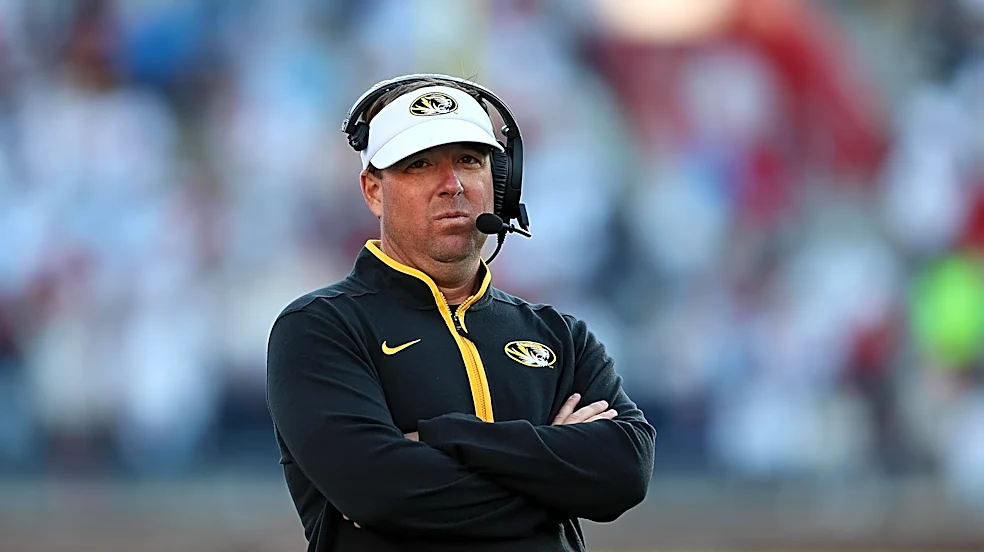
Mizzou slipped to 9th in scoring percentage and 12th in touchdown percentage in 2025, but improvement in this department was going to be needed if the team wanted to elevate into an elite unit in 2026. Right now, the Tigers’ offense ranks 45th nationally in Bill Connelly’s latest SP+ rankings. Through seven games, Missouri’s red-zone scoring percentage is lower than any completed season in the Drinkwitz era.
Improved efficiency and a cleaner operation are the difference between 7 and 3 points. It didn’t necessarily matter in a 28-point loss in Oxford, but think of a game like Mississippi State. The Tigers get a penalty on a 2nd-and-3 from the nine. It pushes the drive back, making it more difficult to cut the lead to 14-7. Mizzou lost that game by seven points, but had the ball at the Bulldogs’ 35 with under a minute to play. A touchdown earlier would’ve meant MU needed a field goal on their final possession to tie the game instead of seven.
We saw Mississippi stay perfect in the red zone, while Mizzou faltered. As the schedule gets even tougher, it’s going to be an emphasis to improve in the red zone moving forward. It’s not necessarily about finding more creative plays, it’s executing the ones called and giving more manageable situations going forward.
With a bye week coming up, it’s a perfect time to self-scout and improve. Hopefully, that leads to positive results going forward.