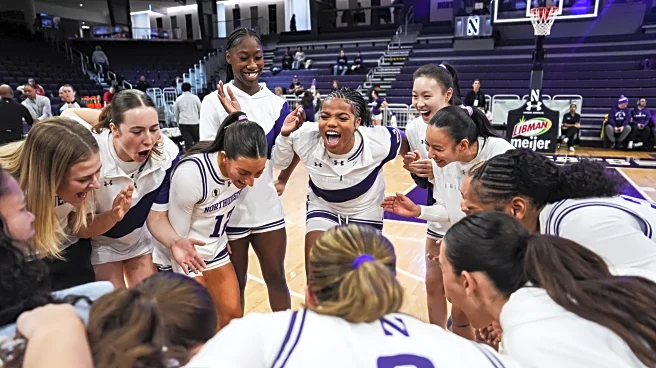

It wasn’t even a conversation until the program showed promising signs with two Big Ten wins.
Improvements are small, but encouraging, right? In my preseason preview, I envisioned the Wildcats would finish
with five to six conference victories. After a brutal road stretch with tough losses, Northwestern (8-11, 2-6 B1G) regrouped with consecutive wins over Rutgers and Wisconsin before a hard-fought loss to No. 25 Illinois last weekend.
With ten Big Ten battles remaining on the schedule, winning three or four more games shouldn’t be a dream. The question is whether Northwestern can build on its recent resilience or revert to the struggles that defined its 10-game losing streak.
More Helping Hands Around Grace Sullivan
Grace Sullivan maintains her dominance as usual, ranking second in the Big Ten with 22.1 points per game, but as the Wildcats struck in consecutive losses, there was a lack of support despite her consistency. Now, as other players have stepped up, the Wildcats feel the difference.
Xamiya Walton has emerged as the most significant addition to the rotation. After sitting on the bench for the first nine games, Walton has mostly started since, providing much-needed firepower. Against Minnesota, she dropped 16 points with four three-pointers. Last weekend against Illinois, she posted a career-high 19 points on five triples. She’s shooting 39% from beyond the arc, second-best on the team behind Casey Harter (39.4%).
Harter has also delivered crucial scoring. After missing three games with injury, the junior guard returned in late December and has recorded double-digit scoring in five of seven games since. She exploded for a team-high 21 points in the Rutgers victory, distributing the workload off Sullivan’s shoulders.
Caroline Lau deserves mention as well. Concerns arose about whether she could pick up her scoring pedigree. However, while maintaining her high assist average this season, she’s elevated her scoring from 4.9 points per game last season to 8.0 this year. After making just 25 three-pointers all of last season, Lau has already drained 24 from beyond the arc with plenty of games remaining.
Northwestern also welcomed a leap from Tayla Thomas, who transformed from a role player averaging 1.4 points as a freshman to over 10 points-per-game this year as a starter. She’s become a main rebounder for the Wildcats, grabbing 8.5 boards per contest. The rising sophomore has also posted nine games with double-digit rebounds and five double-doubles, cementing herself as another important piece behind Sullivan.
It’s always beneficial to lean on Sullivan’s prowess. But having others step out consistently impacts more wins, and Sullivan’s surrounding cast has matured with a more polished look.
Lack of Strength Off the Bench
It’s hard to answer whether Northwestern can turn things around with less than two months remaining. It depends on how you define “turning around.” If reaching the Big Ten Tournament shows progress, the Wildcats can probably achieve that goal. But dreaming about a deeper postseason run might sound more than a fairytale. Their poor bench scoring tells that reality.
According to NCAA stats, Northwestern averages just 9.8 bench points per game, ranking 353rd nationally — bottom of the bottom. Despite fighting hard and nearly upsetting Illinois, the Wildcats produced nothing from the bench while the Fighting Illini overwhelmed them with 11 bench points. In two other ranked battles against Iowa and Ohio State, Northwestern was also outscored by opponents’ benches despite competitive performances.
Tate Lash’s struggles epitomize the bench issues. Before being moved to a reserve role, she started the first 13 games but couldn’t meet expectations after averaging double-digit scoring for three seasons at Furman. Playing the last six games off the bench, she’s experienced a diminishing role, with two games logging just 15 minutes and combining for only 11 points over that stretch.
Head coach Joe McKeown’s decision to replace Lash with Walton in the starting lineup has worked—Walton has averaged 8.1 points and shot 40% from three since the change. But Lash’s inconsistency reflects Northwestern’s broader bench struggles. While players like Angelina Hodgens and Claire Keswick have occasionally felt hot from deep and posted double-digit performances, they haven’t consistently supported the team. Those scoring outbursts have become flukes rather than reliable contributions.
Can Northwestern Turn the Season Around?
Northwestern currently sits 15th in the conference, temporarily safe from the Did-Not-Qualify zone that would eliminate them from the Big Ten Tournament. Speaking realistically, securing a tournament berth should be the priority for the Wildcats.
The resilience Northwestern has shown against ranked opponents provides reason for optimism. Competitive performances against Illinois, Iowa and Ohio State demonstrate this team can hang with elite Big Ten competition when focused and executing. If the Wildcats can maintain that fight and find consistency from their bench contributors, capitalizing on the room for growth becomes achievable.
If bench players can step up and contribute even modest scoring, Northwestern would become far more dangerous. That depth would prevent starters from carrying impossible burdens during late-game situations and retain momentum when starters need rest.
The road ahead won’t be easy. Whether the Wildcats can turn things around depends on maintaining resilience, finding bench consistency and capitalizing on the growth already shown. Three or four more conference wins aren’t just realistic — they’re necessary for postseason hope.