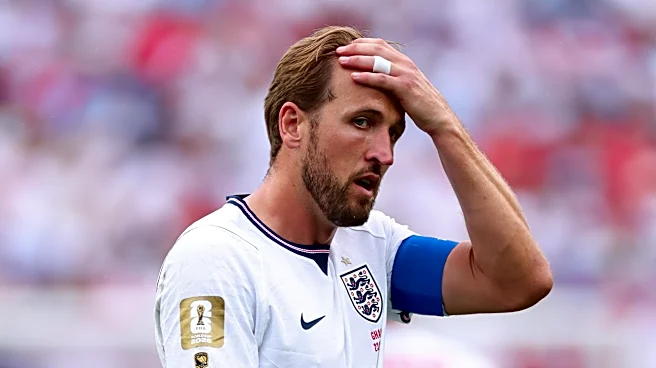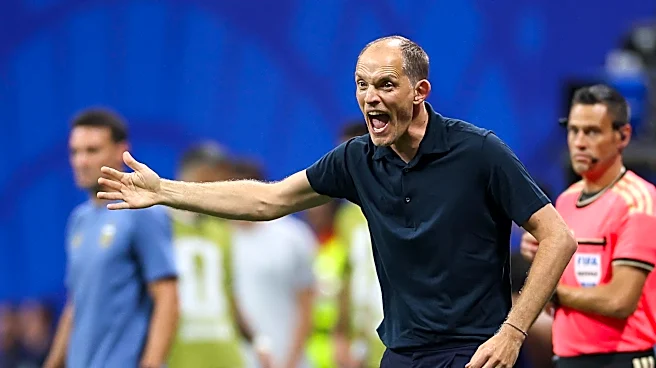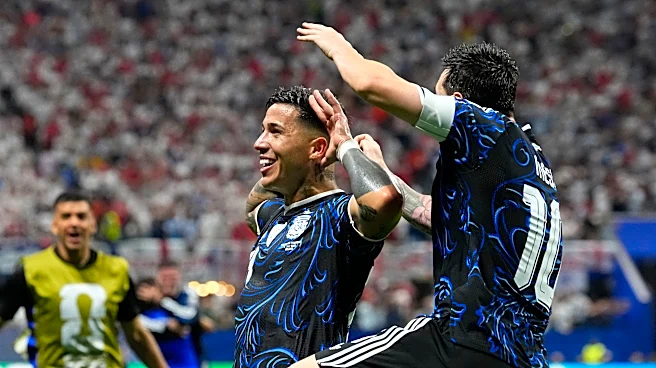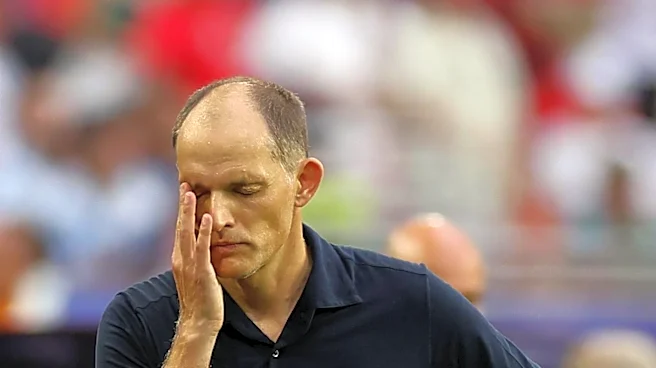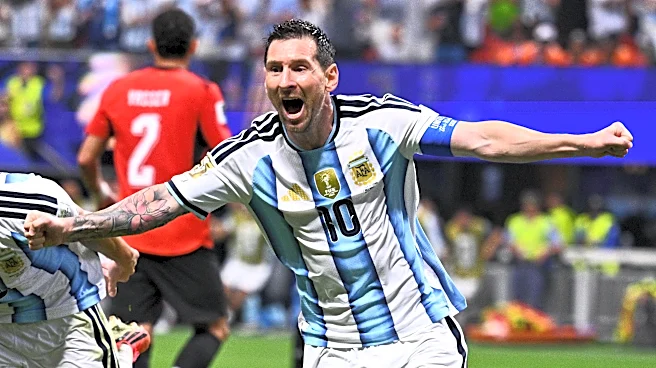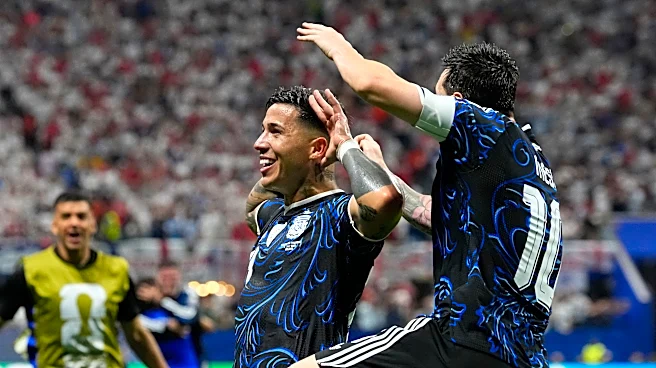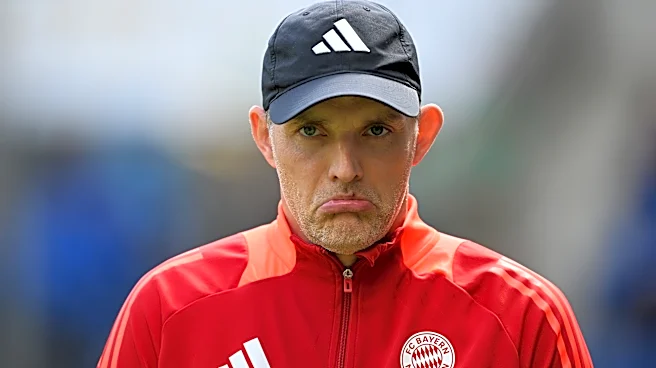





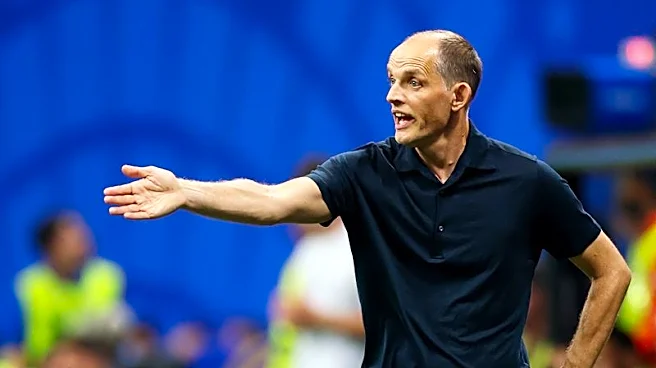


The world watched with shock as England lost 2-1 to Argentina despite being a goal up, but to Bayern Munich fans, this was a story that they’d unfortunately seen before.
While England fell when it mattered most and made way for Argentina to secure their spot in back-to-back World Cup finals, painful reminders of the ill-fated night in Madrid two years ago must have flashed in the minds of those unlucky enough to remember it.
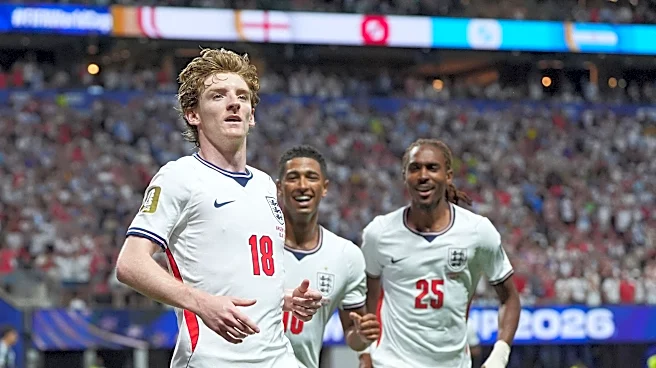
What ensued after Anthony Gordon’s goal today was almost a play-by-play recreation
of one of the worst moments in Bayern’s modern history. It is no surprise that the perpetrator on both occasions was Thomas Tuchel, delivering fans a fate they did not deserve, and this time around, denying football a World Cup final worthy of its billing.
For those lucky enough not to remember, the game in question that shared striking similarities with the World Cup semifinal was Bayern’s 2-1 loss to Real Madrid in the second leg of the 2023/24 Champions League semifinal. There is a lot that Tuchel deserves criticism for after the Argentina loss and much of it is best encapsulated by drawing parallels to his handling of Bayern’s Champions League crash-out two years ago.
The “definition of insanity…”
“…is doing the same thing over and over again and expecting different results.”
It would be a disservice to call this a tactical breakdown, because on England’s end, there were few tactics at play following their lead. England did well to control the game up until they scored, but ironically, that was the turning point as they chose to forfeit possession of the ball and sit back. What then transpired for the next 40 minutes was a poor and disorganized low block that allowed Argentina free rein in the English box, and little to no pressure from England also meant that Argentina had complete control over the flanks. This change in approach was set in stone when Tuchel took off his goalscorer Gordon for centre-back Erzi Konsa at the 72nd minute, and followed that up by bringing on defender Nico O’Reilly for Declan Rice.
The issue with this should become exceedingly clear: if you allow any half-decent team a bunch of attempts on goal with uninterrupted access into prime crossing positions, you are bound to concede. More so when said team just happens to have the greatest creator the sport has ever seen. Just take a look at the state of their defensive setup:

What was supposed to be a 5-3-2 out of possession turned out far too often to be a chaotic mess that rushed to crowd the box when facing an attack. Lacking coordination and helpless, hoping for the best. Unbelievably frustrating to watch.
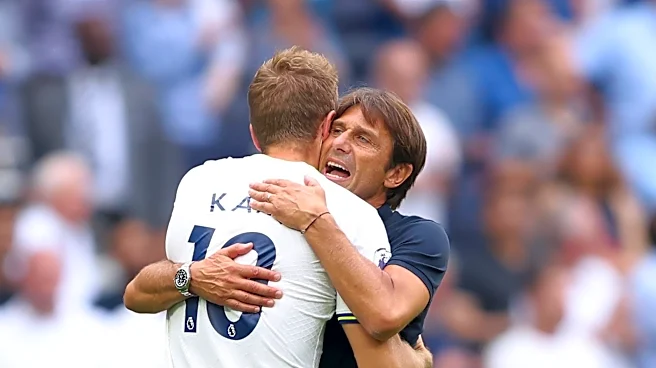
The point is, this isn’t the first time Tuchel has tried this. Bayern’s 2-1 loss to Real Madrid in 2024 saw the Rekordmeister go up by one in the 68th minute, after which virtually the same set of events ensued. Tuchel first took off Bayern’s only remaining winger Leroy Sané for centre-back Kim Min-jae eight minutes after Alphonso Davies’ opener, and followed it up by bringing off Harry Kane another eight minutes later. And the carnage that thus ensued was no different: a supposed 4-4-2 off the ball turned into messy attempts at absorbing the pressure from a Real Madrid team to whom they had surrendered the ball.

Both games saw an equalizer and then a winner towards the last minutes, but both goals in both games felt almost inevitable given the 30 minutes that preceded them. It is worth considering the inverse: had they not conceded, Tuchel would be hailed as a hero. But the set-up so early on right after getting a leg up felt like both teams were inviting this outcome. It is an uncharacteristically cowardly approach, and ironically, Tuchel’s own critique of England’s 2024 Euros campaign applies here too: “They were more afraid to drop out of the tournament than having the excitement and hunger to win it.”
There is nothing inherently wrong with parking the bus when a goal up, but far too soon, with clearly so little preparation to face the bombardment they did, was almost objectively foolish. Doing it once is excusable, but twice? See the paragraph heading.
Shambles on the set-pieces
While we’re on the topic discussing the tactical limitations that led to these results, a withstanding pet peeve of mine has been how Tuchel has handled opposition corners. There seemed to be little practice to handle situations when corners were taken short, and oftentimes his teams have conceded from the ordeal. Take this game, where Argentina equalized through a short corner where Lionel Messi was able to complete a calm one-two with Rodrigo de Paul while under minimal press from the Englishmen, who were too busy crowding the box (rather ineffectively, it must be said).

And the same sequence could be seen in Bayern’s loss to Madrid, notably in the 70th minute where a short corner from Luka Modrić to Federico Valverde saw the latter’s shot find the back of the net but was later ruled out due to a foul in the box.

The inability to successfully counter corners taken short can be viewed in tandem with the inability of these frantic low-blocks to defend the flanks well. The introduction of an additional centreback disrupts the defensive mechanisms the team has developed off the ball, and when coupled with narrower set-ups, allows opposition to wreak havoc from the wide areas into the half-spaces. Tuchel has made the same little tactical mistakes far too often, and they have proved to be far too costly.
Let’s play the blame game…
Let’s call out names, names…
The Tuchel special following a loss. This is what irks fans the most: Tuchel makes decisive decisions, but seldom shoulders the blame for the outcome. A practice rather successful at alienating the fans of your own team. The England match was quite clearly decided by his tweaks, but if one only heard Tuchel’s post-match interview, they wouldn’t believe that the game had ended in a loss.
“Today we played one of our best games. Maybe our best game. We have no regrets. It’s easy to say my decisions were wrong after the defeat.” (via Fabrizio Romano)
And lo, and behold, the same antics took place following the loss to Madrid. Blaming injuries, and then the referee. Bayern fans are far too familiar with his press antics; there are countless examples beyond this, involving publicly singling out his own players.
“The whole season we’ve been reactive with the substitutions instead of being active. We always had to react to injuries.” (via @iMiaSanMia)
“A disaster. An absolute disaster. With Real’s second goal, they let the play continue. The clear rule is that the scene must continue. The first mistake was made by the linesman, the second by the referee.” (via @iMiaSanMia)
Tuchel, the tournament king?
Tuchel has been here countless times. His reputation as a “tournament specialist” may well be what empowers him to opt for such defensive approaches to try to ensure progression, but time has shown him repeatedly that this simply does not work, and choosing to do the same despite outcomes that prove otherwise is nothing short of stubborn. You know it is a problem when his own England team is left flabbergasted by his approach. There is little denying that he did rather well to bring England this far, and coached a particularly good game against Mexico. But that does not exempt him from the criticism for today’s blunder, especially when it is one that he has committed exactly the same in the past. There has to be a change if he plans on seeing success with this England squad in the future.
What did you think of England’s game? Was Tuchel at fault? Do you agree with the parallels observed with Bayern’s loss to Madrid two seasons ago? Tell us everything in the comments below!
Join the conversation!
Sign up for a user account and get:
- New, improved notifications system!
- Fewer ads
- Create community posts
- Comment on articles, community posts
- Rec comments, community posts