

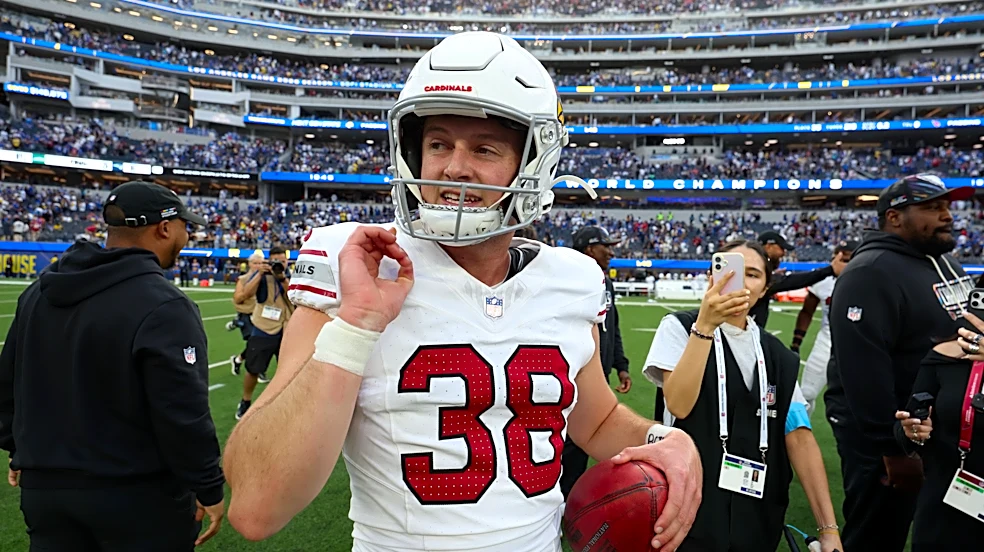

The Dallas Cowboys are heading to Philadelphia for a Monday night NFC East showdown, and both teams have plenty of questions to answer. Dallas is coming off a 23-13 loss to Green Bay that dropped them to 2-4, while the Eagles have lost four straight and are also sitting at 2-4.
Philadelphia’s season has taken an especially dramatic turn, with quarterback Jalen Hurts sidelined for the year by blood clots and Tanner McKee stepping into the starting role.
The Eagles still have recognizable talent on both
sides of the ball, including running back Saquon Barkley and wide receiver DeVonta Smith. But their offense has struggled to find a rhythm, and losing Hurts only makes that challenge more complicated.
Their defense has been the steadier unit, giving Philadelphia a chance to stay competitive even when the offense cannot sustain drives.
For Dallas, the opportunity is obvious: take advantage of an offense in transition. The challenge is that divisional games rarely follow the script, especially when the opposing defense can make life difficult.
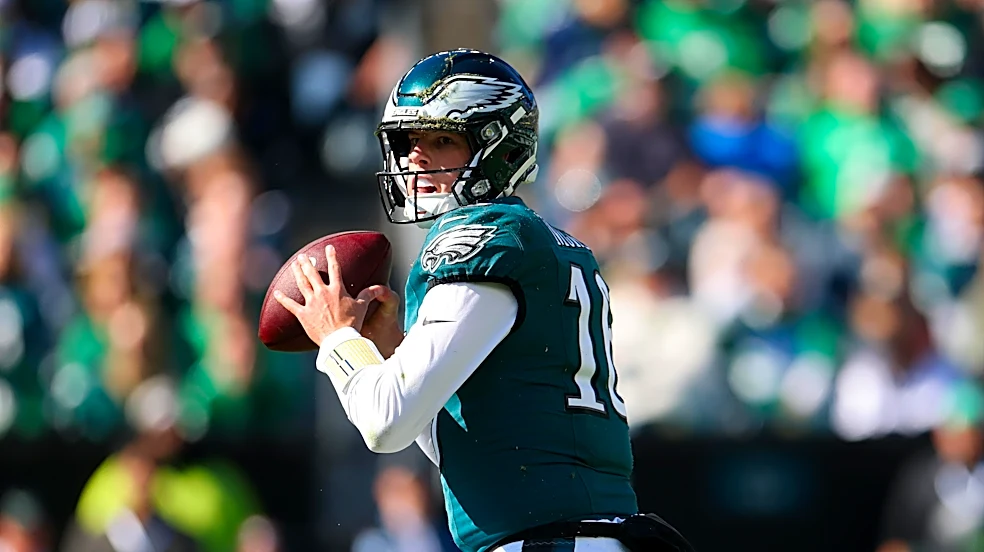
Tanner McKee takes over as the Eagles’ quarterback
The biggest story in Philadelphia is the absence of Hurts. The Eagles confirmed that he will miss the remainder of the 2026 season after further testing revealed blood clots in his lungs. The focus is rightly on his recovery, but the football implications are enormous for a team that has struggled even with its starting quarterback available.
Hurts had thrown for 933 yards, eight touchdowns and three interceptions in five games before being sidelined. Replacing his production and leadership is a big ask, especially for a backup quarterback who hadn’t played a snap in the 2026 regular season before taking over against Carolina.
McKee made his first start of the season in Week 6, completing 26 of 45 passes for 215 yards and one touchdown without an interception in a 25-14 loss to the Panthers. The stat line was respectable in terms of ball security, but the offense managed only 222 net yards and struggled to generate consistent momentum.
McKee has shown flashes during his limited NFL opportunities, and he deserves time to settle into the role. Still, the Eagles cannot expect him to replicate everything Hurts brings to the offense. He is a different type of quarterback, and Philadelphia will likely need to simplify its approach, protect him better and create more manageable down-and-distance situations.
Dallas has struggled to generate consistent pressure this season, so getting after McKee without allowing easy underneath completions should be a priority. The Cowboys cannot afford to let an offense in transition find its confidence early.
Saquon Barkley and DeVonta Smith remain the key weapons
Even with the quarterback change, Philadelphia has playmakers capable of causing problems. Barkley remains the centerpiece of the running game when healthy, while Smith gives McKee a reliable target who can win at multiple levels of the field.
The major caveat is Barkley’s health. He missed Philadelphia’s last two games with a hamstring injury, and the Eagles have had to patch together their backfield in his absence. Through the first six weeks, Barkley had recorded 36 carries for 182 yards, averaging 5.1 yards per attempt, but he had not scored a rushing touchdown. Those numbers are limited by his missed time, and his availability for the Cowboys game will be an important storyline to watch as the week progresses.
Without Barkley, Philadelphia has struggled to establish a consistent ground attack. The Eagles used Dameon Pierce and Carson Steele against Carolina after injuries depleted the depth chart, and the team finished with only 62 rushing yards. That lack of production puts even more pressure on McKee and the passing game.
Smith offers a more established option in the passing game. He returned from a hamstring injury against Carolina and caught a touchdown pass from McKee. Through six games, Smith has 26 receptions for 310 yards and two touchdowns. He gives the Eagles a receiver who can separate, make contested catches and create opportunities when the offense needs a spark.
The question is whether Philadelphia can build a functional offense around those pieces. Smith’s return is a positive, and if Barkley is available, Dallas will have to account for his ability to turn a small crease into a substantial gain. If he remains sidelined, the Cowboys should be able to focus more attention on the passing game.
Philadelphia’s defense is keeping it competitive
The Eagles’ defense has been the more dependable side of the team, and it could be the biggest obstacle for Dallas on Monday night. Philadelphia has not been perfect, but it has created more disruption than its offense has generated, recording eight sacks and three interceptions through six games.
The defense also has young playmakers capable of changing a possession. Defensive tackle Jalen Carter and edge rusher Nolan Smith have each recorded three sacks, while cornerbacks Cooper DeJean and Quinyon Mitchell have each intercepted a pass. Linebacker Jihaad Campbell has contributed across the defense, giving Philadelphia another young player to build around.
The unit’s job has become more difficult because the offense has struggled to sustain drives. Philadelphia’s defense played 79 snaps against Carolina, compared with 64 for the Eagles’ offense. That imbalance can wear down even a talented group, particularly when the offense repeatedly gives the ball back without putting points on the board.
Still, the defense has done enough to keep the Eagles within reach in several games. Yet against Carolina, the Eagles allowed 25 points and struggled to stop the run, showing the defense isn’t immune to the same inconsistency affecting the rest of the roster.
For Dallas, the matchup presents a familiar challenge. The Cowboys’ offense has shown it can move the ball, but the loss to Green Bay exposed problems with protection, rushing production and execution in critical moments. Philadelphia has enough talent up front and in the secondary to make those issues costly.
The Cowboys need to establish the run, keep Prescott out of obvious passing situations and avoid turnovers. If the offense becomes predictable, the Eagles have the personnel to pressure Prescott and force difficult throws. Dallas cannot assume that a struggling Philadelphia team will simply roll over, especially with a defense capable of creating momentum-changing plays.
A struggling offense, but no easy divisional game
Philadelphia enters Week 7 on a four-game losing streak, averaging just 14.5 points per game during that stretch. The Eagles have scored 14 points against Carolina, 17 against Jacksonville, 7 against Chicago and 20 against the Rams. The results point to a broader problem, which is their offense has not been very good.
Dallas has its own issues, of course. The Cowboys have lost consecutive games and are still searching for consistency on both sides of the ball. That makes Monday night an important test for a team that cannot afford to give a divisional opponent easy opportunities.
The recent history between these teams reinforces how little the records matter once they meet. Philadelphia beat Dallas 24-20 in the 2025 season opener, but the Cowboys responded with a 24-21 win in Philadelphia later that year. Dallas leads the all-time series, 75-59, but recent meetings have been competitive enough that neither team can take the other lightly. If the Cowboys allow the Eagles’ defense to dictate the pace, another frustrating night could be waiting in Philadelphia.