
It’s never fun when your team loses in the playoffs. When they win, you can gloss over all of the mistakes with the satisfaction of victory. But, when they lose, all those miscues become the center of everyone’s attention once the game – and season – is over. Every mistake will be combed over in excessive detail by fans and analysts alike, desperate for a reason behind another playoff exit.
But, in the days immediately following such a big loss, especially one with as many hiccups as the Houston Texans’
28-16 loss to the New England Patriots, identifying mistakes and issues can feel like spotting shrapnel in a war zone.
What caused the Texans to lose to the Patriots?
The first issue that leaps into your mind is the biggest one: QB CJ Stroud. His statline tells the ugly story of this game, and his lowlights in the first half make it look even worse. He was supposed to be the franchise quarterback to deliver Houston from mediocrity! Flashing his potential in year one and then never again, like a cruel joke played on those that thought the franchise had finally found their leader. But why? Why has Stroud gotten worse?
And then, the avalanche washes over you-
It’s got to be this offensive line. Stroud has had too many line combinations this year and he couldn’t handle the whole lineup shuffling because of RT Trent Brown’s injury.
…No, it’s the ground game! RBs Woody Marks and Nick Chubb only get 31 yards on 18 carries against the Patriots? That’s a disaster…but, the receivers weren’t great, either! Houston needed WRs Jayden Higgins and Christian Kirk to be sparkling stars in Stroud’s visor, and they failed.
…Is it right to expect so much of them, though? Is it too much for me to expect Higgins and Kirk to step up against such a high level defense? Maybe it’s really the injury bug that killed the Texans…but the quarterback is supposed to compensate for those injuries! Ugh!
All of Houston’s compounding issues this game ultimately orbit around the quarterback playing poorly. CJ Stroud is the sun that the offense revolves around, so when he’s having a cloudy day, they all are. So…do you bench him? Should the Texans have tapped QB Davis Mills to be the starter after halftime? Well, if you listen to DeMeco Ryans postgame conference after the loss, he had full confidence in Stroud remaining the starter:
To Ryans’ credit, Stroud did play better in the second half, but not by very much. He remained iffy inside the pocket and couldn’t hit his receivers in the hands to save his life. Is that enough to bench him? Well, a perspective I’ve come around to is: if all of these small issues surrounding the offense on Sunday were enough to overwhelm Stroud, they likely would be enough to stop backup QB Davis Mills from looking any better. Even if Stroud was taken out of the game immediately following the pick-six in the second quarter, Mills would not be able to rely on his rapport with Christian Kirk and Jayden Higgins to carry him to a comeback, and the Patriots would be even more likely to stack the box with him in the game. So, looking past the quarterback controversy (which has already been covered on this site), what can the Houston Texans make as their primary targets in the offseason? For me, there are three major spots of deficiency that can be significantly improved before kickoff of the 2026 NFL season:
1. Running Back
Of all the mysterious football injuries that have plagued star caliber players and confused the public at large, RB Joe Mixon’s undisclosed foot/ankle injury has to be one of the most prolific. Now nearly 6 months separated from the initial reports of Mixon struggling to practice in training camp, we still have very little information as to what has ailed him and why it kept him off the field for the entire 2025 season. If you’re to take General Manager Nick Caserio’s testimony mere minutes into his Wednesday press conference, the Texans had little understanding of the injury, as well:
“So, as it pertains to Joe [Mixon]…so, here’s what I would say, it was a very…unique situation…I don’t think anybody really had any clarity, honestly, from the start of the year until now. I’d say Joe worked very very hard to try to get himself ready to play football. It just never manifested itself and came to fruitition…probably have an opportunity to kind of see where he is in the offseason, um, relative to next year. But again…it was as unique a situation an injury as I’ve been associated with…it’s just kind of a freak thing…He didn’t do anything off the field…it wasn’t like he was riding a snowmobile or anything like that. It was just more of a medical condition or situation that really didn’t improve as much of the as everybody would have hoped…I’d never seen the condition. ” – Nick Caserio
A whole lot of words to say not very much, and I guess that sums up the breadth of knowledge the Texans are willing to share regarding Mixon. Whether he was in a snowmobile or…jumping off a building…or not, this injury Mixon is suffering from was not significant enough to prevent him from trying to return midseason, but still too much to muster a comeback in time for Houston’s divisional round exit. A very odd situation indeed, and a perfect excuse for Houston to target RB either in free agency and/or the NFL draft in April.
Without Mixon, Houston’s rushing offense was stuck in neutral for much of the season, and, at times, completely nonexistent. Veteran RB Nick Chubb would start as the Texans first fill-in for a bruising tailback, but he would eventually be usurped by one of Houston’s best rookies: Woody Marks. Marks was not the punisher that Mixon could be, but he was all the more elusive as he marched his way towards the starting job halfway through the season. By the end of the regular season, Marks finished his first year as a Texan with 911 yards from scrimmage (703 rushing, 208 receiving), behind only WR Nico Collins in yardage on the team. Despite not being the offense’s strong suit, Marks made the rushing game functional and occasionally great…but it’s going to require more than just him to make the ground game truly deadly.
Nick Chubb is not immediately expected to return from free agency after an underwhelming year, so the compliment to Marks is completely unknown. Backup RBs Jawhar Jordan and British Brooks showed real promise in limited action, but they would not challenge an incoming veteran or top 100-pick for the backup spot behind Marks. Hopefully, with a small stable of reliable RBs, the ground-game should flourish once again. My personal favorite targets both in free agency and the draft are:
Top Running Backs in 2026 NFL Free Agency:
- RB Kenneth Walker III – Seattle Seahawks
- RB Breece Hall – New York Jets
- RB Tyler Allgeier – Atlanta Falcons
Top Running Back Prospects in 2026 NFL Draft:
- RB Emmett Johnson – Nebraska
- RB Kaytron Allen – Penn State
- RB Mike Washington Jr. – Arkansas
2. Guard (LG in particular)
Tytus Howard, Kenyon Green, Kendrick Green, Juice Scruggs, Jarrett Patterson, Laken Tomlinson – these are the names of all of the players the Houston Texans have had at LG in the last two seasons. Kenyon Green is Nick Caserio’s only first round bust, Kendrick Green was an interim player at the position, and Scruggs and Patterson were centers called upon due to a lack of depth at guard. Tomlinson was brought into the building in 2025 to provide stability at the position, but would lose his starting job to Tytus Howard, who is normally the starting RT but kicked it inside thanks to a healthy RT Trent Brown manning the bookend. This stream of interchanging players and position-blending is not a recipe for success, nor is it helpful to QB CJ Stroud, and we all bore witness to the impact of not having a true starter at LG in the divisional round against the Patriots when the interior line was torn to shreds by DT Milton Williams.
Nick Caserio’s strange method of addressing the offensive line – scooping up random middling starters and disappointing young players in free agency – did yield new starters at C (Jake Andrews) and RG (Ed Ingram), much to my surprise. However, LG remains his Achilles heel, and I’d rather see him address it with a top-50 draft pick than go hunting through the bargain-bin of other teams’ rosters, again. After the success of Ed Ingram, though, I fear he may be emboldened by his rather scattershot philosophy. But, Caserio is not exactly predictable either, so regardless of what direction he decides to walk backwards into, I hope he considers these options:
Top Guards in 2026 NFL Free Agency:
- LG David Edwards – Buffalo Bills
- LG Isaac Seumalo – Pittsburgh Steelers
- LG Alijah Vera-Tucker – New York Jets
Top Guard Prospects in 2026 NFL Draft:
- LG Olaivavega Ioane – Penn State
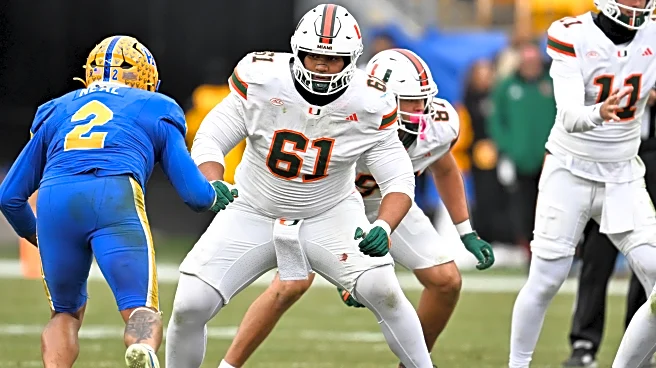
- T/G Francis Mauigoa – Miami
- RG Keylan Rutledge – Georgia Tech
3. Tight End
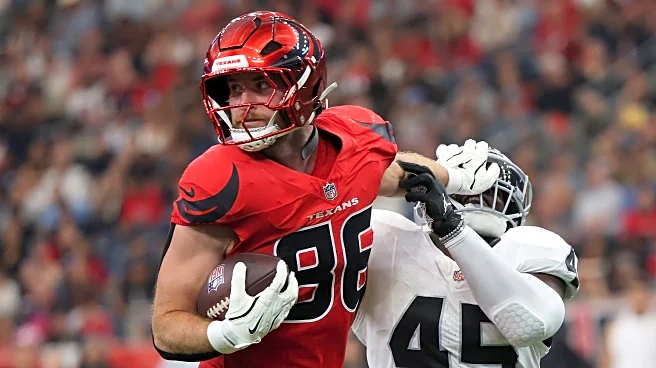
In the modern NFL, having multiple good tight ends almost feels like cheating. To have multiple players on the field that can either block or go out as a receiver adds so much versatility to an offense that one of the NFL’s most popular developments in the passing attack has been running a play quest the tight end pretends to be a blocker, only for them to turn around and play receiver a few seconds after the ball is snapped (this trend is also spreading to RBs as well, which we saw with Woody Marks in the Chiefs game.) Having a tight end leak out of the backfield after chipping a defender is one of the easiest ways to rack up cheap yards on offense, which is why you see teams like the Buffalo Bills and Green Bay Packers building their offenses around multiple tight end sets. Texans offensive coordinator Nick Caley actually employed some of these concepts last year when he was the passing game coordinator for the L.A. Rams, but they were a bit more of a rarity in Houston in 2025. Dalton Schultz was still a major part of the offense in 2025, but he was only occasionally used as a decoy blocker or receiver. Due to the broken foot injury backup TE Cade Stover suffered in week 1 that put him on IR, and the season-ending injury TE Brevin Jordan suffered in August, many of those multiple TE formations got buried in the back of Caley’s playbook, never to see the light of day…until 2026!
This is the key to Houston unlocking their offense once again. They’ve already signaled interest in versatile TEs by re-signing Jordan to a one-year deal just a month ago whilst he’s still in recovery from his second season-ending torn ACL in a row. Even with the extension, there’s no doubt Nick Caserio has taken notice of Jordan’s lack of availability, so I expect some Jordan-like reinforcements to arrive in Houston either in free agency or the draft so that a few injuries to this position group won’t turn it into a Schultz-only show. My favorite targets are:
Top Tight Ends in 2026 NFL Free Agency:
- TE David Njoku – Cleveland Browns
- TE Kyle Pitts – Atlanta Falcons
- TE Isaiah Likely – Baltimore Ravens
Top Tight Ends in 2026 NFL Draft:
- TE Kenyon Sadiq – Oregon
- TE Eli Stowers – Vanderbilt
- TE Tanner Koziol – Houston
And that’s my list of way-too-early free agent and draft targets for the Houston Texans! I really believe the season-ending injuries to both Joe Mixon and Brevin Jordan amputated the kind of offense Nick Caley was looking to implement – one that can run over opposing defenses to set up the play-action passes and keep the defense guessing with multiple tight ends. I would have loved to have seen a 2025 Texans offense with a healthy Mixon and Jordan, but that is not the hand we were dealt. Houston isn’t the only team to have suffered debilitating injuries at the onset of the regular season, so they should have been prepared for this scenario. Hopefully, with a more loaded backfield, o-line, and tight end’s room, the Texans will be able to waltz past any major injury unscathed in 2026.
What do you think, though? Should the Texans target these spots on offense during the offseason, or is there a more important position for the team to focus on? Is there any position on the defense you’d rather see addressed, like LB or S? Or, are you still looking for a the player to follow up CJ Stroud? Let us know your thoughts down in the comments below!
Go Texans!!!