






The Minnesota Lynx were supposed to be in survival mode.
Their franchise cornerstone, Napheesa Collier underwent two ankle surgeries in the offseason and was ruled out until at least early June. Add in a roster that lost Alanna Smith, Jessica Shepard, Natisha Hiedeman, Bridget Carleton,and DiJonai Carrington to free agency and the expansion draft, and many expected the Lynx to tread water or be in the lottery until their best player came back.
Instead, Minnesota sits alone atop the WNBA standings at 7-2,
boasting the league’s top defensive rating and the third-best offensive rating. They are not only surviving without Napheesa Collier. They are thriving. And here’s how they’re doing it.
The Minnesota defense is connected

The Lynx defensive identity under Cheryl Reeve has always been predicated on communication and collective effort, and this year’s group has taken that to another level.
What makes Minnesota so difficult to score on isn’t some exotic scheme; it’s the relentless connectivity between defenders. They play tight gap defense, shrinking driving lanes before ball handlers can attack the paint, and they rotate with precision. Rarely do you see Lynx players gamble on defense.
It’s rare for teams to be this connected to start the season. Given that everyone was a free agent, it’s even more expected for players to not be on the same page with each other during the first month, but that’s never been the case with Cheryl Reeve-coached teams.
The result shows up in the data. Opponents are generating a defensive effective field goal percentage of just 43.72 percent, the best mark in the league. That number doesn’t happen because of one elite rim protector or one lockdown perimeter defender. It happens because five players are on the same page on every possession, contesting shots at the point of release and funneling opponents toward help that’s already there.
Minnesota also forces a solid number of turnovers, ranking 5th among the league’s best in opponent turnovers per 100 possessions, according to PBP Stats. Opponents are committing bad passes and losing the ball at an elevated clip against them, a direct byproduct of the pressure the Lynx apply without overcommitting. They are not a high-risk, boom-or-bust defensive team that is overreliant on the margins.
They guard. Every night. Every possession.
Olivia Miles has taken the reins

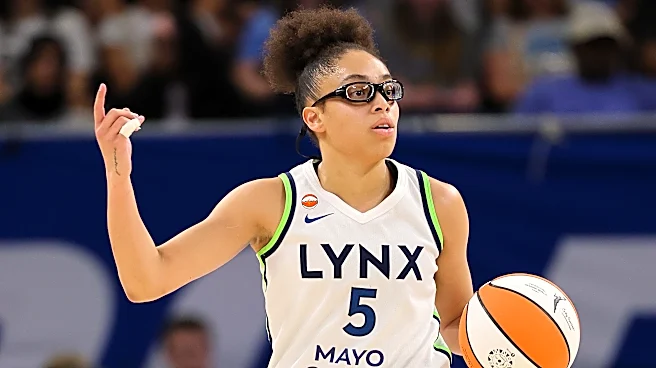
On the other end, the offense runs through rookie Olivia Miles, the No. 2 overall pick out of TCU who has stepped in like a seasoned veteran.
Miles isn’t trying to be the lead scorer, but she reads the game extremely well, keeps everyone in their distinct roles on offense and makes the simple play before the defense can react. In a system full of established veterans with defined roles, that kind of facilitation is invaluable to them, as they struggled last year in late game moments with getting the ball to the right player in the right spot.
Her ability to push tempo and make quick decisions in the halfcourt has kept Minnesota’s offense humming at a level few expected without Collier orchestrating possessions. The Lynx rank in the top three leaguewide in offensive rating, and Miles is the conductor holding it all together.
Howard, Coffey, McBride and Williams are all cashing in

The reason Miles’ distributing translates to wins is also the quality of the players she’s feeding.
Natasha Howard has been the Lynx’s best player and arguably the most valuable player in the entire league through the early going. Her combination of interior scoring and passing, rebounding and switchable defense gives Minnesota an amazing Collier replacement who can also create for herself when needed. In many ways, she is the focal point—and she’s been exceptional.
Nia Coffey has quietly evolved into a legitimate floor spacer, knocking down 3s at a rate that forces defenses to respect her out to the arc. That spacing matters enormously in a system that thrives on ball movement and attacking closeouts. Not to mention, she leads the league in blocked 3-pointers and has arguably been the best defender in the WNBA so far this season.
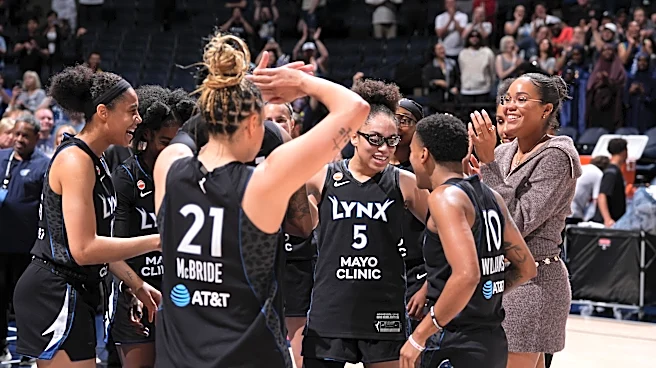
Then, there’s Kayla McBride and Courtney Williams, two of the best shooters in the league, running off what might as well be hundreds of screens. The attention they draw from opposing defenses is relentless. When a defense is spending half its possessions chasing McBride around staggered screens and tracking Williams through handoffs, driving lanes open up for everyone else. Minnesota’s shot quality reflects exactly that. According to Second Spectrum, the Lynx lead the entire league in offensive shot quality at 50.72, meaning they’re getting to their spots and generating good looks at an elite rate.
The caveat to all of this optimism is a pattern in how the Lynx generate those quality looks. Minnesota’s offense leans heavily on ball reversals and middle-of-the-floor actions to create the spacing and driving angles they want. Against teams that can take away the paint and contest the reversal catch, that can bog things down. It may be a stylistic vulnerability that playoff opponents, with a full week to scheme and more length to deploy, could try to exploit.
Whether that’s a real structural concern or simply an overreaction to a small sample, it’s worth monitoring as the season progresses and the competition level rises.
Phee’s return will be a good problem
None of this diminishes what awaits when Collier returns.
If anything, it raises a fascinating question: How does a team playing this well integrate its best player back into the rotation? That is a genuinely good problem to have.
For now, the Minnesota Lynx are the best team in the WNBA, building a lead in the standings while one of the premier players on the planet isn’t even suited up. Their defense is connected, their offense is efficient and Cheryl Reeve has this group locked in and playing the right way.