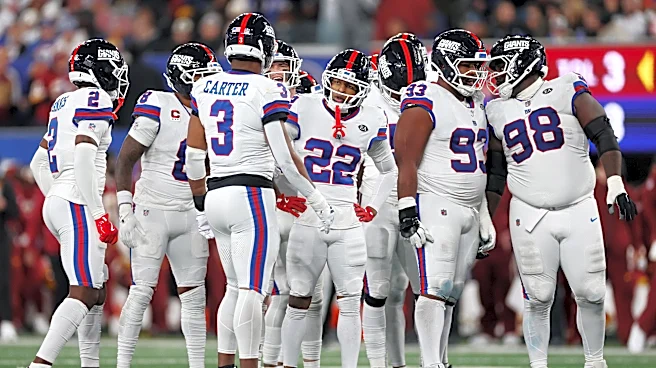


The New York Giants blitz at the third-highest rate in the NFL—a 40%+ rate reminiscent of the Wink Martindale days. Defensive coordinator Dennard Wilson has found success generating pressure and free rushers with an aggressive style that features a loaded line of scrimmage and deceptive tactics the offense can’t easily diagnose. I respect Wilson’s approach and game plans, but they don’t always yield sacks.
New York blitzed Jayden Daniels often in high-leverage situations on Thursday night, but David
Blough and Washington had a plan for the pressure. Daniels finished 23 of 33 for 249 yards with three touchdowns and a pair of fourth-quarter interceptions that New York’s offense failed to capitalize on.
Wilson stuck to his aggressive style and tried to dictate to Washington’s offense, as he did in Week 5, but the Giants’ defense managed only one sack by Shelby Harris. Nevertheless, the Giants designed several pressure looks to try to attack Washington’s subpar offensive line. Plus, the back-end coverage on these blitzes were impressive for much of the game. Here are those pressure looks:
Q1, 7:45, third-and-8
via GIPHY
via GIPHY
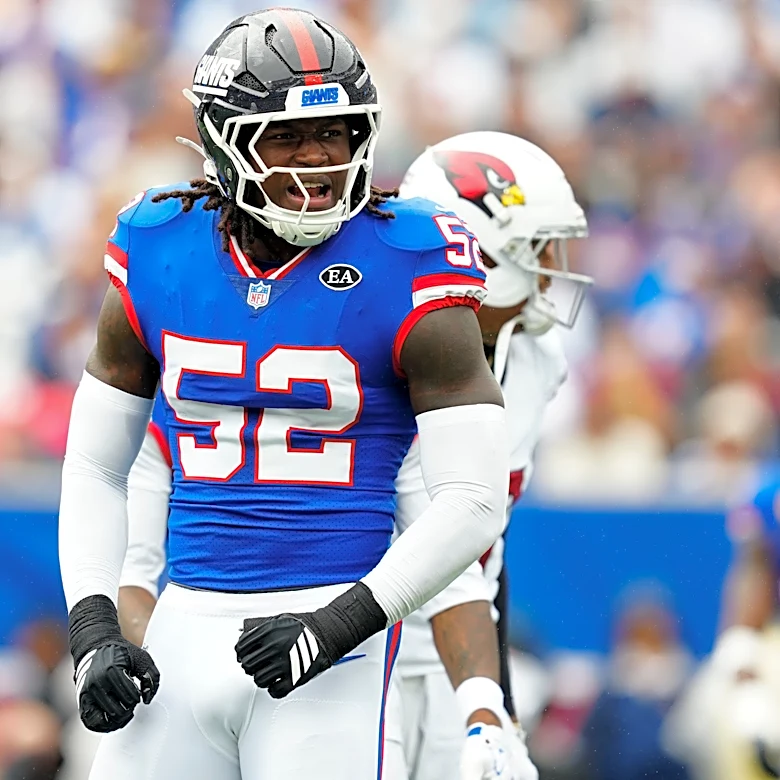
Wilson has run a fire zone all season, and the Giants provide various looks to bring five rushers with zone on the back end. Dawuane Smoot (96) drops off as the end man on the line of scrimmage (EMOLOS) to assume the middle hook away from the strength (the three-receiver side). Both Micah McFadden (41) and Arvell Reese (52) sugar the A-gap before the snap and blitz, with Greg Newsome II (20) locked up in MEG (man everywhere he goes) on the back side No.1:

The Commanders design this play to Rachaad White (1), who drops the pass by Jayden Daniels(5). McFadden slides off his blitz — after forcing a blocker to engage him — to account for White in the flat. Wilson often devises blitz packages with contingencies; sure, there are five rushers, but one of them is rushing to force blocker engagement, and they’re keeping their distance to either contain the quarterback or worry about a potential receiving threat — McFadden was that defender on this play.
In doing this, New York frees up two rushers who are unblocked, and Daniels is forced to release the football a tad early, resulting in an incomplete pass and a punt. Abdul Carter (3) was unblocked because Kayvon Thibodeaux (5) aligned as a 4i-shade to engage the tackle. The center mistakenly didn’t block anyone, and the Giants’ defense got off the field. Dennard Wilson wastes blockers and creates confusion up front, and the back end of the defense is communicative, with good coverage rapport.
Q2, 10:40 third-and-5
via GIPHY
via GIPHY
This Cover-0 look by the Giants is common. New York initially rushed seven but dropped both Darius Alexander (91) and Smoot off the line of scrimmage into underneath zone looks, but their initial commitment dictates protection. The left guard is blocking no one by the time Daniels takes his second step backward in his drop.

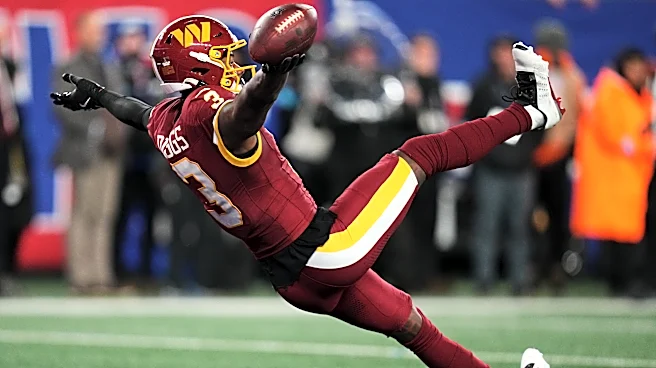
White does well to locate Jevon Holland (8) as the free rusher, but Daniels fails to complete the far-hash throw to Stefon Diggs (3). This look also allows Carter to get a free one-on-one matchup to the outside of both dropping defensive linemen. He does seem tasked, though, to be wary of Daniels’ legs on the rush, for his pass-rush is controlled.
New York aligned the same way and dropped two defenders off the line of scrimmage on Diggs’ fourth-quarter touchdown. Washington had the last laugh after seeing this Cover-0 look multiple times on Thursday night.
Q2, 2:00, second-and-2
via GIPHY
via GIPHY
The Giants ran a simulated pressure where Kayvon Thibodeaux dropped off the line of scrimmage to the strength on the play-action sprint-out by Daniels. New York has three deep, and they’re communicating on the back end, with Holland staying between the hashes. Jason Pinnock (25) assumed the deep dig route by Treylon Burks (13) and Holland stayed deep in the middle of the field.
Tae Banks (2) jammed Diggs at the line of scrimmage and then followed the flow of the play to the inside, which prompted Pinnock to make a push call that wasn’t heard:

The sprintout was designed to Austin Ekeler (30), but the Giants had Thibodeaux and Dru Phillips (22) outside the hash in underneath zones. Daniels did an excellent job seeing Diggs and throwing across his body to create an explosive play to the backside. The threat of his rushing ability forced McFadden out of his zone. I presume Banks was told to run playside on sprintouts after passing Diggs off, but Diggs also ran inside and Pinnock’s push went unheard.
Q3, 3:22, third-and-10
via GIPHY
via GIPHY
I’m impressed with the Giants ‘ communication on the back end when they send five or more rushers. This is another fire zone blitz where Thibodeaux and Reese both drop off the line of scrimmage, and Phillips is the extra blitzer to the outside of Carter.


Kayvon Thibodeaux — an EDGE rusher not known for dropping into coverage — is incredibly heady and aware on these fire zone blitzes. The Giants handle this very well, even down to Smoot’s rush, which goes wide to contain the possibility of a Daniels’ rush while also being in the area code of Chig Okonkwo (85), who helped block him initially. Reese and Thibodeaux communicate well and pass routes off to one another.
Q4, 9:09, fourth-and-2
via GIPHY
via GIPHY
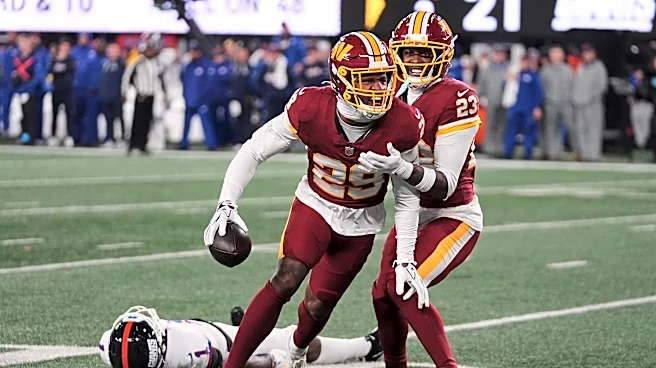
Above is a Giants’ Cover-0 look without defenders sliding off the line of scrimmage a second post-snap; this is a six-man rush with Holland and Reese as extra rushers, with man coverage on the back end. Ar’Darious Washington (24) makes an elite play on the football to force the first of three turnovers for in the fourth quarter. The Giants stacked Reese behind D.J. Reader (98) to try and give him leverage against the center on the delayed rush, which would have worked excellently against Washington’s empty look, but the center did well to stop Reese. Still, the Giants came away with the big play.
Final thoughts
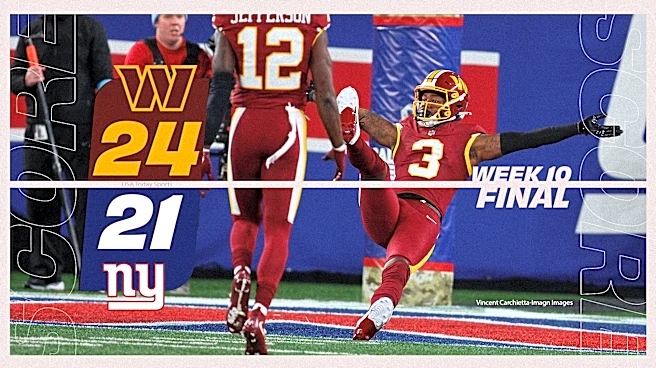
The loss was tough for the Giants. New York could have, and possibly should have, won the football game, but that’s not how the NFL works. Although the lack of statistical success in the sack department is frustrating, the aggressive style did significantly alter and influence Washington’s game plan. Credit to the Commanders for executing well to mitigate the strategy. Dennard Wilson and his defense forced three fourth-quarter turnovers and consistently forced Daniels to get the ball out quickly. I was very impressed, again, with Wilson’s strategy, and New York is doing well with their communication on the back end of their blitz packages when they’re in man-zone, but Washington executed fantastically on all three of their third-down touchdown passes. Overall, the Giants are in good hands defensively, and I look forward to how they’ll bounce back against much tougher opponents that are coming up on the schedule.