








On May 8, the NCAA released new eligibility guidelines that target international prospects who have spent time playing in pro leagues overseas.
The guidelines are aiming to classify players from the EuroLeague, Spanish ACB and more as pro athletes rather than student athletes. It’s implied that the rule will be put in place to preserve roster spots for high school athletes from America.
“The Association is modernizing the rule book in several ways to ensure college sports are played by college athletes and not used as a fallback for professional athletes,” an NCAA spokesperson said in a statement to Sports Illustrated.
But over the course of the past few seasons, many programs have turned their focus to international recruiting and built their teams around overseas players. When players like Dame Sarr (Duke), Ivan Kharchenkov (Arizona) and Elias Rapieque (Kansas State) were cleared to play, other programs followed in investing heavily overseas.
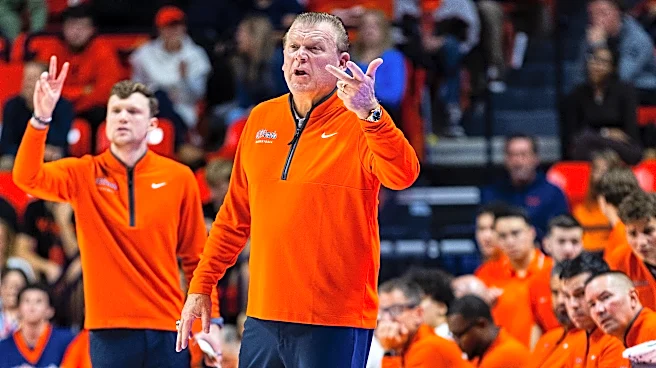
Illinois is one of many programs that has benefited from international recruiting, now able to keep up with blue bloods who have no trouble recruiting the best high school stars from America. Head coach Brad Underwood is a massive fan of taking in talent from Europe, and the past two seasons made that evident with the addition of players like Tomislav Ivisic, Zvonimir Ivisic, David Mirkovic and Mihailo Petrovic. The Illini’s most recent overseas addition — Stefan Vaaks — played in Estonia before his standout freshman year with the Providence Friars. The Ivisic twins and Mirković played professionally for the Montenegrin club SC Derby, competing in the Adriatic First League Division (ABA).

Although it’s unlikely that the NCAA will revoke their eligibility, the guidelines create unneeded anxiety for the 2026-27 season. It’ll also change the landscape of Illinois basketball in the future, and Underwood’s recruiting process will look different. In the small possibility that the “Balkan Block” won’t be able to set foot on the State Farm Center court next season, the Illini faithful would immediately lose a big chunk of their fan-favorite superstars.
The NCAA is targeting players who have “entered an agreement with, competed on or received compensation from a team that participates in a league with minimum compensation that exceeds actual and necessary expenses,” according to the guidelines obtained by Sports Illustrated.
The EuroLeague requires a minimum post-tax salary of roughly $58,000 for first-year players, meaning that anyone who has ever played in the EuroLeague is likely ineligible. Coaches in the EuroLeague have also expressed concern about the impact NIL is having on pro leagues overseas.
Eligibility will be evaluated case-by-case based on how much a player made overseas and how competitive the league they played in was. Public consensus suggests more reasonable guidelines that would restrict overseas freshmen over the age of 21 from entering the NCAA.
Given the timing of the NCAA’s release, after the spring recruiting window, it would only make sense if these rules go into effect after the 2026-27 season to allow programs that have committed to overseas recruiting to transition smoothly.