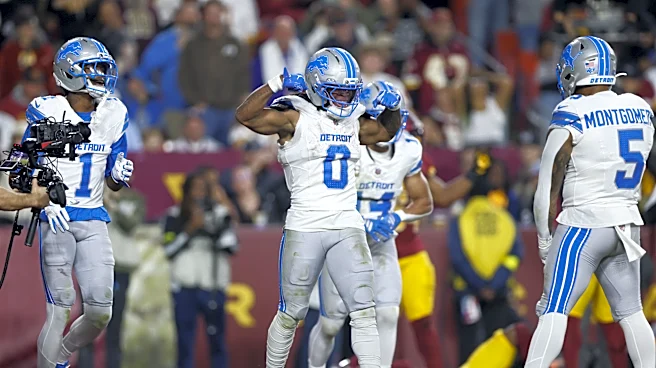






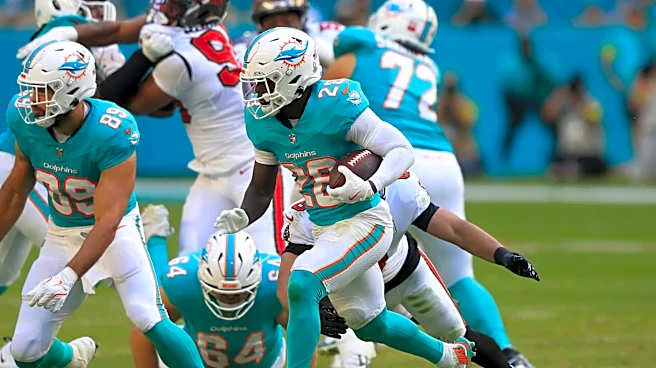
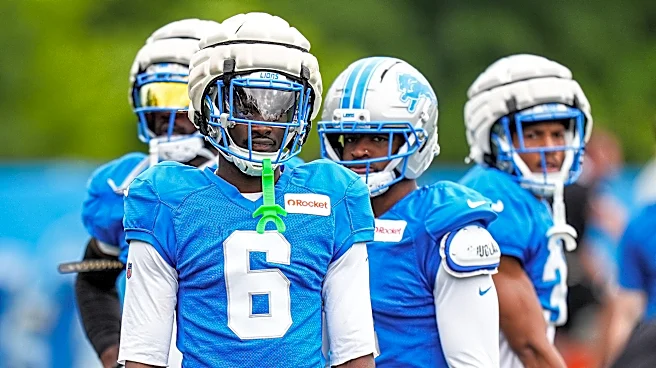


With the season about three months away and news currently at a minimum, it’s time to kick off our 2026 Detroit Lions roster preview series. In this series, we’ll be offering a profile and projection for the majority of the Lions’ roster. We’ll look at past performances, what coaches and players are saying about each player, and then offer our own projections for the 2026 season.
This series kicks off with one of the team’s most pivotal players: running back Jahmyr Gibbs.
Jahmyr Gibbs
Expectations heading into 2025
In 2024, Gibbs set career
highs in just about every category and established himself as one of the league’s most impressive backs.
Entering 2025, Gibbs was already a Pro Bowler, but there was an expectation he’d take his game to an entirely new level. Prior to 2025, it had been David Montgomery as the starter. Based on training camp, it was clear there was going to be a changing of the guard. Gibbs was ready to take over as the starter, and that meant more opportunities and, hopefully, more production. Montgomery still figured to be a big part of the equation, but it was Gibbs’ time to shine as the primary.
Actual role in 2025
17 games (17 starts): 737 offensive snaps played (67%, career high)
Stats: 243 carries, 1,223 yards (5.0 YPC), 13 rushing TDs; 77 catches, 616 yards, 5 receiving TDs
PFF offense grade: 85.6 (5th out of 58 qualifying running backs)
PFF run grade: 81.1 (16th)
PFF receiving grade: 90.3 (2nd out of 46 qualifying running backs)
After starting just four games the previous season, Gibbs did indeed become the starting back. In fact, he played far more than most expected. In 2024, Gibbs played 55.7% of the snaps while Montgomery’s share was 41% (including three missed games). In 2025, Gibbs jumped to 67% while Montgomery’s usage dipped to 37% despite not missing any games.
Unfortunately, more playing time did not necessarily mean more efficiency. Obviously, Gibbs was still an electric player, but his production actually took a step back in several places:
Rushing yards:
- 2024: 1,412
- 2025: 1,223
Yards per carry:
- 2024: 5.6
- 2025: 5.0
Success rate:
- 2024: 53.6
- 2025: 46.5
The biggest culprit for the decreased efficiency was the offensive line changes. The Lions lost Frank Ragnow and Kevin Zeitler in the offseason and had to deal with an injured Taylor Decker for most of the year. Detroit’s interior offensive line struggled with Christian Mahogany, Graham Glasgow, and rookie Tate Ratledge struggling out of the gate. While Ratledge eventually turned things around, the rest of the gang struggled all season.
However, as the PFF grades suggest, it was a very successful year for Gibbs as a receiver. He increased his output from 52 catches for 517 yards to 77 catches for 616 yards and a career-high five receiving touchdowns.
Outlook for 2026
With Montgomery traded to the Texans and Isiah Pacheco signed to replace him, the sky is the limit for Gibbs in 2026. Lions coach Dan Campbell has already publicly stated that Gibbs will be the team’s bell-cow back in 2026, which represents a pretty significant change in strategy. The Lions had previously approached the backfield as a timeshare in order to keep their top two rushers fresh, it’s now the Jahmyr Gibbs Show.
So what would that look like?
For one, Gibbs has plenty of room to grow to reach the level of participation as the top backs in the league. Even with his increased role last year, he was plenty short of some of the biggest workhorse backs last year. Here’s a look at the top five running backs in overall touches and where Gibbs compares:
Christian McCaffrey: 413 total touches: 311 rushes, 102 catches
Jonathan Taylor: 369 total touches: 323 rushes, 46 catches
Bijan Robinson: 366 total touches: 287 rushes, 79 catches
James Cook: 342 total touches: 309 rushes, 33 catches
Derrick Henry: 321 total touches: 307 rushes, 15 catches
Jahmyr Gibbs: 320 total touches: 243 rushes, 77 catches
All of the above running backs had at least 44 more rushes than Gibbs. In fact, Gibbs ranked just 11th in rushing attempts last year.
But can his body hold up for an additional 40-ish carries a season, or 2.4 more per game? He’s only carried the ball more than 25 times in one career game and only had 20 or more carries in six games. For comparison’s sake, Bijan Robinson has two games of 25+ carries and 13 games with at least 20 carries. We’re talking about a pretty serious increase in workload if the goal is to get him closer to the rest of the top backs.
If Gibbs holds up, it’s fair to wonder if he’ll compete for the rushing title. In his first three seasons in the NFL, Gibbs has averaged an impressive 5.3 yards per carry. Only De’Von Achane has averaged more over that time (min. 100 carries). If Gibbs can maintain that level of efficiency with a 15% increase in workload, everything is on the table for the fourth-year running back.
For example, let’s say Gibbs matched Bijan Robinson’s exact rushing attempts and receptions last season, but with Jahmyr’s efficiency marks from last season. He would’ve totaled:
- 1,444 rushing yards (would’ve ranked fifth)
- 632 receiving yards (third)
- 2,076 scrimmage yards (third — behind Robinson, McCaffrey)
And that’s using Gibbs’ least efficient statistical numbers. Now imagine if the Lions’ investments in the offensive line this year pay off and Gibbs can uptick his rushing efficiency back to the 5.6 yards per carry he managed in 2024. You take that 5.6 average and match Robinson’s 287 rushes from last year, and you get 1,621 rushing yards—the exact mark of last year’s rushing leader James Cook. Throw in some growth in the receiving game, and everything is on the table for Gibbs in 2026: the rushing title, his first All Pro, and even Offensive Player of the Year.