
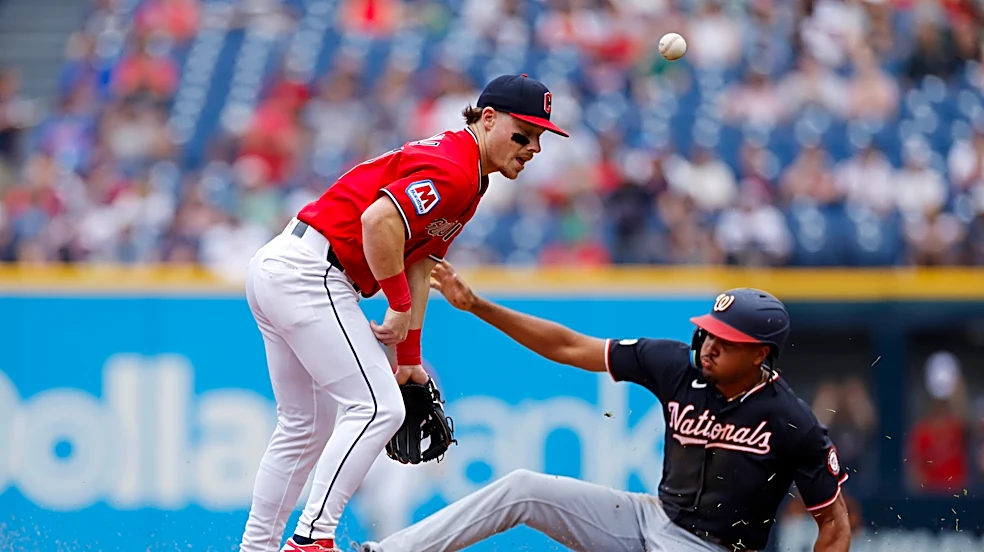

For about three weeks this spring, Jeremiah Jackson was the best story on the Orioles. Through 18 games he was hitting .317 with five home runs, a team-leading 17 RBI, and a .923 OPS. On April 13 against Arizona he hit two homers, one of them the first grand slam of his career. A few days later his three-run homer in the eighth gave the O’s a 6-4 comeback win over Cleveland. “Right now, I don’t think there”s anyone in baseball feeling better than him,” Coby Mayo said. Craig Albernaz called him “a
great example of a player putting in the work.”
Alas, I guess working hard is no guarantee of success in the Big Leagues. Jackson’s final line this season looked nothing like April. In 102 games and 293 plate appearances he hit .217/.247/.365, with 10 homers and 45 RBI. Baseball-Reference puts his OPS+ at 72 and his WAR at 0.1. FanGraphs is harsher: a 67 wRC+ and -0.3 WAR. With Jackson still in pre-arbitration, he wouldn’t be a costly retention on next year’s roster, but with lots of promising infielders around yet, it’s not clear the value is still there.
Jackson came to the Orioles in the way many players (too many?) come to the Orioles: as another team’s castoff. In 2018, the Angels took the infielder in the second round out of Mobile, Alabama. The next season, he tied the Pioneer League record with 23 home runs, but then he stalled. Injuries cost him time, and after languishing several season in the Angels organization, he was traded to the Mets in 2023. He’d hit a paltry .205 at Double-A Binghamton in 2024 before reaching free agency, where the Orioles signed him to a minor-league deal that November.
Last season, hopefully you’ll recall, Jeremiah Jackson exploded as a hitter, posting numbers in Triple-A Norfolk that forced the big-league front office to take notice—a .377 average with 11 homers in 40 games—and a successful stint in the big leagues after his debut at Chicago’s Wrigley Field on August 1, hitting .276/.328/.447 over 48 games.
None of this meant Jackson was guaranteed a roster spot again this spring. But he earned it once more, hitting .314 in Grapefruit League play to beat out a crowded field—Luis Vázquez, Bryan Ramos, Weston Wilson, and Thairo Estrada—for the last bench spot. Soon after that, Jackson Holliday’s hamate fracture and Jordan Westburg’s multiple injuries made Jeremiah Jackson the O’s everyday second baseman.
Alas, the experiment didn’t work. After April, Jackson’s offensive numbers cratered. He’d hit .209 in 17 games in May, then see his playing time dry up by early June. Jackson was optioned to Norfolk on June 28 and called back up five days later. He went 1-for-29 after the All-Star break, and on August 19 he went back down to make room for Samuel Basallo. He returned when rosters expanded on September 9, but he hit just .163 in 10 games.
What went wrong? Well, being a free swinger was one issue. Jackson’s season-long walk rate of 3.4%, down from 6% last season, proved a real liability, as pitchers stopped giving him hittable pitches early in counts.
To be fair, he had some bad luck. As of late in the season, Statcast had his expected wOBA (.284) a good deal above his actual wOBA (.265), and his 38 percent hard-hit rate is respectable. Plus his expected average (.236) was actually higher than last season’s (.222). And his strikeout rates didn’t skyrocket, either (in fact, his K% dropped a couple points from last season).
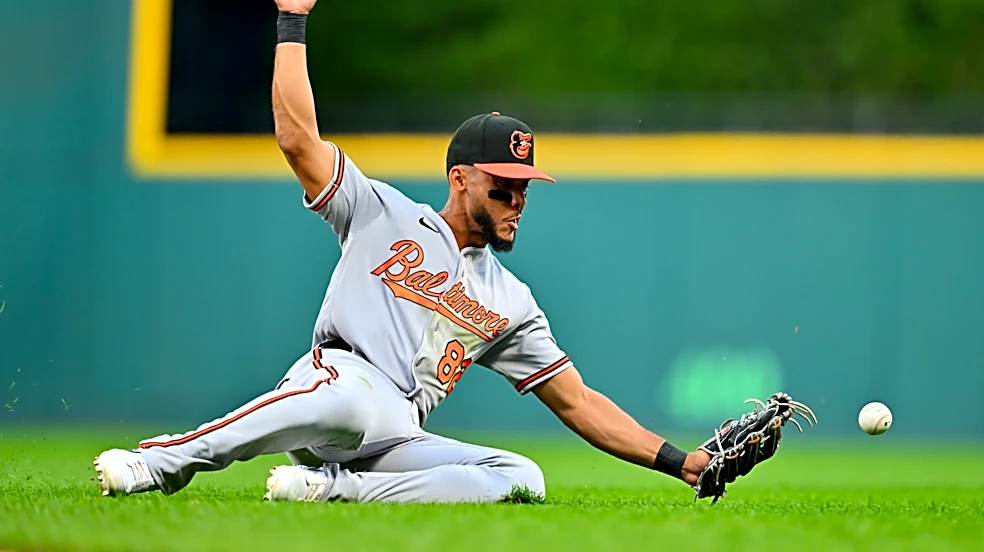
But this is still average to below-average output from even a bench bat, and Jeremiah Jackson was supposed to have the thump to do a lot more. Not to mention that the glove was just average. Most of his time came at second base (80 games), with a handful in left field and single games at third and right. He looked good there early, with some diving plays and a +2 DRS in April. Over the full season, though, the defensive numbers settled at around average. That’d be fine but for the .611 OPS. A utility man should either hit or be a defensive plus, and in 2026 Jackson wasn’t consistently either.
In sharp contrast, Blaze Alexander, another typical Orioles diamond in the rough, added obvious value in his 93 games, hitting .303/.358/.414 while flashing the wheels and plugging in all over the field. I mention this because if the Orioles are looking for “bench bat who can play all over,” it’s not clear there will be room for Jeremiah Jackson on the roster come next season, especially not with hitters like Alexander, or even the slugging Christian Encarnacion-Strand, both of whom did it far better in 2026.
Because Jackson is pre-arbitration, the Orioles don’t face a big salary decision with him. If he stays on the 40-man roster, he’ll make close to the league minimum. But the question still remains: amidst a crowded infield that includes a returning Jordan Westburg, a slugging Coby Mayo, a surprising Encarnacion-Strand, a versatile Blaze Alexander, Gunnar Henderson and Jackson Holiday, is there still a spot on the roster for Jeremiah Jackson?