



The New England Patriots have never been shy about joining forces with other teams in training camp. They did so under Bill Belichick, during Jerod Mayo’s one-year stint, and now that Mike Vrabel is in his second year as head coach.
After holding sessions with the Commanders and Vikings last year, the Patriots will play hosts to two more teams this summer. First, the Indianapolis Colts will come to town for one practice on Tuesday. Then, next week, it will be the Eagles to visit the Gillette Stadium
facility for two more workouts; both sessions will be followed by preseason games between the clubs involved.
Why are joint practices a thing in the first place, though? Because they are a useful tool for the teams participating. And don’t take it from us either; just listen to what Patriots veterans had to say about them heading into Tuesday’s session with the Colts.
To break the monotony of camp
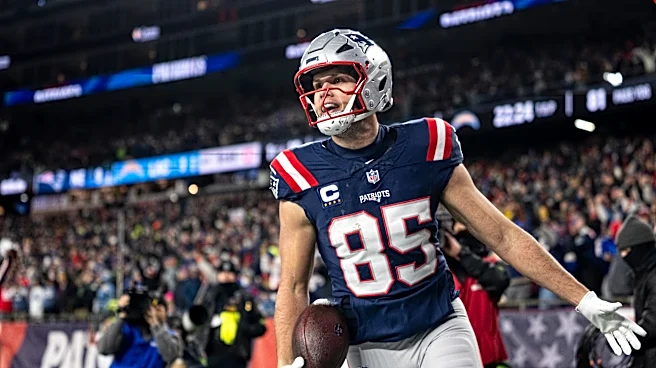
“In the middle of the camp, it’s fun to do that because we’ve just been going against each other for two and a half weeks now over and over and over again. You’re going against the same guy over and over again.” — TE Hunter Henry
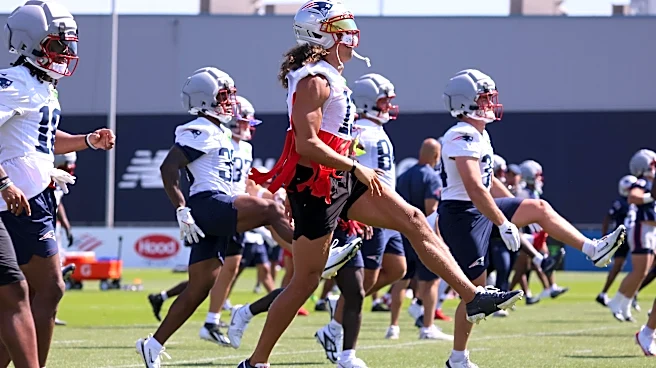
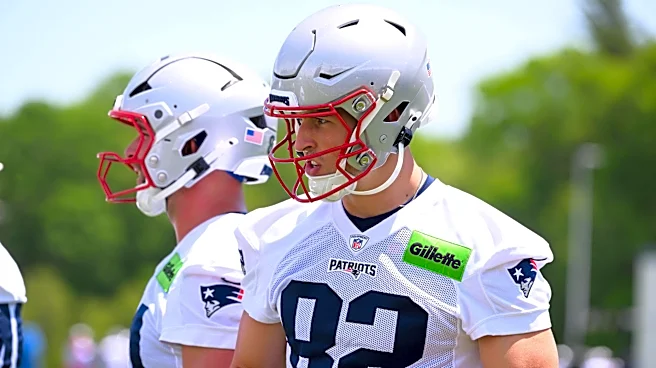
The Patriots have indeed been focused on themselves so far this summer. Their first 13 practices exclusively featured Patriot-on-Patriot action, including multiple times in full pads. And while there is value in that, or else training camp as whole would lose its purpose, a certain monotony can be introduced by repeatedly facing the same players in the same set of circumstances.
The so-called dog days of camp are real, and joint sessions help mix them up a bit.
To get insight into different schemes
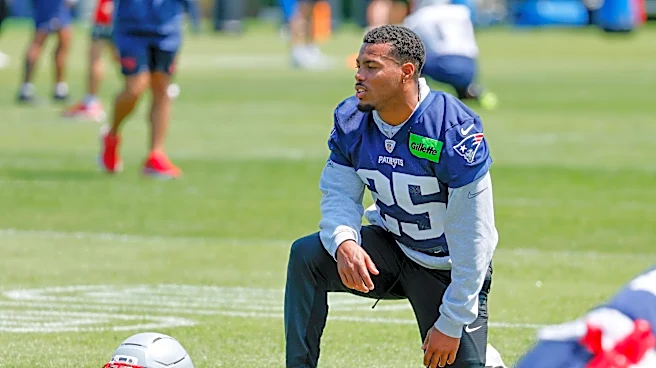
“Very important, and the reason why I say that is because we get to see other schemes. Whenever we practice against each other, we get to know how our offensive guys work, the offensive line, their checks and everything. But now we get to see how different offensive schemes get to be. And then also on the offensive side, they get to see other defensive schemes as well.” — CB Marcus Jones
The ultimate goal of training camp is to get the team ready for the challenges of the regular season, both physically and mentally. That mental aspect is, to a large degree, built through repetition; you get better at something if you practice it over and over. That is part of the repetitiveness mentioned earlier, but also why practicing against another team can be appealing: it gives a glimpse into what other teams like to run and are working on.
While the exposure to those different schemes is relatively minimal in the grand scheme of things, it still can come in handy once the games start to matter. At the very least, though, it is more practice on how to adjust on the fly — a crucial skill in the NFL.
To get better technically
“You get to refine your skills, at the end of the day. That’s what it is. You refine your eyes, your feet, how you communicate with the backend, how you communicate with the front guys because they’re going to give us something that our offense hasn’t given us. And in the same way, our defense is going to do something that their defense doesn’t do. So, you just get a chance to see how your rules, how your job, and how your hands and feet work against a different team.” — LB Christian Elliss
Every NFL player is different in what they can do and are comfortable with. Finding that out is a key element of training camp — an environment that allows for trying out and getting a feel for things. And while joint sessions are still practice when all is said and done, the technical focus needs to become more refined against an opponent who might not care all that much if your running back gets knocked out of his socks or not.
To strengthen the team
“It’s the first time we’re a full team. We’re all going to wear the same color and cheer on each other in a way instead of going against each other. It’s always fun to have those battles throughout camp and all of a sudden just kind of come together as a team and try to build that.” — TE Hunter Henry
Ever since his introductory press conference last January, Mike Vrabel has made one thing clear: culture is important. Building that culture does not happen overnight and is an arduous process, but one that comes into full effect once the team stands united.
Against the Colts and Eagles, the 2026 Patriots will do that for the first time. While the competitive element still is significant — only 53 roster spots are available come cutdown day — the culture and team spirit will truly come out when somebody else is lining up opposite you.