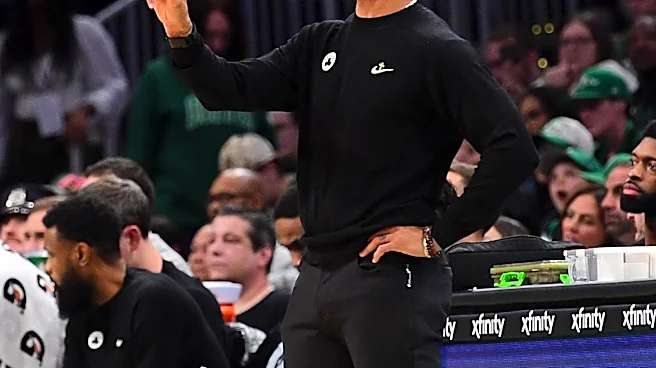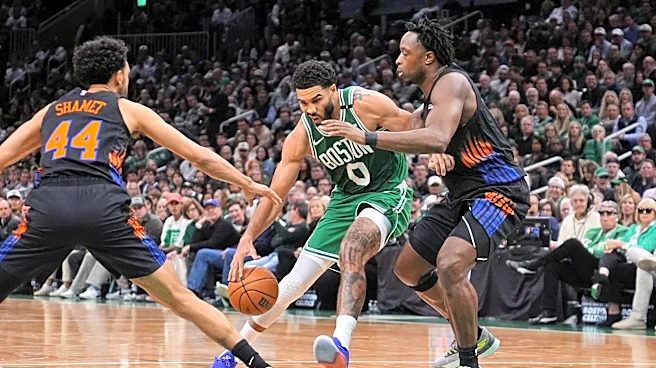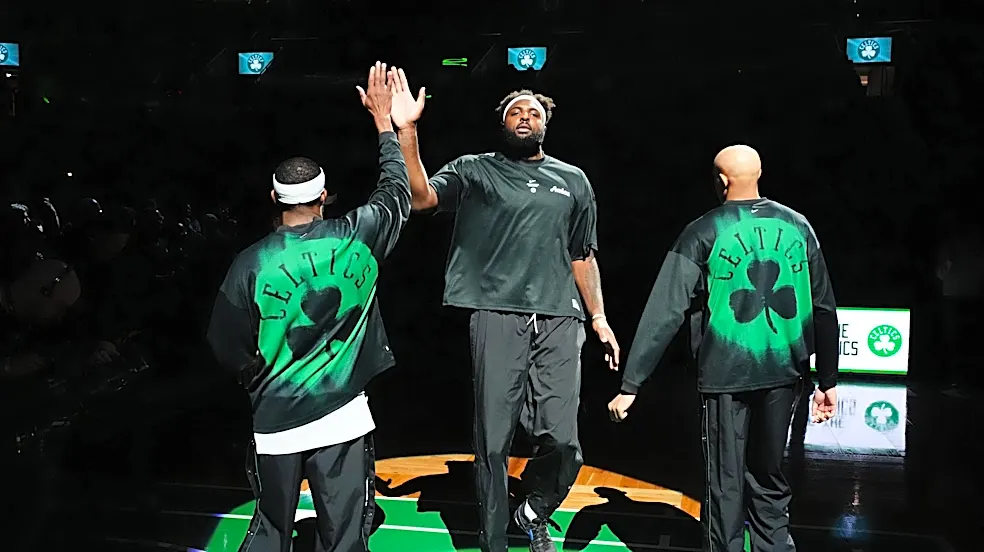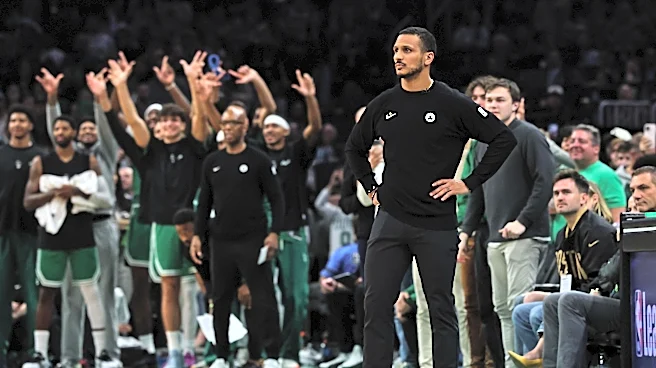




Joe Mazzulla has used 11 players in each of the Celtics’ first two games, which sounds democratic until you inspect the timecards.
Everybody has checked in, but that doesn’t mean everybody has a full-time job.
Jayson Tatum, Derrick White and Paul George have predictably played the most. Payton Pritchard is fourth in total minutes despite coming off the bench. Sam Hauser has logged more minutes than Jordan Walsh and Mitchell Robinson, two members of the starting lineup. Hugo González has played just
13 minutes.
Two games are not enough to settle Boston’s rotation, but they do give us some clues about how Mazzulla is sorting it.
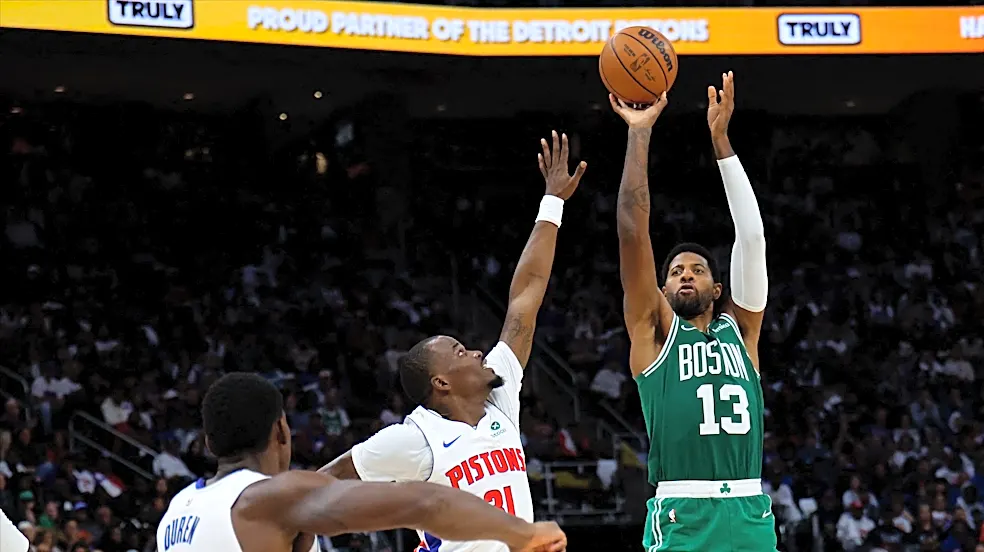
The same five players started against Detroit and New York: White, George, Tatum, Walsh and Mitchell Robinson. Everything after that has been more fluid. The first week has already exposed a few levels of trust. Pritchard’s bench designation looks increasingly cosmetic. Hauser may be the cleanest solution to Boston’s spacing issues. Among the young wings, meanwhile, the minutes have not been distributed equally.
Here are my biggest takeaways from Joe’s rotations through the first two games.

Pritchard is a bench player in name only
Pritchard explained his definition of a starter after practice last Sunday.
“To me, a starter is the amount of minutes you play,” he said. “Do you finish games? Are you playing 30-plus minutes? Then you are a starter.”
By his own math, Pritchard is starting.
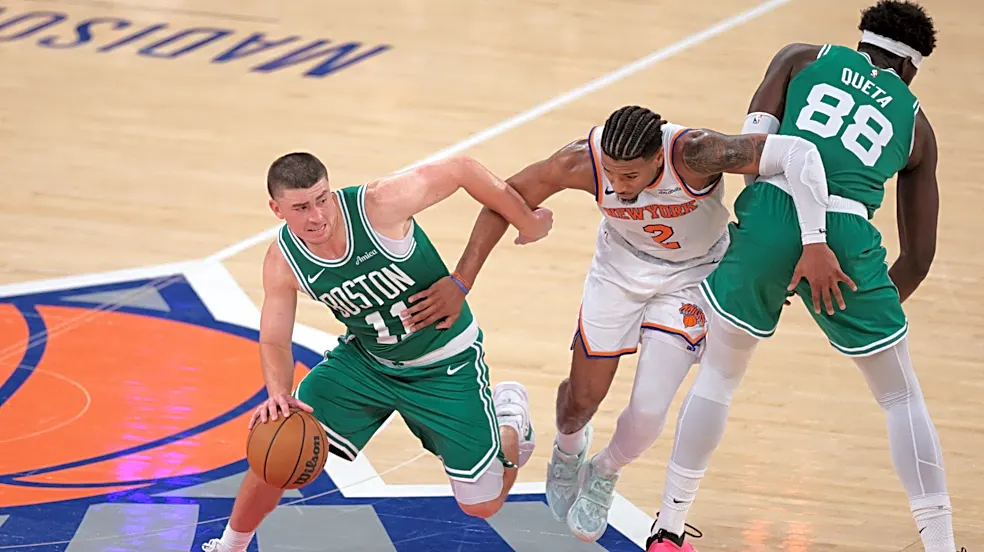
He has played 57 minutes and 56 seconds through two games. Only Tatum, White and George have played more. Against the Knicks, Pritchard scored a measly four points on 1-for-6 shooting, but still remained on the floor for more than 30 minutes.
I’m not going to try and spin his four points as a secretly great performance. He missed five of his six shots and never found an offensive rhythm. But cold shooting nights can reveal more about a coach’s confidence than another three-point avalanche. Any reasonable person would leave Pritchard on the floor while he’s setting fire to the net. Mazzulla stayed with him even when he wasn’t.
Single-game plus-minus can tell lies with a straight face, but Boston still outscored New York by eight points during Pritchard’s 30 minutes. It wasn’t Pritchard’s night, but it wasn’t a problem large enough to lose a game, which is probably the distinction Mazzulla cares about most.
The Celtics opened the second quarter with Pritchard, White, George, Hauser and Luka Garza. Tatum rested while George carried the star responsibilities. Boston started the fourth with almost the same construction, swapping Robinson in for Garza.
Pritchard was the constant. He is becoming the connective tissue between Boston’s different versions of itself.
His closing role was more situational. Mazzulla initially went with Tatum, George, White, Hauser and Queta during crunch time. Pritchard returned for Hauser with 1:11 remaining, giving Boston another ball handler and free-throw shooter. He made one at the line, then was replaced by Queta for the final defensive possession.
That wasn’t one permanent closing five we saw Friday night. Mazzulla was changing the group possession by possession, which is probably how this roster should work.
Pritchard may not always be standing on the court when the game ends, but he’s made it clear that he’ll be plenty involved in getting Boston there.
Hauser keeps solving lineup problems
Hauser has played 40 minutes and 52 seconds, six seconds more than Robinson. That isn’t a meaningful statistical gap, but it’s a pretty useful reminder of how little the starting label matters to Mazzulla.
He has made five of his first 10 three-point attempts after shooting 39.3% from deep last season, the worst mark of his career and still a percentage most players would happily tell their grandkids about down the road. His shooting stretches the floor in ways Boston needs, particularly when Mazzulla uses Queta or Robinson at center.
Those big men provide vertical spacing, offensive rebounding and rim protection. Neither one is naturally dragging a defender away from the paint. Hauser gives those groups oxygen.
The best example came against Detroit. White, Hauser, Tatum, George and Queta turned a 39-39 game into a 57-43 Celtics lead in roughly five minutes. That lineup produced a 172.7 offensive rating and a 136.4 net rating, which are hilarious numbers that should not be treated as remotely sustainable. The part worth taking seriously was the fit. Four shooters surrounding Queta gave everyone room to operate.
Mazzulla returned to the same idea against New York.
Hauser opened the fourth quarter alongside Robinson, Pritchard, White and George. Later, with the Knicks threatening, Mazzulla used Hauser next to Queta in a lineup with Tatum, George and White.
The shooting explains why Hauser fits, but his defense might be why Mazzulla can keep turning to him.
Hauser still gets hunted occasionally because opposing stars see a white guy with a sensible haircut and make certain assumptions. Those assumptions have not produced easy baskets as often as expected.According to NBA tracking data from last season, opponents shot 0.7 percentage points below their expected field-goal percentage when Hauser was the closest defender.
He is sturdy enough to survive switches, rarely wanders away from the scheme and has become good at forcing scorers into shots the defense can live with. Nobody is asking him to turn into Scottie Pippen. He just can’t be the loose thread every offense tries to pull.
That combination of competent defense and elite shooting allows Mazzulla to place him almost anywhere without creating an obvious problem at either end.
Queta did make his only three-point attempt against New York, so Hauser should probably keep an eye on his job. Queta is currently shooting 100% from deep, and I refuse to entertain any small-sample-size arguments at this time.
Until Queta starts receiving the same treatment behind the arc, Hauser gives Mazzulla a proven shooter without handing opposing offenses an obvious place to attack.
The young wings are not receiving equal auditions
Walsh, Scheierman, González and Ron Harper Jr. entered the season as Boston’s collection of young wings. The first two games have not treated them as interchangeable.
Walsh has started both games and played 33 minutes and 45 seconds. His offense remains a work in progress, but Mazzulla has given him difficult defensive assignments, including Cade Cunningham in Detroit and Jalen Brunson against the Knicks, and allowed him to play through mistakes. He also rewarded that patience against New York, hitting a three and scoring on a nice cut during Boston’s third-quarter run.
Scheierman has played 29 minutes and 22 seconds. He scored eight points in the opener, made both of his threes and already looks more willing to make a quick decision when the ball finds him. Mazzulla has used him in both halves of both games, including alongside Tatum during the third quarter Friday.
González has played just 13 minutes and 18 seconds. Only Garza has played fewer. Harper has yet to see the floor at all.
González checked in midway through the first quarter against New York, stayed on the court for three minutes and 35 seconds and never returned. His 13 total minutes are less than half of Scheierman’s and well below Walsh’s.
That isn’t a verdict on a 20-year-old two games into his second NBA season. González had a really encouraging preseason, and his size, defensive instincts and fearlessness should get him onto the court plenty as the season wears on. Boston’s first back-to-back arrives Monday and Tuesday, which may create an opportunity almost immediately.
For now, Mazzulla appears more comfortable with Walsh’s defense and Scheierman’s…Scheiermanning. The gap is worth noticing without declaring it permanent. These first two games show Mazzulla’s initial preferences with a healthy roster. They don’t tell us what the rotation will look like after a difficult back-to-back, an injury or the first time somebody ahead of González stops giving the Celtics what they need.
Garza provided a useful reminder that the bottom of the rotation can still change quickly. He entered against New York, scored eight points in three and a half minutes, made two threes, drew a charge and returned to the bench like a man who had broken into the game, emptied the register and disappeared before anyone could identify him.
Garzilla behavior.
Mazzulla will need those little bursts over 82 games, but every player producing one doesn’t suddenly move into the permanent rotation.
Right now, Walsh and Scheierman have the longer runway. González is waiting for his next opening. Harper is waiting for his first.
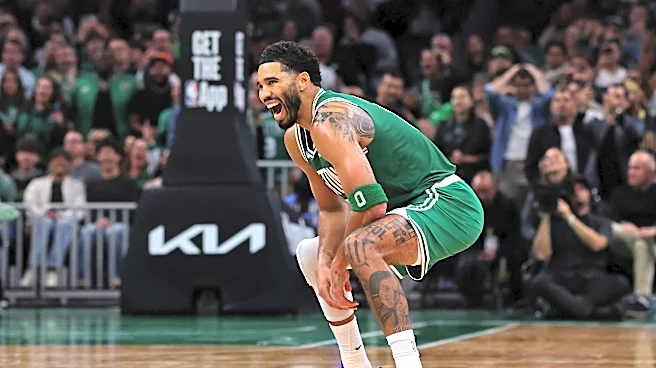
Tatum and George are sharing the floor, and the workload
The Celtics did not acquire George so he and Tatum could alternate isolations while everyone else watched. Through two games, Mazzulla has started working on a more useful kind of staggering.
Against the Knicks, Tatum rested to begin the second quarter while George played with Pritchard, White, Hauser and Garza. Tatum played the entire third, with George sitting for the final four and a half minutes. George then opened the fourth while Tatum rested.
At the 6:53 mark, Tatum replaced George. Just over two minutes later, George returned and the two stars finished the game together.
The basic rhythm is beginning to emerge. Tatum and George overlap at the beginning and end of halves, then take turns anchoring the middle. Pritchard moves between both groups. White can run the offense with either. Hauser gives each of them another outlet when the defense loads up.
The arrangement should keep Boston from living through too many possessions without a high-level creator. It also gives George stretches where he can operate as the primary option instead of trying to fit his touches around Tatum’s.
There will be nights when the rotation gets smaller. Injuries, foul trouble and matchups will rearrange all of this. If we have learned anything about Mazzulla, it’s that he will happily abandon Tuesday’s rotation by Thursday and seem mildly irate that anyone expected otherwise.
Still, his first two games have given us a working hierarchy.
Tatum, White and George are the foundation. Pritchard is a starter, his words, not mine. Hauser and the two centers give Mazzulla different ways to build around them. Walsh and Scheierman have received meaningful auditions. González, Garza and Harper are waiting for the game that calls for them.
There are still 80 games left. Roles will change, new lineups will emerge and Mazzulla may render half of this article obsolete by Thanksgiving. For now, we get to study two games far more closely than any reasonable person should, because Celtics basketball is finally back.