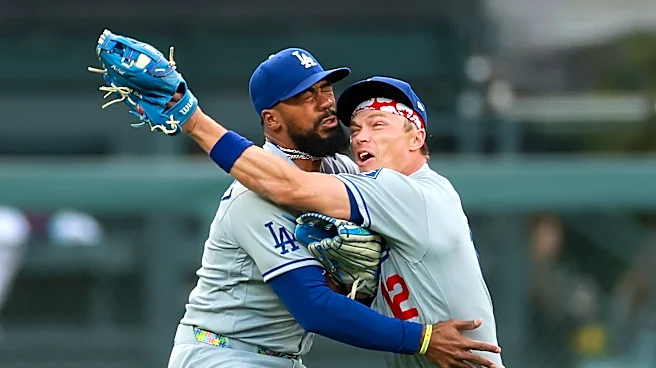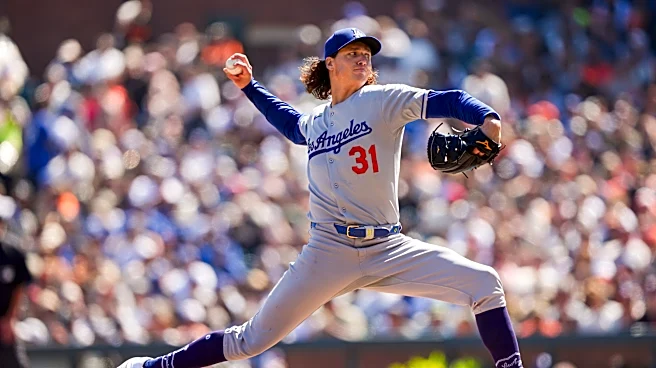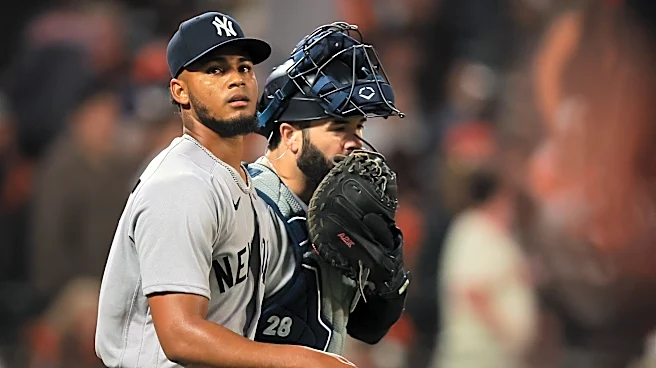


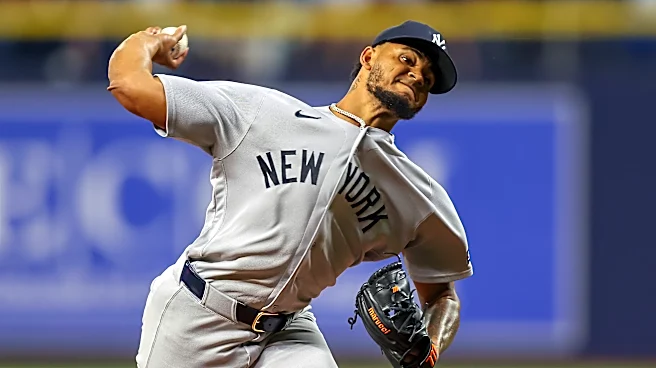
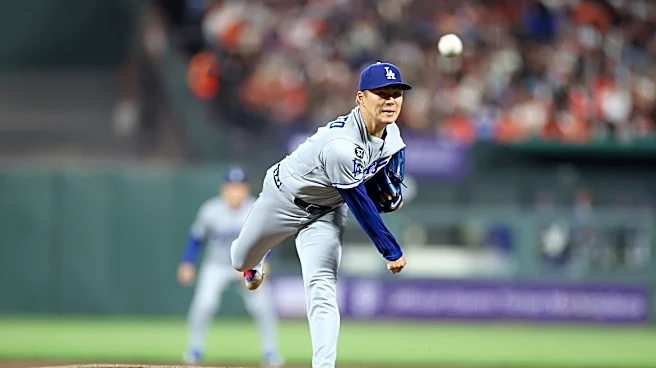
Right now, everybody’s talking about bullpens. Earlier this week, the Los Angeles Dodgers put newly signed closer Edwin Diaz on the injured list after a disastrous start to his LA career, as he undergoes surgery to remove loose bodies from his elbow. Over in Queens, their two new bullpen arms, Devin Williams and Luke Weaver, have been major contributors in what was heading into last night’s action a 12-game losing streak. And of course, here at Pinstripe Alley, there’s a good chance you’re already
sick and tired of hearing about Camilo Doval, Jake Bird, and, to be honest, every reliever except Tim Hill, Fernando Cruz, and, somehow, Brent Headrick.
At this point, the narrative is pretty clear. For many years, the Yankees invested heavily into their bullpen, signing big name closers and top-shelf relievers to set up for Mariano Rivera (e.g., Tom Gordon, Kyle Farnsworth, Rafael Soriano), spending big money on closers following Rivera’s retirement (e.g., Andrew Miller, Aroldis Chapman), trading for closers to set up for other closers (e.g., Zack Britton, David Robertson, Tommy Kahnle), and signing top relievers on the free agent market to fill out the ‘pen (e.g. Adam Ottavino, Darren O’Day, Justin Wilson). They did this while developing a parade of bullpen arms that would be closers elsewhere, including Dellin Betances, Chad Green, Jonathan Loáisiga, and Michael King (before he became a starter, of course). And the Yankees — particularly during the Baby Bombera era, from 2017 to 2021 — saw major return on that investment: their 33.0 fWAR in that span ranks first, four runs ahead of the second-place Rays (whose 29.3 fWAR is artificially inflated by their liberal use of openers, who are officially classified as relievers) and well ahead of the third-place Dodgers.
Since 2021, however, the Yankees have taken a very different approach when it comes to building their bullpen. Rather than signing the top of the market players, they have opted to look in the bargain bin to find relievers — some of whom have worked out, and others who have not. The few top-level arms they do acquire have been brought in via trade, not signed as free agents, and are generally still arbitration-eligible. No matter how they’re acquired, however, when these relievers reach free agency, they have, for the most part, let them walk: since 2021, Aroldis Chapman, Chad Green, Wandy Peralta, Tommy Kahnle, Clay Holmes, Devin Williams, Luke Weaver, Jake Cousins, and Jonathan Loáisiga have all been allowed to leave in free agency, and Ian Hamilton, Scoff Effross, Mark Leiter Jr., Ron Marinaccio, Michael Tonkin, and more have been designated for assignment and released despite providing key innings. In fact, over the last few years, only Tim Hill, Ryan Yarbrough, and Paul Blackburn have been retained, and the latter two were brought back specifically because they also serve as rotation depth.
This philosophical shift has unsurprisingly generated some frustration among fans, especially when the bullpen has floundered (as it has so far this season). And I’m not going to argue with the idea that, maybe, just maybe, the team should have invested a tad more into the bullpen over the winter, instead of running out a bullpen that was clearly insufficient at the end of last season (no, Angel Chivilli and his career 6.18 ERA heading into the season doesn’t count as reinforcements, despite his young age) — there’s a sound logic to how they’ve treated the bullpen in recent years.
The traditional maxim has been that relievers are volatile, but in the mid-to-late 2010s, it seemed like that was no longer the case. While relievers did continue to rise and fall regularly, the race for spin rate on the fastball, and the apparent direct correlation between spin rate and bullpen success, meant that it was easier than ever to predict which relievers were a flash in the pan and which would continue to be dominant. And in that world, if you were absolutely certain which relievers were good, then it made sense to invest heavily into the bullpen and build a super-pen.
Once the sticky stuff crackdown occurred, however, relievers became more volatile once more, as the chase to increase spin rate… didn’t exactly stop, but wasn’t able to be as reliably intensified. This crackdown represents the turning point where the Yankees as an organization seem to have de-prioritized the bullpen in order to bolster the rotation: in that same span of time where they have not heavily pursued relievers in free agency, the Yankees have added a pair of top-of-the-rotation starters in Max Fried and Carlos Rodón, spent money on Marcus Stroman, and wooed Yoshinobu Yamamoto and Rōki Sasaki. There’s a clear logic to this strategy: it’s easier to rework a bullpen than it is to find a top starter in the middle of the season, and on the whole, top starters age more gracefully than top relievers (an ace who declines typically becomes a bottom-of-the-rotation starter, while a reliever who declines is usually destined for mop-up duty).
And while it can be annoying at times, this strategy has clearly worked for the Yankees. For all the handwringing about the bullpen this year, they are tied for seventh in baseball in fWAR with 0.9, fourth in ground ball percentage, and top-10 in FIP, xERA, and left on base percentage. Do I wish that Bednar didn’t require emotional support runners on the basepaths in order to lock in? Would I prefer to have a setup man who didn’t stress me out as much as Doval? Of course! But then again, as I look across the city to Queens, or to the other coast in LA…well, maybe the grass isn’t always greener.