
Authors Note: I suppose with all the teeth-gnashing recently express over a disappointing end of the season (aren’t they all, really), you are wondering how I can talk about success. Occasionally (ok, mostly) the disappointment of a bad ending overwhelms the balance we need to reasonably evaluate outcomes. Hopes and expectations can be dashed and frustration rises. But, sometimes, if we are able to look back on what our original expectations were, things didn’t quite turn out as bad as we think.
Let’s walk back in time to an article I published the first week of this season and look at how the season went from that perspective.
Here us what I wrote in April (with amendments in italics)….With the season in its infancy and without enough data to grapple with yet, I’m going to look forward for a bit. Forward to the end of 2026. I’m not a good predictor, so I won’t go there, but I have formulated an outline of what I think success might be for the 2026 Cardinals edition. What might success look like? I mean, baseball is about hope, right?
In the movies, hope is never vanquished. It really isn’t in real life either. Not til the end, anyway.
By now, I’m sure you have read the various prognostications about how the Cardinals will fare in 2026. At the low-end, some folks see a team with 90 or more losses. The high side, led by Dr. Howl, seems to be around 85 wins. That is some range.
Well, 90 losses was quite a bit on the pessimistic side, huh? 85 was full of hopium, but not really that far off. A slightly better bullpen or just better luck with 2 outs and 2 strikes might have allowed this. Not that 85 wins would meant playoff baseball, anyways.
But who really knows? I can imagine this season being a tale of two (or even three) different seasons and how they add up to a final win-loss tally is anyone’s guess. My interest is … within that wide range, what constitutes success?
Let’s look.
Key questions
What does it have to look like for this team to finish at the higher end of the projections?
- Could we see Dustin May pitching like a dominant TOR pitcher? TOR? No. But he did pitch well, and trading him brought back a couple of nice prospects. Success here? YES.
- Will we see a full season from Mathew Liberatore more like the first-half of 2025? No. Disillusion reigns.
- Could a full season of Michael McGreevy be worth double what last year’s half-season churned out? Yes. .9 fWAR last year became 1.8 fWAR this year with 1 start remaining.
- Could Masyn Winn prove that last year’s defensive gem of a season was not a high side outlier, and maybe add a tick to his offensive output and cross 4 fWAR? No. The offensive trend continues the wrong way. The defense is still superb. While not a failure, lack of offensive improvement makes it hard to define this as a succesful season for him.
- Will Alec Burleson continue his steady offensive climb and perhaps find a stable defensive platform now that he is playing one position? Yes. A 3 fWAR season should be considered a success. More on that later. Improving his wRC+ to 86 against LHP in the second half of the season didn’t hurt.
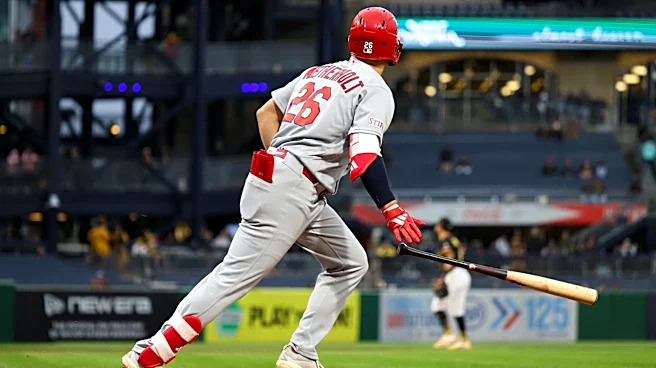
- Could JJ Wetherholt effectively replace Donovan’s 2.9 WAR at second? Yes. YES. 4.3 fWAR is outstanding and is likely not his ceiling. A resounding success.
- Can Ivan Herrera be healthy and extend his .837 OPS hitting? No. Ivan backslid this year, missing his projected output by almost 50%. Even in a poor season by his standards, still a 109 wRC+. But not the line-up stalwart needed. He did play almost every day.
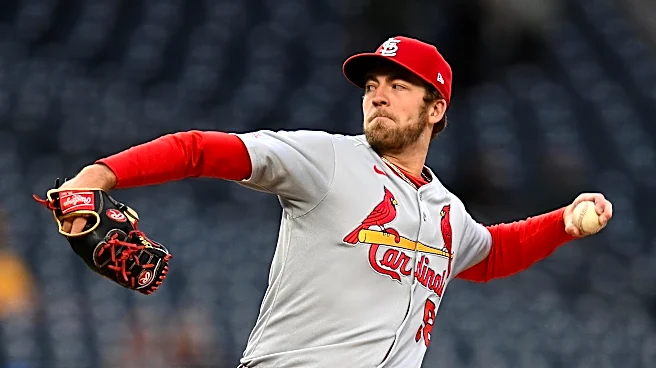
- Can the rest of the rotation provide reliable quality day-in and day-out? Yes. The Cardinals got three pitchers to 2.6 fWAR production, along with the aforementioned McGreevy at 1.8 fWAR. While not top of the league, still a lot more solid than many expected. This group will end up with more than 140 starts.
- Can the bullpen lock down the leads that are present? No. NO! You can evaluate in most any way you prefer (number of meltdowns, ERA-, blown saves) and this bullpen was one of the worst in all Cardinals’ history. Even worse than 2003, for those that remember it. A colossal failure, this.
- Will any of Scott II, Gorman, or Walker establish themselves as a line-up presence? No. No. Yes. Is one out of three success? Realistically, back at season’s outset, I think the answer would have been YES, since most expected all three to fail and would have pegged Gorman as most likely to emerge, if any. I am confident no one saw a 3 fWAR season coming from right field.
- Will Nootbaar come back hale and hearty? An OBP machine with a bit of pop? He came back. Was OK. Moving better, but in the end just an average hitter (wRC+ 102) on a team that needed more. He did bring back a couple of interesting pitchers. I’d say a qualified Yes here but could be argued the other way.
- Is there enough depth at AAA to fill the inevitable holes created by injury and non-performance? No. We saw it all. Velazquez, Saggese, Fermin, Torres, Jordan, Crooks, Pozo, Pereira. If you were a position player on this 40-man roster, you got a shot this year. The net of all of them? fWAR of -1.2 combined, mostly carried by Saggese at .4 fWAR from Pereira (Everson, we hardly knew ye!).
I think one could look individually at each of the questions and think that a YES answer to any one of them is entirely possible. Not guaranteed, maybe not even most likely, but within a reasonble range where YES wouldn’t be a huge surprise. All of them becoming YES is a bit of a stretch, though.
Seven YES and five NO as it turned out. Actually, not a bad ratio, but not enough compete for the wild card. Close. But not enough. It does pay to remind ourselves that while more went right than wrong, there were 5 areas of non-success and only one was the bullpen.
Timing is everything
The definition of the season could well come down to how many of these answers become YES, and how soon. The how soon part could help begin to define several distinct sections of the season.
- Might we see a hale and healthy Nootbaar in late April/early May, or will it drag on until the ASB? Early June as it turned out. The middle answer. And he was gone by the trading deadline.
- Could it take several different iterations of the rotation to find the right combination of starters? How long will it take to swap out a struggling starter? There really weren’t iterations. Dobbins plugged in when May was traded. Mathews plugged in when Dobbins went down. The struggling starter this year (Liberatore) outlasted last year’s Fedde-ish.
- How long will it take for Wetherholt to adjust to the league, and them to him? Not long, it turns out.
- How long might it take to find the right bullpen combinations and roles? It never happened. In fairness, ROB was the right choice for closer among the options presented.
- Will the AAA depth be ready to ascend when needs arise? No.
- What happens at the trade deadline with Noot, Romero, May and perhaps one or two others? What we expected. I think the prospect return was probably greater than expected.
- How long will Gorman or Walker get runway if they continue to struggle? Gorman got til June. Walker got all season and worked through short bursts of trouble. Mostly.
A tale of two (or even three) seasons
April-May … A lot of teams take the approach of coming out of Spring Training with their roster and giving it until Flag Day to assess what they have and adjust. I could see a lot of mixing and matching line-ups, movement of pitchers up and down to Memphis and such during this early phase. Not sure they will wait til Flag Day, either.
The did not wait til Flag Day, but came really close. The first third of the season was the most successful record-wise. The moves they made just before Flag Day foretold their assessment that the early season success was not sustainable. In a twist on self-fulfilling prophecy, they were right.
June-July … Here is where I’d anticipate an influx of prospects to fill holes. Baez, Mathews, Dobbins, Fitts, Crooks. The past few years, this is where things have fallen apart, as the injury toll has exposed a lack of depth. Is this year different in that way?
The influx of talent really didn’t occur until August, seemingly triggered by the coincidence of the trade deadline activity and the 10-18 record in July that diminished hope. Little nicks and injuries yet again made their presence known as compromised players played through at diminished capacity.
August-September … I can imagine this part of the season being defined by what happens at the trade deadline. If the club moves Nootbaar, Romero, May and others, the last two months will become a tryout for the second tier depth, particularly the many pitchers behind Dobbins and Fitts.
We really didn’t see much depth behind Dobbins and Fitts, both of whom ended the season on long-term injury. A couple of young relievers got shots (Gastelum, Winquest, Mautz). The trade deadline produced interesting prospects, but none able to impact the MLB (or AAA) roster immediately. This a tough one. The static nature of the roster left fans frustrated, but if prospects aren’t ready, they aren’t ready and it is likely a disservice to everyone to push them into roles they aren’t ready for. The Bernal experiences saves the day here. From a position player standpoint, they got their answers, pretty all to the negative except Leo. On the pitching side, there was no help coming for a beleaguered bullpen.
The pathway via Starz
It seems to me like success will come (or not) based on how effective the rotation is day-in, day-out. There is enough talent there where I could see a more stable output than we’ve seen in years. I don’t know enough to project any individual’s success or failure, but it is easy to see that there are alternatives available if someone gets hurt or struggles (Fitts, Dobbins and Mathews being the first wave). In that sense, the manager won’t have to stick with a seriously struggling starter as long as in years past. Depth matters. In the end, if I apply the Starz model published late last year, success will be if they find 4 pitchers who can reliably project to > 1.8 fWAR in the rotation and two of those who can reliably project to more than 2.5 fWAR, and still retain some depth. Can you see this possibility by 2026 season’s end?
From a Starz standpoint, May, Pallante and Leahy at 2.6 fWAR and McGreevy at 1.9 fWAR meets the minimum definition. From a roster construction standpoint, if they can expect this next year, this group works from a position of strength. Can they? Now about that fifth spot…..
Perhaps an under-stated element will be how stable the defense becomes. Given that the offense is unlikely to be a juggernaut, defense seems to be a key for leveraging the pitching. Can a guy like Church provide enough offense to allow frequent deployment in the outfield? Can Wetherholt lock down second base defensively, giving the Cardinals the proverbial “strong up the middle” backbone? Can Saggese become a plus defender somewhere?
Do we have a good feel for this defense? Statistically (from a DRS standpoint) Winn and Wetherholt were elite or near-elite with close to 20 DRS each. Pages at near 7 DRS was strong but did not play enough to make much impact. Crooks was slightly positive. Gorman at +1.8 was a pleasant surprise, given expectations. Walker (-12) and Burleson (-10) were deep in the red from a DRS standpoint. Everyone else was right around neutral. Church being in the neutral group was most disappointing, and rendered questions about his offensive game moot. In essence, strong up the middle (except CF) and not so strong on the wings. Not good enough to influence outcomes like the 2021-2022 teams could with an entire field of gold glove caliber defenders.
A third part could be the baserunning. Can Church and Scott II get on base enough to utilize their speed effectively? Can guys like Church, Saggese, Wetherholt infuse enough speed and athleticism to materially improve the team BsR and allow for the manufacture of more runs? I will miss Arenado and Contreras, but let’s face it, they weren’t great baserunners. Along with Pages and Burleson, there was a tendency for the bases to get clogged and a power deficient team became station-to-station, which is not a great combination. There is opportunity here with the new people.
This is not a good baserunning team. Only a few players score much above zero in BsR (Wetherholt and Walker). A couple guys are just above 0, but they don’t get on base enough to make much difference with their skills (Church, Scott II, Winn, Fermin). Otherwise, this is a team that does not take the extra base, steal bases or otherwise pressure the other teams defense. This is an area where improvement has been needed and we haven’t seen much progress.
It is difficult to look at this offense and imagine it being part of the pathway to success. Herrera, Wetherholt, Winn, Burleson are likely to be solid, but things fall off after that and four hitters is not enough. Nootbaar coming back strong would add a positive element. Baez and Crooks may get shots at adding offensive punch before the season gets too far along. If it works out, they could have seven guys that would feature 95 wRC+ or better in the line-up. That is an average line-up. With good pitching and good defense, that might be enough. Using the Starz model again, success would be finding five position players who can reliably project to top 2.7 fWAR, with 2 or 3 of them up and over 3.8 fWAR. Same question, can you see this potential by end of 2026?
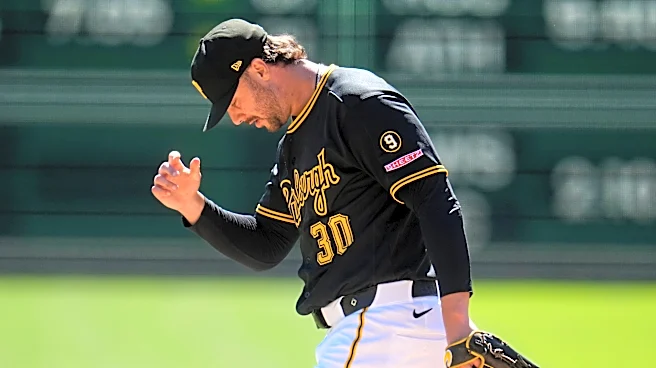
Wetherholt, Burleson and Walker all meet the Starz model threshold. Herrera fell well under and Winn just under (mostly defensive driven). Bernal and Baez got started very late in the season and the jury is still out. From an fWAR view, production was deficient from LF, CF and 3B. Progress from last year but still work to do. Just not enough hitters.
A step forward from Scott II, Walker and/or Gorman would add needed depth to the line-up, also. After years of struggles, this is hard to count on. Maybe by mid-season the Cardinals end up with a cromulent offensive outfield of Baez, Church and Nootbaar. The final piece of the Starz model is … Zero, absolutely zero, below replacement level outcomes. Here is the support for that rule of thumb. Will this be the year that under-performing players are moved out?
14 relief pitchers pitched to replacement level (0 fWAR) or worse. The Starz model allows a threshold of 10 relief appearances or less with a negative WAR before a pitcher is counted. Let’s face it. In two appearances, Pedro Pages -.1 fWAR didn’t influence this season any. It’s not until the appearances start adding up and the performance is at or below replacement that there is a problem. The pitchers who qualified are Stanek, Soriano, Gastelum. Two more (Svanson, Romero) barely missed, collecting .1 fWAR. 250 appearances between these guys is too much for the replacement level production received. The depth in the organization will have to improve a fair bit to be able to isolate these types of outcomes before the appearances rack up to the volume that becomes harmful.
Same approach on the hitter side. On a playoff caliber team, there should be not be hitters above the 100 PA threshold with replacement or worse production. Three qualified … Gorman (-.5), Crooks (0), Scott II (-.3). On the bright side, all three were moved out and two made it back primarily due to the spate of September injuries and did not see meaninful playing time, signalling the organization’s end of runway approach here.
In the context of this season, where it wasn’t really expected that the team would be playoff-caliber, these outcomes would be expected. They define what changes in depth must occur before playoff-caliber is realized.
A fallback
If 4 pitchers > 1.8 fWAR and five players > 2.7 fWAR seems like a bridge too far for this organization in 2026, perhaps a slightly lower bar of success could be … if they fall one or two players short of this target, knowing where they fall short (and not having too many holes) might propel them to begin acquiring MLB talent via trade or Free Agency next off-season to fill that last gap or two and be able to have a roster built to win 90 games.
In the end, they appear to have 4 Starz pitchers and 3 Starz position players. Total of seven, not nine. Crapshoot category. In the group of teams that have a low, but non-zero chance of making the playoffs. Too many things have to go right for this category of team. Think of 8 Starz as the minimum, and 10 as the real target, so that a team can absorb a season like Herrera’s, a player expected to deliver Starz level performance but does not. Ergo, they need to find three more Starz, either internally of via acquisition. When becomes the key question.
In that sense, the holes remaining in this roster are more discernible, not broad based. Instead of the whole outfield in question, now they need a CFer. Instead of wondering how the IF was going to play out, they now know 3B is the key upgrade area. Instead of wondering how the C position will shake out, I think they pretty well know now. Instead of wondering if they needed 3 or 5 starters, they can now look and see they really need to upgrade one starting slot and bolster the depth until younger phenoms are ready. And that bullpen….There are still a fair amount of holes to fix in one (shorter) off-season but will take more rifle-shot precision than scatter-shot. So, in that sense, “knowing” is probably a qualified YES. They know, even if they don’t care for all the answers.
Discuss. That is what these articles are for … priming the pump for talking about baseball.