
AJ Levine had never defeated Princeton. None of his Penn teammates had ever defeated Princeton. None of his Penn teammates had a teammate who ever defeated Princeton during their time at Penn.
Dalen Davis
had never lost to Penn. None of his teammates during his career at Princeton had ever lost to Penn.
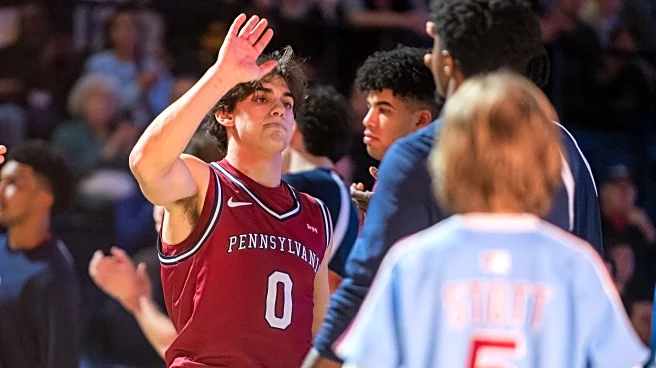
With the weight of the rivalry on their shoulders, the two Chicagoland natives locked eyes and chests with seconds remaining. Davis made his first move to get inside the three-point arc, but Levine held firm, maintaining his positioning and knocking the ball loose with seven seconds left.
Davis drifted to recover the ball, and when he picked it up, Levine was back in his face. He started left, and put his right shoulder into Levine with four seconds remaining at the left elbow. Levine didn’t budge.
Then, Davis spun towards the middle. Levine matched every step. As the tension in the building rose and rose, the only way that Davis could create any separation was by fading away. So he did, and he released the ball from the foul line with one second on the clock.
“I did everything I could in that moment,” Levine said. “I put my entire effort out there all game, there was not a moment where I let up.”
Every Penn fan in the world thought the shot was going in. After all, that’s how this rivalry has gone recently. It had been 2923 days since the Quakers beat the Tigers. Four whole classes of now Quaker graduates entered, studied, and received their diplomas at Franklin Field without seeing their men’s basketball team take down their biggest rivals.
When the ball clanked off the front rim, all of that was in the past. It finally happened. Eight years later, Penn finally defeated Princeton. The Quakers won it 61-60 in dramatic fashion, and for the first time since 2018, the number under the Penn name on the rivalry scoreboard no longer reads 126.
“Once it missed, it was the biggest relief ever,” Levine said.
You’re not the only one, AJ.
First-year head coach Fran McCaffery downplayed the moment of ending the streak.
“I don’t concern myself with what happened in 2018,” he said.
And why should he? After all, it’s not his streak. He was in Iowa City or other Big Ten cities during those games, probably not even watching the Quakers. It would only serve to put added pressure on himself and his players for something that is the collective outcome of more than one group of players and coaches.
McCaffery won’t tell you after the game, but he knows what this means. He grew up in Philadelphia and played at Penn himself. So while he may not care about the streak, he cares about the rivalry.
Before the first meeting of the two teams this year, McCaffery said that the Penn-Princeton games were the games that he returned to his alma mater to coach in.
“That was always one of the most incredible atmospheres you’d ever play in front of, and it always had a great impact on your ability to win a championship,” McCaffery said on December 31 after beating NJIT.
TJ Power said that McCaffery brought alumni and former Penn players to speak with the team on Friday night before the game, which he said provided context and helped Power understand the meaning of the rivalry.
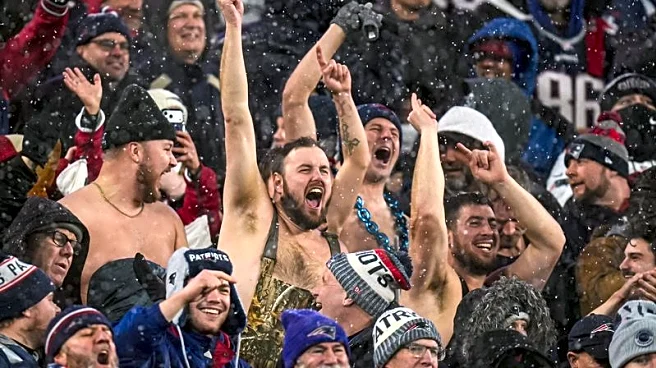
And it was a packed house at the Palestra. Over 3,800 packed the cathedral, with the sidelines filled up and the students unfurling rollouts on the baselines. Penn’s largest home crowd since the Princeton game two years ago.
Penn led by as many as 12 in the second half, but it could never possibly be that easy. The Quakers led by 14 in January against the Tigers before an avalanche of proportions that McCaffery said he’d never seen before – 18 possessions in a row with a score – hit between the end of the first half and the middle of the second half to completely flip that game away from Penn.
But Princeton never took the lead back on Saturday. Power made an incredibly important corner three with just over a minute left to give the Quakers a four-point lead, but the Tigers made a three and got a stop to set up the final possession.
Levine’s stop is the defining moment of his Penn career thus far. Just a sophomore, he’ll have at least four more matchups against the Tigers in his future to build on that, and he’s grown immensely throughout the year. He didn’t score in double figures until December 28, but has scored in double figures in eight of the ten games since then, including 13 against Princeton.
Power has been at his best in rivalry games for the Quakers this year. He had 23 points and 15 rebounds in the win over Saint Joseph’s. He scored 29 against La Salle, and he came through with a game-high 18 against Princeton, making that big shot.
The game may not be as impactful on winning championships as it once was – these two used to duopolize the Ivy League championships. Between 1963 and 2007, only three championships (four if you include Yale sharing the 2002 title with the Tigers and Quakers, but Penn won the playoff for the autobid), where won by teams besides Penn and Princeton. Today, the league is more competitive from top-to-bottom, but these two are now part of a four-way tie for third place in the league at 4-4.
And while every game matters, this one matters just a little bit more.