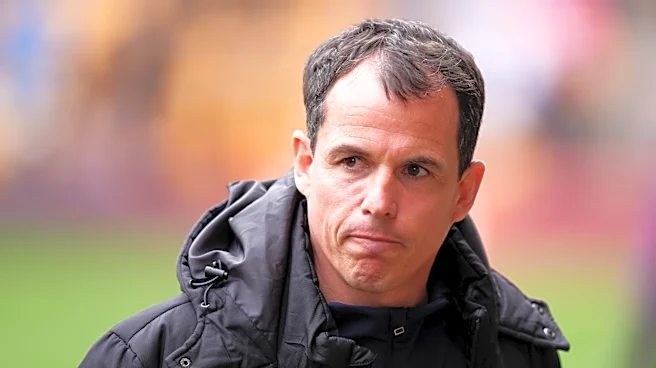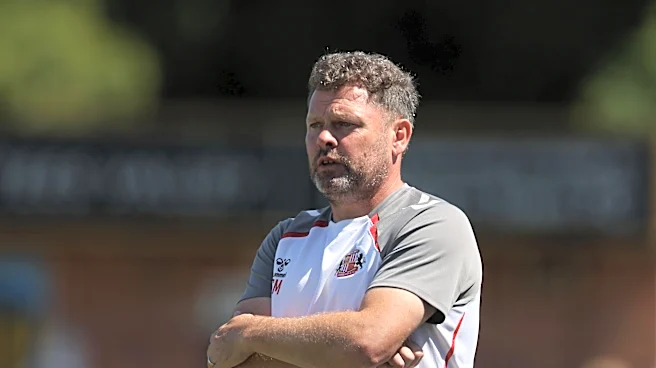









There is a distinct, sometimes harsh reality to the way modern football clubs operate under elite sporting directors, and yesterday Wearside felt this reality as news broke that Under-21 Lead Coach Graeme Murty is set to depart the Academy of Light.
At a glance, this appears to be a casualty of the sweeping, systemic changes being implemented by Kyril Louis-Dreyfus, Florent Ghisolfi, and the club’s hierarchy as they seek to completely reshape our youth setup and club operations as a whole.
Since arriving
in October 2022 from Rangers, Murty hasn’t just been a steady hand at the wheel of the Under-21s; he has been a transformative figure. Under his stewardship, the young Lads didn’t just compete; they flourished.
He guided them through a spectacular narrative of development, culminating in a brilliant run to the Premier League Cup final at the Stadium of Light. More importantly, he has been instrumental in bridging the daunting gap to the first team, playing a pivotal role in nurturing elite talent such as Chris Rigg, Matty Young, and Tommy Watson.
During what will prove to be his final season at the club, Murty oversaw a campaign that culminated in that impressive run to the Premier League Cup final. Along the way, he fast-tracked a younger crop of scholars who are now regarded as some of the academy’s brightest prospects, including Jenson Jones, Finn Geragusian, Felix Scott, and Marcus Neill.

As Director of Football, Florent Ghisolfi continues to mould the setup behind the scenes. Murty is one of a growing list of high-profile departures over the last few months, including Kristjaan Speakman, Robin Nicholas, and Stuart Harvey.
Reports suggest the club will adopt a structure in which staff are shared between the first team and the Under-21s. On paper, eliminating the traditional hard border between the Under-21s and the first team makes a lot of sense. In practice, it completely alters the landscape at the Academy of Light.
This change in approach to integrating staff across both squads means the Under-21s effectively gain access to elite first-team-level coaching, analysis, and sports science on a daily basis, rather than having a dedicated coaching team that only occasionally interacts with the first-team setup. It allows the club’s best developmental minds to have a direct hand in moulding raw talent before players ever step onto the Stadium of Light pitch.
While the structural benefits of a shared staffing model are clear, football is ultimately about human relationships. The biggest concern with this approach is the potential dilution of dedicated mentorship.
In a shared system, where staff are naturally consumed by the high-stakes demands of first-team football, do academy players lose that figurehead? Murty was that dedicated protector and guide. Replacing that specific, hyper-focused care with a rotating or shared coaching pool is a significant gamble.

This potential restructure further demonstrates that the club’s hierarchy is not content with simply having a good academy; they want something more. By moving away from the traditional “manager” model at Under-21 level, Sunderland are introducing a modern, European-style methodology that prioritises the club’s overarching philosophy over any single coaching personality.
If it works, Sunderland could become a masterclass in modern football efficiency, seamlessly producing first-team-ready talent. If it fails, there is a risk of compromising the very culture that has made the Academy of Light such an attractive destination for some of the country’s best young players.
While the club’s leadership appears committed to a different philosophical direction for the academy’s next chapter, replacing Murty’s tactical intelligence, mentorship, and deep commitment to the development pathway will be no easy task. He leaves behind a squad vastly richer in character and technical quality than the one he inherited.
Thank you, Graeme, and all the best for the future.