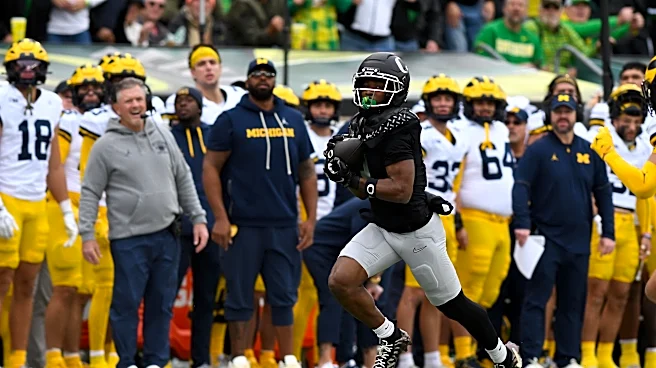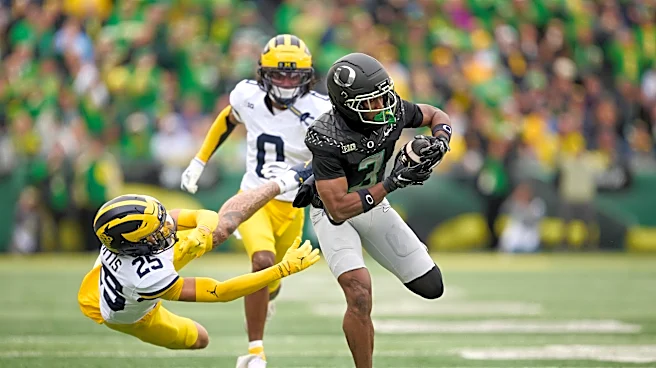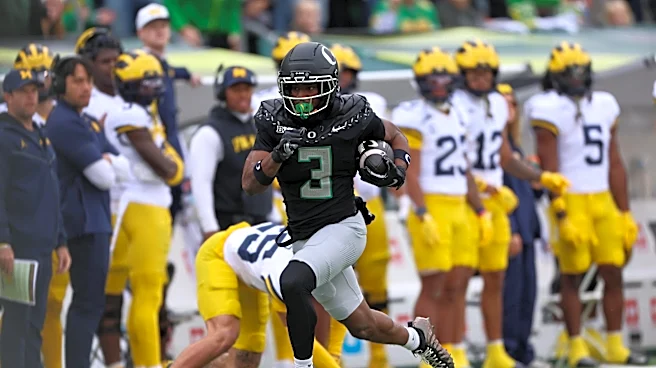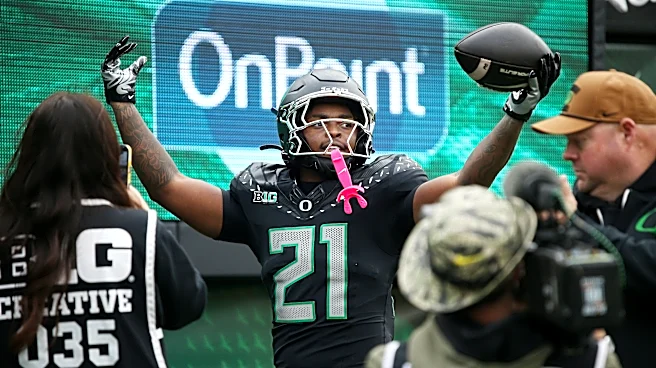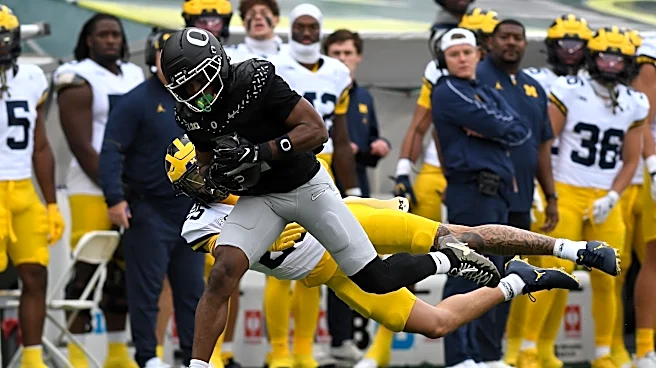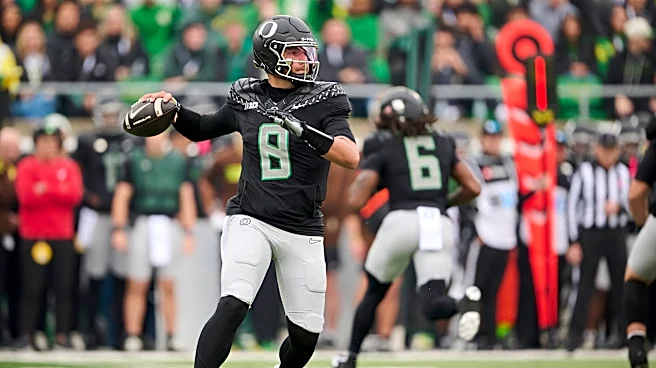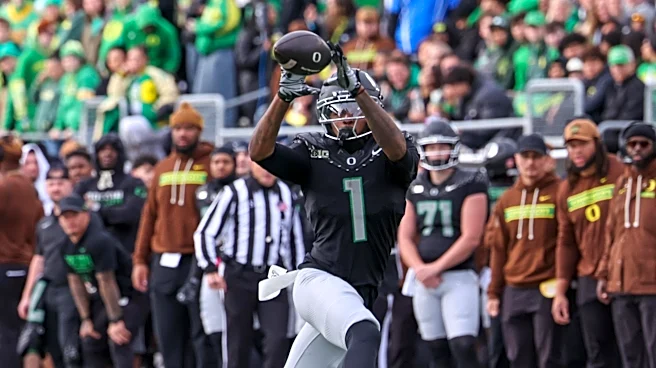

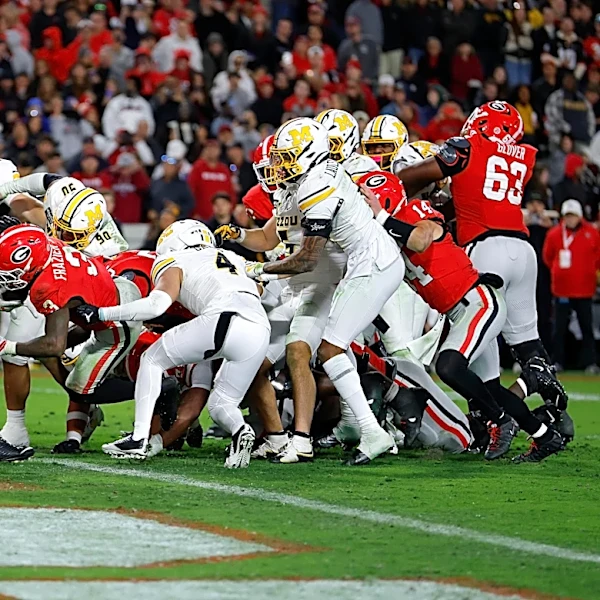
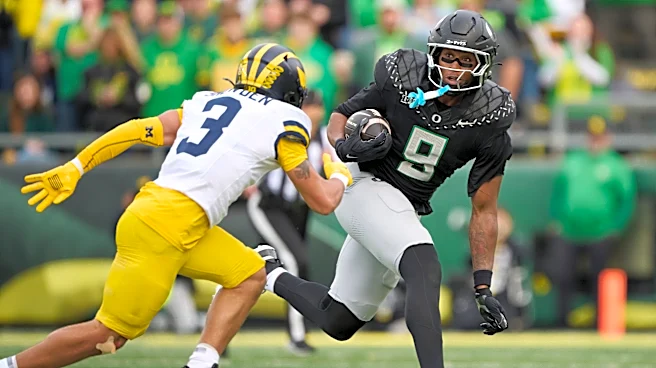
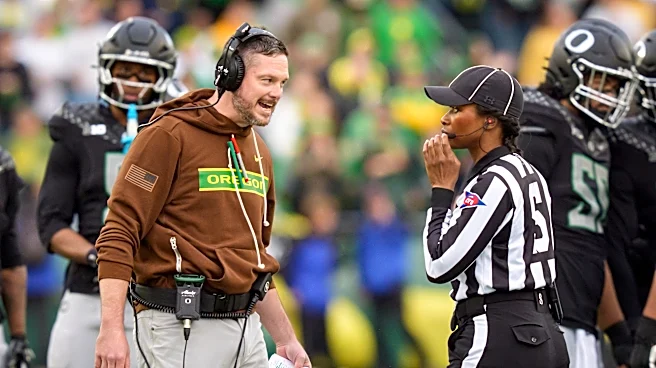
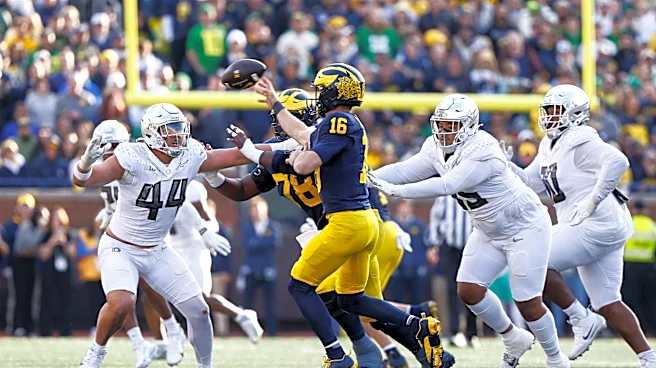
Entering Saturday’s game, Michigan’s defense hadn’t allowed more than 21 points in any game this season. Three big plays by the Oregon offense essentially put up that many points by themself. Throughout the 31-7 loss on Saturday, the Wolverines allowed chunk play after chunk play, some of which resulted in touchdowns and some of which kept momentum in the Ducks’ favor.
Two minutes into the game, Oregon wide receiver Jeremiah McClellan made a double move in man coverage against Jyaire Hill. Hill held
McClellan up but he still made the play, and Mason Curtis missed an open-field tackle that allowed the Ducks to put points on the board quickly to take a 7-0 lead.
“Just gave up some big plays in the first half. Got to execute better, be us at the end of the day and get back to work,” Chris Bracey said postgame.
Then just over six minutes into the first quarter, Oregon quarterback Dylan Raiola lofted a ball up to wide receiver Evan Stewart, who caught the ball after beating Hill one-on-one in tight man coverage for a 38-yard gain. Although the pass wasn’t a touchdown and the drive didn’t lead to a touchdown, the pass came from Oregon’s own 5-yard line and completely switched the field position. A three-and-out from Michigan’s offense gave the Ducks the ball back at their own 36-yard line, which they took 10 plays to reach the end zone.
“(We) let their guys get behind us a couple times, missing some tackles on a couple of the big plays,” Whittingham said postgame. “Like I said, they got outstanding athletes, and they’re going to make a miss on occasion, and they’re fast. They’ve got great contact balance. … So between that and blowing a couple assignments, that’s what gave up the chunk yardage with our defense.”
Another instance where Oregon got behind Michigan defenders was when the Ducks got the ball back with 50 seconds left in the first half and a 14-7 lead. On the fourth play of the drive, Ducks wide receiver Dakorien Moore found himself wide open for a 59-yard touchdown after a broken zone coverage from Smith Snowden, who bit down on a shorter route that was already covered by a defender.
“That’s a cardinal sin in that situation, to let somebody behind us, and unfortunately we did it,” Whittingham said.
“Everyone has their own assignment, and at the end of the day, when you try too hard to make a play, or you try to compensate for someone else’s job, it costs you,” defensive lineman Jonah Lea’ea said postgame. “That’s the only way I can play it simply, honestly. But I feel like that was a big thing today.”
While it was down the field passes that exposed Michigan’s defense in the first half, it was runs and short passes that did so in the second half. On Oregon’s first drive of the second half, Dierre Hill Jr. rushed to his left for 36 yards to set the Ducks up in the red zone. A penalty and sack pushed Oregon deeper in field goal range as they ultimately missed the kick, but the run started to take advantage of a missed tackle situation for the Wolverines.
Again in the fourth quarter, though, Oregon actually took advantage of the missed tackles. After Tommy Carr fumbled the ball and offensive penalties backed up Oregon’s offense to the 49-yard line, the Ducks drew up a screen pass because they were in a 3rd-and-19 situation. Multiple missed tackles later ended in a touchdown for Oregon and what became inevitably the final blow and final explosive play given up by the Michigan defense.
“The biggest thing is probably tackling, especially on that last touchdown that we gave up, we’re giving up too much easy stuff,” Lea’ea said.
“When you start to press and try to do more than just your job, you’re trying to do more than you need to, and that sometimes is a product of that,” Whitingham started to say about the explosive plays as a whole. “I’m not going to say that’s why it happened. Again, they’re good athletes, they’re going to make you miss on occasion. But I think a lot of our problems stem from just trying to do too much and just not playing within the structure or framework of the defense. When you say that, our defense has been lights out all year, so it’s not like it’s been a recurring problem.”
Although not a recurring problem, and Michigan has relied on its defense often this season, that is ultimately what happened. Whether it was trying to do too much, missing tackles or missed assignments, the Wolverines’ allowed explosive plays that decide the game.